





WEBINAR (2/24/26): The Revolutionists: The Story of the Extremists Who Hijacked the 1970s
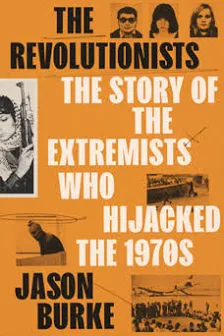

This video features Peter Bergen of Arizona State University and New America introducing author Jason Burke and his new book, “The Revolutionists: The Story of the Extremists Who Hijacked the 1970s.” Burke discusses the themes of his book, focusing on the origins and evolution of international terrorism in the 1970s. He highlights the shift from largely non-lethal, attention-seeking attacks to mass-casualty suicide bombings.
Key Discussion Points:
- Origins of Extremism: Burke traces the roots of modern extremist Islamism and international terrorism back to the mid-1960s, noting how both leftist and Islamist movements developed in parallel with shared enemies like imperialism and Western capitalism (2:45–5:52).
- Cold War Context: He emphasizes the importance of understanding this period within the framework of the Cold War, discussing Soviet attitudes toward various groups and how geopolitical contexts influenced major events like the Entebbe raid (12:42–17:26).
- Evolution of Terrorist Waves: Burke challenges the traditional “four waves of terrorism” framework, proposing an “identity wave” that includes Islamism and white supremacism, emerging after the leftist wave faded in the mid-1970s (27:26–28:45).
- Reasons for Leftist Decline: The conversation touches on why leftist movements in Western Europe burned out, citing public revulsion to violence and governments making significant social and cultural concessions (24:30–26:18).
- Current State of Islamist Extremism: Burke notes that while Islamist extremism is currently thriving in sub-Saharan Africa due to chaos and lack of governance, other strands like the Muslim Brotherhood are not doing as well (30:03–33:20).
- Challenges in Hostage Negotiations: The discussion addresses the disunity among Western nations in hostage negotiations during the 1970s, highlighting the novelty of the threat and the lack of established protocols or specialized units (34:18–39:40).
- Cooperation Between Leftist and Middle Eastern Groups: Burke details the limited but significant cooperation between European leftist groups, such as the Red Army Faction, and militant groups in the Middle East, often facilitated by shared anti-imperialist sentiments and practical training (40:02–46:58). He also points out the cultural clashes and internal divisions that made such cooperation difficult (43:56–46:58).
- Youth and Motivation: The appeal of these extremist movements to young people is explored, emphasizing factors like the desire for agency, adventure, and camaraderie (57:05–59:02).
ARCHIVE of SWJ EVENT ALERT:
WHEN: Tuesday, Feb. 24, 2026 12:00 pm to 1:00 pm EST
WHERE: Online

In the 1970s, an unprecedented wave of international terrorism broke out around the world. More ambitious, networked and far-reaching than ever before, new armed groups terrorized the West with intricately planned plane hijackings and hostage missions, leaving governments scrambling to cope. Their motives were as diverse as their methods. Some sought to champion Palestinian liberation, others to topple Western imperialism or battle capitalism; a few simply sought adventure or power. In his new book The Revolutionists: The Story of the Extremists Who Hijacked the 1970s, veteran foreign correspondent Jason Burke tells their story in what the New York Times calls a “sprawling, extensively researched story” that is buttressed by dozens of interviews and decades of research in 12 languages including recently declassified government files, still secret documents, and original interviews with hijackers, double agents, and victims still grieving their loved ones. Burke traces the key events that shaped their lives and also how, by the early 1980s, a campaign for radical change led by secular, leftist revolutionaries had given way to a far more lethal movement of conservative religious fanaticism that would dominate the decades to come.
Join New America’s Future Security Program as they welcome Jason Burke for a discussion of his new book The Revolutionists. Jason Burke is the international security correspondent for The Guardian. He has been a foreign correspondent for almost thirty years, reporting from the Middle East, South Asia, Europe, and Africa. In addition to The Revolutionists, he is the author of four critically acclaimed books: The New Threat: The Past, Present, and Future of Islamic Militancy; The 9/11 Wars; Al-Qaeda: The True Story of Radical Islam; and On the Road to Kandahar: Travels Through Conflict in the Islamic World
Jason Burke
Author, The Revolutionists: The Story of the Extremists Who Hijacked the 1970s
International Security Correspondent, The Guardian
Moderator:
Peter Bergen
Vice President, New America
Co-Director, Future Security
Professor of Practice, Arizona State UniversityCopies of The Revolutionists are available for purchase here through our bookselling partner Solid State Books.

About New America:
“We are dedicated to realizing the promise of America in an era of rapid technological and social change.
At New America, our research and policy recommendations focus on five key thematic areas: education and work; family economic security and wellbeing; global politics for people and planet; political reform and civic engagement; and technology and democracy.
In each area of our work, we put equity at the center; elevate stories of people closest to the public problems we seek to solve; invest in the next generation of leaders; and intentionally engage with local perspectives.
Taken together, these efforts advance toward our vision of a more equitable America that lives up to its values.”

