





A CRINK in the Armor of Deterrence: The Axis of Upheaval in the Indo-Pacific
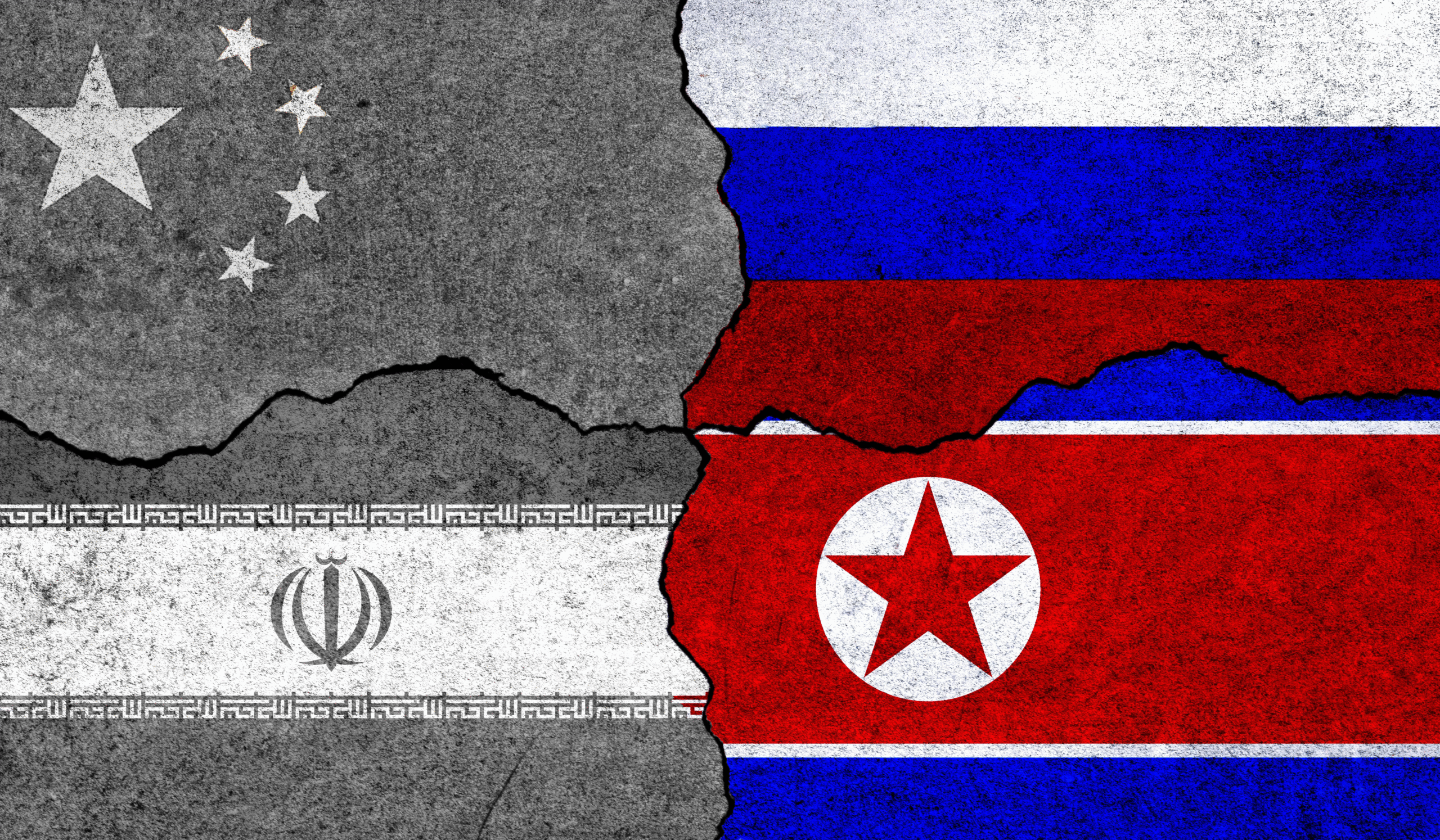

In the calculus of a Chinese invasion of Taiwan, America’s most decisive deterrent may not be a carrier strike group or a bomber task force, but a forward-postured ground-force capable of holding Beijing’s interests at risk while simultaneously deterring a ground war on the Korean Peninsula. The new National Security Strategy (NSS) rightly prioritizes the Chinese Communist Party as the pacing threat, with the invasion of Taiwan the most prescient danger to a free and open Indo-Pacific. Yet beyond this explicit focus lie tacitly overt challenges that carry equally consequential implications for regional stability that cannot be ignored.
Chief among them is the burgeoning China, Russia, Iran, and North Korea (CRINK) alignment and, more specifically, the battle-hardened partnership between Moscow and Pyongyang. No longer peripheral, this relationship functions as a direct logistical and strategic pipeline that enables Beijing to divert Washington’s attention and tie down U.S. forces. In any Taiwan contingency, South Korea will inevitably face a newly provocative and emboldened North Korea, forcing allied planners to contend with a second front.
But viewing U.S. Forces Korea (USFK) merely as a defensive backstop misses its most critical role. As General Xavier T. Brunson, Commander of United Nations Command, Combined Forces Command, and USFK has repeatedly reiterated the centrality of USFK – anchored by the U.S. Army’s only field army and enabled by its unique geographic and operational posture – provides a powerful preemptive lever to impose direct costs on the Chinese Communist Party. Properly leveraged, USFK fundamentally alters President Xi’s risk analysis and offers policymakers a more potent path to deterring a two-front war before it begins.
Russia-North Korea: CRINK’s Rising Comradeship
The emergence of a credible two-front challenge in Northeast Asia is neither accidental nor episodic. It is the product of deliberate state action, enabled most directly by Russia’s evolving partnership with North Korea. While China stands to benefit from any diversion of U.S. attention during a Taiwan contingency, it is Moscow – not Beijing – that has most tangibly altered Pyongyang’s capabilities, confidence, and willingness to act. Since the onset of Russia’s war in Ukraine, the relationship has shifted from episodic arms transitions into a sustained strategic alignment, providing Kim Jong-un with resources, legitimacy, and access to military technology unavailable through any other partner.
This evolution matters, not because it reflects a centralized CRINK strategy, but because it materially constrains U.S. and allied options. Russian support has redacted the plausibility of decoupling North Korea from broader anti-U.S. alignments through diplomatic realignment, or so-called reverse Kissinger approach. Rather than a fissure to be exploited, the Russia-North Korea partnership increasingly functions as a force multiplier within CRINK – accelerating North Korea’s military development while directly supporting China’s concepts for unrestricted warfare with direct implications for a Taiwan contingency.
Accordingly, comprehending how this partnership has emerged, how it functions, and how it accelerates Beijing’s capacity for future territorial aggression is critical. This new partnership within CRINK now constitutes a central driver undermining U.S. efforts to reestablish deterrence in the region.
When Putin Met Kim: CRINK’s Center of Gravity
What began as transactional arms exchanges between North Korea and Russia has deepened significantly into a formal strategic alignment with far-reaching security implications. Since mid-2024, the relationship has progressed from opportunistic weapons transfers into a Comprehensive Strategic Partnership Treaty signed by Vladimir Putin and Kim, reportedly including mutual defense commitments. Under this arrangement, North Korea has supplied Russia with large quantities of artillery ammunition, ballistic missiles, and as many as 11,000 troops in support of Moscow’s war in Kyiv.
In return, Moscow has provided Pyongyang with financial relief, diplomatic legitimacy, and potential access to advanced military technologies – including missile guidance, electronic warfare, air defense capabilities, and advanced intelligence supporting operational planning and targeting today. These exchanges have transformed North Korea from a chronic regional irritant into a more capable, risk-acceptant actor with growing confidence in its ability to coordinate regional provocations against the U.S. and allied forces.
The December 2025 NSS reinforces the U.S. focus on the Indo-Pacific and the Chinese Communist Party as the pacing threat, while simultaneously prioritizing a swift resolution in Ukraine and renewed “strategic stability” with Russia. While welcomed in Moscow, this shift raised concerns among Korea watchers, who warned it may signal reduced U.S. urgency toward the Russia-North Korea partnership. While North Korea is notably absent from the strategic spotlight, the most consequential reading lies in what the strategy implies:
Moscow’s ongoing partnership with Pyongyang effectively strengthens a second front critical to Beijing’s ability to execute a successful Taipei contingency. This partnership directly supports Xi’s concept of unrestricted war by forcing U.S. and allied forces to divide attention and resources across multiple theaters, signaling that regional strategy must account for the operational leverage this partnership provides to China.
Among CRINK, the Russia-North Korea partnership has emerged as the most operationally mature and immediately consequential alignment. While China, Iran, and Russia cooperate across economic and technological domains, the Moscow-Pyongyang relationship is an overt military partnership demonstrated through direct battlefield integration in Kyiv.
This partnership accelerates North Korea’s nuclear and missile development timelines while providing Kim with a degree of strategic autonomy from Beijing the world has not seen in decades. In doing so, it creates a more permissive environment for coordinated pressure against U.S. and allied interests and linking European and Indo-Pacific theaters through active military cooperation rather than abstract alignment.
From Comradeship to Brinkmanship: Implications for Deterrence and Regional Stability
The maturation of the Russia-North Korea partnership carries implications well beyond the war in Ukraine. Russian non-compliance with United Nations sanctions, including the veto of Resolution 1718 enforcement mechanisms, has significantly weakened denuclearization diplomacy and eroded international constraints. Simultaneously, this partnership complicates the reestablishment of deterrence for the U.S.-South Korea alliance. Russian assistance that materially improves North Korea’s survivable nuclear capabilities raises unavoidable questions about deterrence credibility, alliance assurance mechanisms, and the evolving role of the Nuclear Consultative Group.
More broadly, the alignment of two nuclear-armed states that explicitly reject the No First Use policy – Russia and North Korea – alongside China’s rapid force expansion, intensifies escalation risks in Northeast Asia. Pundits assessed this convergence as a revisionist alignment – one that actively undermines global sanctions regimes and emboldens North Korean provocations. North Korea is no longer a dependent proxy but an increasingly capable actor operating within a permissive, great-power ecosystem. Even if hostilities in Ukraine subside, the Russia-North Korea partnership is unlikely to dissolve, with mutual benefits eliminating the prospect of short-term diplomatic separation strategies and reinforcing the need for deterrence rooted in posture, integration, and denial.
For the U.S. and its allies, the challenge is not to reverse this alignment, but to prevent it from translating into coordinated coercion across theaters. This requires treating the Korean Peninsula not as a secondary contingency but as a central node in cross-theater deterrence – one that will shape Beijing’s calculations in a Taiwan crisis rather than merely respond to Pyongyang’s provocations.
If the war in Ukraine comes to an end, it will accelerate China-Russia cooperation rather than diminish it. The U.S. and allies must contain this adversary alignment to prevent its expansion to other countries. The strongest response lies in deepening alliances and working with partners to counter this alignment, while tactically constraining the forms of cooperation that pose the greatest risk to U.S. and allied interests. While the Russia-North Korea cooperation extends Moscow’s capacity to sustain its campaign in Ukraine, its broader significance lies in accelerating North Korea’s nuclear and missile programs, which has direct implications for regional stability and U.S. national security. Addressing these and the strategic signals they send requires a coordinated, multi-pronged approach.
Countering the Axis: A Multi-Pronged Approach
No single measure can dismantle the Russia-North Korea partnership, rooted as it is in mutual desperation: Moscow’s isolation from the West and Pyongyang’s reliance on sanctions evasions for regime survival. Nevertheless, a balanced, multi-pronged approach can mitigate the partnership’s most dangerous effects by containing risk, deterring escalation, and exploiting internal vulnerabilities. The following four pillars form the foundation of this strategy.
1. Strengthening Forward-Postured Deterrence on the Korean Peninsula
The priority is establishing deterrence through additional rotational capabilities forward postured in South Korea and assigned to USFK. While the U.S. can deploy more advanced capabilities to the Korean Peninsula, those forces must be fully integrated across the broader Indo-Pacific theater rather than treated as a peninsula-bound asset. Properly postured, they must provide both flexible deterrence and response options relevant to a Taiwan contingency while also ready to respond to a secondary front in a protracted and adaptive war. General Brunson illustrates how Korea occupies a unique position at the nexus of geography, allied partnerships, and operational reach, placing it at the forefront of driving technological innovation, deterrence concepts, and joint and multinational coordination – not just for the region but across the entire joint force. In this context, South Korea must be positioned to present Xi with something he can feel – a credible, integrated military reality that complicates Chinese Communist Party planning and raises the perceived costs of territorial aggression beyond the Taiwan Strait.
2. Enhancing Trilateral Alliance Coordination
Beyond force posture, the U.S. must elevate alliance coordination by institutionalizing and operationally testing the trilateral cooperation with South Korea and Japan around a broader threat that explicitly includes a Taiwan contingency and a secondary front response. Historically, trilateral mechanisms focused almost exclusively on North Korea; the growing Moscow-Pyongyang nexus requires planners include the Russia factor as a standing assumption – one capable of providing logistical support to both China and North Korea in order to open a second front and to further prolong a Taiwan contingency.
Expanding joint exercises – such as Freedom Shield and Orient Shield – can simulate hybrid contingencies involving coordinated missile launchers, cyber operations, or gray-zone coercion. This trilateral cooperation approach enables Japan to assume a greater share of the operational burden for both a Taiwan contingency and a secondary front, while South Korea can visibly demonstrate and rehearse its commitment under the 1953 Mutual Defense Treaty, capabilities that would otherwise be exercised only after deterrence efforts have failed. A strong, unified trilateral response clearly communicated to Moscow can deter Russian involvement in a Taiwan contingency by sharply raising the costs of participation, thereby allowing U.S. allies and partners to remain focused on the pacing threat.
3. Policy and Targeted Diplomacy
The effectiveness of U.S., South Korea, and regional allies’ military efforts depends on policy frameworks that constrain the transactional foundations of the Russia-North Korea partnership and preserve avenues for targeted diplomacy and de-escalation. Robust sanctions enforcement, multilateral mechanisms such as the UN structure, and systematic exposure of illicit activity underpin deterrence by limiting the flow of weapons, technology, and financing that sustains this relationship while multilateral mechanisms – including newer initiatives such as the Multilateral Sanctions Monitoring Team launched in 2025 – serve as critical enablers by increasing transparency and disrupting evasion networks. Targeted designations of entities involved in technology transfers, as well as secondary sanctions on third parties facilitating illicit trade, further strain the partnership’s operational viability. Furthermore, maintaining limited, purpose-built diplomatic channels – leveraging existing President Trump’s personal rapport with Kim established during the 2018-2019 summits – can create off-ramps focused on constraining the most destabilizing forms of cooperation, such as nuclear or advanced military technology transfers, without reviving unrealistic expectations of near-term denuclearization. Parallel engagement with China, which tacitly accepts North Korea’s nuclear status but prioritizes regional stability to avoid refugee flows and uncontrolled escalations, can reinforce shared incentives to limit Pyongyang’s most provocative behavior. Because the relationship is fundamentally opportunistic – exchanging Russian capital and technical assistance for North Korean munitions – publicly revealing arms transfers, shipping routes, and financial intermediaries will erode trust between the parties. When calibrated carefully and paired with diplomatic signaling, such disclosures impose reputational and operational costs that reinforce allied and military posture while preserving space for de-escalation, a critical component of Peace Through Strength.
4. Countering Hybrid and Asymmetric Threats
Allied deterrence is reinforced when military pressure is complemented by policy-enabled diplomatic and hybrid measures that exploit distrust among authoritarian partners. Investments in cyber defense, intelligence collection, and law-enforcement coordination are essential to disrupt the covert activities that sustain the Russia-North Korea partnership, including cyber operations, organized crime networks, and illicit finance. Because the Russia-North Korea partnership thrives in opacity, policies that increase transparency, resilience, and exposure directly enable allied forces by narrowing the strategic space in which Moscow and Pyongyang can act.
Targeted diplomatic engagement with North Korea, conducted in close coordination with Seoul, can probe constraints on the most destabilizing forms of cooperation – such as nuclear and advanced missile technology transfers – while recognizing that denuclearization remains a longer-term objective rather than a near-term negotiating outcome. On the Russia front, progress toward resolving the conflict in Ukraine would likely diminish Pyongyang’s battlefield relevance and reduce incentives for sustained military cooperation. Together, these efforts reinforce the credibility of allied deterrence by constraining the operational freedom of CRINK without provoking uncontrolled escalation.
President Xi appears to expect Putin and Kim to act as his reliable wingmen in his “unstoppable” campaign to reunify China and Taiwan. History, however, shows he is asking for a Mercedes Benz on a rickshaw budget. North Korea committed “boots on the ground” to support Russian operations in Ukraine, while China’s contributions to its partners have been indirect, cautious, and limited – more a spectator than a participant. Xi’s assumption that he can leverage Russia and North Korea to advance a Taiwan contingency underscores fundamental reality: an unreliable partner will inevitably find himself aligned with other unreliable partners. By combining diplomatic signaling, sanctions enforcement, and exposure of illicit networks, the United States and its allies can impose reputational and operational costs, degrade the effectiveness of CRINK’s covert channels, and reinforce a free and open Indo-Pacific.
A Free and Open Indo-Pacific, Despite the CRINK
The CRINK alignment, centered on the Russia-North Korea partnership, now represents the most immediate and operationally consequential threat to a free and open Indo-Pacific. For the U.S. and its allies, the Korean Peninsula is not simply a secondary concern but a linchpin for shaping Beijing’s calculations in any Taiwan contingency. As Secretary of War Pete Hegseth put in his deliberately blunt formulation, deterrence ultimately rests on a simple premise: adversaries who FA must be prepared to FO. USFK, alongside other forward postured elements within the strategic triangle in the Indo-Pacific, provides that visible, forward-postured mechanism to enact that guidance against Beijing miscalculation.
The Moscow-Pyongyang axis – battle-tested, overt, and operationally relevant – has turned the axis of upheaval or CRINK into a cross-theater lever, with Beijing riding along like a hopeful third wheel hoping to reap the rewards without doing the heavy lifting. Despite the tenuous ties across all CRINK partners, the U.S. cannot ignore the advancement of Russia-North Korea collusion. That said, the U.S. could exploit the transactional nature of Russia-North Korea cooperation through sanctions enforcement, transparency measures, and targeted diplomacy. Xi may assume he can rely on these partners, yet his expectations outpace his contributions; an overconfident Chinese Communist Party risks being undone by the very partners it counts on. By combining posture, integration, and policy, the U.S. and its allies can impose real costs on potential aggressors, reinforce alliance credibility, and uphold the NSS’ top priority: deterring Chinese aggression and preserving a free and open Indo-Pacific.


