





How Cartels are Adopting Drone Tactics from Ukraine
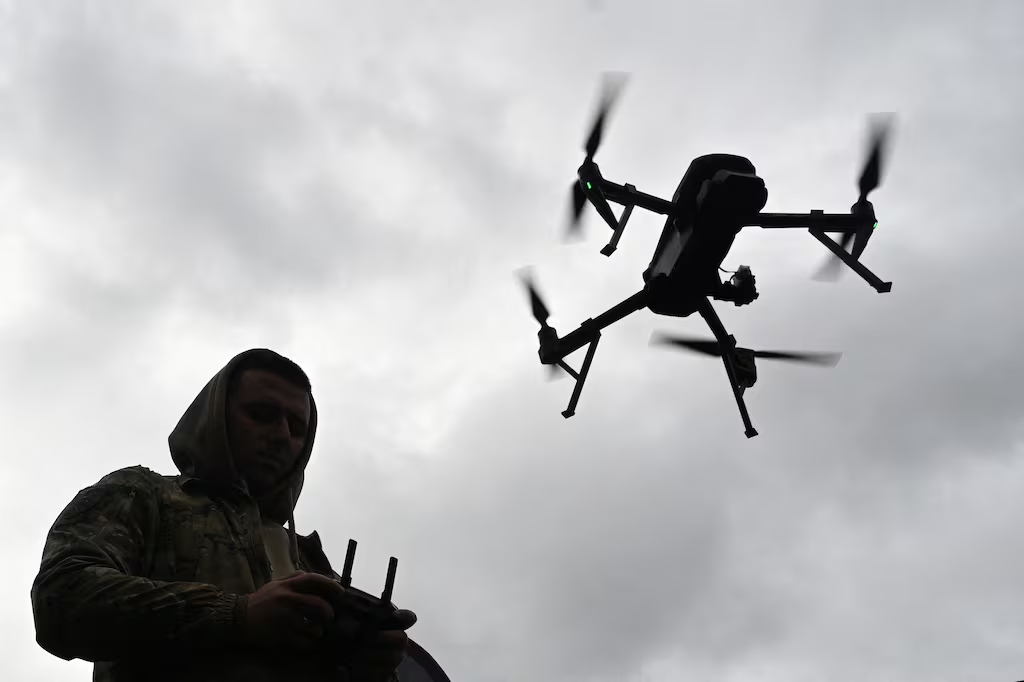

Drug cartel operatives snuck into Ukraine for drone training: report | Linus Höller, July 30, 2025
How cartels are adopting drone tactics from Ukraine | Zita Ballinger Fletcher, November 14, 2025
Criminal Organizations and Battlefield Learning
Both of these articles document a shift in how transnational criminal organizations acquire tactical knowledge. Ukrainian counterintelligence services investigated the deliberate infiltration of Latin American cartel members into Ukraine’s International Legion. These individuals entered under false identities and humanitarian cover with the intent to receive first person view drone training inside an active war zone. Ukrainian authorities now assess that combat training developed for state-on-state warfare is being absorbed by criminal networks with global reach.
Infiltration Through Volunteer Pathways
Investigations by the Security Service of Ukraine focus on Spanish speaking units operating in eastern Ukraine. Mexican and Colombian nationals sought assignment to drone operator roles and completed structured training in drone manufacturing, electronic warfare resistance, thermal avoidance, and coordinated strike employment. Several cases involved forged documentation and links to former military or insurgent organizations, including Mexican special forces alumni and former FARC fighters. The effort reflects planning, access to logistics networks, and institutional awareness of how modern conflicts generate transferable skills.
Ukraine as an Unintended Training Environment
The reporting highlights Ukraine’s role as an inadvertent dissemination node for asymmetric warfare techniques; training pipelines designed to meet battlefield demands now intersect with criminal objectives. Ukrainian officials acknowledge that low cost FPV drones provide lethal capability with minimal infrastructure. That capability aligns directly with cartel operational needs, particularly in environments where airspace control and rapid strike options shape local power dynamics.
Cartels and the Weaponization of Drones
Fletcher’s article grounds these developments in real world consequences. Mexican cartels now employ explosive equipped FPV drones against rivals and state security forces. Documented attacks include strikes on prosecutor offices, ambushes of military patrols, and coordinated ground assaults following drone detonations. These operations demonstrate the fusion of criminal violence with tactics drawn from contemporary warfare.
Hybrid Threats and Blurred Categories
Both pieces reinforce the erosion of clear distinctions between criminal groups, paramilitary actors, and terrorist organizations. Cartels recruit former soldiers, adopt military structures, and employ weapons and tactics associated with armed conflict. Analysts and international organizations note that these actors operate within networks that intersect with state and non state conflicts, creating security challenges that fall outside traditional law enforcement models.
Domestic Security and Counter Drone Pressure
The United States now faces the downstream effects of this diffusion. Officials report persistent drone incursions along the southern border and over military installations. In response, NORTHCOM has formed a rapid response unit equipped with deployable counter drone systems. U.S. Special Operations Command is expanding FPV drone training for operators, while industry partners introduce surveillance platforms designed for border security missions.
Strategic Takeaways
Together, the articles point to a central theme. Modern conflict environments generate tactical knowledge that moves beyond the battlefield. Volunteer pathways, training pipelines, and permissive identity systems create exposure points that nonstate actors exploit. FPV drones compress the distance between military and criminal capability, challenging existing legal authorities, intelligence frameworks, and domestic defense postures. The issue is not technology alone, but the speed at which knowledge migrates across conflict boundaries.

