The Archaic Defensive Doctrine Continues to Plague Post-Soviet States Today
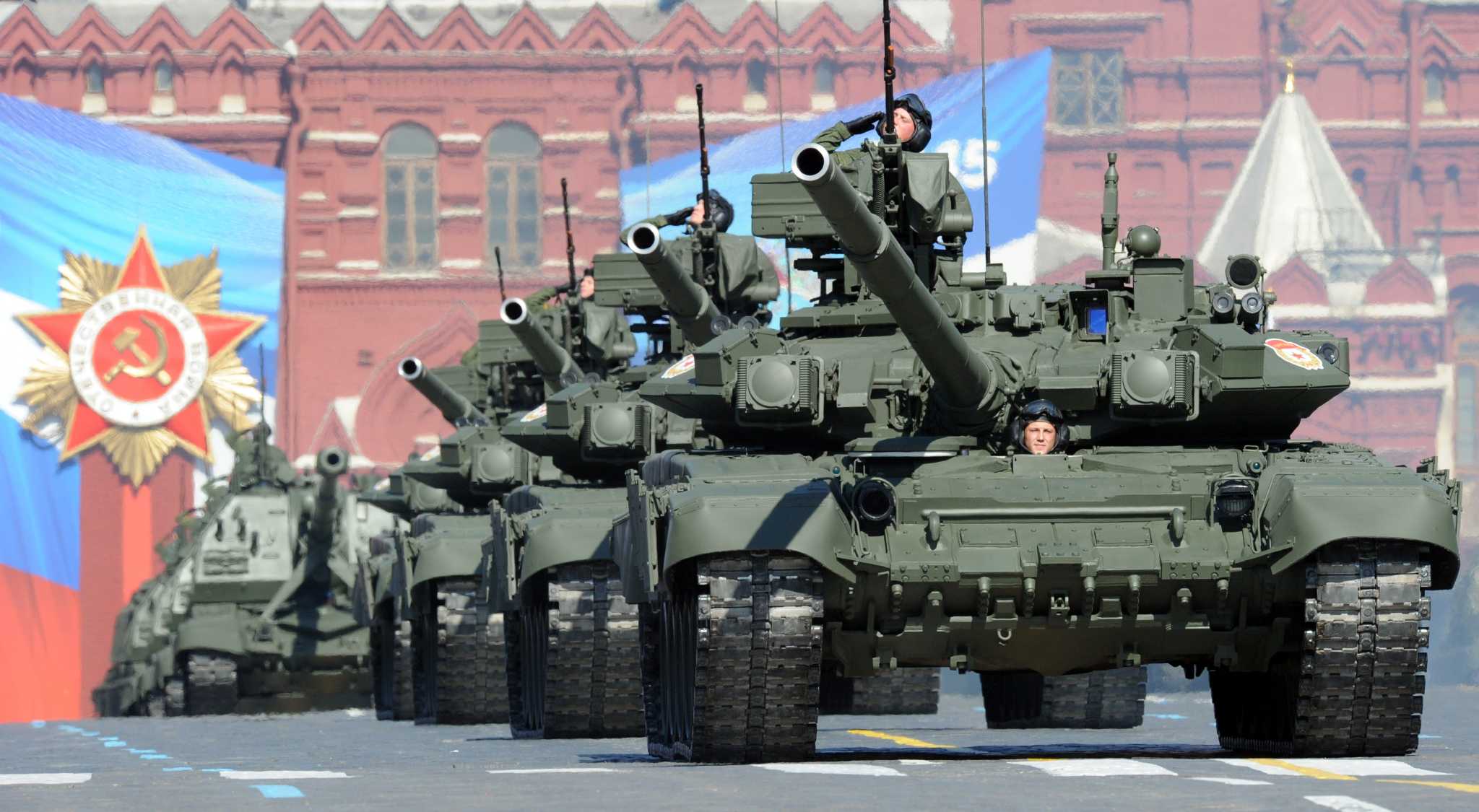

From its beginning to its collapse, the USSR relied on overwhelming its enemies with superior manpower and firepower. Soviet forces rarely withdrew from untenable positions. Instead, they held positions, used armored columns, and launched frontal assaults as seen in WWII. The Warsaw Pact continued this approach.
Amid the collapse of the Warsaw Pact and USSR, the Baltic states, Poland, Romania, Hungary, Czechia, and Slovakia all integrated with the West. As a result, they adopted NATO doctrine on air superiority, technological advances, and autonomy for field officers to make critical decisions. In contrast, countries still in Russia’s orbit did not have the opportunity to adapt. Consequently, countries such as Armenia, Georgia, Moldova, and, in some instances, Ukraine remain influenced by outdated Soviet doctrine. In many 21st-century conflicts, significant losses might have been averted, or outcomes improved, with a more effective doctrine. The Second Karabakh War showed the disadvantage of persisting with Soviet doctrine, and the Russian invasion of Ukraine highlighted additional reasons to adopt modern approaches.
The Soviet Military Doctrine
To understand Red Army and Warsaw Pact tactics, we must access Soviet military doctrine. Declassified CIA files show this doctrine changing over time, reflecting strategic priorities as warfare evolved. CIA documents show that the Soviets saw themselves as defensive, which was a contradiction. Stalin’s Red Army fought offensively in Finland and Poland in WWII and occupied the Baltic and parts of Romania. The Kremlin steadily maintained this mentality.
High-mobility operations were prioritized to negate any counteroffensive or defensive posture by enemy forces. For example, during the collapse of the Axis flanks around Stalingrad, the German Sixth Army was completely encircled. According to retired Marine Corps Major Bevilacqua, Soviet commanders wanted to maintain battles at their own tempo and pace. This approach aimed to hinder an opposing commander from creating conditions favorable to their own terms, reflecting the Soviet emphasis on operational control.
Soviet doctrine required creating surprise in attacks. Personnel, armor, logistics, and aircraft had to move quickly into key sectors and strike before the enemy could react. The USSR expected commanders to meet Kremlin-set deadlines. During WWII and the Afghan War, Moscow fired commanders who failed to meet them. Early Nazi German success in Barbarossa followed Stalin’s purges of experienced commanders. Inexperienced lower officers failed under heavy enemy fire. To achieve an objective within a key timeline, intelligence gathering and reporting need to be accurate. The Soviet Union failed at this through false reporting or a lack of confidence in command decision-makers. During WWII, Stalin ignored reports of a massive German buildup on the Soviet border. This error proved costly for poorly equipped, unfortified troops.
“The Soviet military doctrine in the 21st century is nearly incompatible with modern warfare. For example, despite initially taking 20% of Ukraine during the surprise invasion, Russia has barely moved forward since, with near-frozen lines while trading 1% of the Russian population in grueling and cataclysmic frontal assaults.”
Additionally, the Soviet Union often used frontal assaults, sending troops and columns, with or without support, to seize ground and accepted heavy casualties to take positions. Other Soviet republics also had high losses before technology reduced these risks; now, such losses are disastrous. For example, losing key demographic groups that sustain the labor force weakens a country’s economy and population growth.
Modern Russia still adheres to much of Soviet doctrine and continues to fail in intelligence. For example, Putin received false reports from the generals and intelligence agencies. He expected little resistance in Ukraine, but Russian forces took heavy casualties, lost thousands of tanks, and one-third of the Black Sea Fleet. The Russian invasion of Ukraine and the Second Karabakh War both show how conflicts shape demographics in Armenia, Ukraine, and Russia. Each of these countries uses some form of Soviet doctrine.
How the Soviet Doctrine Played a Critical Role in the Second Karabakh War
In the Second Karabakh War, Armenia faced major disadvantages. Azerbaijan increased its UAVs, intelligence, and artillery capabilities and procured weapons from Turkey and Israel. Armenia’s leaders neglected reforms and relied on Russia. Yerevan left its military doctrine unchanged and kept the older Soviet system.
For decades, Azerbaijan and Armenia were deadlocked over Karabakh’s status. Clashes followed Armenia’s victory in the First Karabakh War. Azerbaijan did not make a significant military move until the late 2010s, when an opportunity arose. Following the Velvet Revolution, which ousted the pro-Russian government, the Kremlin reassessed its relations with Armenia, as Russia viewed Armenia as it had Georgia and Ukraine after their revolutions. These newly strained relations gave Azerbaijan a chance to strike.
The Second Karabakh War began in late September 2020 as Azerbaijani airstrikes, artillery fire, and ground incursions opened the conflict. Armenian defenders immediately halted these attacks. When Azerbaijan suffered heavy armor losses, Baku then deployed Turkish-made Bayraktar TB2 drones to break through Armenian defensive lines. Armenia then had older Soviet-made air defense systems, but these struggled to track and down TB2s. Lacking electronic countermeasures, Armenian forces could not stop Azerbaijani drone strikes, which broke through defensive lines.
The Armenian command decided to defend on flat ground around Fuzuli and Jabrayil. This choice followed the Soviet doctrine of holding untenable positions. As a result, Yerevan lost critical equipment and manpower. The losses were devastating for a country with a small population.
“The Soviet doctrine relied on top-down orders, leaving field officers and NCOs with little authority. This flaw weakened Armenian defense in the Karabakh mountains, including Hadrut and Shushi.”
The Soviet Union absorbed losses across many republics, but Armenia, with just 3 million people, cannot afford such losses. This is especially true among Millennials and Generation Z, who are vital to its future workforce.
In the mountainous areas of Karabakh, Azerbaijan’s intelligence, surveillance, and reconnaissance (ISR) capabilities proved less effective due to the rugged terrain and harsh weather. This gave Armenia much-needed cover from TB2s. Nevertheless, Armenia continued to suffer from bureaucratic constraints imposed by the military and political high command, which ultimately sealed the war’s fate.
The Soviet doctrine relied on top-down orders, leaving field officers and NCOs with little authority. This flaw weakened Armenian defense in the Karabakh mountains, including Hadrut and Shushi. TB2 and Harop drone strikes nearly cut Yerevan’s communications, and Armenian field officers and NCOs lacked autonomy on defense. Azerbaijani special forces exploited the Armenian command’s poor outreach. Azerbaijani special forces used steep cliff sides to catch Armenian defenders in Shushi off guard. The Armenian command assumed the mountain cliffs were impassable and prepared only limited defenses. Furthermore, Armenia’s command was absent, leaving inexperienced field officers and conscripts with few orders. The failed defense led to a capitulation favorable to Baku.
Ukraine’s Critical Manpower Shortages are Intertwined with the Soviet Union’s Doctrine
The Ukrainian Armed Forces (UAF) demonstrated resilience against Russia’s overwhelming manpower, artillery, and air attacks. Kyiv’s strong defenses limited Russian offensives to small gains and high attrition.
Ukraine’s strong defenses bought time for defenders to improve fortifications, rebuild military branches, and reduce Russian logistics. However, some of the General Staff’s Soviet-based doctrine led to neglect and unnecessary losses. This resulted in rising absenteeism and desertion. General Oleksandr Syrskyi, Commander-in-Chief of the AFU, led major victories, including the 2022 Kharkiv Offensive and the pushback against Russian forces in Kyiv. But Ukrainian troops criticize him for micromanagement and for following outdated Soviet doctrine. Troops particularly cite holding on to lost positions for too long. Ukraine cannot afford such an approach, due to demographics, as is the case in Armenia.
Some of Ukraine’s key battles sometimes turned into disasters, worsening infantry shortages. At Bakhmut, the AFU held the city under Syrskyi’s orders for far longer than necessary, in line with Soviet doctrine. During the Battle of Bakhmut, the AFU inflicted heavy casualties on Russian forces and their then Wagner Group allies. But after Russia’s capture of Soledar, the flanks of the AFU positions in the city became precarious. Instead of ordering a gradual withdrawal to the heights and canals of Chasiv Yar, Syrskyi gave a Soviet-style holding ground order and swelled the city with more units.
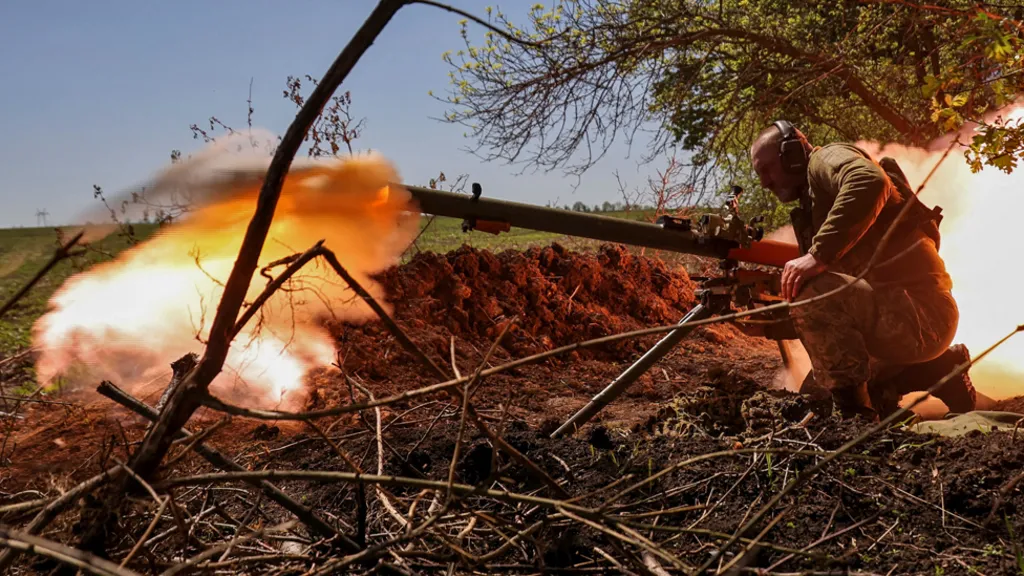
A Ukrainian soldier firing an anti-tank grenade launcher at a front line near Bakhmut (photo and caption courtesy BBC News)
The results of Bakhmut would be felt today, as not only did it end in a Russian victory, but also Ukraine wasted tens of thousands of troops unnecessarily when fortified lines of defense were right behind the city. Furthermore, the majority of Russian forces who took part in the fighting were mercenaries and convicts from Wagner, whereas the AFU lost some of their best brigades and troops that could have been used for the spring counteroffensive later in 2023. Syrskyi would be nicknamed “General 200” by disenfranchised troops and military bloggers by turning the battle into an avoidable bloodbath for the AFU.
Ukraine under Syrskyi’s command would repeat the same mistakes in both Kursk and the critical fronts of the Donetsk oblast in 2025. Initially catching the Kremlin and Russian forces off guard by the surprise offensive at Kursk, the AFU’s positions gradually diminished as North Korea directly intervened. The offensive was meant to draw Russian troops away from the Donbas region, but instead, Moscow did not take the bait, and Ukraine’s reserves were stretched thin while Russia advanced along the critical Pokrovsk sector.
Instead of gradually withdrawing troops and equipment to reinforce embattled fronts in early January, the AFU would instead withdraw hastily in March under an uncoordinated retreat. Ukrainian forces lost valuable Western equipment in a chaotic withdrawal from the Kursk oblast as Syrskyi once again held onto the territory for far too long.
As previously mentioned, General Syrskyi uses a strict micromanagement style that, at times, impedes frontline field officers’ critical decision-making. Ukraine has struggled with staffing and allocating units within logistics—sometimes creating unnecessary brigades rather than strengthening existing ones, a hallmark of prior Soviet strategy.
Policy Recommendations and Lessons
The Soviet military doctrine in the 21st century is nearly incompatible with modern warfare. For example, despite initially taking 20% of Ukraine during the surprise invasion, Russia has barely moved forward since, with near-frozen lines while trading 1% of the Russian population in grueling and cataclysmic frontal assaults.
Simultaneously, Russia can withstand the loss of human life and resources due to its large population, albeit the effects will be felt for generations. Armenia and Ukraine, like many other countries, have aging populations and need to minimize the loss of essential military personnel and avoid becoming trapped in older Soviet-style doctrine.
Regarding the Ukrainian Armed Forces, some of the AFU’s most trusted and respected commanders are the younger, seasoned officers such as Colonel Denys Prokopenko, Brigadier General Andriy Beiletsky, and Major General Mykhailo Drapatyi. All three officers utilize and maximize resources by exploiting key terrain and employing maneuver warfare, resulting in minimal necessary troop losses. Ukraine is going through a reshuffle amid scandals arising from internal corruption probes, and a potential reshuffle of the general staff could occur again. If this happens, the AFU can deploy the most Western-trained up-and-coming officers and give them greater autonomy to react and command troops in the field, thereby mitigating casualties that could be avoided, as seen in Bakhmut and Kursk.
For Armenia, a complete reinvigoration of its military doctrine is paramount. Geographically situated between Turkey and Azerbaijan, Armenians have had numerous conflicts and plights with both, and a fragile peace has mitigated large-scale regional fighting. Yerevan needs to maximize its resources without overcommitting to a war of attrition it cannot win, as seen in the 2020 and 2023 wars. Armenia is taking steps to distance itself militarily from Russia and the Kremlin-created Collective Security Treaty Organization (CSTO), which is meant to be a counter to NATO but failed to militarily back Armenia in the 2020s.
Instead, Armenia has grown defensive partnerships with India and France, along with a strategic partnership with the United States that helps reconstitute the Armenian Armed Forces. The U.S. National Guard is assisting Armenia in reinvigorating its NCO corps and instilling confidence among field officers, but other problems remain. The lack of trust in the Armenian army’s neglectful leadership is a significant problem that must be addressed and rooted out, with the current government in Yerevan taking steps to relieve the older, corrupt officers who commanded the 2020 disaster.
Conclusion
The Soviet military doctrine might have been more proficient in WWII and the former Warsaw Pact, but keeping elements of the USSR’s battlefield tactics has led to unnecessary and avoidable mass military casualties, as seen with wars in Armenia previously and Ukraine today. Protecting human resources, mitigating the tendency to hold positions for too long, becoming proficient in maneuver warfare, and giving field officers and NCOs greater freedom to act will be needed for all countries that wish to diverge from the old Soviet vanguard tactics.
Check out all of Small Wars Journal’s great content.