The Silent Disarmament of Kurds: Why Ending the Armed Struggle without Political Guarantees May Breed Instability and Extremism
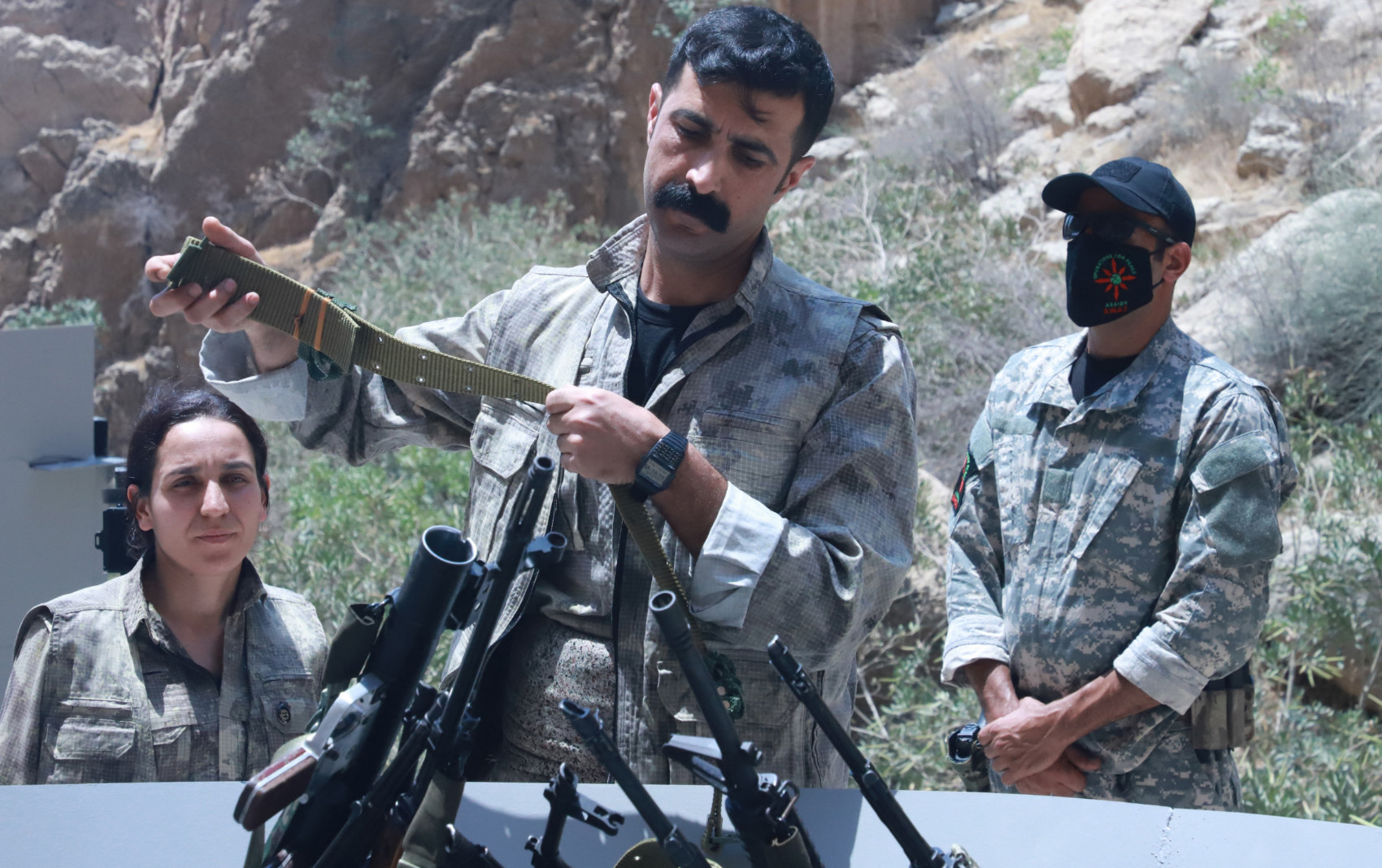

Among the many loud processes taking place in the Middle East, the disarmament of the Kurds is the most tacit. Though the Kurds have yet to achieve their national aspirations, the Syrian government seeks to disarm them, primarily to end their century-plus old armed struggle for freedom. Stripping Kurds of their armed forces before guaranteeing their civil rights is dangerous as it will create a power vacuum that armed ultra-nationalist or religious extremist groups will likely fill.
A Century of Struggle and the Shift in Power
Collectively, these processes aim to solidify the reach of central governments in the name of security and stability, often at the expense of local authorities and non-state actors accused of being state proxies.
In recent history, the Kurdish armed struggle for independence began in the aftermath of World War I and the resulting deterioration of Ottoman power. British approval self-rule for Kurds in Iraqi Kurdistan inspired a belief that freedom was possible. Since then, Kurds in Turkey, Iran, Iraq, and Syria have been engaged in a combination of political and armed struggle to achieve independence (ora degree of autonomy at least. However, the unspoken disarmament of the Kurds will drastically undermine Kurdish nationalism and its bargaining position.
Currently, the Middle East is witnessing various events such as the plan to disarm Lebanese Hezbollah, dissolve the Kurdistan Workers Party, and disintegrate the Syrian Democratic Forces (SDF). Some of these events are intended to alter the power balance, others to protect the status quo. Collectively, these processes aim to solidify the reach of central governments in the name of security and stability, often at the expense of local authorities and non-state actors accused of being state proxies. Additionally, while disarmament publicly targets Iran-aligned groups such as Lebanese Hezbollah and the Iraqi Popular Mobilization Forces (Hashd al-Sha’bi), they are not the only groups under pressure.
Through their actions, it appears the governments of Turkey, Syria, Iran, and Iraq all agree on a silent disarmament of the Kurds to end the century-old issue of Kurdish sovereignty within their borders. This intention was likely amplified by the 12-Day War and the fear of a new regional order more generous to the Kurds than the Sykes-Picot Agreement of 1916.
Regional Theaters of Disarmament
The pressure manifests differently across the four states with significant Kurdish populations:
- Turkey. Since late 2024, the Turkish government often publicizes negotiations with Kurdistan Workers Party (PKK) Leader Abdullah Ocalan that aim to dissolve the PKK and end its activities. Despite being described as a slow process, there has been significant progress, namely a weapons-burning ceremony in Iraqi Kurdistan in July 2025. While the PKK leadership frames this as a shift from armed to political struggle, critics doubt Ankara’s intentions and demand clear constitutional amendments before the PKK lays down its weapons.
- Syria. After a decade of fighting the Islamic State, the new Syrian government is attempting to disintegrate the Syrian Democratic Forces (SDF) and undermine the Democratic Autonomous Administration of North and East Syria (DAANES). Because the Turkish government views Kurdish autonomy as a threat to its national security, the Syrian Transitional Government’s insistence on dismantling the SDF mirrors Turkish demands.
- Iran. The Iranian government is similarly in the process of disarming Iranian Kurdish opposition groups through military operations and diplomacy with Baghdad and Erbil. Unlike the Turkish model, Tehran does not publicly negotiate with the armed opposition; it aims to end these groups rather than reintegrate them. Furthermore, neither Turkey nor Iran formally recognizes the Kurdish cause or their opposition groups as true representatives of the Kurdish people.
The Fragility of the Iraqi Model
While the Turkish and Syrian constitutions do not formally recognize Kurdish citizens – and Iran recognizes them without granting political rights – Kurds in Iraq enjoy greater constitutional status. Nearly half of Iraqi Kurdistan is a federalized region run by the Kurdistan Regional Government (KRG). However, the Peshmerga forces—which report to the Kurdistan Democratic Party (KDP), the Patriotic Union of Kurdistan (PUK, and the KRG Ministry of Peshmerga—are now facing a complicated US-assisted unification process. As soon as these forces are unified, the Iraqi government will likely attempt to impose direct command over them. This intent surfaced as recently as December 20, 2025 when Kataeb Hezbollah stated they would not lay down arms as long as the Peshmerga remains a “threat” to Iraq.
Conclusion: The Risk of a Vacuum
The Kurds – who have waged a century-long struggle for self-determination and fought both dictators and terrorists – are now being silently disarmed. This push coincides with attempts to disarm various regional resistance groups.
The Kurds’ taking up arms have always been for self-protection against an external threat. Unless their fears are resolved, a forced disarmament of the Kurds would create an existential crisis and threaten their hard-fought achievements. It is highly likely that by strong rejections and confrontations would follow. This would create instability, weaken the moderate groups, and result in a security vacuum that the underground groups, the ultra-nationalists, and religious extremists such as the Takfiris exploit.
A better way is encouraging rather than forcing the disarmament – encouraging through providing constitutional rights, guaranteeing protection, and enabling a fair political environment where political activities are at least equally effective as military means to achieve legitimate goals, and would render the need for arms, even for self-protection, obsolete.
Check out all the great content Small Wars Journal has to offer!