





The Rising Tide of Dissent in China
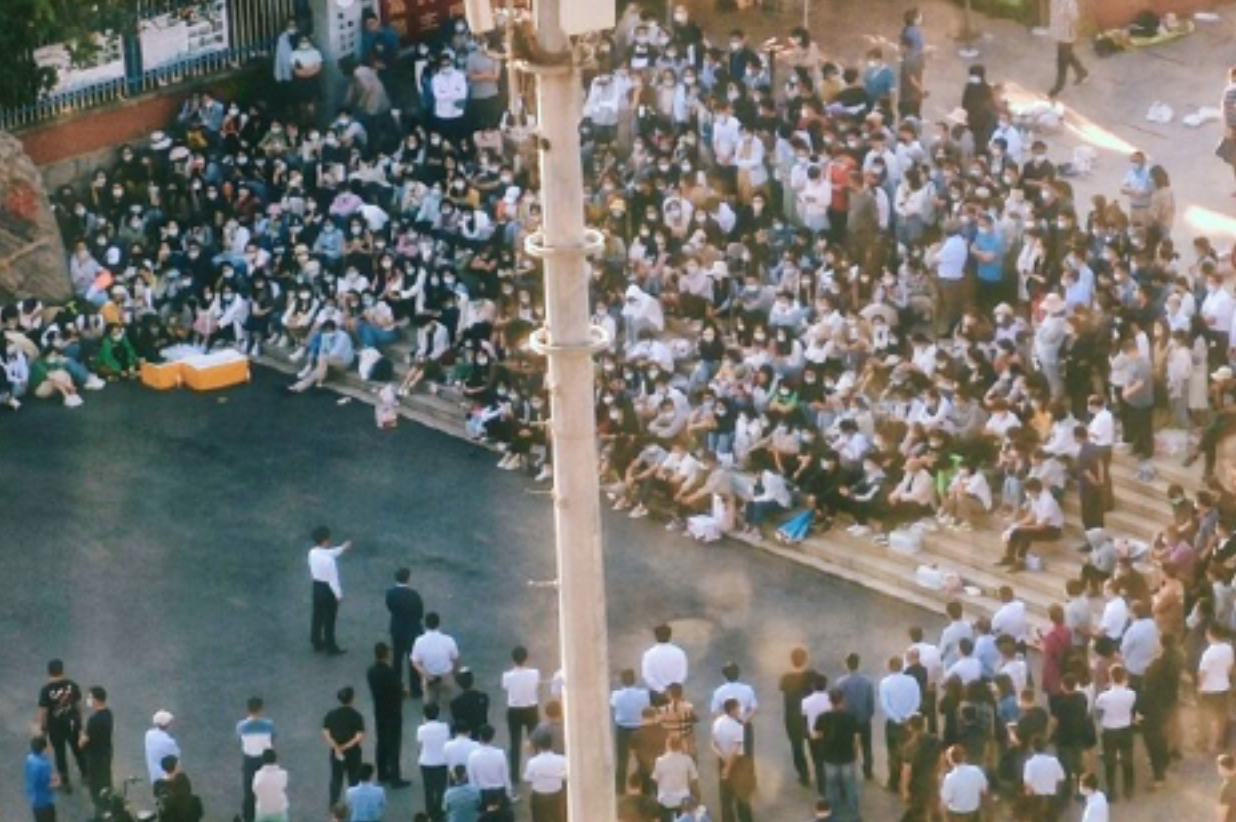

The People’s Republic of China (PRC) has long maintained a facade of unyielding stability under the Chinese Communist Party (CCP), but beneath this veneer lies a simmering undercurrent of public discontent. Data from the China Dissent Monitor (CDM), a project by Freedom House, reveals a marked escalation in dissent events during 2025, particularly in the third quarter (July-September). This surge, driven predominantly by economic grievances, underscores vulnerabilities in the CCP’s governance model and raises questions about potential flashpoints for broader unrest. This analysis explores how everyday protests could evolve into more organized challenges to authority.
Despite a temporary funding freeze in early 2025 that disrupted operations, the CDM resumed data collection and reported a total of 12,331 dissent events since June 2022 by the end of September 2025. For Q3 2025 alone, the project logged 1,392 events—a 45% increase over the 937 recorded in Q3 2024. This marks the sixth consecutive quarter of year-on-year growth, signaling a persistent upward trajectory in public expressions of grievance.
Actors, Issues, Tactics, and Targets
Expert Commentary from our Editor-at-Large, Col. (Ret.) David Maxwell:
Some basic questions about social unrest and and potential resistance:
When economic grievances become routine and widespread, what turns them into coordinated political challenges, and what keeps them fragmented despite shared hardship?
If the regime relies on local repression and censorship, what happens when local fiscal strain makes the state less able to buy compliance and more prone to overreact?
If outside actors see “opportunity” in internal fissures, where is the line between strategic messaging and actions that provoke backlash, tighten repression, and harm the very people dissenting?
“The China Dissent Monitor (CDM) collects and shares information about the frequency and diversity of dissent in the People’s Republic of China (PRC). In response to an information gap created by media restrictions and risks associated with collecting information about protest and dissent from within the PRC, CDM aims to provide an accurate picture of dissent in the country as well as preserve information about that dissent. The project prioritizes capturing offline collective action in public spaces, though cases of less public and online dissent are also included to illustrate diversity among dissent actions. Sources for the CDM database have included news reports, civil society organizations, and PRC-based social media, as well as the application of a machine-learning algorithm developed by the nongovernmental organization (NGO) Doublethink Lab. CDM is operated by Freedom House, a nonprofit, nonpartisan organization that works to create a world where all are free.”
Methodology
Defining DissentThis project uses a definition of dissent that contains two components: necessary and sufficient conditions. For an act to be included in the CDM database, it must meet a minimum set of necessary conditions defined as follows:Actors (or a single actor) within the People’s Republic of China voice grievances, assert rights, or advance their interests or the public interest in contention with the interests of political authorities, social authorities, or social structures.
This project’s conceptualization of dissent aims to capture, first and foremost, bottom-up action. We seek to document the ways in which those with less power in a given context contend with the powerful in that context.
In addition to meeting the necessary conditions above, for an act to be recorded in the CDM database, it must have at least one of the following sufficient conditions:
- Non-institutional means.
- Modes of action that are not recognized by authorities as official channels through which to voice grievances or resolve disputes. Institutional channels include lawsuits, official government hotlines, and complaints filed through the Bureau of Letters and Visits (信访局). Non-institutional means can include many modes of actions, including street demonstrations or hanging banners in public, public performance, voicing grievances or disputes in online spaces, or non-cooperation with authorities. However, an action via institutional means may be considered dissent if it results in, or is likely to result in, reprisal—e.g., a lawsuit filed against government officials that leads to state reprisal against the plaintiff or family members.
- High visibility.
- In many cases, the actor intends the act of dissent to be seen by others in their community, nationally, or even internationally in order to spread the information to a greater number of people or to generate greater pressure for authorities to make concessions. Greater visibility usually makes the act more contentious in the eyes of authorities because it raises the costs of inaction or generates more discussion about something that contravenes their interests. For example, a group of homebuyers may privately meet with a representative from a developer to express discontent about the failure to complete construction on their apartment according to an agreement, and there would be minimal consequence for the developer to ignore the complaint if few others know about it. But if the homebuyers hang banners outside the developer’s office stating the same complaint, the company (as the more powerful actor) would consider this act more contentious because others will learn about their misconduct and increase pressure for them to act.
- Virality of online speech.
- If speech online is more widely shared, then it increases the number of people exposed to a grievance or pressure for the target of dissent to act. Similar to the previous point, this makes the act more contentious from the perspective of authorities. For example, in April 2022, authorities censored online references to the PRC national anthem after certain lyrics (“起来!不愿做奴隶的人们”) from the anthem were widely reposted as a way for people to express dissent against the government’s strict Covid lockdown policies.
- Actual reprisal by state or non-state actors.
- A clear indicator that an authority perceives an act as contentious is the use of reprisals against the dissenting actor. Examples of reprisals include violence, detention, abduction, intimidation, criminalization or other lawsuits, denial of livelihood, or the threat of any of these measures.
- Risk of reprisal.
- Even when reprisal has not yet occurred, it may be clear that an act carries considerable risk of reprisal. This risk is often contextual and may be determined based on similar recent acts, the situation in a given community, or the actor’s background and reputation.
- Censorship of a topic or speech.
- Similar to the two points above, censorship by authorities is an indication that authorities consider an issue or act to be in contention with their interests. For example, if authorities widely censor online speech about a student that alleged sexual assault by a teacher, people who subsequently post online in support of the student or demanding remedy may be considered dissenting.
There are some types of acts that may look similar to dissent or involve contention but that will not be included in the CDM database:
- Acts conducted by state actors or that support authorities.
- As the purpose of this project is to document how those with less power are contending with the powerful, pro-state activism does not meet the definition of dissent. For example, government-organized rallies, pro-state banners, or pro-state demonstrations. This exclusion includes speech espousing a position that is not in contention with authorities. For example, an online post that states the government is not harsh enough toward human rights activists, or a post that supports a lawsuit filed by a powerful company against individuals. However, this exclusion does not apply to individual government officials or workers who engage in dissent against the state or other authorities.
- Acts that specifically espouse violence against individuals.
- The CDM project is primarily concerned with recording acts of dissent and protest, not violence. Additionally, within the context of dissent, this project recognizes fundamental human rights. While it includes the rights to free expression and public assembly, it also includes the rights to life and bodily integrity. If the main purpose of an act is to espouse or commit violence against individuals, then it violates those rights and will not be recorded. This exclusion does not apply when violence is not the main intention of the act but occurs incidentally or in defense, such as demonstrators reacting to police violence. This exclusion does not apply to damaging property or entering property without permission, assuming the act meets conditions of dissent described above.
Verification
The CDM project is documenting dissent in an environment where dissent is systematically repressed and information about it often censored. We are unable to verify all dissent events with the same level of evidence or same degree of certainty. To maintain the credibility of findings, CDM confronts this problem through transparent verification tiers. Every entry in the database is assigned a tier rating based on type and amount of evidence.
- Tier 1: Strongest evidence.Readers are provided ample evidence with which to verify the event. This tier includes two types of evidence: (a) primary documentation of the dissent with proof of the date that it occurred (e.g., photo/video of offline dissent); (b) report from a news or civil society organization.
- Tier 2: Moderate evidence.Readers are provided some evidence with which to verify the event. This tier includes: (a) we can provide at least two sources confirming the event occurred (e.g., two online posts describe the event without); (b) a trusted partner confirmed the event through at least two sources, but we cannot publicly share the source, a link, or documentation for safety reasons.
- Tier 3: Least evidence.Readers have minimal ability to directly verify the event themselves. This tier includes: (a) we can provide one source confirming the event occurred (e.g., one online post about the event without photos); (b) a trusted partner confirmed the event through one source, but we cannot share the source, a link, or documentation for safety reasons.

