Algorithimic Fratricide: When Artificial Intelligence Bias Becomes a Battlefield Liability
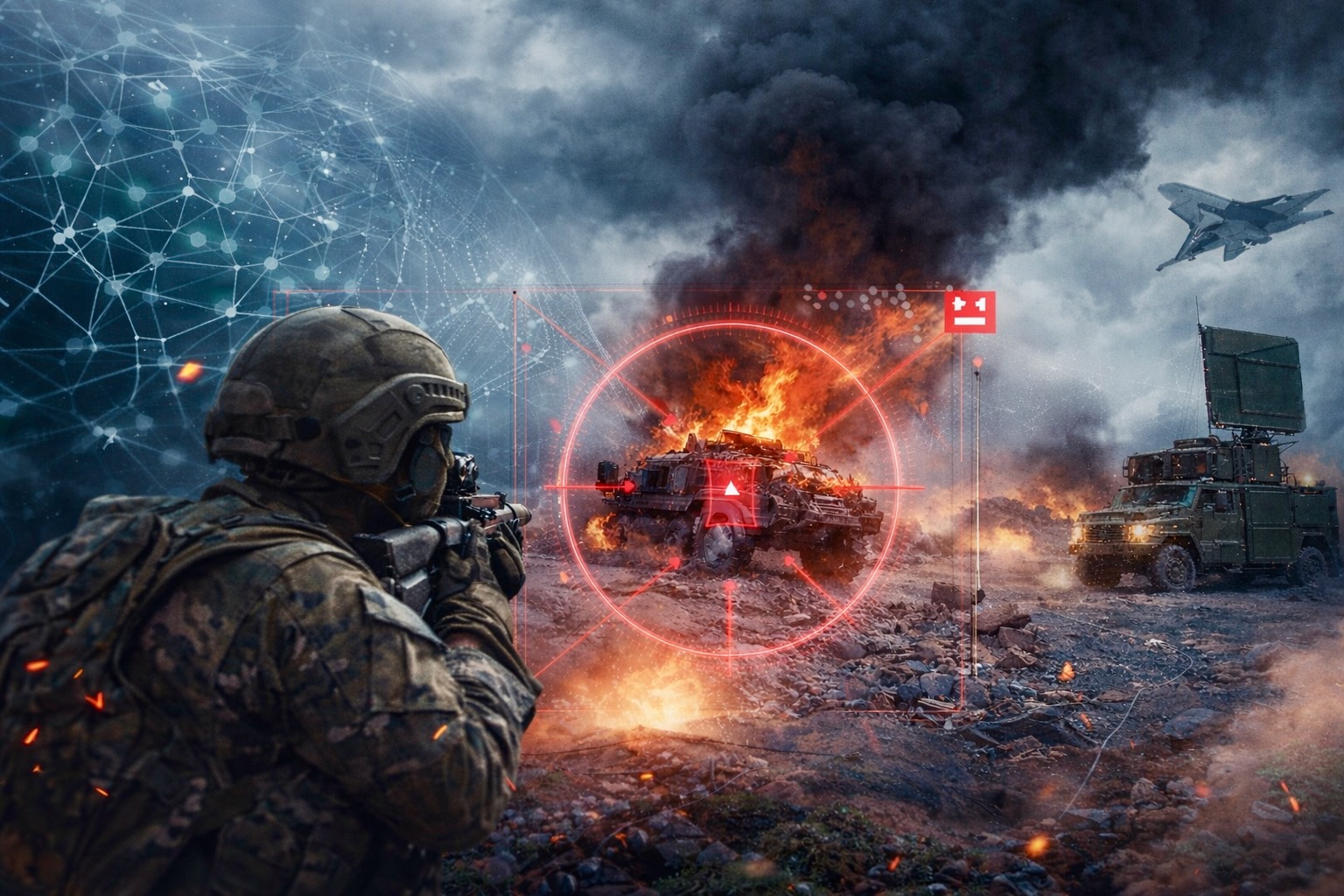

March 23, 2003: A Tornado crew returned from a strike mission over Iraq and never made it home. A Patriot battery – trusted, automated, validated – engaged a friendly aircraft. Flight Lieutenants Kevin Barry Main and David Rhys Williams died. The inquiry found faults in identification logic, procedures, and equipment.
Two decades later, the mechanics are different, but the lesson is the same. What once was an engineering failure can now be encoded in training data and model weights: a misclassification buried inside an Artificial Intelligence (AI) system will propagate at machine speed across sensor networks and command chains before a human has time to stop it.
The Brittleness We’re Encoding
Modern defense AI is trained on historical engagement logs, curated datasets, and synthetic simulations. These sources carry patterns and absences. In 2003, coalition forces discovered that targeting systems optimized for Cold War threats struggled when confronted with non-NATO platforms and captured equipment. Operators learned to distrust high-confidence classifications that didn’t match ground truth.
Now imagine that same brittleness encoded in neural network weights: an AI targeting model encounters a Soviet-era T-72 operated by coalition forces, but the vehicle’s signature matches those of adversary profiles in the training data. The model assigns it a hostile classification with 89% confidence – a measure of model certainty, not a guarantee of correctness. High confidence means the model is certain about what it has seen before in training data, not what is actually in front of it.
These risks are already visible in current program pipelines. The U.S. Army’s Tactical Intelligence Targeting Access Node (TITAN) program awarded Palantir a $178.4 million prototyping contract in March 2024 to build 10 sensor-fusion vehicles. The first prototypes arrived for soldier evaluation in 2024, and the program remains in a prototype status rather than being fully operational. “TITAN provides game-changing technologies on how we collect, process and disseminate intelligence across the battlefield,” said Col. Chris Anderson, Program Manager for Intelligence Systems & Analytics. Palantir President Akash Jain echoed this urgency: “Soldiers deserve best-in-class technology that gives them the tactical advantage on the battlefield, allowing for real-time decisions at critical speeds.”
But speed without robust validation creates risk, not advantage. These program milestones demonstrate the operational trajectory of sensor-fusion systems: prototypes are moving into soldiers’ hands today, and without rigorous bias testing, they will carry encoded failure modes into combat.
The UK Ministry of Defence is simultaneously expanding Project Nexus, a £19.7 million (approximately $26.3 million) cloud-based architecture that integrates sensor data across NATO partners to create a unified operational picture for coalition air operations. BAE Systems, Anduril, and other defense primes are building autonomous Intelligence, Surveillance, and Reconnaissance (ISR) and command-and-control platforms that will inherit these same data-driven failure modes unless tested against coalition diversity rather than laboratory benchmarks.
A Scenario Already in Motion
Picture a high-intensity coalition operation in an urban corridor. An AI-assisted sensor fusion node processes radar, thermal, and overhead imagery. It flags a convoy as hostile with 92% confidence and recommends immediate engagement. Operators, trained to trust high-confidence outputs and facing decision timelines measured in seconds, accept the recommendation. Strike authorization proceeds through standard protocols.
Only in the final moments before weapon release does a separate intelligence cell, operating on delayed voice communications, identify the convoy as allied forces using unmarked vehicles acquired through battlefield exigency. The strike is aborted. A near-miss, but one that exposes catastrophic fragility in systems now entering operational test. Had the strike proceeded, consequences would have cascaded beyond the immediate loss of life. Coalition partners would demand an immediate halt to joint operations pending investigation. Trust in AI-assisted workflows would collapse across the alliance. Political leaders would face domestic pressure to withdraw from combined operations. Intelligence sharing agreements would face review. In a high-tempo conflict against a peer adversary, that operational pause is not an administrative inconvenience; it is a strategic defeat. Fratricide becomes a force multiplier for the enemy.
The 2003 Patriot-Tornado incident prompted immediate Pentagon and UK investigations and temporary operational reviews of Patriot deployments, which created coalition friction that took months to resolve. An algorithmic fratricide incident today would propagate faster, across more systems, with deeper institutional impact. The difference: in 2003, the failure was in a single battery’s identification system. Today, the failure would be replicated across every node running the same AI model.
Four Operational Countermeasures
Mitigating algorithmic fratricide requires treating bias as a force protection issue, not an ethics seminar topic. Four operational steps can reduce the risk before deployment—and these steps are consistent with DoD Responsible AI guidance and existing developmental test and evaluation practice. What’s needed is not a new policy, but binding procurement requirements that translate principles into gateable criteria.
1. Bias Red Teams with Formal Authority
Model them on cybersecurity penetration testing squadrons. Staff them with data scientists, operational planners, coalition liaison officers, and electronic warfare specialists. Their mandate: adversarially probe models for coalition blind spots, label-space omissions, and exploitable vulnerabilities, including sensor spoofing, training data poisoning, and signature mimicry.
Critically, bias Red Teams must have formal authority to block deployment, not merely issue recommendations. If a model cannot survive red-team stress tests that include coalition vehicle databases and adversary deception scenarios, it does not advance to operational trials. This is not theoretical: cyber red teams already exercise this authority for network security. AI targeting systems deserve the same rigor.
Current practice allows program managers to acknowledge red-team findings but proceed to fielding with “acceptable risk” determinations. This must change. Bias vulnerabilities that threaten coalition fratricide should be treated as mission-critical failures, not acceptable technical debt.
2. Simulation Accreditation That Mirrors Coalition Complexity
Before any AI targeting or identification system moves beyond controlled testing, it must pass stress tests that include diverse allied platform signatures (NATO, non-NATO partners, and captured or repurposed equipment), low-probability but high-consequence edge cases, sensor degradation and spoofing scenarios, and communications-denied environments where AI operates with stale or incomplete data.
Certification should be a binding gate criterion in procurement, not a post-deployment aspiration. This aligns with existing developmental test and evaluation frameworks; it simply requires that AI systems meet the same operational realism standards as weapon platforms. If a targeting system hasn’t been tested against the full spectrum of coalition vehicle signatures under degraded conditions, it isn’t ready for deployment.
The challenge: building test datasets that capture coalition diversity is expensive and time-consuming. But the alternative – learning these gaps through operational failure – is catastrophically more expensive.
3. Procurement Requirements for Dataset Provenance and Adversarial Robustness
Defense contracts must mandate a verifiable chain of custody for training data, documented provenance showing data sources and curation decisions, quantified adversarial robustness metrics (not just accuracy on test sets, but also resilience under attack), and mandatory, immutable logging of sensor and model inputs for post-incident forensic analysis.
If a contractor cannot demonstrate dataset integrity and red-team survivability, the system should not receive operational funding. This requirement already exists in DoD’s Responsible AI Strategy; enforcement through contract language is the missing piece. Program managers need authority to reject systems with insufficient provenance documentation, regardless of performance benchmarks.
The procurement challenge: current contracts emphasize performance metrics (accuracy, speed, throughput) over robustness and explainability. Vendors optimize for what gets measured. Adding dataset provenance and adversarial testing as binding requirements changes vendor incentives before development begins.
4. Rapid Response Authority for In-Theater Rollback
Create clear command protocols for immediate system disablement when a model produces erratic outputs in operational conditions. Define who has authority to suspend AI-assisted workflows, how forces revert to manual processes without losing mission continuity, and how to preserve forensic telemetry for after-action analysis and rapid model retraining.
Make logging immutable and standardized: preserved telemetry must feed an accredited forensic pipeline so investigators can determine whether a model, sensor, or process failed. Speed matters. Institutional indecision after an anomaly guarantees that the next anomaly will cause harm.
This requires pre-established authorities, not ad-hoc decision-making during a crisis. Battalion and brigade commanders require clear guidance about when they can disable AI assistance. What manual backup procedures are available? How quickly can forensic analysis determine the root cause? Without these pre-planned protocols, commanders will either fail to act (allowing cascading failures) or act precipitously (degrading capability unnecessarily).
Human Factors: The Last Line of Defense
Even with robust testing, operators remain the final safeguard. Interface design and training must reflect this reality. High-confidence scores should be accompanied by uncertainty bands showing model calibration; not just “92% confident” but “92% confident with ±15% calibration error based on training distribution.”
Displays should show data provenance transparently, including when sensors were last updated, which coalition sources contributed, which signatures remain unverified, and how long it has been since the model’s training distribution was validated against current operational conditions. This contextual information helps operators distinguish between “the model has seen this scenario many times” and “the model is extrapolating beyond its training data.”
Operators require training that builds healthy skepticism through red-team exercises where AI offers plausible but flawed recommendations. Personnel must learn when to override model outputs, how to probe model assumptions, and how to recognize when high confidence masks underlying uncertainty. This is not intuitive: humans naturally defer to confident-sounding automated systems, a phenomenon called automation bias that has caused accidents across aviation, medicine, and military operations.
Design changes matter as much as red teams. A well-designed interface that surfaces model uncertainty can prevent catastrophic over-trust; a poorly designed one will encourage automation bias even when the model is unreliable. Current military interface design often emphasizes speed and simplicity, showing operators a single confidence score and recommending a corresponding action. This is insufficient for AI-assisted targeting where the stakes include coalition fratricide.
Addressing the Speed Objection
Program managers will ask: “We need speed to match adversary tempo. Won’t red teams and accreditation slow us to irrelevance?”
The answer is “no” because the alternative is slower. Historical precedent shows that hurried fielding without thorough testing produces costly operational pauses. Deploying an untested system that operators don’t trust, or that causes a coalition fratricide incident, will halt operations for months and erode confidence for years. The weeks spent on adversarial testing before deployment are force-protection accelerants: they prevent the catastrophic operational pauses that follow preventable failures.
Bias testing is not bureaucratic delay. It is the same logic that governs live-fire testing of munitions: find the failures in controlled conditions before they kill people in combat. No program manager would deploy a missile system without live-fire testing. AI-targeting systems that recommend lethal action deserve equivalent rigor.
The Cost of Inaction
An algorithmic fratricide incident will not only kill personnel, but it will also set back the adoption of AI-enabled command and control by years, handing adversaries a strategic advantage while Western militaries rebuild confidence in systems that failed under operational pressure. The cost of a formal bias-testing and certification pipeline is a rounding error compared to program cost overruns, the political cost of a coalition incident, or the institutional cost of losing trust in decision-support technologies for a generation.
If the first challenge in defense AI was human trust, the second is data integrity. The lesson of the Patriot-Tornado incident is written in investigations, Congressional testimony, and memorial services: systems that do not reflect operational complexity kill allies.
Bias is not a theoretical flaw; it is a force-protection hazard. Program offices and operational commanders can either treat it as a gating factor today, with red teams, accredited simulation, traceable datasets, and clear rollback authority, or they can learn the same lessons the hard way: after a casualty, a collapse in coalition tempo, and a loss of public trust.
The fielding clock is already ticking. The testing clock must run faster.
Check out all the great things that Small Wars Journal has to offer.