The New Arms Race: Global Drone Dominance and America’s Tactical Wake-Up Call
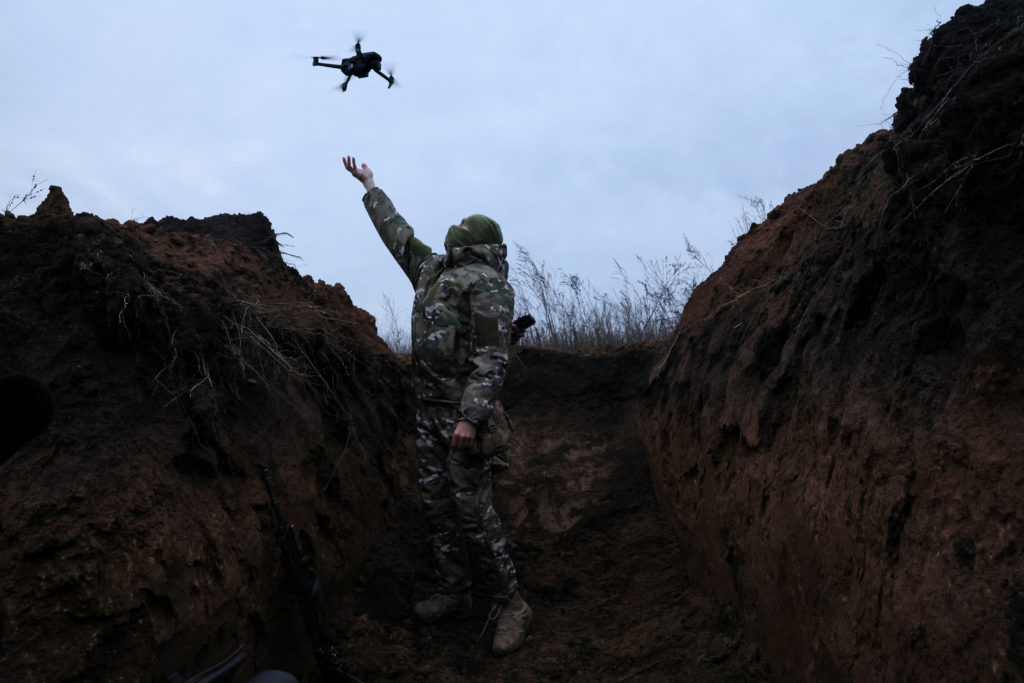

Introduction: Are We Paying Attention? Technology Lessons from Modern Conflict
Are we truly learning lessons from recent major conflict zones and applying them to doctrine, training, and technological or material solutions? Beyond isolated innovations, are we considering the broader ecosystem of unmanned systems (UxS), which now dominate the modern battlefield?
The war in Ukraine, now in its fourth year, has inflicted immense human suffering but has also reshaped global perspectives on warfare. Lessons emerging from Ukraine and Gaza are rapidly influencing tactics across Southeast Asia, Africa, Central America, and South America. Alarmingly, Mexican cartels—just across our southern border—have sent fighters to Ukraine and are now deploying evolved tactics rooted in internal violence.
These are the questions every Department of War leader should be asking, even at the tactical level. The global UxS ecosystem demands holistic consideration, as modern conflict shows drones and robotics fundamentally altering the character of war. Ukraine’s UxS evolution has been rapid, adaptive, and driven at the tactical edge. Its model of distributed innovation and networked communications is worth tracking closely for applications in counter-UAS challenges that must account for autonomy, electronic warfare, and mesh networking.
Let’s begin by examining unmanned ground vehicles (UGVs) on the battlefield. UGVs are increasingly integral to the UxS fight, especially in delivering improvised explosive devices, laying mines, and conducting casualty evacuation (CASEVAC) missions. Their increasing use has made them high-value targets, with Ukrainian and Russian forces routinely striking these systems during operations and again during recovery efforts. As with all conflicts, communication is crucial; in Ukraine, terrain often obstructs line-of-sight links. To extend connectivity, Ukrainians are deploying airborne repeaters, though mesh networking remains the most reliable method for maintaining communications. Signals now play a prominent role in decision-making, driving multi-layered communication architectures for units at every echelon, and let’s not forget about the emergence of 5G and Starlink as enabling communications tools as we think deeper about “the how” when shaping the future force.
In the UxS realm, RF jamming is becoming increasingly complicated as platforms shift frequencies. Recent reports indicate that sUAS systems operate within the 7–12 GHz range, and evidence suggests some can also function at 150 MHz, highlighting the fluid nature of modern electromagnetic warfare. These developments should be top-of-mind for DOW decision-makers.
Consider the evolution of unmanned surface vehicles (USVs). These robotic systems pose a complex challenge for naval forces and have proven highly effective in Ukraine against the Russian fleet. Their utility goes beyond ship attacks—USVs are now used as weapons platforms, sUAS motherships, and even anti-aviation delivery systems.
“At the tactical level, organic innovation is accelerating. Ukraine’s platoons maintain their own UAS “manufacturing shops” for assembly and repair, while higher echelons operate research and development labs focused on mid-range strike capabilities. Brigades receive funding to design, build, and arm drones, driving a three-month, Moore’s-Law-like innovation cycle. But challenges persist—supply chain limitations mean both sides rely heavily on the same Chinese components. China’s “neutrality” appears driven more by economic advantage than by political position, but what does that really mean in the long term? I don’t think the USG can discount this fact as it prioritizes preparing the force in modern realities.”
As technology evolves, battlefield awareness must keep pace. Ukrainian forces are focusing on left-of-launch intelligence, emphasizing predictions of Russian pilot shift changes to time movements and attacks. This has emerged as a critical vulnerability and one of the most effective methods to disrupt enemy UxS capability—target the pilot or the pilot training pipeline.
Social media is filled with sUAS, often first-person-view systems, striking tanks, and infantry fighting vehicles. This has sparked debate about whether the “Age of Armor” is over. While armor protection has improved, survivability has declined. Ukraine estimates it now takes seven drones—up from three—to destroy a modern tank, but the precision of FPV drones allows operators to immobilize armor by targeting guns and critical components. As a result, armored vehicles are often held far behind the zero line.
Now let’s address the essential mission of detecting, tracking, identifying, and defeating UxS. As TTPs mature, countermeasures are becoming a primary survivability task. Experimentation with acoustic, thermal, and electronic defenses is ongoing. Layered sensors improve survivability but also increase the soldier’s signature. Ukraine is now exploring thermal camouflage for drones, similar to the concealment already used for troops and vehicles.
Ukraine’s UxS evolution is fast, adaptive, and driven by frontline innovation. Its distributed model offers valuable insights for autonomy, mesh networking, and rapid adaptation. When asked how Ukraine became so innovative so quickly, the simple answer remains: They were invaded.
A Revolution in Military Affairs
Make no mistake—we are once again in an arms race. But this time, the battlefield is not defined by nuclear warheads or stealth bombers. It is a race for global dominance in unmanned systems, and the United States is trailing behind nations that have embraced the robotics revolution with urgency and scale. The war in Ukraine shattered assumptions about modern warfare, revealing a paradigm where small, agile, lethal drones can shift tactical power.
As the U.S. prioritized traditional capability development, other nations surged ahead. China, home to DJI—the world’s largest producer of small unmanned systems—has mastered drone manufacturing and showcased its capabilities with bold transparency. Ukraine, driven by necessity and survival, demonstrated how tactical parity can be achieved against a superior force through improvisational drone warfare.
Are we applying these lessons to doctrine, training, and modernization? Beyond isolated efforts, are we considering the broader UxS ecosystem that now defines the battlefield?
Ukraine’s UxS evolution remains a critical model: rapid adaptation, networked communications, distributed innovation, and tactical autonomy. These lessons are essential for any credible counter-UAS solution.
The rise of UGVs, communication challenges in contested terrain, RF agility, the explosive growth of USVs, and organic drone innovation at the platoon and brigade levels all demonstrate how fast the character of conflict is changing. Ukrainian battlefield awareness improvements—including targeting pilot pipelines—show that disrupting UxS capability requires targeting not only machines, but human enablers.
Ukraine’s model proves that a distributed, adaptive, frontline-driven approach can outpace industrial warfare. Rapid innovation is born from an existential threat.
The Rise of UxS: Redefining Warfare
Unmanned systems—whether aerial (UAV), ground (UGV), surface (USV), or underwater (UUV)—are transforming military operations:
- Surveillance and Reconnaissance: Drones provide real-time ISR, enabling precise monitoring of enemy movements and terrain.
- Strike Capabilities: Armed drones deliver precision effects without risking pilots.
- Logistics and Resupply: UxS platforms are increasingly used for contested-environment sustainment.
- Electronic Warfare and Cyber Operations: Some drones now jam communications, spoof GPS, or conduct cyber intrusions.
These systems are not theoretical—they are shaping real-world operations and forcing militaries to rethink doctrine and procurement.
Ukraine: The Catalyst for Tactical Innovation
Ukraine’s defense against Russia revolutionized drone warfare. Facing a superior adversary, Ukrainian forces turned to commercial drones—many from DJI—to provide ISR, target artillery, and drop grenades on enemy positions. Their success demonstrated:
- Cost-Effective Warfare: A $500 drone can replace multimillion-dollar systems.
- Rapid Adaptation: Civilian tech is quickly weaponized.
- Psychological Impact: Constant drone presence disrupts operations and morale.
These lessons have triggered a global reassessment of drone strategy and investment.
Global Leaders in UxS Development
China: Industrial Scale and Strategic Ambition
China leads commercial drone manufacturing, with . Beyond consumer drones, China is developing stealth UCAVs, swarm technology, and aggressive export strategies. Military-civil fusion accelerates innovation.
Turkey: The Drone Export Powerhouse
Baykar’s TB2 and Akıncı platforms have proven their effectiveness across multiple conflicts. Turkey’s agile procurement and battlefield-validated systems have turned it into a major drone exporter.
United States: Legacy Leadership, Tactical Lag
The U.S. leads in strategic ISR and strike drones but lags in tactical sUAS due to procurement bottlenecks and reliance on legacy platforms. Programs like Replicator are evolving to address this issue, but as faith in the program wanes, the urgency is on the rise.
Israel: Pioneer of Drone Warfare
Israel’s decades-long innovation in ISR, precision strike, and loitering munitions maintains its leadership. Combat experience in Gaza, Lebanon, and Syria continuously validates new systems. Think human-out-of-loop to better understand the Israeli innovative thought in this space.
United Kingdom and Nordic Nations: Agile Innovators
The UK’s LANCA program, Sweden’s Saab underwater systems, and advanced counter-UxS development across NATO’s northern flank make these nations emerging leaders in autonomy and defense tech.
Germany and Mexico: Dual-Use Innovation
Germany’s Wingcopter and Mexico’s modernization efforts demonstrate growing interest in both military and civilian UxS applications, especially logistics, surveillance, and border security.
These examples are simply samples of what is taking shape, but we cannot leave out Ukraine, Russia, India, Poland, and many other countries around the world that are paying attention and energizing their industrial base.
Strategic Implications: What the U.S. Must Do
To regain leadership in UxS, the U.S. must act decisively:
- Accelerate Tactical Innovation
• Invest in affordable drones for the infantry, but think about the total force. Securing logistics and forward locations of all types of units is a comprehensive approach to the new and evolving reality.
• Develop modular, mission-tailorable platforms. Manufacturing at the tactical edge is essential, providing the tools and resources to enable field expedient innovations, repairs, and quantity will prove the deciding edge in some tactical engagements. - Streamline Procurement
• Reduce acquisition delays, which is happening. Acquisition reform has been talked about for decades. Moving away from the military industrial complex to a combination of big and small firms working together to bring solutions to the force. Encouraging small businesses to get in the fight was/is a winning recipe for Ukraine.
• Leverage commercial off-the-shelf (COTs) solutions. A good way to look at COTs is to understand the purpose of the technology, investigate technical assertions and metrics in all-weather environments, determine if the technology meets the need, normalize the supply chain, and continuously review the technology to know when to predict a sunset as end-of-life nears. - Enhance Training and Doctrine
• Integrate UxS at all echelons. Train foundations before deploying technology. This is the single most problematic issue when it comes to the United States Joint Force. The common response to new military innovations is to lean heavily into technology purchases, field the force with cutting-edge material solutions, and simultaneously fail to teach, educate, and train on “why and how” this new gear will support the ability to fight and win on the modern battlefield. Additionally, unit leaders at all levels need to understand this Age of Robotics while developing and applying a pillar approach that includes threat assessment, protection, quick reaction response, and left-of-launch information and intelligence processes that produce Concepts of Operations (CONOPs) and proactive mission orders.
• Develop doctrine for autonomous logistics and swarms. - Strengthen the Industrial Base
• Support domestic manufacturers. This means that counting on the big firms to continue to provide solutions without working closely with small businesses must be a thing of the past.
• Foster public-private partnerships. Working with and vetting companies to provide technology that meets security requirements and ensures the success of the mission must be emphasized. - Invest in Counter-UxS Technology
• Improve detection, jamming, and defeat systems that are agile, easily moved, and not dependent on cargo air transport. The need for these systems is at the tactical edge.
• Prepare forces for drone-contested environments. This is a doctrine problem and will create issues at all tactical levels. Look no further than the typical heavy U.S. armor battalion to see why this new environment does not fit current techniques, tactics, and procedures (TTPs); however, it goes further when taking into account all Services and how logistics are executed. This is a complex problem that requires quick change. The United States military is known for its long and deep logistics tail. It is “the how” in sustaining and winning conflicts.
Conclusion: The Future Is Autonomous
The race for UxS dominance defines military, industrial, and technological competition in the 21st century. Drones are no longer niche tools—they are central to warfare, logistics, and intelligence. The U.S. must recognize that future conflict will be autonomous, scalable, and adaptive. Falling behind is no longer an option.
Ukraine and other areas have proved that innovation can emerge from necessity. But for the United States, the time for reactive adaptation is over. It must lead with vision, urgency, and strategic clarity to shape—and not merely respond to—the future of unmanned warfare.
The sky is no longer a sanctuary — drones have turned the air above us into contested ground, and ignoring it is a risk we cannot afford.