





Strategic Depth Reimagined: Expanding Decision Time in 21st Century War
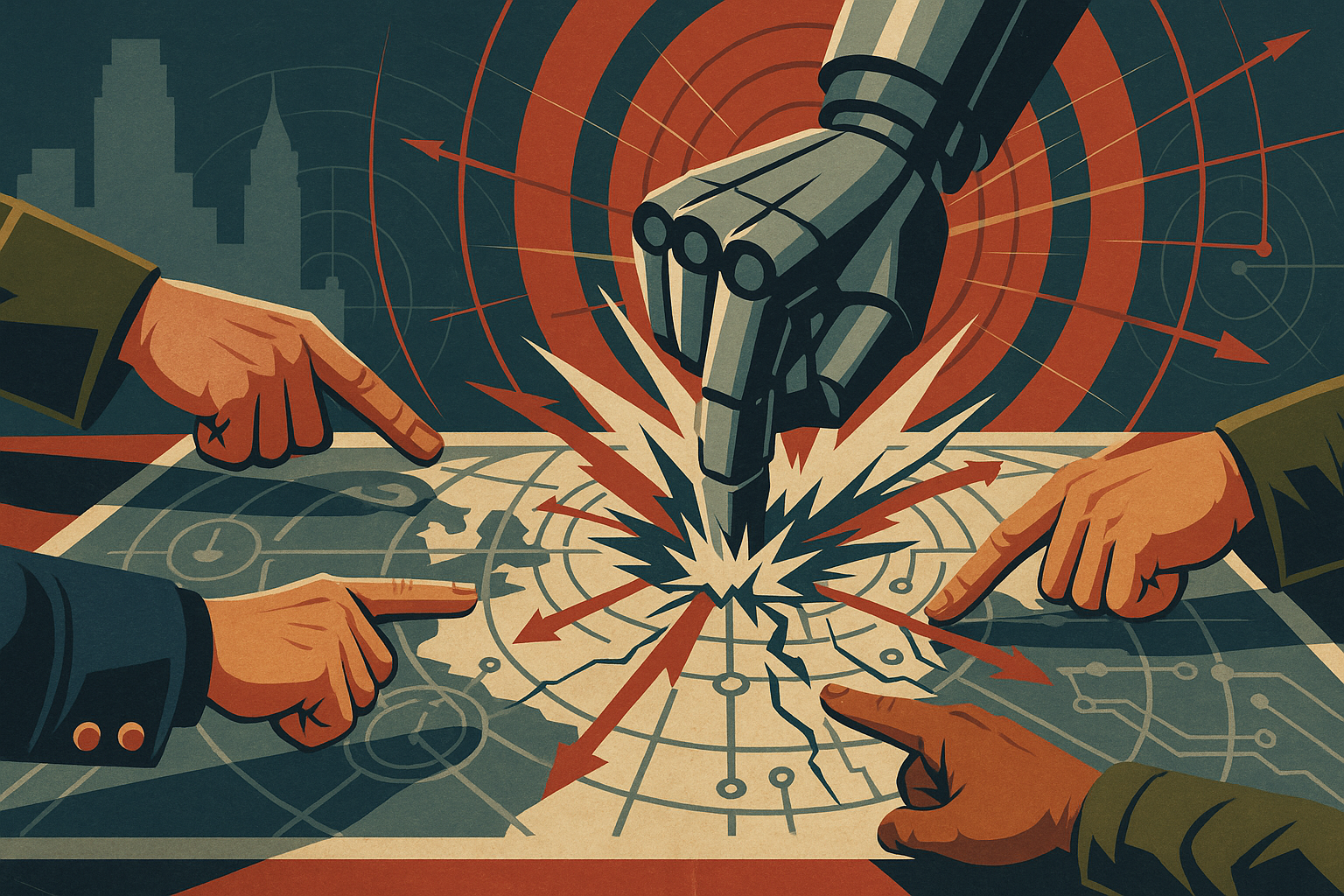

Strategic depth has traditionally described a state’s ability to trade space for time—to absorb, adapt, and recover before vital centers are threatened. Strategic depth may be defined as the spatial, temporal, and cognitive distance that enables a nation or commander to absorb shocks, mobilize, and adapt before decisive outcomes occur. It represents the freedom to think and act over time, creating conditions to maintain initiative even under pressure.
At its core, strategic depth is about time, which is the most valuable currency in warfare. Commanders historically traded space for time to delay adversaries by accelerating their own tempo to seize the initiative. Mastering tempo, changing the pace to create time for decision, remains a critical component of strategy.
Yet in the twenty-first century, technological acceleration has collapsed the boundaries that once protected states and commanders from immediate danger. Precision-guided munitions, long-range drones, space-based reconnaissance, and cyber operations have eroded both physical and temporal buffers, making the battlespace continuous and persistent. The outcome is a radical compression of time and space, forcing leaders to make strategic decisions at tactical or operational tempo—often within minutes or hours.
In today’s security environment, where technology compresses distance and speed erodes deliberation, small states must manufacture time through intelligence, mobility, and alliances, while larger states must integrate breadth to restore lost depth.
The ongoing Russia–Ukraine war provides a striking contemporary example. Ukraine’s operational depth has been steadily eroded by Russia’s employment of long-range fires, missile strikes, and drone swarms that reach deep into its territory. Meanwhile, Russia’s traditional strategic depth, long considered its great advantage, has been similarly reduced by Western-supplied precision weapons capable of reaching logistics hubs and airbases hundreds of kilometers from the front. Moscow has remained relatively unaffected in part because Western states have imposed restrictions on Ukraine’s use of long-range systems to avoid escalation. This dynamic demonstrates that geography no longer guarantees sanctuary. Cyber operations compound the problem by extending the battlespace beyond the physical domain, threatening command networks, energy systems, and information flows at the speed of light. Together, these capabilities collapse the decision-making window that once defined strategy, forcing nations to seek new forms of depth, especially informational and cognitive forms created by strategic intelligence and design.
This essay redefines the classical military concept of strategic depth, the use of geography to create time for decision, through two lenses: expanded time and strategic breadth. Assessing historical military theorists Sun Tzu, Clausewitz, Jomini, Fuller, Liddell Hart, Mao, Triandafillov and Tukhachevsky, and Gerasimov, it explores how time and space have been used to expand a commander’s decision window at the tactical, operational, and strategic levels. In today’s security environment, where technology compresses distance and speed erodes deliberation, small states must manufacture time through intelligence, mobility, and alliances, while larger states must integrate breadth to restore lost depth. The paper identifies five strategic approaches: forward deterrence, deny-and-survive, strategic breadth, hybrid, and distributed resilience, and concludes that a blended model integrating internal temporal depth with external breadth offers the most credible framework for deterrence, resilience, and decision advantage in the Twenty-First-Century security environment.
Classical and Doctrinal Foundations
Classical theorists viewed strategic depth as the relationship between time, space, and endurance (See Table 1). Sun Tzu described depth as achieving objectives without battle by subduing the enemy through foresight, deception, and preparation. Clausewitz saw depth as moral and physical reserves achieved through delay, trading ground for time to preserve the will to fight. Jomini expressed it geometrically through lines of operation and communication, each providing temporal flexibility and decision space. Fuller cautioned that mechanization and mobility were collapsing that space. Liddell Hart reframed space as psychological time—broadening an enemy’s perception and widening their decision loop through the indirect approach. Mao expanded depth to include political endurance with time replacing space. Triandafillov and Tukhachevsky inverted traditional depth with deep operations, seeking simultaneity to overwhelm the enemy’s ability to think. Gerasimov later argued that modern conflict blurs the line between war and peace, dispersing depth across non‑linear domains and compressing decision cycles.
Modern doctrine, from JP 1 Joint Warfighting to NATO’s Strategic Concept, carries this way of thinking forward, linking operations in time, space, and purpose to preserve decision freedom. Strategic depth, in doctrinal terms, is the conversion of physical distance and organizational endurance into temporal advantage.
Table 1: Classical Conceptions of Strategic Depth, Space, and Time
| Theorist | Key Concept | Relation to Strategic Depth | Interpretation of Time and Space |
|---|---|---|---|
| Sun Tzu | Excellence consists in breaking the enemy’s resistance without fighting. | Depth comes from preparation, deception, and indirectness; it preserves decision space by avoiding premature engagement. | Time and space are fluid dimensions to be shaped through foreknowledge and adaptability. |
| Clausewitz | Defense is the stronger form of war. | Depth as both moral and physical reserve—the ability to trade ground for time, preserving the will to fight. | Space provides delay, which generates time for decision and strengthens resolve. |
| Jomini | Lines of operation and communication. | Depth expressed geometrically—secure lines provide temporal flexibility and sustainment. | Space organizes forces; time is the sequence of operations along those lines. |
| Fuller | The object of strategy is to disintegrate the enemy’s power of co‑operation. | Depth as a mechanized maneuver—expanding tempo and range to overwhelm enemy decision cycles. | Time becomes a weapon, space becomes elastic, defined by mobility and mechanization. |
| Liddell Hart | The indirect approach. | Depth achieved through dislocation—forcing the enemy to lose balance, physically and psychologically, before battle. | Space creates freedom of maneuver by mental advantage; time is controlled by acting with speed and surprise. |
| Mao Zedong | Protracted war. | Depth as strategic patience—time as a resource to exhaust a stronger opponent. | Time replaces space as the decisive variable; victory through endurance. |
| Triandafillov Tukachevsky | Deep Operations. | Reimagines depth as simultaneity and penetration to operational depth; successive operations disrupt the enemy’s rear, reserves, and command. | Space is penetrated in multiple echelons; time is compressed via simultaneity and successive operations across front and depth. |
| Gerasimov | Blurring the lines between war and peace. | Depth distributed across non-linear domains (cyber, information, proxies). | Space is multi-domain; time is continuous, demanding persistent influence. |
| Contemporary Western View | Multi-domain operations and decision advantage. | Depth extends through information, alliances, and reach-back logistics. | Time and space merge into decision cycles—creating tempo and resilience. |
Expanding Strategic Depth
The proliferation of long-range precision weapons, unmanned systems, and cyber operations has eliminated traditional sanctuaries once afforded by space and time. Decision cycles that once unfolded over days now occur in minutes. As the ongoing Russia-Ukraine conflict illustrates, today’s strategic environment merges the tactical, operational, and strategic levels into a single, accelerated continuum.
If the purpose of strategic depth is to expand decision-making time, then the concept must be re-examined across dimensions other than the physical to increase that time for senior leaders. In that case, modern strategic depth exists along five interrelated dimensions that collectively preserve decision advantage:
- Geographic Depth. Physical distance and terrain enable absorption and recovery.
- Temporal Depth. Time is gained through readiness, delegation, and early warning; strategic intelligence and indications systems remain essential.
- Cognitive Depth. The intellectual agility of leaders to reflect, anticipate, and adapt.
- Informational Depth. The ability to generate and integrate knowledge faster than adversaries.
- Institutional Depth. The political, military, and social systems possess enduring resilience to absorb shocks and maintain legitimacy.
Together, these form a holistic model of depth, not as static space, but as dynamic design forming an integration of systems that converts knowledge and endurance into time.
How, then, do states manufacture depth when space and time are compressed? The next section presents practical pathways and illustrates them through three cases: Israel (informational, institutional, and temporal depth), the Baltic States (institutional and informational depth), and the United Arab Emirates (strategic breadth paired with cognitive and informational depth).
Mitigating the Loss of Strategic Depth: Adaptive Strategies for Modern States
The loss of traditional depth does not mean the loss of strategic advantage. States—large or small—can design adaptive depth through deliberate mitigation strategies aligned with the five approaches.
Case 1: Israel—Manufacturing Temporal Depth via Strategic Intelligence. Few modern states illustrate this transformation better than Israel. Surrounded by potential adversaries and lacking geographic depth, Israel has relied on strategic intelligence, the fusion of HUMINT, SIGINT, ELINT, and CYBINT, to create informational, institutional, and temporal depth.
From the 1956 Sinai campaign through the 1967 Six-Day War, Israel’s intelligence services (Aman, Mossad, Shin Bet) provided indications and warnings that converted information into time. HUMINT networks, Unit 8200 intercepts, and aerial reconnaissance extended the decision window, allowing pre-emption before converging threats could mature. Intelligence thus acted as a substitute for space, manufacturing time for decision, and transforming foresight into freedom of action.
In April 2024, Iran launched an unprecedented direct attack on Israel with more than 300 drones and missiles. U.S. Central Command reported intercepting or destroying over 80 drones and at least six ballistic missiles, and Israel reported intercepting roughly 99% of the projectiles, illustrating intelligence‑enabled, networked air-and-missile-defense layers that converted warning into decision time. Israel’s intelligence system acts as both shield and sword; it extends decision-making time by revealing adversary intentions and compresses the adversary’s decision window through deception, disruption, and pre-emptive action.
Case 2: Baltic States—Institutional/Informational Depth through Digital Resilience. The Baltic States exemplify this adaptation of strategic depth. Estonia, Latvia, and Lithuania have almost no geographic depth, yet they create deterrent depth through collective defense (NATO’s Enhanced Forward Presence), whole-of-society resilience, and digital redundancy. Estonia’s cyber defense infrastructure and data‑embassy in Luxembourg, the X‑Road data exchange, the volunteer Cyber Defense Unit, and the NATO Cooperative Cyber Defense Centre of Excellence (CCDCOE) generate informational and institutional depth that substitutes for territory.
When the internal dimensions of depth—geographic, temporal, informational, and institutional—no longer suffice to delay or deter, states must seek time externally. This outward adaptation gives rise to strategic breadth: the expansion of deterrent geometry through alliances, access, and influence that multiply the options for decision before a crisis.
Case 3: The United Arab Emirates—Complementing Depth with Breadth. The United Arab Emirates, despite its limited size and population, increases decision-making time by expanding its influence via regional partnerships, expeditionary forces, and global access agreements. The UAE’s forward basing in the Horn of Africa and participation in coalition operations demonstrate how external engagement creates geographic and temporal buffers. Its emphasis on strategic foresight, leadership education, and technological modernization demonstrates cognitive and informational depth designed, not inherited.
Breadth multiplies deterrence through partnerships and global posture, while depth sustains endurance through institutional coherence. Together, they form the dual pillars of modern strategic resilience: endurance and reach.
Comparative Strategic Approaches
These national cases illustrate that no single expression of depth or breadth is universally sufficient. The following approaches generalize those patterns into strategic options for preserving decision-making time across diverse contexts.
- Forward Deterrence and Denial. Confronting threats early to demonstrate readiness; high visibility but escalation risk.
- Asymmetric Deny-and-Survive. Dispersion, mobility, and deception to gain time through survivability.
- Strategic Breadth. Alliances and basing creating deterrent geometry and political assurance.
- Hybrid Depth-and-Breadth Model. Blends internal temporal depth with external breadth; readiness at home, partnerships abroad.
- Distributed Multi-Domain Resilience. Integrates cyber, space, and AI-enabled command networks for cognitive and digital depth—the future frontier.
The table below integrates the five dimensions, approaches, and examples. In today’s security environment, the proliferation of hypersonic weapons, artificial intelligence, and persistent ISR compresses the time-space continuum. Therefore, strategic intelligence becomes the decisive variable for all strategic approaches. Advanced HUMINT, SIGINT, and CYBINT fused with artificial intelligence and quantum-enabled analytics offer foresight at machine speed. Intelligence no longer merely informs decisions—it creates the time to make them. This is the essence of “expanding decision-making time for strategic depth”: trading insight and anticipation for moments of control in a world of uncertainty.
Table 2: Examples Applied to Strategic Approaches for Increasing Strategic Depth
| Dimension | Mitigating Strategy | Illustrative Example |
|---|---|---|
| Geographic | Forward presence, distributed basing | NATO Baltic deployments |
| Temporal | Delegation, mission command, anticipatory planning | Israel’s intelligence-led decision systems |
| Cognitive | Strategic foresight, reflective education | UAE’s Strategic leadership programs |
| Informational | Integrated intelligence, cyber resilience | Estonia’s national e-resilience |
| Institutional | Alliances, redundancy, whole-of-government mobilization | NATO Article 5; UAE regional partnerships |
Assessment and Recommendations
No single approach is sufficient. Forward deterrence provides visibility but risks escalation. Strategic breadth offers assurance but can create dependency. Asymmetric Deny-and-Survive remains essential, converting information into time, yet it must be coupled with external breadth to ensure credibility. The Hybrid Depth-and-Breadth model provides the most balanced framework—internal resilience reinforced by external reach. Distributed Multi-Domain Resilience points toward the future, where cyber, space, and cognitive domains become the new dimensions of depth.
In short, depth provides endurance, breadth expands reach, and time facilitates enhanced decision-making. Together they define strategic survival in the twenty-first century.
Conclusion
Strategic depth, as used in this paper, is the spatial, temporal, and cognitive distance that enables a nation or commander to absorb shocks, mobilize, and adapt before decisive outcomes occur; in essence, it creates freedom to think and act over time. This ability to think and act over time is inherent within all classical military theories: Sun Tzu situates depth in foreknowledge, deception, and preparation; Clausewitz in trading ground for time and sustaining moral and physical reserves; Jomini in the geometry of lines that organize space and sequence operations; Fuller and Liddell Hart in mobility and dislocation that weaponize time; Triandafillov and Tukhachevsky in deep, simultaneous operations that compress time across depth; Mao in protracted endurance that trades space for time; and Gerasimov in blurred war–peace conditions that disperse depth across non‑linear, multi‑domain space and continuous time.
In an era where milliseconds determine outcomes, the true measure of strategic leadership is decision advantage: the ability to think and act faster and more coherently than any adversary.
Israel exemplifies designed temporal depth: strategic intelligence (HUMINT, SIGINT (Unit 8200), and integrated air–missile defense) has repeatedly converted warning into decision time, from the 1956 Suez Crisis and the 1967 Six‑Day War to the April 2024 multi‑vector intercepts. For Ukraine and Russia, large states long assumed to possess territorial ‘strategic depth’, persistent ISR, long‑range precision fires, and cyber operations have shifted depth from geographic cushion to a function of dispersion, deception, mobility, protected command networks, and informational advantage; in short, depth increasingly resides in agility and cognition rather than physical distance.
Strategic depth and strategic breadth are complementary instruments for managing time and uncertainty. Depth grants endurance; breadth extends influence. As warfare accelerates across domains, the ability to create, preserve, and exploit decision-making time becomes the essence of strategic leadership.
For smaller nations, this fusion of strategic depth and breadth converts vulnerability into agility; for major powers, it offers adaptation to compression. In an era where milliseconds determine outcomes, the true measure of strategic leadership is decision advantage: the ability to think and act faster and more coherently than any adversary. The strategist’s task is no longer to find space; it is to manufacture time, the final and most enduring form of strategic depth.


