Concept of Small Boats: Sri Lanka’s Contribution to Naval Battles

When Sri Lankan armed forces fought with the LTTE (Liberation Tigers of Tamil Eelam) for thirty years, they confronted their biggest most ferocious threat. This threat came from the asymmetrical advancements of LTTE guerrillas, which challenged the conventional military strategies of Sri Lankan forces. With time, and at a heavy price, Sri Lankan forces became accustomed to grappling with asymmetrical warfare. It may not be an exaggeration to state that the Sri Lankan Navy adopted intense structural and doctrinal changes earlier than the other two-armed forces in Sri Lanka when it came to understanding the enemy. As the LTTE’s activities intensified along the northern and eastern coasts of Sri Lanka, the Sri Lankan Navy retained a largely traditional posture, reflecting the doctrines inherited from the British naval system. The British instructors had instilled in them the doctrines of Mahan’s concept of absolute naval supremacy and Corbett’s maritime strategy—ideals revered by these post-colonial naval officers but offering little insight into the unconventional challenges posed by the LTTE’s naval wing, the “Sea Tigers.”
At the outset of the LTTE’s naval operations, its mechanical power was considerably inferior to the conventional maritime capabilities of the Sri Lankan Navy, which possessed a larger fleet of Fast Attack Crafts (FAC), while the LTTE’s vessels were limited to small boats with speeds below 25 nautical miles per hour. To overcome this disparity, the LTTE frequently resorted to suicide attacks, inflicting significant damage on the Sri Lankan Navy. Following the first suicide attack launched by the LTTE against the naval vessel Edithara, such tactics remained their preferred strategy, progressively undermining the strength and morale of the Sri Lankan Navy. In addition to suicide attacks, the LTTE emulated the tactics of the Italian World War II special unit Decima Flottiglia MAS by training their own divers to sabotage naval vessels docked in harbors. They further improvised their approach in the sea battles adopting Wolf Pack tactics in which LTTE relied on using many small boats to surround the FAC’s of Sri Lankan Navy.
The growing complexities of sea routes—encompassing geopolitical rivalries and challenges in maritime governance—now shape the dynamics of modern naval engagements, underscoring the need to reassess Sri Lanka’s maritime strategy.
With time and experience, especially after 2005, the Sri Lankan navy developed a formidable counter-strategy to match the LTTE’s superiority in asymmetrical sea battles. It may be a truism to state that the circumstances faced by the Navy after the LTTE launched the 4th Elam War compelled them to alter their strategic culture. For instance, after 2005, the LTTE increased the number of boats it deployed during attacks. The Sri Lankan Navy realized they would need at least 25 to 30 FACs at once to crush such intense assaults. Yet, acquiring enough FACs from the international market quickly was impossible. The Navy’s solution for this dilemma was ingenious: they decided to manufacture their own small boats from fiberglass. This extraordinary concept arose from the strategic acumen of then Navy Commander Admiral Wasantha Karannagoda. As Paul A. Povlock, a scholar from the US Naval War College, later described, this tactic was to “out-guerrilla the guerrilla”.
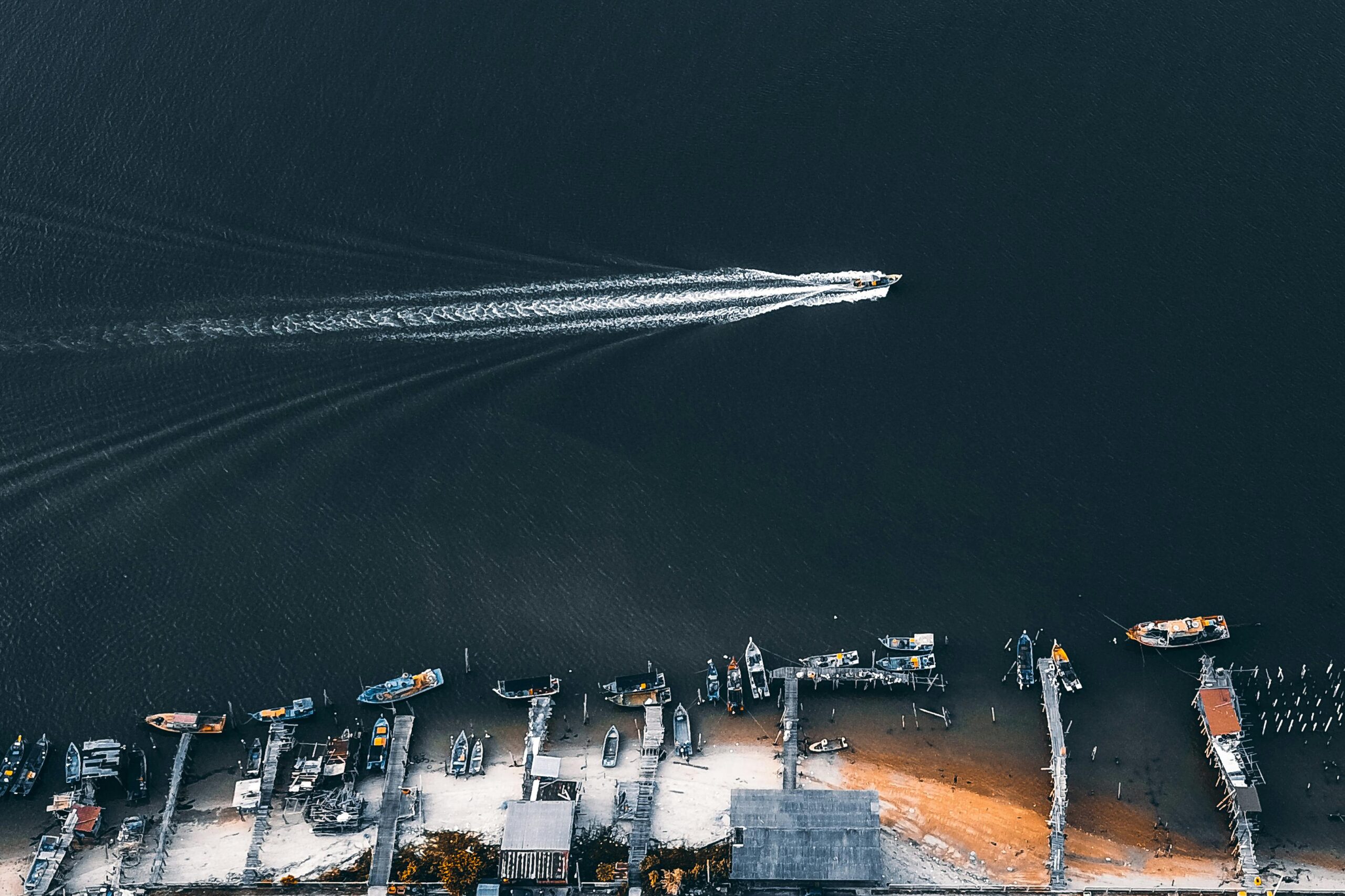
Karannagoda referred to these newly constructed small boats as “Arrow Boats” because of their resemblance to a sharp arrow, each powered by a 250-horsepower engine. The firepower mounted on these boats ranged from 14.5 mm twin-barrel guns to grenade launchers imported from China. Two specialized units within the Sri Lankan Navy—the Special Boat Squadron (SBS) and the Rapid Action Boat Squadron (RABS)—were established to operationalize the small-boat concept and mastered swarm tactics to outmaneuver the LTTE’s naval units. Throughout the Sri Lankan Navy’s engagements with the LTTE, the Sea Tigers consistently targeted Navy FACs along the coastal areas of Point Pedro and Mullaitivu in northern Sri Lanka. The primary challenge the Sri Lankan Navy faced in deploying the newly built Arrow Boats against the Sea Tigers was the absence of a harbor at Point Pedro to station these vessels. However, the boats were concealed behind sea rocks during the inter-monsoon period, and their first combat engagement in 2007 crippled the Sea Tigers.
As Admiral Karannagoda recalls later, the first active participation of arrow boats in a sea battle proved their effectiveness to the Sri Lankan navy as arrow boats could destroy two LTTE Sea Tiger fighter crafts. Later Sri Lankan Navy embraced a new concept of combining arrow boats with FACs, which led to an increase in the defensive capabilities of the navy and to protect its traditional vessels, such as battleships, in the open sea.
Some analysts argue that the Sri Lankan Navy’s approach to small boats resembled that of the British Navy, which had introduced innovative coastal motor boats during the First World War. This innovation enabled the British Navy to achieve decisive victories against the Imperial German Navy in the North Sea. Despite the conceptual similarities, the Sri Lankan Navy’s innovation proved decisive, as the maritime activities of the Sea Tigers rapidly declined. Naval engagements between the LTTE and the Sri Lankan Navy along Sri Lanka’s northeastern coast reached their peak in 2006, prior to the adoption of the small boat concept. However, following structural reforms within the Navy, small boats known as “arrow boats” were introduced, marking a significant tactical advancement. Their superior speed and firepower greatly enhanced the Navy’s ability to suppress Sea Tiger activities, reducing the number of direct confrontations between the two forces to only eleven in 2007. Within a year, the number of confrontations declined further, reaching its lowest point in 2008. By March 2009, the Sri Lankan Navy had achieved complete control over the island’s coastal waters.
The small-boat concept did not fade following the end of Sri Lanka’s civil war in 2009; rather, its tactical value was recognized within the domestic defense industry.
According to retired U.S. Marine Corps Lieutenant General Edward Hanlon, future conflicts are expected to occur in littoral zones, where the sea meets the land. Conventional naval warfare has largely receded into history since the conclusion of the Falklands War. The growing complexities of sea routes—encompassing geopolitical rivalries and challenges in maritime governance—now shape the dynamics of modern naval engagements, underscoring the need to reassess Sri Lanka’s maritime strategy. Although no direct parallel can be drawn, Ukraine’s recent innovations in confronting overwhelming Russian naval superiority serve as a salient reminder of the Sri Lankan Navy’s small-boat doctrine. Sea Baby, an unmanned surface vessel (USV) developed by the Security Service of Ukraine to counter Russian naval advances in the Black Sea, bears notable resemblance in design to the Arrow boats employed by the Sri Lankan Navy. The small-boat concept did not fade following the end of Sri Lanka’s civil war in 2009; rather, its tactical value was recognized within the domestic defense industry. For instance, in 2016, Nigeria procured nine inshore Arrow boats from Sri Lanka under a contract valued at USD 4.2 million, reaffirming the strategic and commercial value of the small-boat concept—an emblem of the Sri Lankan Navy’s indigenous innovation.