





When There Is No Off-Season

Editor’s Note: this article is being republished with the permission of the Field Artillery Professional Bulletin. The original article will be published in the forthcoming issue of the Field Artillery Professional Bulletin.

Introduction
In our recent article, “Winning in the Off-Season,” the III Armored Corps (IIIAC) Fire Support Element (FSE) highlighted the critical importance of a deliberate process for building interoperability to effectively synchronize operations and fires as a Corps in large-scale combat operations (LSCO). This process proved essential to our success in overwhelming and defeating the exceptional World Class Opposition Forces in less than four days during Warfighter Exercise (WFX) 25-4. Our tailored approach customized an unfair fight but required a significant and sustained effort.
Following WFX 25-4, the IIIAC rapidly transitioned to assuming a Higher Control (HICON) role in WFX 25-5. This subsequent exercise presented a markedly different approach to building the team – we experienced a compressed timeline and limited pre-exercise integration opportunities due to the available training days, the participation of Component 2 (COMPO 2) National Guard (NG) units, and significant Corps Staff transitions. IIIAC rapidly integrated with two NG Divisions, an NG Fires Brigade, an NG Combat Aviation Brigade, and 451st and experimented with both our organic 75th Field Artillery Brigade as a multifunctional brigade strike (MFB-S) and a multifunctional brigade corps support (MFB-CS). This experience exemplified Donald Rumsfeld’s observation that “you go to war with the army you have.”
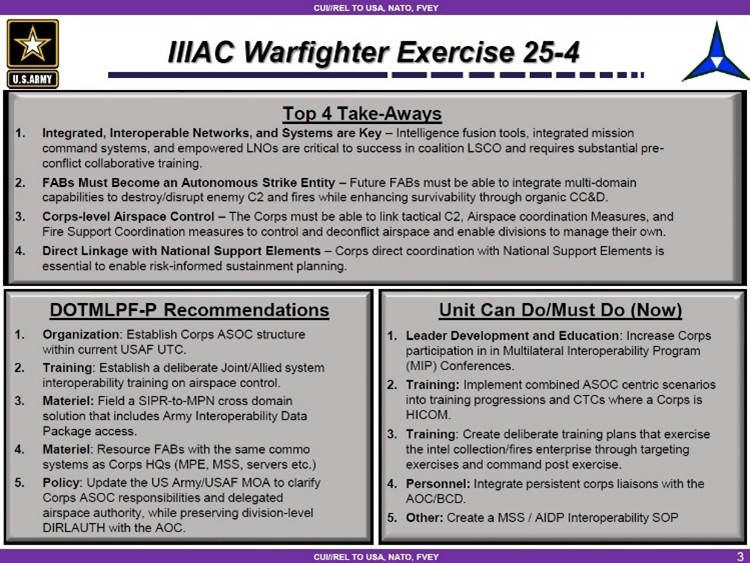
This article contrasts the deliberate, year-long integration process for WFX 25-4 with the rapid, near-immediate integration demanded by WFX 25-5. We will analyze the associated risks and identify the critical requirements for synchronizing operations and targeting in LSCO, particularly when time for preparation is severely limited. Ultimately, we aim to establish a scaled approach to integration based on the time available, recognizing that future crises may not allow for the extended preparation period experienced during WFX 25-4. (Image 1: WFX 25-4 take-aways from ALLF).
The Contrast
IIIAC Fires rapidly transitioned from the success of WFX 25-4, attempting to establish conditions with new units and personnel across Warfighting Functions (WfFs) within a compressed seven-week timeframe prior to WFX 25-5. 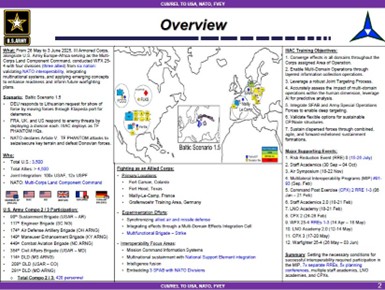
This challenge was significantly compounded by IIIAC Staff summer transitions and the difficulty synchronizing training and real-world mission requirements between Component 1 and Component 2 units.
To illustrate the complexity, integrating these disparate elements was akin to assembling an American football team comprised of an offensive line from the NFL, a defensive line from the CFL, and special teams from the XFL, then immediately competing against a Super Bowl championship team with no prior integrated practice.
A significant contrast existed between the process integration approaches for WFX 25-4 and WFX 25-5. During WFX 25-4, we conducted combined academics and symposiums with subordinate divisions, including detailed reviews of fighting products and comprehensive onboarding to IIIAC targeting, fires, and airspace clearance procedures. These preparatory events were largely absent prior to WFX 25-5 (Image 2: WFX 25-4 Overview ALLF).
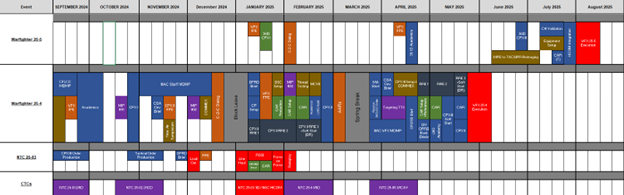
Image 4: WFX 25-4 vs WFX 25-5 progression plan
This difference impacted the degradation of shared understanding of how IIIAC conducts operations, synchronizes targeting, and leverages the battlefield framework. Consequently, substantial effort was required to remotely align subordinate elements, navigating disparate Command and Control Information Systems (C2IS) and Mission Command Information Systems (MCIS) to establish a common operational picture and synchronize the fight.
Our team prioritized systems interoperability to improve data exchange between national MCIS and enable synchronized operations and targeting during WFX 25-4. Interoperability events, including three (3) Multilateral Interoperability Program (MIP) and Artillery Support Cooperation Agreements (ASCA) events, along with two (2) command post exercises, expanded our ability to share data and achieve shared understanding. However, in preparation for WFX 25-5, we lacked opportunities for pre-execution integration events to connect systems, share data, and build proficiency through data exchange events or command post exercises.
A key difference between the two exercises was an observed gap in proficiency and a shortage of experienced system integrators. While our Maven Smart System (MSS) successfully shared graphics with the National Guard’s Command Post Environment (CPCE) and other MCIS systems exchanged data, insufficient training prior to execution significantly hindered our ability to effectively manage the battlefield framework, develop targets, coordinate airspace, and leverage mission command systems. Essentially, we achieved an optimal performance in WFX 25-4 but experienced operational degradation in WFX 25-5 due to a lack of sustained integration and training before execution.
The absence of Liaison Officers (LNOs) during WFX 25-5 represented a significant shortfall and a degradation in capability compared to WFX 25-4, with the impact increasing in severity as operations progressed. LNOs proved invaluable during WFX 25-4, particularly in operations and targeting. Their ability to facilitate communication, bridge distinctions between units and partner WfFs, and concisely convey operational significance (“so what”) was critical. The lack of LNOs directly hindered effective integration of units for both operations and targeting.
The differing approaches to pre-exercise preparation – what we refer to as the ‘off-season’ – stemmed from factors beyond our ability to influence and synchronize. Personnel transitions, the availability of COMPO 2 training days, and the timing of WFX 25-4 execution were all considered and accepted as acknowledged risks. Looking ahead, the limited ‘off-season’ experienced prior to WFX 25-5 likely reflects a recurring challenge: the accelerating pace of competition, escalating from crises to large-scale combat operations (LSCO). Our Corps must be prepared to rapidly generate combat power during Reception, Staging, and Onward Movement (RSOI) while integrating a broad coalition of allies transitioning to LSCO.
Juxtapose Impact on Operations
Multi-national formations consisting of U.S. Army COMPO 1 and COMPO 2 forces with minimal notice integrating, establishing interoperability and synchronize the fight. That is a bleak and fair reality we must prepare for. The disparity in preparing for warfighting then holds three key takeaways that must inform our actions if a little to no-notice conflict emerges.
A shared understanding of the plan, visualized through the common operating picture and warfighting products, is critical for synchronizing units and resources. However, a lack of clear communication regarding our operational approach as the IIIAC, coupled with a compartmentalized Military Decision Making Process (MDMP), was exacerbated by independently developed layers across multiple map variations within two distinct common operating pictures (MSS and CPCE). From the start of execution, we observed significant differences in each unit’s visualization and understanding of the battlefield framework. This immediately hindered operations and slowed momentum, as the areas of engagement were not clearly defined, limiting the maneuver divisions’ ability to concentrate combat power in both the close and deep areas. We could not synchronize the fight by echelon.

Beyond visualization challenges within the common operating picture, variations in tactics, techniques, and procedures (TTP) between the corps and divisions contributed to operational delays and created inconsistencies in effects. Specifically, our approach to corps deep shaping operations – including the employment of fires and the Combat Aviation Brigade – was not fully understood as a practiced methodology. The intent behind our use of non-lethal effects, named events, and task organization designed to support those events was also not broadly disseminated. Furthermore, our automated counterfire and red track HeatMaps were not widely known or utilized by subordinate units. Consequently, the TTP of prioritizing Processing Exploitation and Dissemination (PED) to real-time indicators and developing dynamic targets was lost, due to a lack of practical experience gained from command post exercises and insufficient integration of these concepts into Division and Brigade staffs.
The most significant factor impacting operational success was the limited number of preparatory training repetitions. We conducted only one distributed digital rehearsal prior to WFX 25-5, which, while valuable, did not provide the same level of integration and synchronization achieved through command post exercises (CPXs) and experiential learning. As stated in ADP 5-0, The Operations Process, “Rehearsals are most effective when they focus on critical tasks and procedures, decision points, and transitions. Commanders use rehearsals to synchronize the actions of subordinate units and to identify and mitigate potential problems. Rehearsals build confidence in the plan and in each other.”
This significant gap in training repetitions resulted in a demonstrable difference in experiential knowledge between COMPO 1 and COMPO 2 units, based on available training days and requirements. Systems operators and WfF subject matter experts – regardless of age, rank, or experience – exhibited varying levels of proficiency in systems integration and the processes required to synchronize operations and engage the enemy as a corps. This disparity was not attributable to individual competency, but rather to a lack of collective training opportunities and mastery.
Recommendations: Scalable and Tailorable Approach
The current complex global competitive environment demands adaptability. We often face a choice between a deliberate, iterative approach – which can be time-consuming – or a rapid, ‘expedite’ response. Given our success with WFX 25-4 and challenges faced in WFX 25-5, we must now identify and tailor specific elements of our extended plan for implementation within a shortened, limited-notice timeframe. Failure to influence shared understanding will produce similar disconnects experienced throughout WFX 25-5. To ensure the corps and all subordinate formations can synchronize maneuver and targeting operations for decisive victory, we need to define our essential requirements.
Applying the Human, Process, and Systems framework – mirroring our approach to interoperability with partners for integration with any U.S. unit at no notice – we must develop a tactical standard operating procedure (TACSOP) supplement to standardize integration procedures. We must seek routine integration training exercises, and the consistent assignment of Liaison Officers (LNOs) are essential to enable synchronized operations following immediate, rapid integration.
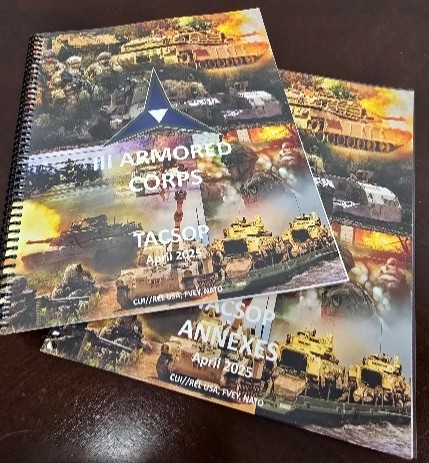
The tailored package must be easily disseminated possessing the depth to increase understating and implementation, but not overwhelming to formations generating combat power, organizing for combat, and preparing to project to TAAs. These elements would be a short-term solution and must be directly drawn from existing products and standards. The following are the essential items to rapidly integrate for combat.
The current TACSOP, comprising two volumes exceeding 120 pages each, requires significant distillation to focus on essential requirements. It currently contains numerous charts, slides, and template examples, but lacks clear guidance on minimum standards of data required. To address this, the TACSOP should be supplemented with a Rapid Integration Pamphlet (RIP-IT). The following elements, drawn directly from the existing TACSOP would require minimal updates to convey the “how” and “why” while identifying the minimum data requirements to 60 pages only; 75% reduction from base TACSOP:
- Battle Drills
- Reports, including a newly developed CUA Update Report suitable for both digital and voice communication.
- Enemy Event Template
- Logistics Statistics Report, or LOGSTAT
- Communications Statistics Report, or COMSTAT
- 7-Minute Drills, specifically: Aviation Go/NoGo, BUA, CUA, C2CD, COP Sync, OPSYNCH, Collection Management, Intel G2 Sync, TWG, TDB, AMD WG, Engineer WG, Protection WG, Sustainment Sync, and all Sustainment Working Groups.
Furthermore, the RIP-IT must include the Corps Fighting Product Standards as a quick reference guide. This should incorporate text boxes and embedded references/notes for the following products: Commander’s Visualization, OPSCHED, 24-hour OPSCHED, 120-hour SYNCMAT, and Tactical Assessment. This pamphlet, distributed digitally, stored in knowledge management systems, and printed on water-resistant paper, will serve as the foundation for establishing shared understanding of corps fighting methods and standards.
Targeting Network Systems – A network and systems integration chart think MCIS ECO-System serves as a guide to quickly establish and track system interoperability.
Knowledge Management and Data – producing a quick-reference guide, formatted as a two-sided aid. One side will detail a step-by-step process for accessing Knowledge Management resources—including the portal, Request for Information (RFI) submission process, OPORDs (daily and flash updates), and personnel directory. The reverse side will provide a “Bottom Line Up Front” (BLUF) guide to accessing, logging into, and navigating our key MCIS and applications: MSS GAIA Map, J-Chat, VJOC, and HeatMaps.
Protection– Phantom Protection operationalizes protection concepts to preserve combat power, deny enemy intent, and expand the Commander’s decision space. It frames protection elements as mechanisms—like defeat or stability mechanisms—and organizes them logically for the battle staff to protect fires, maneuver, command and control, and sustainment. It also leverages these same functions to enhance protection.
Friendly Forces Information Requirements (FFIR) – are a critical intelligence priority, enabling a common operational picture and reducing the risk of fratricide. These requirements including location, capabilities, and intent must be proactively developed, continuously refined, and widely disseminated. FFIR enhances shared understanding, influences mission success and mitigate risk while protecting friendly forces.
Battle Rhythm – Synchronizing the battle rhythm from corps to division’s involves aligning planning cycles and information flow to enhance situational awareness, optimize resource allocation, and improve decision-making at both echelons. Proactive coordination mitigates risks like misunderstandings and conflicting priorities; given operational conditions the BR must be purpose built for the specific operation given TASKORG variation. It must ultimately foster unity of effort and enable a faster, more effective operational tempo.
Human Commodities – The Commander’s concept of operations and scheme of maneuver are informed by accurate accountability, meticulous reinforcement, and informed projections of personnel combat power. The JPERSTAT and PRR inform the Human Commodity Working Group (HCWG), Casualty Estimation and Assessment Working group (CEAWG), daily battle updates, movement planning, and force flow sequencing IOT enhance operational endurance and facilitate Commander decision-making.
Surgeon Cell – Critical reporting requirements include the daily Army Health System Synchronization and Patient Evacuation Coordination Cell (PECC) procedures, accessible on MSS. Units can facilitate actions within the PECC through Liaison Officers (LNOs). The Medical Status Report, Purple 1, and Patient Movement Request from the TACSOP are best suited for the RIP-IT.
Effective training integration and interoperability are critical to future combat success. We must operationalize this by building capacity through progressive training – from Tabletop Exercises to Staff Integration Events – that specifically incorporates National Guard elements, such as Cyber Warfare Companies, Field Artillery Brigades, Combat Aviation Brigades and Maneuver Enhancement Brigade, to enhance joint operational capabilities. We must increase the number of and frequency of opportunities to integrate and train with our National Guard partners.
Effective communication and coordination require Liaison Officers (LNOs) to be embedded within higher echelons to foster shared understanding. Units should prioritize sending LNOs with expertise in critical Warfighting Functions, such as Fires and Airspace Management, to ensure unified effort and maximize combat readiness. A valuable LNO proactively advocates for their unit’s needs and facilitates action between echelons, providing a significant return on investment.
Conclusion
The III Armored Corps’ experiences in Warfighter Exercises 25-4 and 25-5 demonstrate that while deliberate, long-term integration sets conditions for a favorable unfair fight purposely increasing interoperability and the overall probability of success. Yet, rapid integration with diverse units – including National Guard components – is the most challenging course of action we must deliberately prepare for now given the known risk to mission and risk to force. It is the most likely of two approaches we will experience in future conflict. Developing a scalable rapid integration approach mirroring the interoperability framework of human, process, and systems will account for preparation timelines that may demand immediate synchronization of corps maneuver and targeting operations across a breadth of unit experience and capacity.


