





Taiwan, want to stop the gray-zone? Put your money where your mouth is.
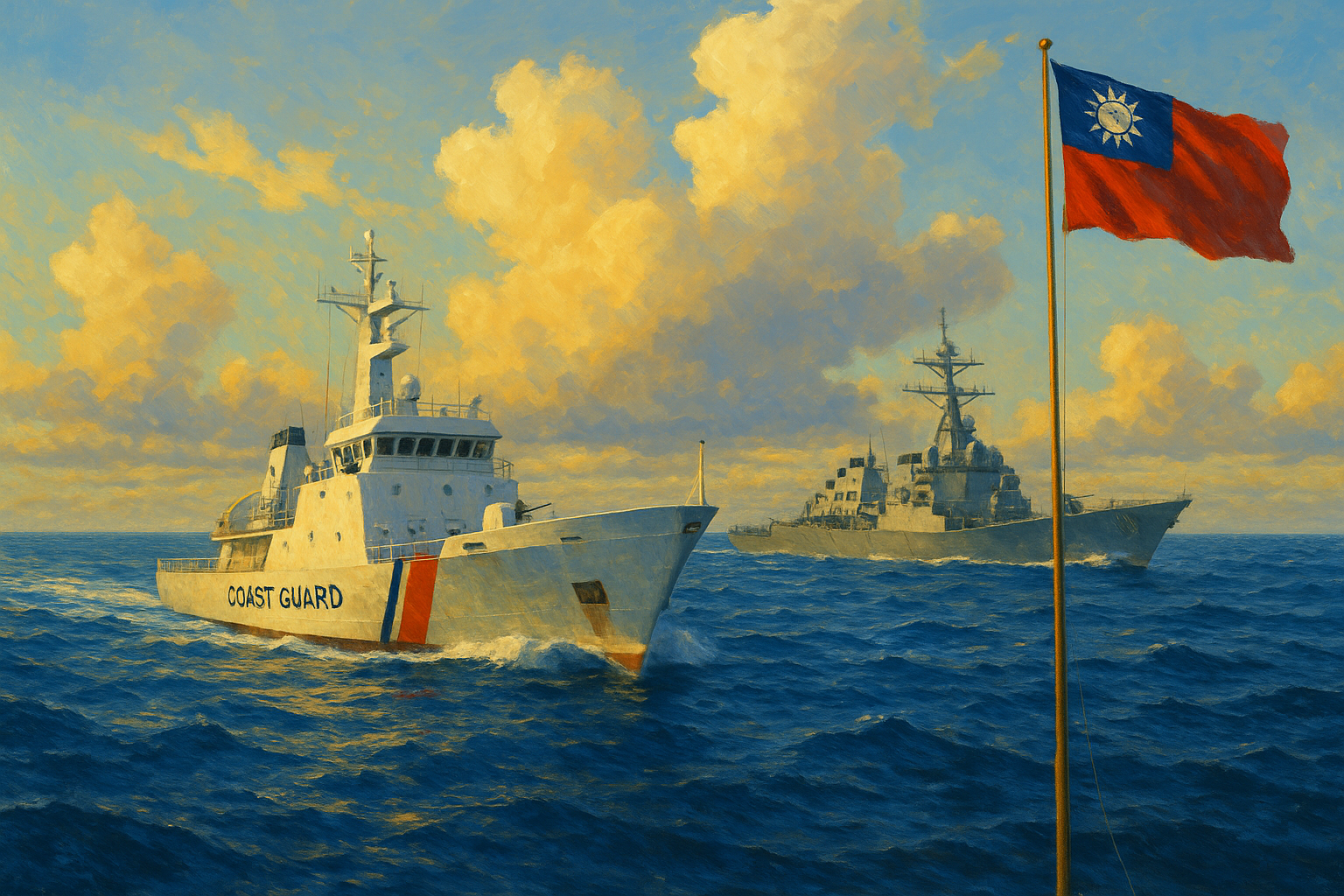

When a Togo-flagged freighter with a Chinese crew severed Taiwan’s TP3 undersea cable this year, Taipei did something unusual: it built a case, prosecuted the captain, and won a prison sentence. Gray-zone activity is supposed to be deniable; a judge’s verdict is not. That ruling should be read as more than a local story about a damaged line: it’s a proof of concept that the right mix of policing, monitoring, and law can raise the costs of below-the-threshold coercion. If Taipei wants less gray-zone harassment, it can’t just call for vigilance — it must pay for it, systematically and for the long haul.
Gray-zone campaigns thrive in ambiguity: actions that are “not quite war” but erosive over time — coast-guard pushes, maritime-militia swarms, “fishing” sorties, sand dredging, cable strikes, and propaganda that muddies facts faster than governments can clarify them. For the PRC, the formula has been clear for years: coordinated pressure by coast guards and “civilian” vessels, layered with disinformation and legal salami-slicing, designed to exhaust and outmaneuver defenders without triggering a treaty response. The near-term effect is friction; the long-term effect is desensitization. Unchallenged encounters raise the informal response threshold inside agencies and cabinets, makes media coverage feel like “old news,” and conditions local communities to treat incursions as background noise. Over time, that drip-drip creates a narrative of normalcy. Maps get redrawn in practice, if not on paper, and it becomes politically harder for Taipei to call out a violation or mobilize partners without sounding alarmist.
That is the point of the strategy: to shift the burden of proof onto Taiwan, sap bandwidth, and narrow the space for timely action. If every incident is “ambiguous,” then every response must clear a higher evidentiary bar, pass more reviews, and compete with other priorities in a finite budget. Meanwhile, administrative precedents stack up: “routine patrols,” “safety inspections,” “fisheries management” that look bureaucratic but function as creeping jurisdiction that China uses to push their agenda. The remedy, therefore, isn’t just more destroyers; it’s more prosecutors, patrol hulls, sensors, and joint law-enforcement mechanisms, to document patterns, attribute intent, impose consequences, and keep the narrative honest.
Start with what the data says about the recent hyped-up gray-zone target: cables. Yes, sabotage gets headlines. But the baseline is noisy: globally, about 150–200 subsea cable faults happen every year, and most are accidental, usually fishing gear or anchors. That noise is exactly why persistent surveillance and attribution tools are needed that can distinguish negligence from intent, and deniability from a pattern. Funding regular patrols, up-to-date detection technology, and identifying China-linked vessels that suspiciously loiter around, is what “putting your money where your mouth is” looks like. It’s not flashy, but it’s how you move from suspicion to evidence — and from press releases to convictions. Meeting each incident head on with a definitive response is essential to raising the cost of meddling with Taiwan, and ultimately, taking the opportunity to do so away from Beijing.
This is why budgets matter. Gray-zone contests, particularly in East and South China Seas, are fought by chronically underfunded agencies: coast guards, harbor masters, communications regulators, and maritime domain awareness networks. Taiwan’s Ocean Affairs Council is now asking for funds (973 Million USD) to build additional patrol vessels and upgrade maritime surveillance, a recognition that the front line in the Strait doesn’t always wear gray hull numbers. The Coast Guard’s ask is a fraction of the total cost of proposed purchases of American fighter jets and missiles. Taipei must also invest in drones, smart coastal monitoring, and EO/IR night systems. These efforts are not just symbolic; they’re the difference between proactive action and reactive struggles to regain control of the narrative.
The other lever is partnership. In 2021, Washington and Taipei created a Coast Guard Working Group that lets the two sides share information, coordinate training, and quietly cooperate on law-enforcement at sea. That’s the right instrument for a campaign that favors white hulls and paperwork over gun barrels. Formal defense ties grab headlines: coast-guard MOUs and practical partnerships provide the capabilities to solve problems.
Beyond kinetic approaches, raising the economic cost of coercion is paramount. A lot of gray-zone maritime pressure isn’t PLA-Navy; it’s a “shadow fleet” of China-linked or China-controlled vessels using flags of convenience, spoofed AIS data, and problematic insurers to skate past scrutiny. When partnered with insurers and classification societies, blacklisting and targeted port-state controls create a tight enforcement net that is more effective than what a single patrol vessel could provide. Taiwan has already begun naming and tracking suspect hulls; partners should harmonize lists and consequences. Make deceptive practices uninsurable and uninspected, and the economics start to bite. Taken together, these measures change the calculus from a low-cost nuisance to an untenable commercial liability. Further, raising the costs on civilian captains through prosecution will help deter others.
Some will insist that real deterrence lies in bigger sticks, forgoing gray-zone deterrence and focusing on preventing a conventional invasion, by purchasing fighter jets and large ships. The issue with this is that by Taipei’s own admission, the purchase of traditional deterrence weapons isn’t for traditional deterrence, but rather to ‘show the flag’ in the gray zone. Traditional deterrence shouldn’t be neglected, but could Taiwan ever purchase the ‘right number’ of F-35s to deter Xi from invading? Meanwhile, the Coast Guard actively asks for a fraction of the cost, promising fast-acting and lasting results. Further, the costs of building and upgrading the mandatory compliant hangars and facilities for the F-35, plus hiring and training the necessary personnel aren’t factored into the costs. Even in a year when U.S. carriers seldom left the Western Pacific uncovered as crises competed for attention elsewhere, the daily grind in the Strait didn’t pause. That’s the lesson: While building submarines and fighter jets makes you look stronger on military power indexes, having a coast guard that can deter adversaries in real time is what actually makes a difference. Another argument says that publicizing gray-zone incidents only rewards the perpetrators with attention or risks unnecessary panic. The better answer isn’t silence, but selective, disciplined transparency. Not every gray-zone action deserves a press conference, and ‘flooding the zone’ risks desensitizing the public and blurring the signal. The incidents that matter, such as maritime incidents near Kinmen, dangerous harassment of fishermen, cable-lane anchor drops, are the ones where visibility and evidence impose reputational and legal costs.
That means disaggregating and communicating with discipline: publish patrol footage when it shows unsafe or unlawful behavior, release AIS patterns that prove tampering or harassment, and pre-brief allies and industry before going public so they can amplify the message. This isn’t the glamorous part of deterrence, but it’s how you inoculate society against manipulation while making sure the provocations that should cost the adversary actually do.
The Philippines offers a cautionary and useful example. In the South China Sea, Manila’s “below-the-threshold” deterrence through documenting incidents, coordinating with partners, and imposing reputational and legal costs, has made Chinese tactics more visible, but it hasn’t solved the dispute. It has narrowed Beijing’s room to maneuver without blowback. That is what success looks like in the gray zone: not victory parades, but fewer surprises and firmer ground underfoot.
So, what does “put your money where your mouth is” look like in practice?
It looks like funding a persistent presence. More white-hulled patrol craft, crew billets, fuel, and maintenance cost pennies on the dollar when compared to fighter jets and frigates. In a world where information is credibility, and credibility is everything, Taipei needs to invest in attribution, not just awareness. Invest in fusing radar, AIS, EO/IR, satellite, and cable-route sensors into a common picture with evidentiary chain-of-custody. The goal is a prosecutor-ready file, not just a red contact on a screen. That’s how you win cases like the TP3 one and make the next captain think twice.
Deterrence is about raising the cost of non-compliance above the adversary’s pain threshold. Continue tightening domestic statutes on cable and seabed interference; emphasize seizure authorities, stiff fines, and liability that follows beneficial ownership across flags. Then export those tools through MOUs so partners can mirror them, and push for UNCLOS-consistent updates that close boarding and jurisdiction gaps over cable interference in EEZs. Credibly raising the costs of sabotage for ship captains and their crew will make future “accidents” far less attractive. If masters know that dragging an anchor across a cable could cost them their ship, their license, and months in a foreign jail, they will think twice before taking the risk — whether on orders or on their own initiative.
Investing in the Coast Guard gives it the ability to mesh with industry. Cable operators, fishing fleets, and platform owners form essential early-warning networks. Build standing channels for rapid alerts and rehearse joint responses. Industry sits on critical telemetry and repair assets; governments sit on authority. Combine them and you compress timelines from hours to minutes. With time, this creates a cadence of “normal” faults to be used to calibrate a response to avoid exhausting crews chasing noise.
When Taipei is silent, China gets a free ride to shape the narrative. To stop carrying water for China’s media arm, pre-publish incident playbooks. Publish routine, boring updates as a matter of habit, not just during flare-ups. And when you do call out a violation, publish the imagery, tracks, and timestamps, so the denials ring hollow. That won’t stop every lie, but it will shorten their half-life.
None of this reads like a blockbuster budget speech. But that’s exactly why it works. Gray-zone coercion feeds on our tendency to underinvest in the mundane. Constant patrols, better sensors and cable protection technology, a blacklisting notice that sticks, joint coast guard and navy drills that improve tactics, and fighting the false narratives head on are the things that grind a deniable strategy down into mere nuisance.
It is cheaper than rebuilding a deterrent you let atrophy, and far cheaper than a war invited by complacency.
The verdict in the TP3 case didn’t just punish one captain; it telegraphed something more important: this is not a void. There are rules here. There are consequences. If we want fewer gray-zone tests tomorrow, we have to resource the institutions that enforce those rules today… and every day after that.
Put simply: if Taipei is serious about stopping the gray zone, it’s time to fund the people and tools that live in it.


