A Lost Friend Down Under
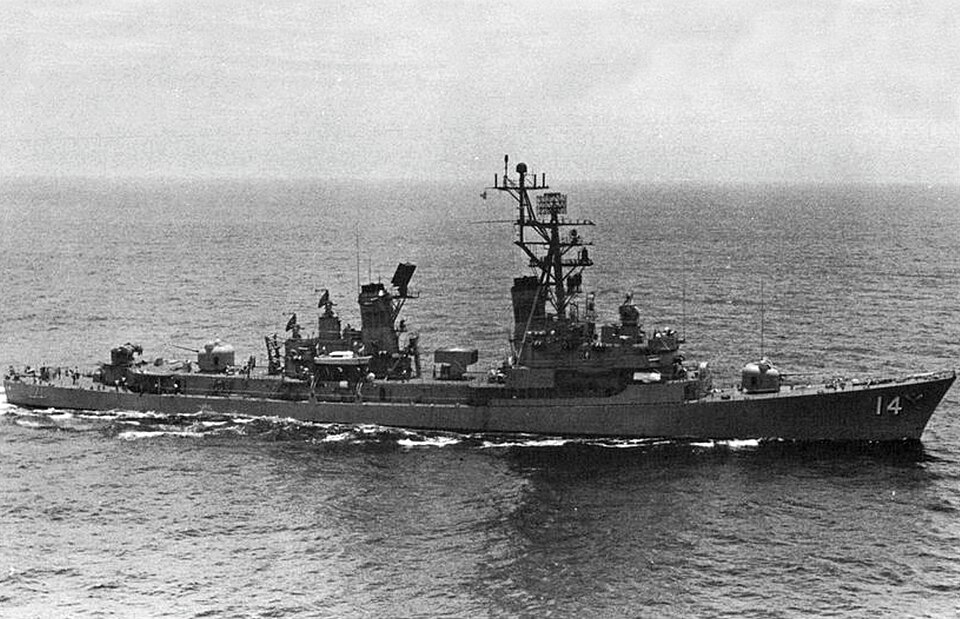

The nuclear conundrum in the South Pacific had estranged the relations between New Zealand and the United States, which were otherwise sailing smoothly since World War II.
World War II made it a desideratum for the Pacific to depend on the United States to check Japanese advances. After the failure of the Singapore strategy and the fall of Singapore, the United States helmed the stewardship of the defense of the Pacific.
The victories in the Battles of Coral Sea and Midway against Japan solidified the role of the United States in the Pacific. Furthermore, the coordinated efforts of the Labor duumvirate in Australia and New Zealand, John Curtin and Peter Fraser, made the Allies march to victory.
The Communist Threat and the Spirit of ANZUS
The successful communist revolution in China and the expansion of Soviet influence in Europe contributed to the rise of nationalist parties. Like Robert Menzies in Australia, Sidney Holland’s victory over the Labor Party was aided by anti-communist rhetoric.
After World War II, in a first, Australia and New Zealand committed troops in the Korean War (1950-53) to check the Communist invasion of South Korea. Subsequently, Australia and New Zealand joined the ANZUS and SEATO to commit to the Anti-Communist alliance. These developments made the Cold War trajectory of these two countries palpable.
Australia and New Zealand shouldered the United States even in the testing times of the Vietnam War. The Western Allies had offered little support or criticized the US endeavor in Vietnam. However, the two friends down under committed themselves to the war.
Nuclear Politics and the Chasm
Until the Premiership of Robert Muldoon, the US Nuclear Warships were welcomed in New Zealand. The visit of USS Texas to New Zealand drew criticism by anti-nuclear proponents.
Thereafter, David Lange succeeded Muldoon as the Prime Minister of New Zealand. The Labor Party took lead in implementing and legislating the Nuclear Free Policy. In an Oxford Union debate, Lange detested nuclear weapons. He also denied entry to USS Buchanan to the ports of New Zealand, which exacerbated the tensions.
Furthermore, New Zealand passed the landmark nuclear legislation in 1987—officially titled the New Zealand Nuclear Free Zone, Disarmament, and Arms Control Act 1987—which declared itself a nuclear-free zone. This was a continuum of the Spirit of Rarotonga Treaty, which vowed to make the South Pacific a nuclear-free zone.
Reacting to the non-nuclear policy, the United States suspended its obligations under ANZUS to defend New Zealand.
These developments deteriorated the decades long cordial relations since World War II. Today, there is bipartisan support in New Zealand to maintain the Nuclear Free Policy.
Australia, on the other hand, keeps itself at ease by allowing the US ships. The United States adopts a policy of “Neither confirm, nor deny” that either the ships entering Australia are Nuclear Powered or Armed or not at all.
Thaw and Non-Nuclear Cooperation
During the Premiership of John Key, relations between the two countries started to thaw. Both the United States and New Zealand eschewed the issue of nuclear ships from negotiations and agreed on cooperation in nuclear non-proliferation and non-nuclear areas.
The Wellington and Washington declarations paved the way for USS Sampson, a non-nuclear ship, to visit New Zealand. After 33 years, a US Naval Ship visited New Zealand.
New Zealand is also contemplating on joining the Pillar II of AUKUS — which includes cooperation in areas such as Artificial Intelligence, Quantum technology, Undersea Capabilities, Hypersonic, and Counter Hypersonic capabilities.
This arrangement may serve as a harbinger of de novo relations between the two countries.
Conclusion
Notwithstanding the fact that New Zealand has come out as a champion of the Nuclear Free South Pacific, it has done lasting damage to its relations with its most important non-South Pacific partner — the United States of America.
New Zealand, in its crusade against nuclear power, failed to calculate the strategic loss that had betided.
With pragmatism and deft diplomacy, ANZUS could have been saved. There was a need to cleft Nuclear Powered and Nuclear Armed Submarines — the former could have been allowed, and on the latter pliability must have been shown by both the parties.
Both sides escalated the issue to a point of no return. In 1986, the United States suspended its security obligations towards New Zealand. Only recent years have shown thaw on non-nuclear issues — a policy that should have continued despite the nuclear conundrum.
Although the United States has started to rely on other regional arrangements like AUKUS and QUAD to contain China, it has lost a friend down under — a key strategic ally.