From Drug Trafficking to Faria Lima: The PCC’s Metamorphosis into a Corporate Conglomerate and the Threat to the Economy
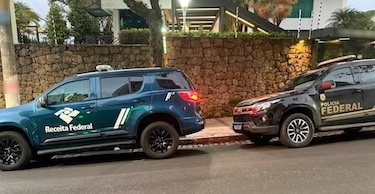

The Brazilian Operação “Carbono Oculto” or “Hidden Carbon” operation, launched on 28 August 2025, transcended the scope of a traditional police action against organized crime. With the mobilization of 1,400 agents and targets ranging from gas stations in the periphery to the air-conditioned offices of Avenida Faria Lima (Faria Lima Avenue), the country’s financial center in Sǎo Paulo, the operation exposed a systemic and profoundly alarming truth: the First Command of the Capital (Primeiro Comando da Capital – PCC) has completed its metamorphosis from a drug trafficking organization into a sophisticated and multifaceted criminal-business conglomerate. The investigation, which unveiled a US$ 9.6 billion scheme in the fuel sector, serves as the definitive case study of an evolution that threatens not only public security but the very integrity of the markets and the stability of Brazil’s financial system.[1] More than a domestic problem, “Carbono Culto” is a red alert for the international community, especially for Europe, where the PCC, notably in Portugal, has already established operational bases and is beginning to replicate its manual of economic infiltration.[2]
The Strategic Paradigm Shift: From “Follow the Money” to “Follow the Products”
To decipher the complexity of the “Hidden Carbon” operation, it is first necessary to understand the paradigm shift in the economic logic of organized crime, a phenomenon brilliantly diagnosed by the study “Follow the Products,” published by the Brazilian Forum of Public Security (Fórum Brasileiro de Segurança Pública –FBSP). The research posits that the classic law enforcement strategy of “following the money,” while still relevant, has become insufficient to contain contemporary threats. The new strategic imperative, argues the FBSP, is to “follow the products,” recognizing that the supply chains of licit goods, such as fuels, beverages, gold, and tobacco, have become the main engine of profit and the most effective money laundering mechanism for factions like the PCC.[3]
The logic behind this migration is based on a purely economic risk-reward calculation. The FBSP study estimates that the illicit revenue generated by infiltration into just four legal markets reaches the monumental figure of US $27 billion annually. This amount eclipses the estimated profit from transnational cocaine trafficking, which orbits around US $2.8 billion per year. The fuel sector, in isolation, emerges as the most lucrative, with a “conservatively” estimated illicit revenue of US $11.3 billion annually.[4] These numbers not only justify but make the PCC’s incursion into the formal economy inevitable. For this criminal organization, this is not a mere portfolio diversification but a fundamental evolution of its business model into a field with greater profit potential, more stable revenue streams, and, paradoxically, a lower perception of risk. Crimes such as tax fraud, product adulteration, and cartel formation, although serious, demand a more complex investigative apparatus and often result in penalties distinct from those associated with drug trafficking.
Anatomy of a Corporate-Criminal Empire: The “Hidden Carbon Operation”
The “Hidden Carbon” operation is the empirical materialization of the “Follow the Products” thesis. The investigation, the result of unprecedented inter-institutional cooperation, unveiled how the PCC applied a vertical integration strategy to methodically dominate the entire fuel value chain, from the importation of raw materials to the final sale to the consumer at the pump. The modus operandi mirrors that of a monopolistic conglomerate, but with the “competitive advantages” of violence, intimidation, and total disregard for the legal framework.[5]
The scheme began with the fraudulent importation of raw materials, such as methanol, naphtha, and diesel, using a network of front companies to hide the true beneficiaries. From there, the faction exercised control over production and adulteration, owning or financing strategic assets, such as four alcohol-producing plants. The logistical stage was secured by its own fleet of 1,600 transport trucks, ensuring the widespread distribution of the adulterated product. The final link in the chain was a vast network of more than 1,000 gas stations, spread across ten Brazilian states.
These retail stations served a dual strategic purpose: first, to generate direct profit from the sale of adulterated fuel, harming the consumer and creating unfair competition that drove legitimate operators out of the market; second, to function as a gigantic “laundromat” for the money originating from all of the group’s illicit activities, including drug trafficking. Between 2020 and 2024, this network handled the impressive sum of US $10 billion, resulting in an estimated tax evasion of between US $1.4 billion and US $1.6 billion. The sophistication of the scheme was such that it included the use of “ghost” gas stations which, although not operational, received US $0.4 billion in simulated invoices, likely to justify large-scale capital transfers to the distributors controlled by the organization.[6]
The Financial Engine: Fintechs, Investment Funds, and the Faria Lima Connection
The mechanism that allowed the movement of such astronomical figures was the financial system, exploited in its most recent and sophisticated vulnerabilities. The investigation exposed that the PCC used fintechs as “parallel” or “clandestine banks,” taking advantage of a regulatory environment that has historically been less stringent compared to traditional banks. A single payment institution, functioning as a private clearing house for the crime, handled US $8.5 billion. To circumvent supervision, the fintech used “pocket accounts”, accounts opened in the institution’s own name at a commercial bank, which did not identify the end clients, and received more than 10,900 cash deposits, a practice flagrantly incompatible with the nature of a digital payments company.[7]
The laundered money was not simply concealed; it was actively reinvested and legitimized in the heart of Brazilian capitalism, Faria Lima Avenue. The operation identified 42 targets in São Paulo’s financial center, revealing that the PCC controlled a network of at least 40 investment funds with a combined equity of US $5.5 billion. These funds, often structured in a cascade model (“fund of funds”) for maximum opacity, were the vehicle for acquiring the conglomerate’s physical assets: plants, a port terminal, the truck fleet, and more than 100 luxury properties. The investigation reached major names in the financial market, including Reag Investimentos (listed on the B3 stock exchange), Banco Genial, Trustee, and BK Bank, signaling the depth of the scheme’s penetration into the conventional system.
In a direct and immediate response, the Minister of Finance, Fernando Haddad, announced that fintechs would now have the same rigorous information reporting obligations as banks, being compulsorily included in the Federal Revenue’s “e-Financeira” system.[8] The measure, although essential, is a reactive action to a systemic vulnerability that organized crime had already exploited on an industrial scale.
The State’s Counteroffensive and the Challenge of White-Collar Facilitators
The “Hidden Carbon” operation is acclaimed as a milestone in inter-institutional cooperation, a task force that united the expertise of the Federal Revenue (Receita Federal), the Federal and State Public Prosecutor’s Offices (Ministério Público Uniǎo or Ministéro Públio Estadual), the Federal Police (Polícia Federal), state police forces, and regulatory agencies such as the ANP (Agência Nacional do Petróleo, Gás Natural e Biocombustíveis or National Agency of Petroleum, Natural Gas and Biofuels). This integrated approach, which combines fiscal intelligence, criminal investigation, and legal prosecution, is the only viable model to confront an adversary that operates simultaneously in the fields of tax fraud, common crime, and high finance.
However, the true strategic challenge begins now. The long-term success of the state’s counteroffensive will not be measured merely by the dismantling of the operational network, but by its ability to hold the “class of facilitators” accountable, the white-collar fund managers, lawyers, and accountants who provided the technical expertise and apparent legitimacy for the scheme to function. The investigations point to the conscious complicity of fund administrators who actively collaborated to hide the true beneficiaries of the resources. The criminal prosecution of these actors, supported by the Money Laundering Act and the rigorous due diligence standards of the Securities and Exchange Commission of Brazil (Comissão de Valores Mobiliários – CVM), is the next and most complex step. Convicting the Faria Lima operators who enabled the US$10 billion scheme is as important, if not more so, than arresting the faction members, as it attacks the intellectual infrastructure that allows such a conglomerate to exist.
Global Contagion: Brazil as a Laboratory and Europe as the Next Frontier
The phenomenon described is not contained within Brazilian borders. The presence of the PCC is already a confirmed reality in at least 28 countries, with Portugal serving as the main gateway and operational base in Europe.[9] Intelligence reports indicate the presence of members in the country, who are not limited to managing the logistics of cocaine trafficking through the ports of Lisbon, Sines, and Leixões.[10]
The major and urgent warning for European authorities is that the PCC is not just exporting an illicit product; it is exporting its sophisticated business model. The faction is no longer just a narcotics supplier.[11] It presents itself as a “multinational of crime,” actively seeking to infiltrate sectors of the legal European economy, such as civil construction, restaurants, real estate, and import/export companies, to launder its capital and establish a durable business facade. European authorities, by focusing excessively on the trafficking vector, risk misdiagnosing the nature of the threat, underestimating the PCC’s capacity to corrupt institutions, distort local markets, and undermine the credibility of the financial system, replicating on European soil the same devastating strategy revealed by the “Hidden Carbon” operation.
Cooperation between Brazil and Portugal, recently reinforced by new security agreements, is a vital step, but it needs to evolve. The exchange of information must transcend the strictly police sphere and deeply engage the financial intelligence units and tax authorities of the entire European Union. The adversary is no longer a simple drug cartel, but a hostile economic actor with transnational ambitions and capabilities.
https://www.gov.br/receitafederal/resolveuid/bb33dc1f00ef43fca0df7998cb928458 “Carbono Oculto” is more than the chronicle of a criminal scheme of unprecedented proportions. It is a portrait of the evolution of crime into a hybrid, corporate, and globalized form that challenges the boundaries between the licit and the illicit. The response, both in Brazil and abroad, must be equally sophisticated, integrated, and, above all, aware that the battle against modern organized crime is no longer fought only in the streets, but also in Excel spreadsheets, investment contracts, and on the floors of the stock exchange.
Endnotes
[1] Estela Marconi, “R$ 52 bilhões e mil postos de combustíveis: saiba tudo sobre a megaoperação da PF contra o PCC.” Exame. 28 August 2025, https://exame.com/brasil/r-52-bilhoes-e-mil-postos-de-combustiveis-saiba-tudo-sobre-a-megaoperacao-da-pf-contra-o-pcc/;
[2] Roberto Uchôa, “The Expansion of the PCC in Portugal: Challenges, Impacts, and Responses.” Small Wars Journal. 24 April 2025, https://smallwarsjournal.com/2025/04/24/the-expansion-of-the-pcc-in-portugal-challenges-impacts-and-responses/.
[3] Nívio Nascimento, Eduardo Pazinato, Renato Sérgio De Lima, David Marques, Isabella Matosinhos, Leonardo De Carvalho, and Thais Carvalho, “Follow the products: rastreamento de produtos e enfrentamento ao crime organizado no Brasil.” São Paulo: Fórum Brasileiro de Segurança Pública (FBSP). 2 October, https://publicacoes.forumseguranca.org.br/items/5c49e7c2-f01f-42c8-ae13-83d8fa9987c6.
[4] Deivid Souza, “Combustíveis são 2º maior negócio do crime organizado na economia.” Metrópoles. 09 February 2025, https://www.fecombustiveis.org.br/noticia/combustiveis-sao-2-maior-negocio-do-crime-organizado-na-economia/259958.
[5] Felipe Souza, “Saiba o que o PCC comprou com fintechs sediadas na Faria Lima.” CNN Brasil, 28 August 2025, https://www.cnnbrasil.com.br/nacional/brasil/saiba-o-que-o-pcc-comprou-com-fintechs-sediadas-na-faria-lima/.
[6] Gizelle Santos, “Esquema de combustíveis do PCC: como funcionavam as fraudes e o uso de bancos paralelos.” NDMais, 28 August 2025, https://ndmais.com.br/seguranca/esquema-de-combustiveis-do-pcc-como-funcionavam-as-fraudes-e-o-uso-de-bancos-paralelos/.
[7] Paulo Barros, “Operação Carbono Oculto: entenda o esquema bilionário do PCC.” Infomoney, 28 August 2025, https://www.infomoney.com.br/brasil/operacao-carbono-oculto-entenda-o-esquema-bilionario-do-pcc-no-setor-de-combustiveis/.
[8] Giordanna Neves, “Receita Federal vai enquadrar fintechs como bancos a partir de amanhã, diz Haddad.” Estadão, 28 August 2025, https://www.estadao.com.br/economia/receita-federal-enquadrar-fintech-bancos-fernando-hadadd/.
[9] Isabela Leite, “PCC é mapeado em 28 países, se infiltra em presídios no exterior para recrutar novos membros e expande tráfico de drogas e armas.” G1, 24 June 2025, https://g1.globo.com/sp/sao-paulo/noticia/2025/06/24/pcc-e-mapeado-em-28-paises-se-infiltra-em-presidios-no-exterior-para-recrutar-novo-membros-e-expande-trafico-de-drogas-e-armas.ghtml.
[10] Roberto Uchôa, “A expansão transnacional do PCC em Portugal e na Europa desafios para a segurança pública e a economia criminal.” Le Monde Diplomatique Brasil, 20 March 2025, https://diplomatique.org.br/a-expansao-transnacional-do-pcc-em-portugal-e-na-europa-desafios-para-a-seguranca-publica-e-a-economia-criminal/.
[11] “Ameaças a inspetores do Fisco e famílias: Grupo criminoso brasileiro PCC expande-se em Portugal.” APIT, 3 June 2025, https://apit.pt/2025/06/03/ameacas-a-inspetores-do-fisco-e-familias-grupo-criminoso-brasileiro-pcc-expande-se-em-portugal/.