





A Letter from Ukraine – How to stop Russian aggression: appeasement or resistance?
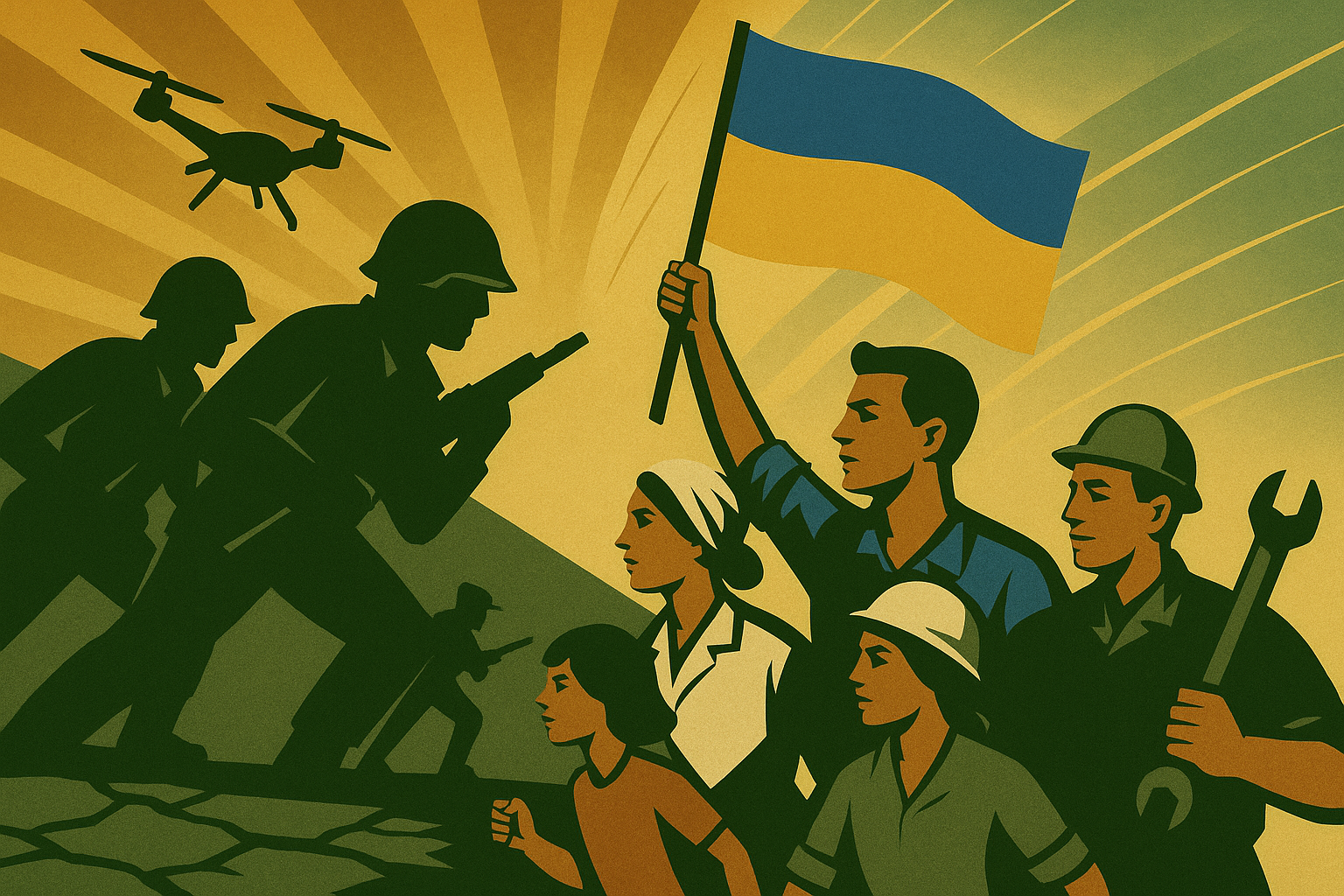

Oleksandr Sukhobrus—a native of Kyiv, licensed lawyer, psychologist, and former diplomat—writes below that to stop Russian aggression, the West must abandon appeasement and instead back Ukraine’s resistance with decisive, sustained military and economic support, because concessions only encourage further expansion and threaten Ukraine’s survival.
How to stop Russian aggression: appeasement or resistance? Ukraine has experienced both methods.
In its propaganda narratives aimed at Western audiences, Russia is trying to impose the thesis that Ukraine has chosen the path of armed confrontation with Russia and thereby made a mistake. Kremlin narratives claim that Russia has always been willing to negotiate on contentious issues, but shooting at Russian soldiers, even if they suddenly appear on your territory, is wrong, as in an armed confrontation, Russia will always prevail, and all issues with Russia can be resolved at the negotiating table. Regarding Russia’s invasion of Ukraine, one of Russia’s main points is that Ukraine should not have fought Russia but negotiated with it. This Russian narrative is pure war propaganda; however, in the fourth year of the war, many so-called experts in the West are parroting Russia’s propaganda theses and accusing Ukraine and the West of a lack of peace initiatives towards Russia. In an attempt to stop Russia’s aggression, Ukraine has tried both appeasement and armed resistance. The results of these two approaches are described below.
In modern history, Russia’s aggression against Ukraine began in 2014. Russian Spetsnaz—special operations forces and Russian paramilitaries—began seizing government buildings in Crimea. Ukraine attempted to respond to Russia’s aggressive actions through diplomacy and negotiations. Peace was considered a priority for Ukraine, and problems, as was then believed in Ukraine with the “friendly Russian people,” could be resolved at the negotiating table. The result of this pacifist sentiment in the Ukrainian establishment and society was the loss of Crimea. The annexation of Crimea became a source of particular pride for Putin and an extremely gratifying fact, propelling Putin’s approval ratings among Russians to record highs. The experience was so inspiring for Putin that he decided to continue the aggression. On April 2014, a group of Russian combatants who had previously participated in the seizure of Crimea, taking advantage of Ukraine’s virtually unguarded border – Ukraine didn’t consider it necessary to guard its border with Russia, as Russia, considered a fraternal nation before the events of 2014 that would not harm Ukraine, crossed the Russian-Ukrainian border and captured the city of Sloviansk in eastern Ukraine. The Ukrainian leadership, realizing that continuing a pacifist policy toward Russian aggression would lead to further annexation of Ukrainian territory, this time offered armed resistance to the invaders. Russia later reinforced its invasion force in Ukraine with artillery, tanks, and troops hardened by battles in the Caucasus and Syria, but was unable to advance further into Ukraine.
Volodymyr Zelenskyy, who became President of Ukraine in 2019, intensified efforts to achieve a ceasefire in the Donbas region in eastern Ukraine, where fighting took place, and achieved partial success. The intensity of fighting in Donbas decreased during this period, and there were even several lulls between the sides. Everything was moving toward freezing the conflict, with Russia effectively occupying part of Donbas. This situation suited Europe, as the European political establishment believed that Russia’s acquisition of Crimea and part of Donbas would appease Putin and satiate Russia’s imperial appetite. For Ukraine, this situation was extremely difficult to accept, yet the Ukrainian leadership tolerated it. In the eyes of the Ukrainian political establishment and Ukrainian society, such a situation was preferable to a full-scale war. The only person who wasn’t happy with the situation was Vladimir Putin.
The euphoria in Russian society over the annexation of Crimea had faded. Russian citizens were thinking less and less about the annexed Crimea and increasingly focused on the problems the government had created—the lack of change of power, corruption, arbitrary law enforcement, and the deteriorating civilian infrastructure. In 2014, the Russian flag over Sevastopol sent a powerful dopamine rush through Russian society and made Russians temporarily forget their problems. In Putin’s mind, the Russian flag over Kyiv was supposed to restore a sense of happiness to Russians. On February 22, 2022, Putin launched a large-scale invasion of Ukraine. The Ukrainian army and society as a whole resisted. As a result, after almost four years of war, Russia hasn’t even been able to capture the Donbas completely.
For Ukraine and Ukrainians, there’s another important point related to the Russian occupation: Russia’s seizure of Ukrainian territory doesn’t mean Ukrainians begin to live under Russian rule. Russia erases their identity, raising Ukrainian children to hate Ukraine and the West, and forcing adults to forget who they are. In effect, Russia is ensuring that after it arrives in Ukrainian lands, there will be no Ukrainians left. The Russian authorities treat Ukrainians in the Russian-occupied territories in the spirit of Vladimir Putin’s article, “On the Historical Unity of Russians and Ukrainians,” which he wrote on the eve of Russia’s large-scale invasion of Ukraine. According to Putin’s arguments in the article, Ukrainians are part of a larger nation—a triune people comprising Belarusians, Russians, and Ukrainians. Accordingly, since they are part of a larger nation, they should speak, think, and have a culture like members of a larger nation—Russians—and live in the same state. For Ukraine, another attempt to appease Russia by abandoning armed resistance would cost its independence and risk the eradication of the Ukrainian nation on Ukrainian territory.
Faced with Russian aggression, Ukraine has tried two approaches. The first was appeasement to the aggressor, an attempt to preserve peace at any cost, and faith in the opponent’s constructive stance. This approach led only to the immediate loss of territory, an increase in the aggressor’s appetite, and continued aggression. The second approach—armed resistance against the aggressor—showed that Russia, with its entire vaunted army and even together with the regular armed forces of North Korea, is not capable of capturing even Donbas.
Ukrainians realized in 2014 that surrendering territory without a fight and attempting appeasement would only whet Putin’s appetite. By 2025, this should be clear to everyone in the West as well.


The title is misleading and should be amended or fleshed out in the narrative. The critical issue is how Ukraine can maintain its resistance, at what cost to itself, to those who are supporting it, and what issues restrain support. The demographics argue against Ukraine sustaining more years of conflict simply because she doesn’t have enough people to use the weapons given to her or purchased by her. Unless she were to implement a major change in conscription, which is being resisted at multiple levels, Russia has a deeper pocket, despite troubles of her own which mitigate against complete success. Putin is showing no flexibility in negotiations, indicating that at the very least the fighting will continue. Although it appears on the surface that territory is the main concern, as you outline the deeper matter is ethnicity and political organization, with the attendant bias Putin wishes to see created. It appears at this stage impossible for Ukraine to recover lost territory. If that is a valid view, the only alternatives are to fight to hang on to whatever can be held and/or to find a tolerable negotiated solution. All wars end with a political settlement. It isn’t sufficient to say “fight on” without understanding the ends.
What a fascinating exploration of Ukraine’s situation! I’m curious—do you think there are historical precedents that illustrate effective resistance against aggression? Your insights really got me thinking about the complexities involved! run 3 online
Choosing “peace at all costs” or relying on the other side’s mercy in this situation is like driving a truck carrying eggs in the game Eggy Car: if you passively surrender to the bumpy slopes without actively controlling the steering wheel and pressing the gas pedal at the right time, the eggs will surely shatter. To protect national identity and sovereignty, unwavering support from the West and relentless self-defense efforts are the only way to keep the “egg” of independence from being crushed.