





Lariat Advance: Insights from the Cold War for the Twenty-First Century

Historical Context and the Catalyst for Reform
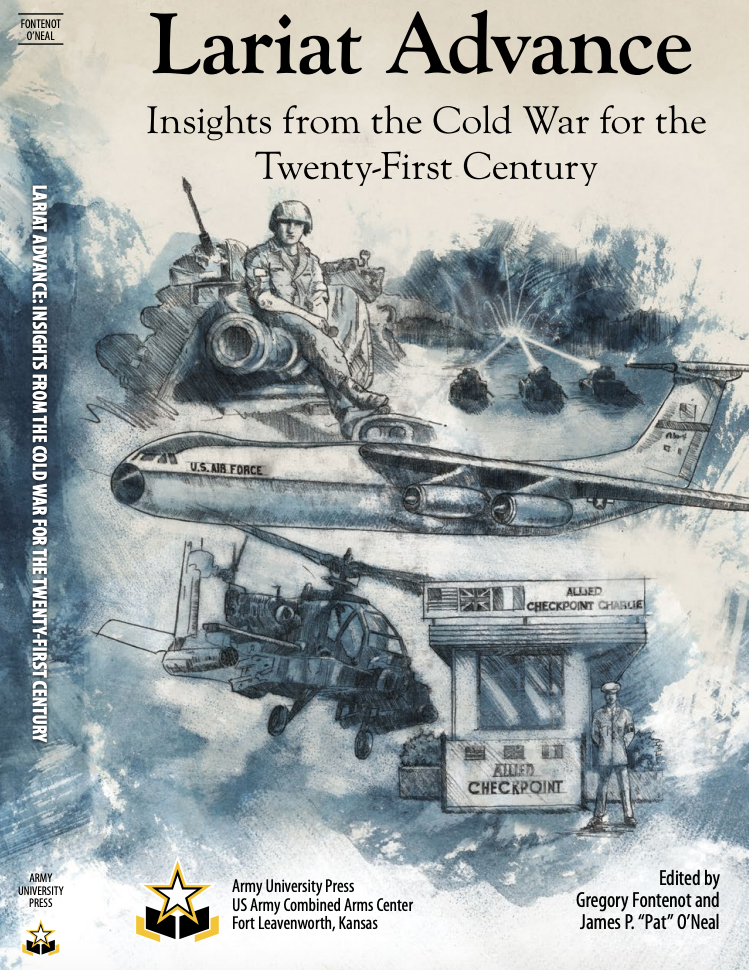
Lariat Advance: Insights from the Cold War for the Twenty-First Century examines the US Army’s professional restoration following the Vietnam War. During this period, military leaders recognized a critical need to reorganize and modernize to address the growing threat from the Soviet Union and the Warsaw Pact. The transition to an All-Volunteer Force in 1973 created a sense of urgency to build a more resilient and professional land force. This reform effort focused on healing the institutional fractures between the military and the American public while regaining the ability to fight outnumbered and win.
The Doctrine of Continuous Readiness
Central to this transformation was the implementation of the General Defense Plan and the no-notice alert system known as Lariat Advance. These exercises required units to reach combat readiness within two hours, fostering a culture described as the Army of Practice. This approach moved away from repetitive training toward a system centered on critical thinking and rapid decision-making. Continuous practice in the terrain of Central Europe built the confidence and competence necessary to execute complex maneuvers under pressure. These readiness standards were validated through large-scale exercises like the Return of Forces to Germany.
Technological and Structural Transformation
The institutional evolution of the force relied on the integration of new technologies and updated fighting concepts. The introduction of the Big Five weapons systems, which included the Abrams tank and the Apache helicopter, provided the technical edge required for the AirLand Battle doctrine. This doctrine emphasized agility, depth, initiative, and synchronization to counter the numerical superiority of adversarial echelons. The formation of the Training and Doctrine Command and the Forces Command provided the structural framework to sustain these improvements. These Cold War experiences offer valuable insights for contemporary leaders as they reshape the force for future strategic conditions.
Foreword
Welcome to this remarkably informative and inspiring anthology of the Lariat Advance period of US Army history. I am honored to be invited by its four creators and my friends—Greg Fontenot, Pat O’Neal, Mike Shaler, and the late Lon (Bert) Maggart to whom this anthology is dedicated—to write this Foreword. I am equally honored to introduce the talented and devoted authors who wrote these chapters, themselves major leaders in this Lariat Advance era and many with whom I have served.
Following this Foreword is an informative Introduction for our readers written with great clarity by my close friend Greg Fontenot, commander Task Force 2-34 Armor in 1st Brigade, 1st Infantry Division VII Corps in combat in Desert Storm, 1st Brigade 1st Armored Division in NATO’s Implementation Force in Bosnia; former School of Advanced Military Studies director; chief of my Planning Group when I was US Army Training and Doctrine Command (TRADOC) commanding general (CG); author of four books; and creator of the University of Foreign Military and Cultural Studies (Red Teaming).
This Lariat Advance period includes roughly twenty years from the end of the Vietnam War until the end of the Cold War even though US Army Europe units had done “alerts” since the early 1960s. The US Army was acutely aware it needed to regain the ability to fight and win as part of NATO against a Warsaw Pact that had modernized while our troops were fighting in Vietnam. The US Army and the nation it serves also were acutely aware that we as an army needed to heal from the physical and moral injuries and deaths and from the fractured trust between our Army and its government and citizens. Those who served and the Gold Star families of those who died in that service needed to trust that their government and fellow citizens would remember and honor that service and be there for them when they returned home for continuing care as that was needed or discovered necessary. Both would go on simultaneously.
This anthology informs and inspires us about the remarkable transformation of the US Army through the experiences and history of that era. Lariat Advance recounts how the noncommissioned officer (NCO) and officer leaders and soldiers who served in that era transformed themselves into the formidable force of deterrence that helped successfully end the Cold War for NATO and the world. Then that now-razor-sharp combat-ready force deployed from Europe and the United States to fight and win Desert Storm with the Allied Coalition to liberate Kuwait.
This anthology is about military readiness, transforming our Army to be able to fight outnumbered and win, winning the first battle of the next war and every one after that to gain strategic victory. It is about fighting right now and winning within hours of where you and your families are stationed—a come-as-you-are war. It is about a major professional land battle that transformed the US Army in all its dimensions. It is about US elected leader support for the 1973 Mideast war and the congressionally mandated All-Volunteer Army that injected a sense of urgency for our Army to become stronger, better, and more resilient than ever.
It is about adopting an ethos of fierce advocacy and intense practice of battle-focused, battle-winning, relevant training at a level of excellence and commitment that our potential enemies surely noticed, and that our Army and joint force validated twice in mounted battle, 1991 and 2003. Never has our Army been so fiercely devoted and committed to this ethos for such an extended transformative period as was our Army in Europe within the code words Lariat Advance.
Over those Lariat Advance years, we evolved into an Army of Practice. No one issued an order or regulation that we were to become an Army of Practice. Under the no-notice Lariat Advance policy, leaders would issue an alert for troops to assemble and deploy—uploaded for combat—to General Defense Plan positions in two hours. Our US Army, soldiers and leaders built themselves into that Army of Practice based on a revolutionized Army training system rather than mindless repetition. This approach focused on improving combat readiness each time to the razor-sharp battle readiness that our Army demonstrated in the Desert Storm victory.
Lariat Advance was our monthly all-weather, outdoor, go-to-war terrain classroom of practice. We learned, we demonstrated the resolve and competence to win at least cost, we each grew as soldiers, we grew confidence in each other and as a tight team, and we were better the next time, and the time after that. With practice comes critical thinking, intuition, instinct—looking at the same thing you did a year ago but seeing more. You cannot get enough of this practice growing up professionally. That kind of practice fuels and develops a quicker, reflective decision-making ability than your enemies.
The better we got to potentially execute our General Defense Plan (GDP) in Central Europe through relentless Lariat Advance practice and adjustments, the more confident we became that we could adjust and adapt anywhere to fight and win using the mission, enemy, terrain, troops, and time available (METT-T) factors.
We were reminded of that each month. All of us saw that total commitment answering the Lariat Advance alert calls to execute in two hours— from notifying unit members, loading vehicles, opening communication networks, then battle ready with ammunition already uploaded and ready to move rapidly to local or actual GDP positions. All ranks were involved, with the backbone of our Army running through our ranks in our NCOs. I recently asked my friend CSM (Retired) Bill Hutton, who served with me commanding the 11th Armored Cavalry Regiment in the Fulda Gap as our Troop A first sergeant, about the value of Lariat Advance. He told me: “Bottom line, confidence at every level—building the team into an even more deadly force. Every participant had a major role. It also required us to improvise on occasion, which in my view was a key ability our Army has always had. In the absence of a leader, some trooper took charge. Again, strengthening the team.”
The best surprises we get to see as leaders are bursts of initiative from soldiers of any rank who advance unit missions forward. To discover those, our units train in practice that resembles combat—as our Army chose to do during this period through Lariat Advance; GDP terrain walks initiated by General Donn Starry; intense maneuver and gunnery exercises at Hohenfels, Grafenwöhr, and local training areas; as well as annual Return of Forces to Germany (REFORGER) and deployment exercises and our combat training centers at Hohenfels, Fort Irwin, and the Battle Command Training Program at Fort Leavenworth. With all who served in that era, I got to participate in those discoveries and help reinforce them from second lieutenant to VII Corps commander. It fueled my confidence in our soldiers, NCOs, and officer leaders that we could do anything on our Desert Storm attack as I told our 3rd Army commander about our 90-degree left hook turning movement. And we did. But it was only because we were an Army of Practice.
Yes, we were an Army of Practice fiercely devoted to perfecting its craft in the military profession by actual and continuing practice. I personally have long believed an Army has to practice and experiment its way forward to keep its winning edge. Our Lariat Advance Army did just that. It is why we began Battle Labs in TRADOC after Desert Storm to experiment where battle was changing and stay ahead of change.
An Army of Practice with razor-sharp readiness, able to fight and win a come-as-you-are war—fiercely devoted to training to fight and win, fighting outnumbered and winning, winning the first battle of the next war and the ones after that. Proving to ourselves and anyone who wanted to fight that we were ready. Don’t tread on me from our beginnings 250 years ago. The attitude of deterrence. Execute to standards to do all that each month. These are the stories, that history. I am once more honored to be included in their ranks as a teammate.
As I have said in other places, there is no mystery to what we do as soldiers and as an Army. As leaders, we fulfill our soldiers’ trust. Together we fight and win our nation’s wars as part of a joint team and with other elements of national power when called to do so at least cost to those entrusted to our command and leadership. We spend a lifetime getting ready to do that and making those necessary transformations.
Our authors in this anthology have given us a glimpse into this Lariat Advance era of our Army’s transformation and some enduring truths for all times including this one now. There is a career worth of wisdom in these pages written by our master authors. Learn from them. I did, reading their work even as I experienced it when we all served together as a combat-ready team committed to “This We’ll Defend.”
Thank you, Greg, for your leadership and together with Pat and Mike and our authors for creating this anthology and including me.
General (Retired) Frederick M. Franks Jr.
Former TRADOC and Desert Storm VII Corps Commander
Table of Contents:
Foreword: iii
Introduction—Insights from the Cold War for the Twenty-First Century Gregory Fontenot: 1
Chapter 1—Implications of the Lariat Advance Era L. Donald “Don” Holder: 7
Chapter 2—The Role of the General Defense Plan (GDP) in the US Army James P. “Pat” O’Neal: 41
Chapter 3—Learning to Fight: Post-Vietnam Leader Development James K. Greer: 71
Chapter 4—The Evolving Role of Noncommissioned Officers Kenneth O. Preston: 89
Chapter 5—The Evolution of US Army Doctrine Kevin C. M. Benson: 109
Chapter 6—A Cold War Revolution in US Army Training Mike Shaler: 139
Chapter 7—The Cold War Launches Modern Army Aviation’s Role in Combat, Development of AirLand Battle Doctrine Daniel J. Petrosky: 165
Chapter 8—Cavalry Operations Mature and Become Central to AirLand Battle William S. Wallace.: 183
Chapter 9—A Logistician’s Thoughts on AirLand Battle and Beyond Kenneth L. Privratsky: 205
Chapter 10—Built for Purpose: Special Forces and the Global Fight to Free the Oppressed Charles T. Cleveland: 235
Chapter 11—Reorganizing the Army: The Decade of Force Structure Transformation from the Vietnam Era to the Cold War Henry G. Franke III: 263
Comment from our Editor-at-Large, Col. David Maxwell:
It is time to reflect on the Cold War for lessons for today. I have only read Chapter 10 (of course), but I look forward to reading all of them because I know that the history captured in this opus is very much worth studying and learning from. I have also pasted the table of contents below following the article. It lists the very distinguished authors and the 15 chapters.
I will never forget being in Germany in the 1980s and receiving those phone alert messages at oh dark thirty, “Lariat Advance.” I also recall the story of the Lieutenant who was late and arrived in his PT clothes because his wife had answered the phone in the night. When she heard “Lariat Advance,” she responded with “Larry, who?” and hung up the phone and went back to sleep and never woke her husband who then came to work thinking it was a regular day.

