Weaponizing Uncertainty: How Rumors Shape the Information Battlespace
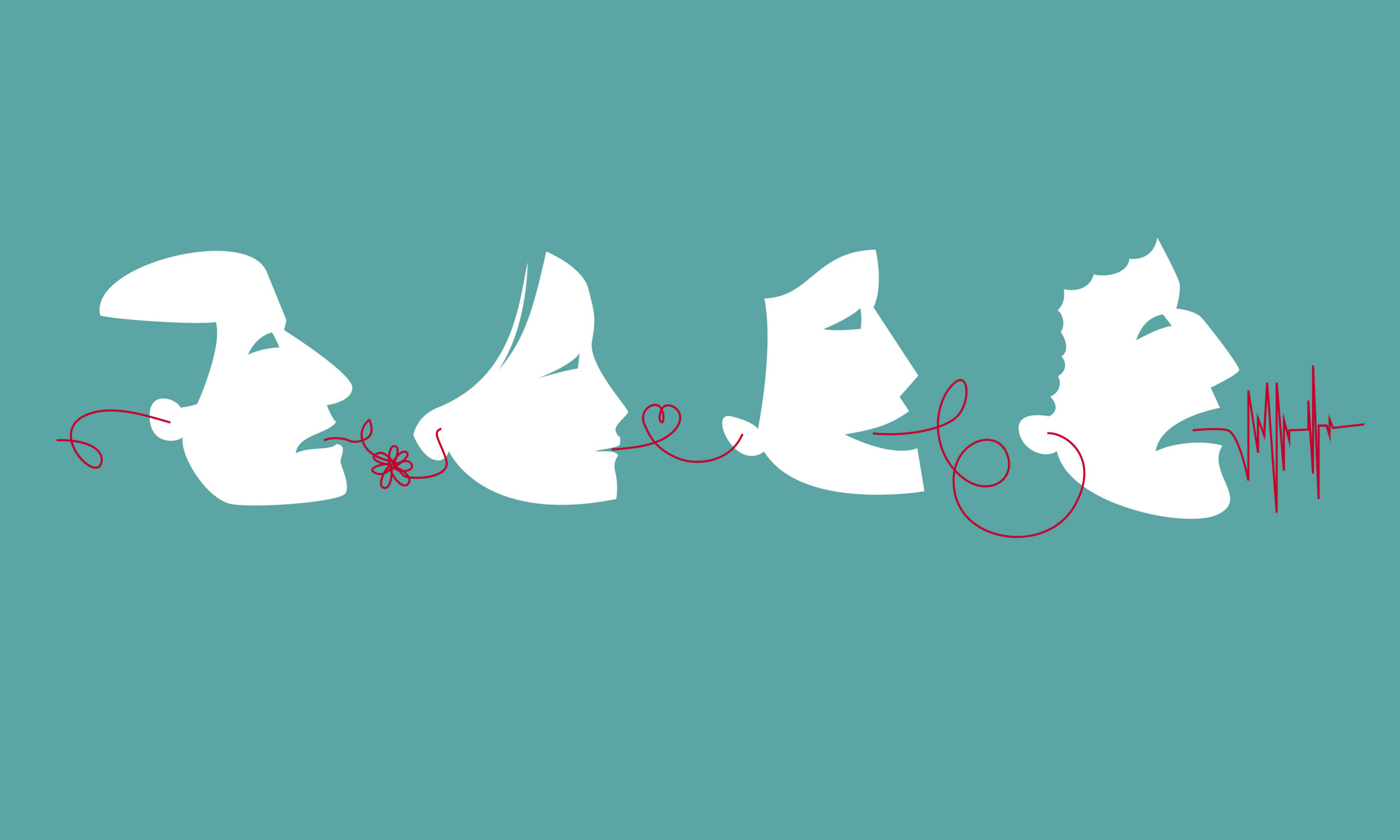

In 2018, a rumor spread rapidly through India via WhatsApp warning that child kidnappers were operating in rural communities. The messages were vague but urgent. They were often accompanied by unrelated videos framed as evidence. Authorities were ultimately unable to identify a single originator or coordinated source behind their spread. As fear escalated, villagers began stopping strangers, forming patrols and in several cases, carrying out mob attacks against individuals mistakenly identified as abductors. Dozens of people were killed before officials could contain the panic. Although the origins of the rumor remained unclear, its effects were immediate and consequential. It filled an information vacuum, aligned with existing fears and transformed uncertainty into collective action. This episode highlights a critical dynamic of modern conflict: rumors can function as flexible weapons within the information environment. They can shape perception and behavior under conditions of ambiguity. Whether emerging organically or introduced deliberately, they can initiate, reinforce or adapt narratives over time. Thus, influencing outcomes before facts stabilize the environment.
All About Rumors
Rumors are unverified but relevant claims that spread when people lack clear information. They emerge most frequently under conditions of uncertainty and perceived threat. People use them to make sense of events and reduce anxiety. While rumors can assume the form of misinformation or disinformation, they don’t have to be. Misinformation is false information presented as true and shared without intent to deceive. Disinformation is false or misleading information also presented as true and shared deliberately to mislead. Rumors are different because they are presented as unverified claims, although they can emerge organically or be crafted intentionally. This makes them flexible. They can later be confirmed, rejected or incorporated into other narratives. Rumors also differ from conspiracy theories. Conspiracy theories offer structured explanations involving secret coordination by powerful actors. Rumors do not require this structure. They are often fragmentary claims that provide small but meaningful details. These details can anchor larger stories and make them feel plausible. Research shows that rumors spread because they align with fear, uncertainty and social identity. This makes them effective building blocks within broader information environments.
Rumors are appealing because uncertainty can produce anxiety, which they can provide a quick relief for. Emotion strengthens this process. As in the India case, fear and outrage increase both belief and sharing. Ambiguity also plays a role. Claims with vague sources are harder to disprove and easier to accept. Social networks amplify these effects. People trust information that comes from friends, family or in-group members. Digital platforms further accelerate spread by rewarding emotional and engaging content. These features make rumors efficient tools in the information environment. They are low cost, difficult to attribute and capable of shaping behavior before verification occurs.
Forms of Rumor
Rumors serve different purposes. Classic research identifies five common types based on content and function. Wish rumors express hope or positive expectations, such as claims that a conflict will end soon or that conditions will improve. Dread rumors focus on threat and danger, often warning of harm, scarcity or attack – these are the most likely to spread during crises because they trigger fear and urgency. Wedge-driving rumors target social divisions by assigning blame, questioning loyalty or amplifying distrust between groups. Identity rumors question loyalty, affiliation or in-group membership. They are used to label individuals or groups as insiders or outsiders, which reinforces boundaries and increases suspicion. Instrumental rumors are designed to influence behavior. They encourage or discourage specific actions, such as avoiding locations, distrusting institutions or taking protective measures. These rumors are especially relevant in the information environment because they weaken cohesion and increase polarization. Together, these categories capture the dominant emotional patterns that drive rumor transmission under uncertainty.
How Rumors Evolve in the Information Environment
Rumors do not remain static as they spread. They change as they move through networks and across contexts. Research identifies four recurring patterns in this process: leveling, adding, sharpening and assimilation. These patterns describe how information is simplified, expanded, emphasized and aligned with existing beliefs over time. In practice, they function as mechanisms that allow rumors to adapt to different audiences and environments rather than degrade. Leveling reduces complexity – details are dropped as messages are repeated, leaving only the most recognizable elements. This process increases clarity and recall, making the rumor easier to understand and repeat across different audiences. It also removes details that could be challenged or verified, which allows the core claim to persist even when specific versions are questioned. In contrast, adding introduces new details that increase relevance or emotional impact. This process allows the rumor to adapt to new events and local contexts, making it appear timely and specific. It also increases engagement by adding vivid or alarming elements that capture attention and encourage sharing. Thus, rumors have the ability to either shrink or grow depending upon the context and environmental factors.
Sharpening highlights specific aspects of a claim, often focusing attention on threat, blame or urgency. This process directs audience attention toward the most emotionally or politically salient elements, increasing perceived importance. It also narrows interpretation, reducing ambiguity by emphasizing a clear target or meaning that audiences can quickly act upon. Assimilation aligns the rumor with existing beliefs, cultural narratives or group identities. This process increases acceptance by making the claim feel familiar and consistent with prior expectations. It also strengthens in-group cohesion by reinforcing shared interpretations and reducing the likelihood that the rumor will be questioned or rejected.
Together, these processes explain how rumors persist even when challenged. They are not repeated exactly. They are continuously modified in ways that maintain their core meaning while improving fit with the audience. This makes rumors resilient. The presentation of contrary facts challenging the rumor does not eliminate the believability of the underlying claim. Rumors can be intentionally or unintentionally adapted and reappear in a new form. A common example is the recurring claim that vaccines are harmful or part of a hidden agenda. Early versions contained detailed and technical assertions about specific ingredients or health effects. Over time, leveling removed complex details, leaving simple claims such as “vaccines are unsafe.” Adding introduced new elements tied to current events, such as references to new diseases or policies. Sharpening focused attention on specific threats, such as harm to children or loss of personal freedom. Assimilation aligned the claim with broader beliefs about government control or distrust of institutions. Across iterations, the core message remained intact while its form adapted. Rumors can evolve to form several variants of the initial rumors form. In the information environment, this adaptive quality allows rumors to survive across events, platforms and time. It also makes them difficult to counter, because responses target specific claims while the underlying narrative continues to evolve.
Rumors as Operational Tools in Information Warfare
Information warriors can use rumors as low-risk reconnaissance assets to scout the information environment and test audience reactions. A rumor can be introduced as a question, an anecdote, secondhand reporting, or any form of unverified information. Avoiding clear claims allows rumors to circulate without immediate challenge. If a claim gains attention, it can be expanded into a larger narrative. If it fails, it can disappear without cost. Rumors can probe what audiences fear, what they trust and what they are willing to believe. Research shows that unverified claims are often accepted before any verification process occurs. This creates an opening to shape interpretation early. At this stage, the information warfare goal should not be to fully persuade the audience. The goal is to introduce doubt, raise questions and establish initial frames that later messaging can build upon.
Successful rumors often have some grounding in reality, as fragments often reference real events, familiar actors or partial truths. This creates the appearance of evidence, which can increase credibility. In this role, rumors act as anchors that can connect disparate pieces of information into more recognizable patterns for audiences. Research shows that placing unverified claims into credibility enhancing formats like news reports increase their acceptance. This blending makes it difficult for audiences to separate verified content from speculation. Over time, repeated exposure allows these fragments to stabilize into perceived facts. At this stage, the objective is to strengthen narrative coherence and increase belief by embedding rumor elements within a broader story.
As narratives develop, rumors can intensify attention and emotional engagement. Especially if they are introduced at moments of tension, crisis or uncertainty. Rumors can amplify fear, outrage or suspicion by adding details that suggest hidden threats or urgent risks. These claims are effective because they are emotionally charged and difficult to verify in real time. Research shows that content that triggers strong emotional reactions spreads faster and reaches larger audiences than neutral information. Rumors are also empowered by repetition. As similar claims appear across multiple sources, they gain familiarity and are more likely to be accepted as true. Digital platforms reinforce this process by creating feedback loops where emotionally amplified rumors are repeatedly surfaced and shared. Successful rumors do not need full narratives to gain traction. Small claims can connect separate pieces of information and create the appearance of a larger pattern. This allows audiences to draw their own conclusions without requiring explicit proof. In this role, rumors organize uncertainty rather than resolve it. At this stage, the objective is to strengthen narrative coherence and increase belief by embedding rumor elements within a broader story.
Operational Implications: Rumors in the Information Battlespace
In information warfare, the ability to increase scope and scale of messages also determine effectiveness. The ability to extend reach across audiences and amplify messages rapidly often matters more than the content itself. Rumors that prove to be successful allow influence to begin at a small scale and expand rapidly across audiences and platforms. They quickly move through social networks, messaging apps, and online platforms with little friction. A single claim can reach large audiences within hours. As rumors spread, they cross groups and contexts, extending their reach beyond the original audience. Weaponized rumors guided by artificial intelligence could potentially accelerate this process to the point where defensive systems cannot properly cope with them. Hundreds of new rumors could easily flood the information environment every day. This would normalize uncertainty to the point where decision making becomes extremely difficult.
In a successful information warfare campaign, rumors can drive internal violence and accelerate social decay. As they exploit uncertainty, fear and social identity to frame other groups as threats, they would cause polarization and potentially trigger inter-group violence. An enhanced perception of severe threat increases that increases suspicion would lower the threshold for hostile action. As with the example from India, fear and outrage could trigger violencefaster than the authorities ability to identify and mitigate them. Rumors could also create distrust of the government to the point where populations cease to cooperate with it and potentially attack institutions.
Limitations of Counter-Measures
Current countermeasures against disinformation are limited in their ability to address rumors. Most responses focus on identifying and correcting false claims after they appear. This approach is reactive. Fact-checking is often too late to counter rumors. Corrections do not fully reverse belief. Research shows that misinformation continues to influence judgment even after it is debunked. This is known as the continued influence effect. It occurs because people retain the initial narrative and use it to fill gaps when new information is incomplete.
Attribution is also difficult. Rumors often originate in decentralized or encrypted networks, which makes it hard to identify a clear source. This limits the ability to respond strategically or hold actors accountable. At the same time, many countermeasures focus on clear falsehoods. This approach misses how rumors operate; they often rely on ambiguity rather than explicit false claims, which allows them to evade detection while still shaping perception. Current responses also overlook emotional dynamics. They emphasize factual accuracy but do not address how people process information. Emotion plays a central role in belief and sharing. Content that triggers fear or outrage spreads more widely and is more likely to be accepted as credible. Platform design reinforces this problem. Digital systems prioritize engagement, not accuracy. Emotionally charged and ambiguous content is more likely to be promoted and repeated. This creates conditions that favor rumor spread over verification. Together, these limitations show that existing countermeasures are not aligned with how rumors function in the information environment.
Conclusion
Rumors are an often overlooked but powerful information weapon. Adroit information warriors enhanced by artificial intelligence could potentially cause enormous disruption of a target society. Democracies with open media systems and free speech face a greater risk from weaponized rumors. Politically and economically unstable societies also face a greater risk because people face more significant levels of uncertainty and distrust. Influence is often achieved by shaping uncertainty, not controlling facts. Current countermeasures are limited. They focus on false claims after they spread, assume clear attribution, and prioritize factual correction over emotional and structural factors. This approach targets outcomes rather than mechanisms. Rumors exploit this gap by operating through ambiguity, emotion and repetition. However, the spread of rumors follows consistent processes and growth patterns that can be mapped, analyzed and understood. Rumors therefore merit more serious scientific study and deserve the attention of information warriors.