





JNIM’s Mali Offensive and the Limits of Counterterrorism in the Sahel
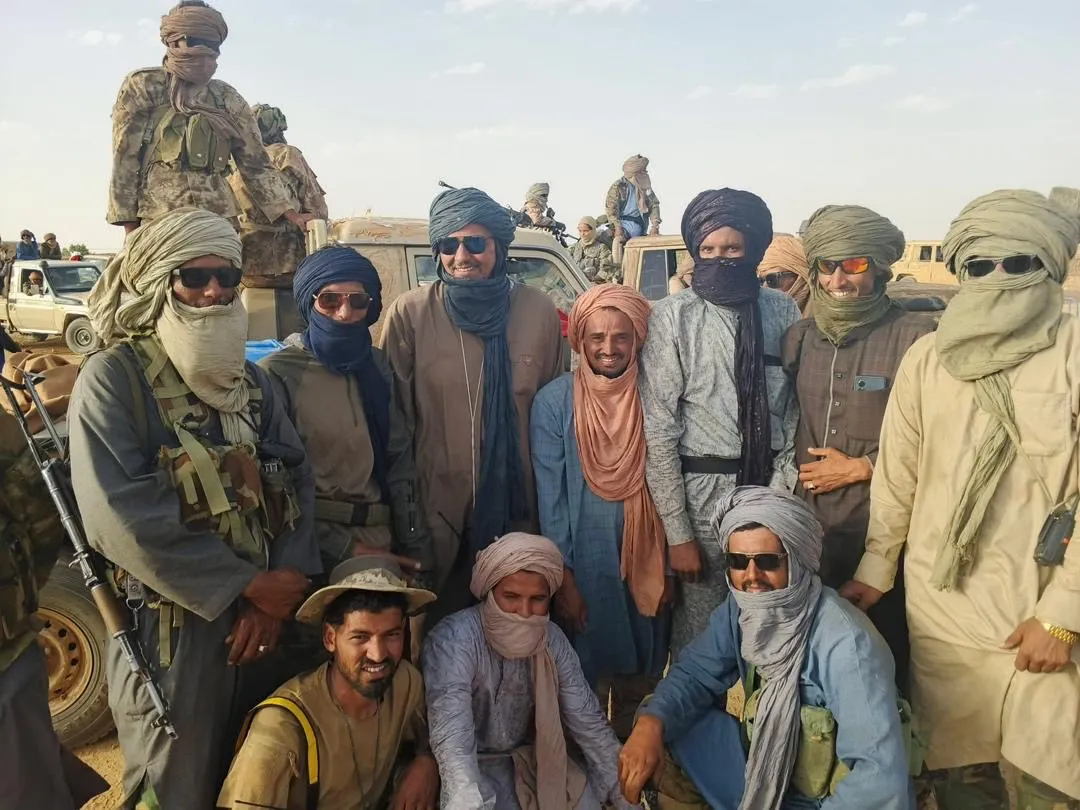

The Combating Terrorism Center at West Point’s recent report, “Developments in the Sahel: An Interview with Wassim Nasr” presents journalist and Soufan Center fellow Wassim Nasr’s analysis of the late April 2026 JNIM-FLA joint offensive in Mali and its regional consequences.
JNIM and the Azawad Liberation Front executed a coordinated nationwide offensive on April 25, recaptured Kidal, and killed Malian Defense Minister Sadio Camara in a vehicle-borne suicide bombing. The two groups formalized this alliance through a 2025 agreement that required the FLA to accept sharia governance in exchange for JNIM military support against the Bamako junta. Nasr argues that the junta’s own decisions, including labeling all opponents as terrorists, silencing civil society, and isolating regional partners, created the political conditions for this military outcome.
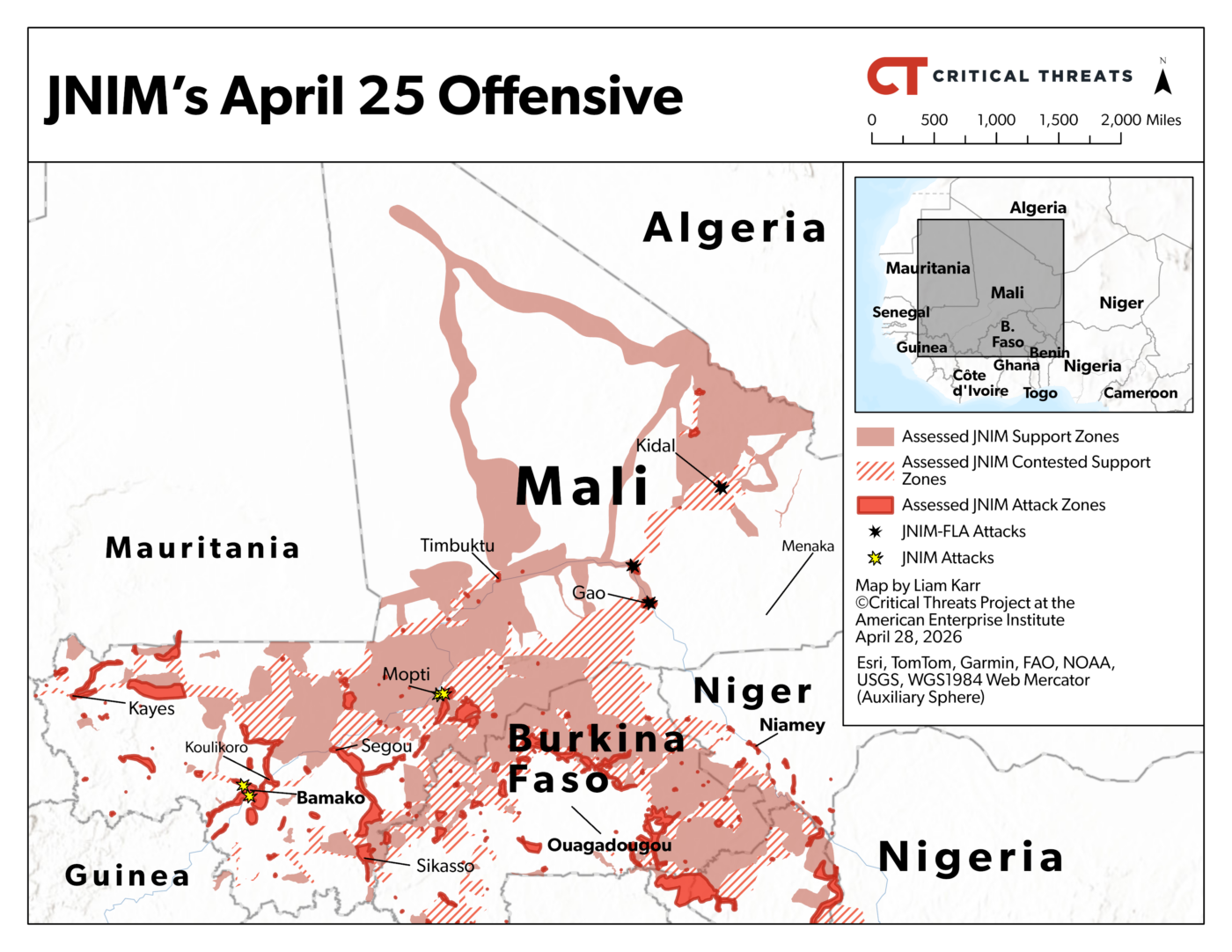
JNIM now holds the position of the most powerful military actor in the region and retains a viable path to breaking with al-Qa’ida through governing rather than any formal declaration, provided it can retain fighter loyalty by delivering political gains. Nasr calls on international actors to abandon pure counterterrorism frameworks and to instead offer off-ramps with JNIM through negotiations before the Islamic State Sahel Province extends further into the Niger-Nigeria-Benin corridor.
“Approaching the War on Terror in the Sahel” by Jordyn Abrams (SWJ, December 2025) argues that the U.S. has paid insufficient attention to the growing jihadist threat in West Africa, and that the kidnapping of an American missionary in Niger, JNIM’s fuel blockade strategy against Mali, and the expanding activities of both JNIM and ISSP point toward the need for a reengaged and more thoughtful American CT policy in the region. The piece shares Nasr’s central concern that pure counterterrorism approaches have failed to contain JNIM and the Islamic State Sahel Province, and that the collapse of Western diplomatic and intelligence presence following the Sahelian coups has created a permissive environment that both groups now exploit. Where Nasr calls specifically for a counterinsurgency framework inclusive of negotiation, Abrams frames the argument as a call for the U.S. to re-examine its foreign policy disengagement from West Africa before the crisis becomes protracted.
Interview Highlights
CTC: Do you think that JNIM is on a path to break with al-Qa’ida then?
Nasr: “Coming from Iyad Ag Ghali himself, ‘breaking with al-Qa’ida isn’t the priority of the day.’ But breaking with al-Qa’ida is on the table… if they break with al-Qa’ida without any ‘legal shariatic’ justification, a big part of the fighters, especially Fulanis, might defect to the Islamic State… If we make it a prerequisite of JNIM to break from al-Qa’ida before some kind of governing or getting into alliances which are acceptable to Mali… A prerequisite will be much more damaging for them, and they won’t be able to do it at this point in time… JNIM is in a position where they can break with AQ de facto through governing. They allied with a secular group, they are calling for opponents of the Malian junta who are not at all in the jihadi sphere, so de facto, they are taking this path… it’s JNIM that is stopping the Islamic State from growing bigger and farther south. It’s not local armies, it’s not militias, it’s not the Russians, it’s JNIM.”
CTC: Given recent events… will that speed up their efforts to compete more effectively against the Islamic State?
Nasr: “They challenged the Islamic State in Ménaka, Mali, and they lost… The last to try was JNIM, and I can tell you, they put a real effort in it—human effort and assets. Still, they failed… What delayed the phase that you are seeing now is actually the war with the Islamic State. Once JNIM admitted they lost in Ménaka and they accepted the loss, they rebuilt their power against the Malian government, and they made alliance with the FLA… in the center and around Bamako, it’s mostly Fulani fighters. And as we speak, the only perceivable political gain is for the Tuaregs in the north. So, if they want it to work, the Fulanis of the center should have something in return for fighting. So, if they have this ‘something’ through political bargaining and national negotiations, it could stop. If they don’t, we will go into phase two.”
CTC: To go back to the offensive specifically, what do we know about the tactics and the weapons that were used?
Nasr: “Nothing groundbreaking. Small arms, RPGs, technicals, machine guns mounted on motorcycles, monitoring the battlefield with FPV drones, nothing new. They are just getting better and better at command and control… the most important thing to me… they are monitoring the battlefield in a skillful way… to send the suicide bomber in Kati, they mapped the area using Google Earth. They didn’t send him in blind; they mapped it. They knew exactly where to send him, what are the weak spots, how to occupy the army on this spot in order to let him go through. And they learned from previous failures in Kati. This is human skill.”
CTC: What should we expect over the next several weeks in Mali?
Nasr: “The sooner Malian political opponents, insurgents, and JNIM jihadists accept, and are allowed, to talk, the quicker we will have a viable answer for Mali and the region… the longer this process takes, the less JNIM has to make concessions. They are the most powerful military actor on the ground… Power brokers, the international community should go back to counterinsurgency ways. Counterterrorism, as it was conducted for 20 years—meaning ‘kill them all’—did not work… Making something stable, even if it’s an Islamic-inspired rule, in Mali could be part of the answer… When I got Koufa’s answers to my questions in October 2024, he was talking about conflict resolution. So why should the West keep on going in a war with no perceivable end, while hardcore jihadis are moderating their positions and saying, ‘We can go into conflict resolution. We accept negotiations.'”
CTC: In that vein, what has the Islamic State Sahel been up to since that attack in January?
Nasr: “I’m following closely the attacks in Dosso and in this tri-border region with Nigeria and Burkina Faso. We are witnessing more and more attacks… What I’m also following very closely is the situation in northwest Nigeria between the Islamic State, JNIM, and the bandits. This is very important because I think that if some bandits decide to openly take one side or the other, it would be a game changer. Because this is how it happened in Niger.”

