





The Missing Framework: How Political Warfare Can Restore American Strategic Coherence
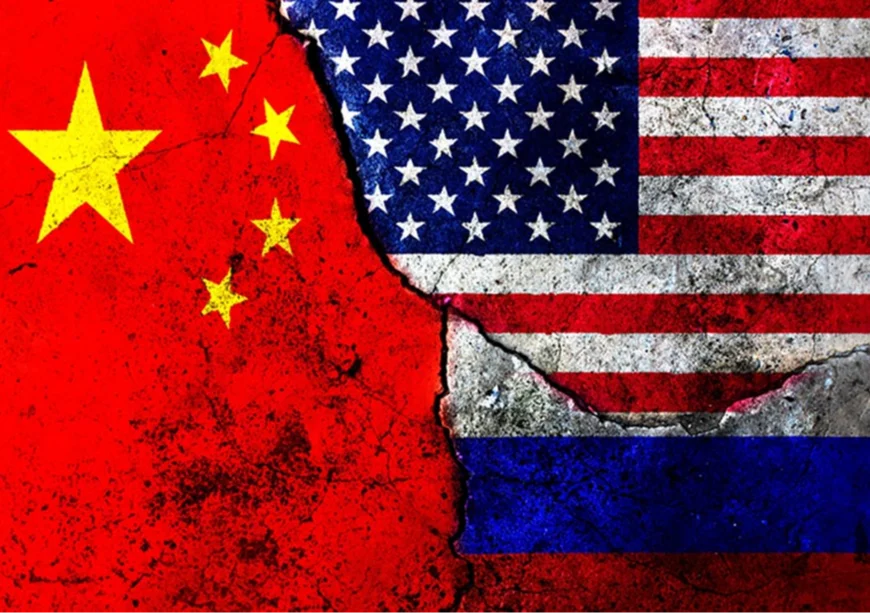

David Maxwell writes in his latest UPI article, “Winning without fighting: political warfare as America’s grand strategy,” that the United States possesses considerable national power but lacks a coherent framework for deploying it. Maxwell revives George Kennan’s 1948 concept of political warfare, defined as the coordinated use of all means short of war to achieve national objectives.
Maxwell identifies four domains through which political warfare organizes national power: narrative, influence, economic statecraft, and security assistance. He diagnoses the current American response to the Dark Quad / CRInK (China, Russia, Iran, and North Korea) as episodic and siloed, ceding strategic initiative to adversaries that compete continuously.
The United States needs a central integrating ‘conversion mechanism.’ Not another committee. A body with authority to align resources and actions across departments. It must connect strategy to budgets. It must set priorities and enforce discipline.
He then calls for structural reform, including a central integrating body he terms a “conversion mechanism,” regional political warfare campaign plans, and a workforce built around language skills, cultural understanding, and information operations. Political warfare is the oldest form of statecraft, and the United States must relearn it before adversaries shape the next era on their own terms.
The Concept Rediscovered: “In 1948, George F. Kennan defined political warfare as the employment of all means short of war to achieve national objectives. It was not a marginal activity. It was the main effort — covert and covert actions, economic measures, psychological operations, support to allies and resistance, and all synchronized toward political ends. Decades later, Paul A. Smith refined the concept. He framed political warfare as purposeful competition for influence, legitimacy and control short of armed conflict. He emphasized coherence. Strategy must align actions across instruments of power. Words and deeds must match. Narratives must be backed by behavior. The United States once practiced this with discipline. The Marshall Plan was political warfare. Voice of America was political warfare. Support for democratic institutions across Europe and Asia was political warfare. These actions did not replace military strength. They made it effective.”
The Present Disorder: “The American response is episodic. Departments operate in silos. Authorities are fragmented. Strategy is often reduced to messaging. There is a belief that political warfare is either too aggressive or too ambiguous for a system built on law and transparency. That belief confuses abuse with use. Political warfare is not lawlessness. It is disciplined statecraft. What is the cost of this confusion? It is initiative ceded, narratives shaped by adversaries, allies uncertain of American intent and tactical success without strategic gain.”
Political Warfare as the Integrating Logic: “Political warfare does not replace the instruments of power. It organizes them. It provides a theory of victory grounded in political outcomes rather than operational metrics. The objective is not to win engagements. It is to shape environments so that adversaries cannot achieve their aims and allies can… This requires integration across four domains… narrative as the alignment of values, interests, and actions… influence… economic statecraft… [and] security assistance and presence.”
Competing in Cold War 2.0: “If this is Cold War 2.0, it differs from the first in scope and speed. The competition is global. The information environment is instantaneous. Non-state actors have greater reach. Technology amplifies truth and deception. Political warfare adapts to this environment because it is not bound to a single domain. It treats competition as continuous. It accepts that outcomes are cumulative. Small actions, consistently applied, shape the strategic landscape… The question is not where to compete. It is how to compete with coherence.”
Organizing for Success: “The United States needs a central integrating ‘conversion mechanism.’ Not another committee. A body with authority to align resources and actions across departments. It must connect strategy to budgets. It must set priorities and enforce discipline… Partnerships are decisive. Allies and partners are not instruments. They are co-authors. Political warfare succeeds when it amplifies shared interests and values. It fails when it treats others as audiences rather than actors.”
Winning Without Fighting: How the United States Can Prevail in Irregular Warfare (Cambria Press, 2024) similarly reframes irregular warfare not as a peripheral military tool but as the United States’ principal strategy for outcompeting adversaries. The book recommends a whole-of-government approach that jointly marshals military, economic, and informational instruments of statecraft, mirroring Maxwell’s four domains nearly point for point. The authors also diagnose the same core failure Maxwell identifies: America’s strategic culture maintains a binary understanding of war and peace, leaving it outcompeted in gray zone activities where China, Russia, and Iran operate continuously and by design.
However, where Maxwell calls for a “conversion mechanism” to enforce strategic discipline, Winning Without Fighting calls for a fundamental reorientation of how American strategists conceptualize irregular warfare, including resilience as a deterrent “fifth pillar” of national power that reinforces credibility and sustains influence before conflict begins.

