





Venezuela at a Crossroads: Cautionary Lessons on Intervention
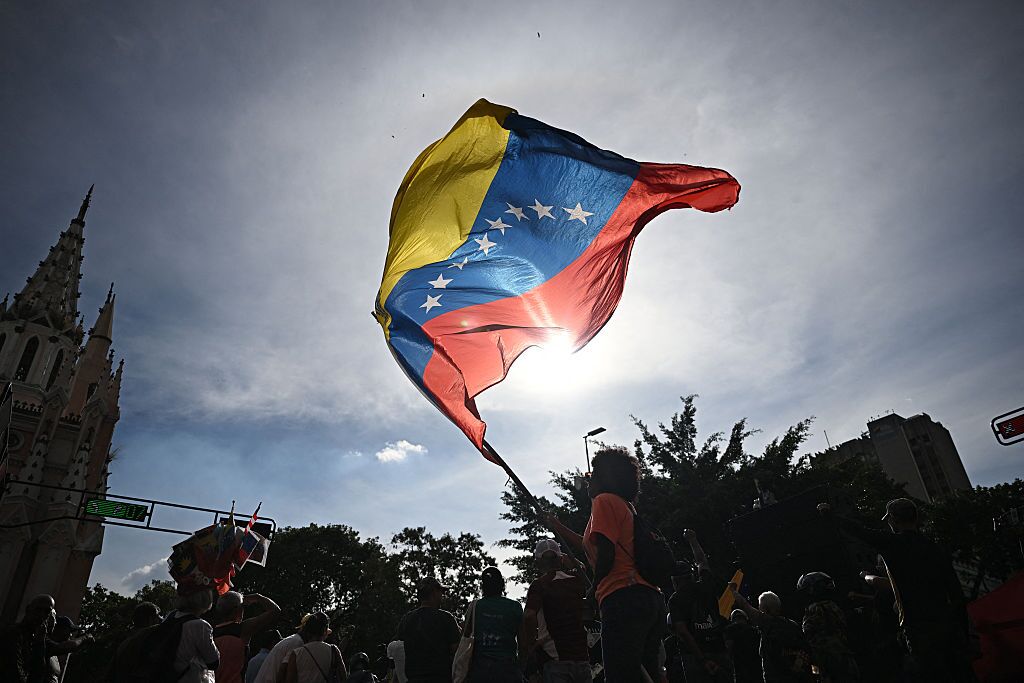

Recent U.S. military operations in Venezuela, culminating in the capture of Venezuelan President Nicolás Maduro and Washington’s declaration that it will “run” the country pending transition, mark a dramatic escalation in hemispheric intervention. Framed by the U.S. administration as a law enforcement action rather than an act of war, the operation revives enduring tensions between domestic executive authority, international law, and the limits of sovereignty. While critics emphasize violations of the U.N. Charter and the erosion of a rules-based order, defenders point to longstanding precedents that grant the American presidency broad unilateral power abroad.
Venezuela thus becomes more than a regional crisis; it is a test case for the durability of international norms, the balance of powers within the U.S. constitutional system, and the strategic logic of great-power competition in the Western Hemisphere. At stake: Does the U.S. intervention in Venezuela represent a lawful exercise of transnational law enforcement authority, or does it signal a renewed era of unilateral intervention that undermines international legal order and regional stability? Nicolás Maduro, a former union organizer and foreign minister, rose to Venezuela’s presidency following Hugo Chávez’s death in 2013. Maduro inherited a deeply polarized and oil-dependent nation. His decade-plus tenure witnessed economic collapse, hyperinflation, and a mass exodus of as many as 8 million Venezuelans. Widely criticized for authoritarian governance and electoral manipulation—particularly the disputed 2018 election—Maduro has maintained power through military loyalty and repression, presiding over one of Latin America’s most severe political and humanitarian crises.
U.S. President Donald Trump’s campaign against Maduro is the latest chapter in a long history of U.S. intervention in Latin America. According to one report between 1898 and 1994, the United States intervened to change governments in Latin America at least 41 times—including Cuba (1898), Panama (1903), Nicaragua (1910), Mexico (1914), Haiti (1915), the Dominican Republic (1916), Guatemala (1954), and Grenada (1983). Seventeen of these incursions involved direct action, including the use of U.S. military forces, intelligence operatives, or government-backed personnel.
This one is different, though. U.S. military operations culminating in Maduro’s capture mark a significant escalation in American involvement in Venezuela. It comes at a time when the South American country has been mired in “its deepest crisis since the transition to democracy in 1958,” according to a 2022 entry in the Bulletin of Latin American Research. To wit: “The country is ranked as the least peaceful country in the region and one of the least peaceful countries in the world . . . Above all else, the increase in political terror is seen as the main driver of the deterioration of peace in Venezuela over the past year,” offer authors Ana Maria Isidoro Losada and Rita Bitar Deeb.
Upon the “capture” of Maduro, President Trump announced that the U.S. would “run” (his words) Venezuela until a “safe, proper, and judicious transition” could be arranged. To rush a sovereign country, grab its political leader, and claim its oil as yours raises profound questions about the rule of law, hemispheric dynamics, and the risks of political fragmentation.
Rule of Law and International Norms
Intervening militarily without broad international consensus challenges the “rules-based international order” that the U.S. claims to uphold. The “rule of law,” defined by the Institute for Humane Studies, is, simply, “the principle that society must be governed by rules that apply, impartially and equally, to all people, regardless of personal characteristics or social status – [It] is an essential feature of limited government.” The capture of a sitting head of state outside established legal frameworks eschews the rule of law, risks undermining global governance, and invites reciprocal breaches by other powers.
However, the framing of the Venezuela intervention is crucial because it forms the basis of the Trump administration’s legal argument. The grab-and-go operation has been characterized by the U.S. as an “enforcement action, not an act of war requiring congressional approval.” In 2015, the Obama administration—short of declaring Maduro’s government “illegitimate”—issued an executive order targeting specific corrupt, international law-ignoring Venezuelan officials. The official, formalized declaration of the Maduro regime as “illegitimate” was adopted by Trump in 2019 during his first presidency. Now, six-plus years later, Maduro has been indicted in a Manhattan court on charges of narco-terrorism and conspiracy to import cocaine, charges that were originally filed in 2020. Maduro’s arrest is presented as a law enforcement operation. Yale Law School Professor Oona Hathaway claims the Trump administration does not “recognize [Maduro] as the head of state,” which may justify his seizure and indictment.
So it is that the U.S. views Maduro not as Venezuela’s legitimate leader but as a criminal who had to be apprehended. The argument has precedent: In 1989, the U.S. indicted Panama’s defacto ruler Manuel Noriega on drug trafficking and money laundering charges, seized him, and brought him to the U.S. for prosecution. Despite Noriega’s claim to head-of-state immunity, the courts sided with the executive branch, ruling that he was not immune and could be prosecuted.
Meanwhile, the legal framing used to justify Maduro’s arrest draws on a heavily redacted Office of Legal Counsel (OLC) memorandum released January 13 by the U.S. Department of Justice. The memo asserts that the use of force against Venezuela “does not rise to the level of war in a constitutional sense,” thereby exempting the president from seeking congressional authorization under the War Powers Act. Instead, the operation has been justified as a law enforcement action targeting indicted fugitives, grounded in the president’s inherent constitutional authority to conduct extraterritorial arrests. This approach builds on a 1989 OLC opinion authored by then-Assistant Attorney General William Barr, which similarly argued that U.S. presidents possess broad authority that U.S. presidents possess broad authority to order arrests abroad—even if such actions conflict with international law.
Pivotal Point
This precedent is decisive: It allows the executive branch to circumvent traditional international legal constraints by framing military interventions as domestic law enforcement operations. The memo explicitly states that while international law may prohibit such uses of force, domestic constitutional law grants the president significant discretion. This legal reasoning underscores a persistent tension between international norms and the realities of American executive power, reflecting a long-standing pattern of unilateral military actions justified under broad interpretations of constitutional authority.
Adding to the complexity of U.S. involvement, constitutional scholar Louis Fisher provides a sweeping socio-historical perspective on presidential military actions that often bypass constitutional checks. From Harry Truman onward, U.S. presidents have frequently engaged in military operations abroad without explicit congressional approval—ranging from Dwight Eisenhower’s covert actions in Iran and Guantanamo to John F. Kennedy’s support for the Cuban invasion, and from Ronald Reagan’s Iran-Contra involvement to Trump’s bombing of Syria and support for Saudi military campaigns in Yemen. According to Fisher, such unilateral actions contravene the constitutional mandate that requires joint authorization by both the executive and legislative branches.
The January OLC memo reinforces this historical trend by legally validating the Trump administration’s unilateral decision to order the Venezuela action, “Operation Absolute Resolve,” without congressional consent. The memo’s central argument is that the U.S. Constitution, rather than the War Powers Act or international law, defines the president’s authority in this context. It explicitly states that the president’s power as commander-in-chief includes authorizing law enforcement activities abroad, even when those activities involve the use of military force. This interpretation effectively sidelines legislative oversight, raising profound questions about the balance of powers and accountability in U.S. foreign policy.
Moreover, the memo’s reliance on the 1989 Barr go-get-‘em opinion highlights a continuity in executive legal reasoning that transcends administrations and political parties. This continuity suggests a deeply entrenched executive prerogative to act decisively overseas, often at the expense of international legal norms and congressional prerogatives. The memo’s framing also reflects a strategic choice to present the Venezuela operation as a targeted law enforcement mission rather than a conventional military campaign, thereby minimizing political and legal resistance domestically.
In the days and months ahead, the liberal establishment will be awash with criticism about the rule of law or what is often called the “rules-based global order.” There will be plenty of analysis, mostly focused on the violation of criminal law and the U.N. Charter. Yet, international politics frequently operates according to Tacitus’s famous maxim: “The strong do as they can, while the weak do as they must.” This blunt reality tempers idealistic notions of universal legal constraints.
The Right to Intervene
The unilateral right to intervene is deeply embedded in contemporary U.S. history. As President Barack Obama once declared, “The United States will use military force, unilaterally if necessary, when our core interests demand it—when our people are threatened, when our livelihoods are at stake, when the security of our allies is in danger . . . International opinion matters, but America should never ask permission to protect our people, our homeland, or our way of life.” Different times, different contexts, but the underlying policy has remained remarkably consistent. President Trump’s approach simply shifted focus from other global theaters to Latin America.
Legal scholar Jack Goldsmith highlights that the Justice Department could easily justify the Venezuela operation under domestic law by framing it as a law enforcement action targeting indicted fugitives, rather than an act of war. This approach draws on precedents like the 1989 Panama invasion to arrest Noriega; the courts accepted the executive’s argument that Noriega was not immune from prosecution. Goldsmith notes that while the Venezuela operation likely violates the U.N. Charter’s prohibition on the use of force, the executive branch’s broad war powers and historical legal opinions grant the president significant discretion to act unilaterally abroad. This legal framework, though contested, reflects the reality that constitutional and international law constraints on presidential military action are often minimal in practice.
Counterpoint
Whereas most people are concerned with the legality of the intervention, there are those who offer a different lens through which to understand the legal reasoning of the U.S. government. This counter-reasoning sees the U.S. intervention in Venezuela as one that did not primarily invoke traditional international criminal law but operated under the framework of transnational criminal law, which extends domestic criminal jurisdiction across borders. Unlike international law, which requires multilateral consent and lacks enforcement mechanisms, transnational criminal law allows unilateral enforcement actions when cooperation with the host state fails—especially when the accused controls the enforcement apparatus, as Maduro did. This legal approach bypasses the need for UN authorization and challenges conventional notions of sovereignty, highlighting a structural vulnerability in the international legal order.
When it comes to international law, it matters little which U.S. president holds office; the rule of law often yields when American interests are at stake. Columbia Law School legal scholar Waxman rightly asks: “Where was it in 2003? Where was it when NATO bombed Yugoslavia in 1999? When the United States bombed Libya in 1986? When the United States supported coups in Honduras in 2009 or Iran in 1953?” None of these actions was authorized under the UN Charter or other conventions governing the laws of war—the very foundations of the proclaimed global order.
Based on statements by the U.S. administration, its defense of the Maduro “apprehension operation” was a mission to bring a criminal to justice; law enforcement rather than regime change. Chairman of the Joint Chiefs General Dan Caine noted that Operation Absolute Resolve was conducted in support of the Department of Justice, while Secretary of State Marco Rubio described Maduro as a “fugitive of American justice with a $50 million reward.”
Such framing helps explain why the Trump administration opted for a surgical intervention rather than a full decapitation of the Venezuelan government and military. It also sheds light on why the administration has, so far, been open to working with, rather than outright supporting, opposition political figures like María Corina Machado or Edmundo González. Supporting the latter overtly would align with a regime change narrative. For the time being, the administration has kept Venezuelan Vice President Delcy Rodríguez in place and appears inclined to negotiate with her rather than remove her in favor of a prominent opposition member.
Justifying Oil Rights
The Trump administration’s 2025 National Security Strategy explicitly reasserts a “Trump Corollary” to the centuries-old Monroe Doctrine, signaling a renewed U.S. commitment to hemispheric dominance, which aims “to restore American preeminence in the Western Hemisphere.” This approach aims to secure access to Venezuela’s vast oil resources and deny influence to China and Russia. However, such a posture risks inflaming anti-American sentiment across Latin America, as seen in Brazil’s swift condemnation, and may reinforce perceptions of hegemonic entitlement rather than principled engagement.
The Monroe Doctrine, long a cornerstone of U.S. hemispheric policy, resurfaces with renewed vigor in the Venezuela mission, signaling a clear message to China, Russia, and other challengers: the Western Hemisphere remains firmly within the U.S.’s strategic orbit. Shortly after the Venezuela operation, Trump issued a stark warning: “American dominance in the western hemisphere will never be questioned again.”
Notes legal scholar Goldsmith, the commitment to ‘run’ Venezuela positions the U.S. as assuming the role of an occupying power, subject to international laws such as the Fourth Geneva Convention. This status imposes legal obligations and restrictions on U.S. conduct in Venezuela, complicating the administration’s strategic ambitions and raising questions about compliance with international humanitarian law.
What began as a targeted law enforcement operation has evolved into a broader assertion of political and economic control. By declaring an intention to govern Venezuela and manage its oil sector, the U.S. risks displacing Venezuelan sovereignty without a clear legal framework for such governance. This shift raises the stakes for global adversaries like Russia and Iran, who benefit from limits on U.S. enforcement power and may respond by supporting proxy conflicts, increasing the risk of prolonged low-intensity warfare rather than direct confrontation.
So, Where to from Here?
The questions are these: What lessons are these global actors drawing from this decisive intervention? Are they recalibrating their own ambitions and tactics in Latin America and beyond, recognizing the limits of their influence in the face of U.S. resolve? And crucially, how might this demonstration of unilateral power shape the broader contest for global influence in an increasingly multipolar world? These questions underscore the strategic calculations at play and the high stakes involved in the evolving great power competition.
Venezuela’s political landscape is already deeply fractured. External pressure or regime change without an inclusive political settlement risks accelerating fragmentation, empowering armed factions, and potentially plunging the country into a protracted civil war. According to Phil Gunson, senior analyst for the Andes at the Venezuela-based International Crisis Group, the Venezuelan opposition remains split between hard-liners such as María Corina Machado, who supports direct foreign military action, and moderates, who favor negotiation and elections. Despite some electoral successes, the government’s refusal to accept results and its repression have further intensified political polarization. The Venezuelan military’s loyalty remains uncertain, and resistance from regime loyalists could prolong instability.
And, what about rebuilding a chaotic country? The challenge raises critical questions about the U.S. willingness and capacity to sustain a long-term commitment. For instance, how prepared is the U.S. to “run” Venezuela in a manner that differs from the costly and protracted engagements in Iraq, Libya, or Afghanistan?
According to Financial Times, Venezuela is “teeming with men with guns,” as armed groups, criminal gangs, paramilitaries, and rogue soldiers operate across the country, posing a serious threat to stability and any U.S. efforts to govern or attract investment. Acting president Delcy Rodríguez has shown limited willingness to cooperate with the United States, but none of these non-state actors answer directly to her. “All of the armed groups have the power to sabotage any type of transition just by the conditions of instability that they can create,” said Andrei Serbin Pont, a military analyst and head of Buenos Aires think-tank Cries. Analysts caution that these groups have the capacity to derail any political transition by fueling instability and weakening central authority across the country.
With this in mind, as well as the lessons learned from previous interventions, how might U.S. political, economic, and military strategies be shaped as necessary for Venezuela’s reconstruction? Moreover, can the U.S. muster the necessary political will and resources to avoid repeating past mistakes, or will Venezuela become another cautionary tale of overreach and unfinished nation-building?
Conclusion
The unfolding crisis in Venezuela highlights the profound challenges of external intervention in a deeply divided and fragile state. The United States faces a critical choice: Commit to a comprehensive, long-term engagement involving political, economic, and military efforts, or risk worsening instability in a strategically important region. The moment is intertwined with broader global power shifts; competition among great powers in Eurasia and the Indo-Pacific will shape U.S. policy in Latin America. History warns that without nuance, restraint, and multilateral cooperation, interventions risk repeating costly mistakes. Without a viable post-regime strategy, arresting and trying Maduro risks empowering even more repressive actors or fracturing the military. A balanced, historically informed approach that recognizes the limits of military solutions and prioritizes inclusive political processes is essential to avoid deepening Venezuela’s tragedy and to promote regional stability.
As scholar Goldsmith warns, the current system grants the president sweeping military authority with limited congressional oversight, enabling unilateral actions that can escalate conflicts without effective checks and balances. This concentration of power, while legally supported by executive branch precedents, diverges from the original intent of the framers of the U.S. Constitution, raising profound concerns about accountability and the rule of law in U.S. foreign policy.
The Venezuela mission leaves many unanswered questions, both domestically and internationally. Are we witnessing a new dawn of U.S. intervention in Latin America, or will this episode merely echo past patterns? Could the Venezuela operation set a precedent, prompting great powers like Beijing and Moscow to take similar actions against regional leaders they perceive as threats—particularly in Ukraine and Taiwan—without regard for the legitimacy of such moves? Will the ghosts of previous interventions—in Cuba, Panama, Nicaragua, Mexico, Haiti, the Dominican Republic, Guatemala, Grenada, Yugoslavia, Iraq, and Libya—continue to cast a shadow over Venezuela’s future? These questions remain crucial as the world closely watches Venezuela’s unfolding fate.
The answers, it seems, lie in interpretation, justification, and the valuation of the rule of law. As the world grows more crowded and complex, new guardrails seem to be screaming for installation.


