





The Risk and Reward of US Intervention in Iran
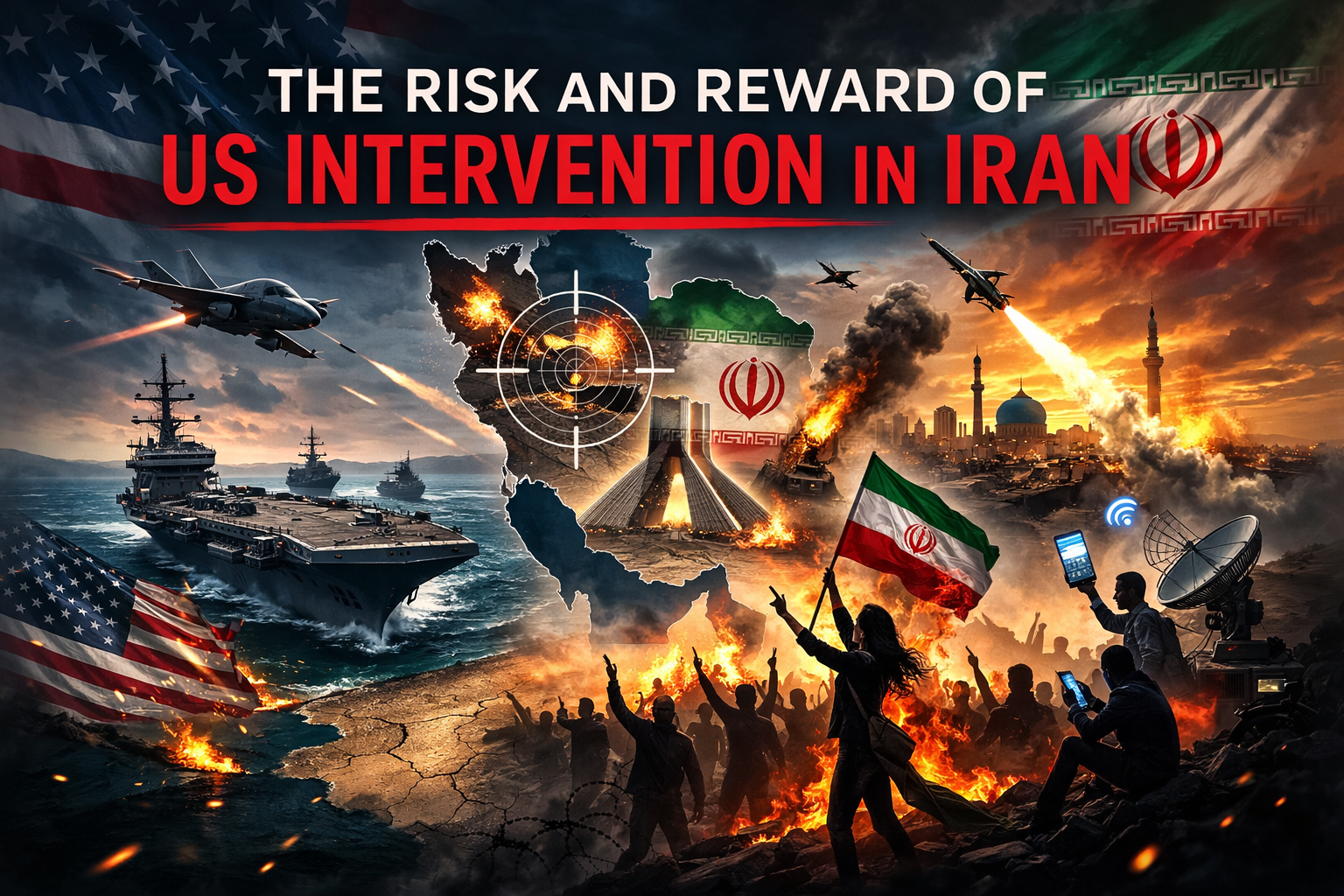

A new wave of military adventurism is dominating the Trump Administration’s international policy, no doubt influenced by the recent US operation in Venezuela. The latest target of US adventurism, and perhaps one of the most persistent challenges from Trump’s first presidency, is Iran. The size of the US military buildup in the region indicates more than just saber rattling to influence Iran to make concessions in ongoing nuclear negotiations, which Iranian officials are unlikely to do. The Iranian regime is experiencing a particularly fraught litmus test with protests having recently started back up again, and a growing desire for regime change that saw some of the largest protests in Iran over the past decade. Further, anecdotal evidence indicates that some Iranians may even be open to targeted US intervention, although Iranian citizens are deeply divided on US engagement. To be clear, any US intervention should be in support of the Iranian people—not at their expense. Regime change, which Trump and other US officials have hinted at, cannot be made unilaterally, as in the case of Venezuela. It would be a recipe for disaster that could mire the US in a prolonged conflict and risk alienating Iranian citizens.
Any US action should focus on empowering the Iranian people. President Trump has already been presented with a variety of policy options. With the President appearing to favor military action, the US could engage in targeted strikes that focus on weakening the Iranian regime. To be successful with this strategy, the US should focus on the Iranian military, specifically mid-level and senior Islamic Revolutionary Guard Corps (IRGC) officials, and military sites that Iran would likely leverage for retaliatory strikes. Such targeting would diminish the IRGC’s ability to retaliate and weaken its base of power in the Iranian regime. If the US takes this approach, it must not target population centers—even at the risk of delaying the removal of key military figures—as doing so would directly undermine any support from the Iranian populous. Further, the US should avoid removing Ayatollah Ali Khamenei directly. Doing so would create a power vacuum that has a high chance of plunging Iran into chaos either through a military takeover, political infighting, or even civil war. Any US military action must stay focused on how to help the Iranian people achieve sustainable, long-term regime change rather than going for flashy, high-risk operations.
Iran is not Venezuela. Military intervention alone will not be enough to overthrow the regime. Even limited strikes intended to shift Iranian leadership’s calculus in ongoing nuclear negotiations with the US will be insufficient to exact meaningful concessions from the Iranian regime. The US must couple any military activity with providing tangible support to the Iranian people. This could take the form of providing access to infrastructure to communicate and plan protest activity, some of which it has already done through US efforts to smuggle Starlink terminals in Iran. Further, the US should engage in informational operations, signaling to the Iranian people that the US will support them, but that regime change is in their hands—where it should be. One approach would be sending messages to protest leadership, fractured as it is, while dually aiming to chip away at security services’ power. Encouraging non-IRGC security services, such as the Law Enforcement Command or the less ideological conventional military, Artesh, to defect could help sustain protest movements. So far, there have been few, if any, defections, although mid-to-low level defections would indicate a weakening of the regime’s control and provide a much-needed swell to the protest movement.
In the event of a direct confrontation, there are inherent risks that US officials must consider. The US has been accumulating a heavy military presence in the region over the past month, but US officials, particularly the President, must not give into hubris that the US could strike Iran and obtain an easy victory. Such illusions are bound to mire the US in a conflict that the US is not ready to sustain. President Trump’s reported confusion as to why Iranian leaders haven’t capitulated yet is a warning that he is not taking the threat of Iranian retaliation seriously enough. Whether the US conducts limited strikes or a more sustained campaign, Iran will respond. As of June 2025, Iran’s ability to retaliate has been significantly curtailed, and its regional partners’ ability to support Iran has diminished, but Iran and its partners could still levy significant damage to US bases, personnel, and US allies in the region.
Military intervention also carries the risk of stoking fears among Iranian citizens of broader foreign intervention, given Iran’s storied history of foreign states meddling in Iran’s domestic affairs—most notably through the 1953 coup of Prime Minister Mosaddegh which has been attributed to the US and UK governments. Iranian leadership will inevitably use this to its advantage in an attempt to maintain control. Such a move risks undermining the very support the US would seek to provide and could give the Iranian regime the opportunity to further dig in and rally regime supporters. Separately, with 2026 being a US election year, Iranian leadership will likely seek to exploit the inherent political risks associated with a military intervention. US officials must be clear-eyed and ready to accept this risk.
Before beginning any operations, the US must have an exit strategy and day after plan in place, something that appears to be notably absent in what has been leaked or shared with the press regarding internal deliberations. As was seen most recently in Venezuela, success depends not just on the initial operation but whether long-term change can be sustained. Entering into a conflict without a clear, actionable exit strategy is a recipe for disaster. A day after plan must also keep in mind the needs of the Iranian people. It should include any necessary hand-offs of power and ensure that the US has adequately impowered the Iranian people so that they are the ones who are dictating the direction of the Iranian government. Anything less should be considered a failure.
Direct US intervention is risky but could provide the much-needed support for Iranians seeking a regime change. The current situation in Iran presents a rare opportunity for the US, one that it cannot afford to squander. Regardless of what happens next, the US must be willing to accept the risk direct military action carries and must keep Iranians’ interest and needs at the forefront of all decision making. Only then will there be lasting change in Iran.


