“Trumphobia” and the Genocide Claim in Nigeria

Abstract
The article deploys historical narratives and legal frameworks to constructively engage with the contentious issue of Christian genocide claims in Nigeria. It critically examines challenges posed by the government’s pushback, arguing that to adequately address genocide claims against Christians in the rich-oil African nation, the authorities must address the existing dual-legal conundrum (crisis of constitutional democracy in contention with Sharia law in 12 northern states), secure its borders, protect citizens’ lives and property, and improve diplomatic relations with the U.S. and the West.
The Christmas Day deadly strike on Islamic State terrorists in Sokoto state (which borders Niger to the north) by the United States’ Africa Command in coordination with Nigerian authorities led to the death of “multiple ISIS terrorists,” who, President Donald Trump said, were “targeting and viciously killing, primarily innocent Christians”. This incident has once again brought to the fore the plight of Christians in Nigeria. The US Department of State’s designation of Nigeria as a Country of Particular Concern (CPC) over claims of Christian genocide has sparked widespread debate. Social media is filled with distressing images of burnt Churches and mass burial sites linked to attacks by Boko Haram, Islamic State West Africa (ISWAP), and Fulani militants. Trump’s signature comment, “guns a-blazing,” unsettled the Nigerian government amid these alarming issues.
Understanding what really constitutes genocide is essential for critically examining this controversy. Under international law, genocide is characterized by two main elements: the mental element of specific intent (dolus specialis in legal terms) and the physical component of committing one of five prohibited acts against a protected group. The mental aspect involves the intent “to destroy, in whole or in part, a national, ethnic, racial or religious group,” often expressed through specific policies or propaganda.
The actions that constitute the physical element – as defined by the UN Genocide Convention and the Rome Statute – include killing members of the group, causing serious bodily or mental harm to group members (e.g., torture and rape), inflicting conditions intended to destroy the group physically (e.g., deprivation of essentials), preventing births within the group, and forcibly transferring children to another group. Based on this legal framework, is there evidence of Christian genocide in Nigeria amid “Trumphobia” – the fear of President Donald J. Trump?
Grim Reality, Conspiracy Theories
Open Doors’ World Watch list reveals that in 2024, 1 in 7 Christians experiences significant According to the report, over 380 million Christians live in high-risk situations across the world and 70% of Christians killed for their faith in 2020 lived in Nigeria; in 2024, 4,476 Christians were murdered for their faith in the country. The International Society for Civil Liberties and Rule of Law (Intersociety) estimated that by August 2025, over 125,000 Christians would have been killed in Nigeria since the Boko Haram insurgency began in 2009. In the first seven months of 2025 alone, extremists killed about 7,000 Christians, with an estimated 11,000 to 12,000 slain between 2015 and 2020. Additionally, the Observatory for Religious Freedom in Africa indicates that 16,769 out of 30,880 civilian deaths from October 2019 to September 2022 were Christians.
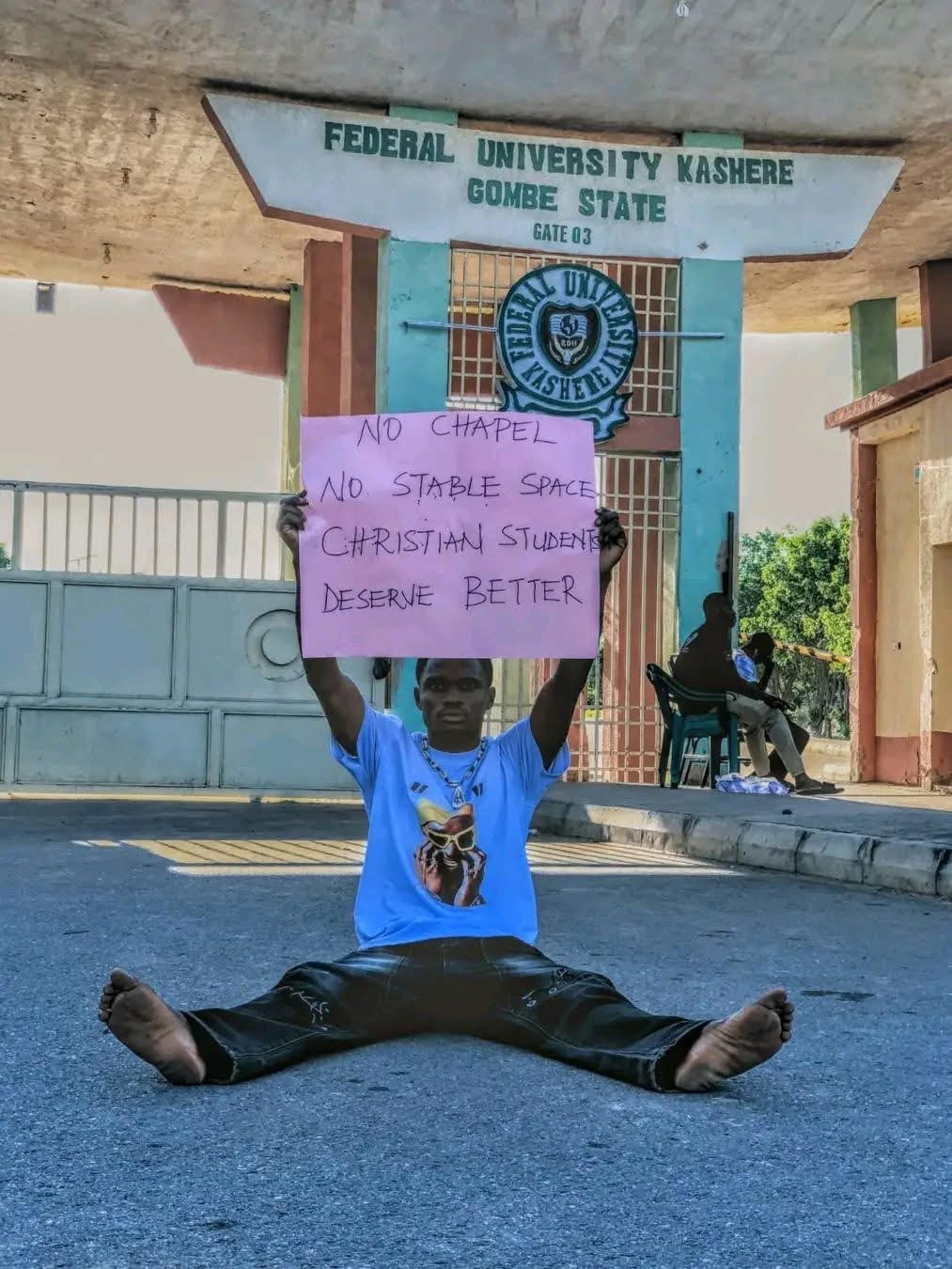
Christians in Nigeria face significant challenges, namely, restricted access to land for church construction. This is in stark contrast to a policy allowing mosques in federal institutions. In northern regions, Christian children often face pressure to convert to Islam and usually undergo indoctrination in hostels.
The Punch newspaper reported that extremists killed at least 53 Islamic clerics and worshippers and abducted 165 between January 1 and July 4, 2022. In contrast, Fides Agency documented the kidnapping of 145 priests and the killing of 11 in Nigeria from 2015 to 2025, with a growing demand for ransom. Rescued individuals revealed that Jihadists aim to impoverish their families and the church. Christian women and girls face frequent abductions, sexual violence, forced marriages, and coerced conversions to Islam, with the 2014 Chibok schoolgirls’ abduction as a notable example. Boko Haram and ISWAP often present Christian men with the choice to convert or face execution. Large-scale attacks on communities have led to property destruction, displacement, and de facto religious cleansing of Christian populations.
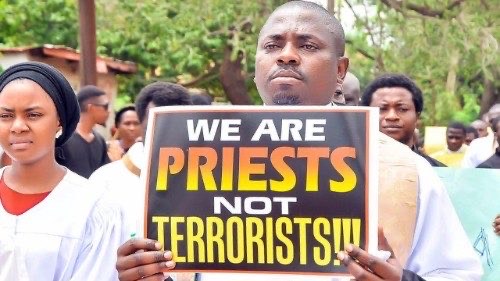
Fr. Joseph Gandu, during a peaceful protest at over the killing priests in Nigeria. Credit: Catholic Archdiocese of Kaduna.
The plight of Christians is particularly dire in northern Nigeria, illustrated by the narrow escapes of Naomi Goni and Rhoda Jatau from blasphemy accusations in Maiduguri and Bauchi, respectively. Violent incidents, such as the 2011 Christmas suicide bombing at St. Theresa’s Catholic Church in Madalla and the June 5 massacre at St. Francis Xavier in Owo, highlight this ongoing crisis. Brad Brandon, founder of the NGO Across Nigeria, states that over 50,000 Christians have been killed and 18,000 churches destroyed in Nigeria since 2009. He points out that millions of Christians are now living in Internally Displaced Persons (IDP) camps, having lost their homes and communities. Brandon emphasizes that this situation reflects a serious issue “of Christian persecution,” with Christians facing the status of “second-class citizens” in northern Nigeria. The terrorists’ religious chant of Allahu Akbar (God is the greatest) as they kill and plunder provides a clue to their motivations.
Mass burials and land grabs in Nigeria provide cause for alarm. Notable incidents include the mass burials of 375 people in Dogo Nahawa in 2010 and 120 people in Yelwata in 2025, reflecting a history of violence. In Southern Kaduna, Fulani militia have taken control of several villages and limited local access to land. The attack on 63 Atyap communities, as well as the siege of over ten villages in Benue state, further underscores the ongoing violence. Additionally, militants have uprooted 102 villages in Plateau State, impacting at least 400 people in the Bassa local government area. Reports indicate armed herders have occupied 151 villages, with multiple Fulani groups showing their settlements being burned, highlighting the conflict’s complexity and widespread effects on all sides.
Christians in Nigeria face significant challenges, namely, restricted access to land for church construction. This is in stark contrast to a policy allowing mosques in federal institutions. In northern regions, Christian children often face pressure to convert to Islam and usually undergo indoctrination in hostels. Those who consider leaving Islam face the threat of violence, and government jobs and educational admissions commonly discriminate against Christians despite federal provisions ensuring equity and fairness. Northern states benefit financially from other regions while limiting Christian rights; issues like the prohibition of alcohol and dress code disputes – such as hijabs for Christian girls – further exacerbate tensions.
Against the will of the people, military leader Gen. Ibrahim Babangida enlisted Nigeria as a member of the Organisation of Islamic Conferences in 1986. 30 years later, President Muhammadu Buhari dragged Nigeria into the Saudi-led Islamic coalition against terrorism on 23 February 2016. Interestingly, Buhari donated a whopping sum of $ to the coalition in 2022 to bolster the Organization of Islamic Cooperation (OIC’sefforts at easing the humanitarian situation in Afghanistan, while IDPs (mostly Christians) in Nigeria wallow in penury. Despite overwhelming public outcry, the All Progressives Congress (APC) fielded a Muslim-Muslim ticket that produced President Bola Tinubu and vice president Kashim Shettima. This was against the norm of balancing religious and regional representation in the Nigerian government that had been followed strictly since Nigeria’s return to democratic rule in 1999.
Genocide Claim and Pushback Amid
However, these conspiracy theories do not explain why the U.S. delayed action until Christian leaders notified Trump of alleged abuses. It is also important to critically examine the claims of Christian genocide in Nigeria amid the prevailing anti-Trump sentiment in Nigeria.
“Trumphobia,” the fear of Trump in the country, persists mostly in the predominantly Muslim north part of the country. They deny accusations of US intervention perpetuated by evangelicals in the middle belt, southern and southwest regions of the country who decry incessant targeted killings committed by suspended Fulani herdsmen. Despite grim reports from international think tanks on violations of religious freedom, the government denies targeted Christian cleansing. Many marginalized Christians have turned to social media to voice their frustrations and demand reforms from a government they view as complicit in their oppression. A key moment came when Rev. Ezekiel Dachomo – a Plateau-born evangelical activist whose state has been under constant attack by a suspected Fulani militia – urged President Trump to help the persecuted Church in Nigeria. The news agency Equipping the Persecuted Church raised global awareness of Christians’ plight in the country. There are claims that the Trump administration may seek to invade Nigeria due to the Tinubu government’s delay in the appointment of an ambassador to the US and controversial trade deals. Some speculate that this aggression is linked to Nigeria’s intention to join BRICS, an organization of several countries including Brazil, Russia, and China. However, these conspiracy theories do not explain why the U.S. delayed action until Christian leaders notified Trump of alleged abuses. It is also important to critically examine the claims of Christian genocide in Nigeria amid the prevailing anti-Trump sentiment in Nigeria.
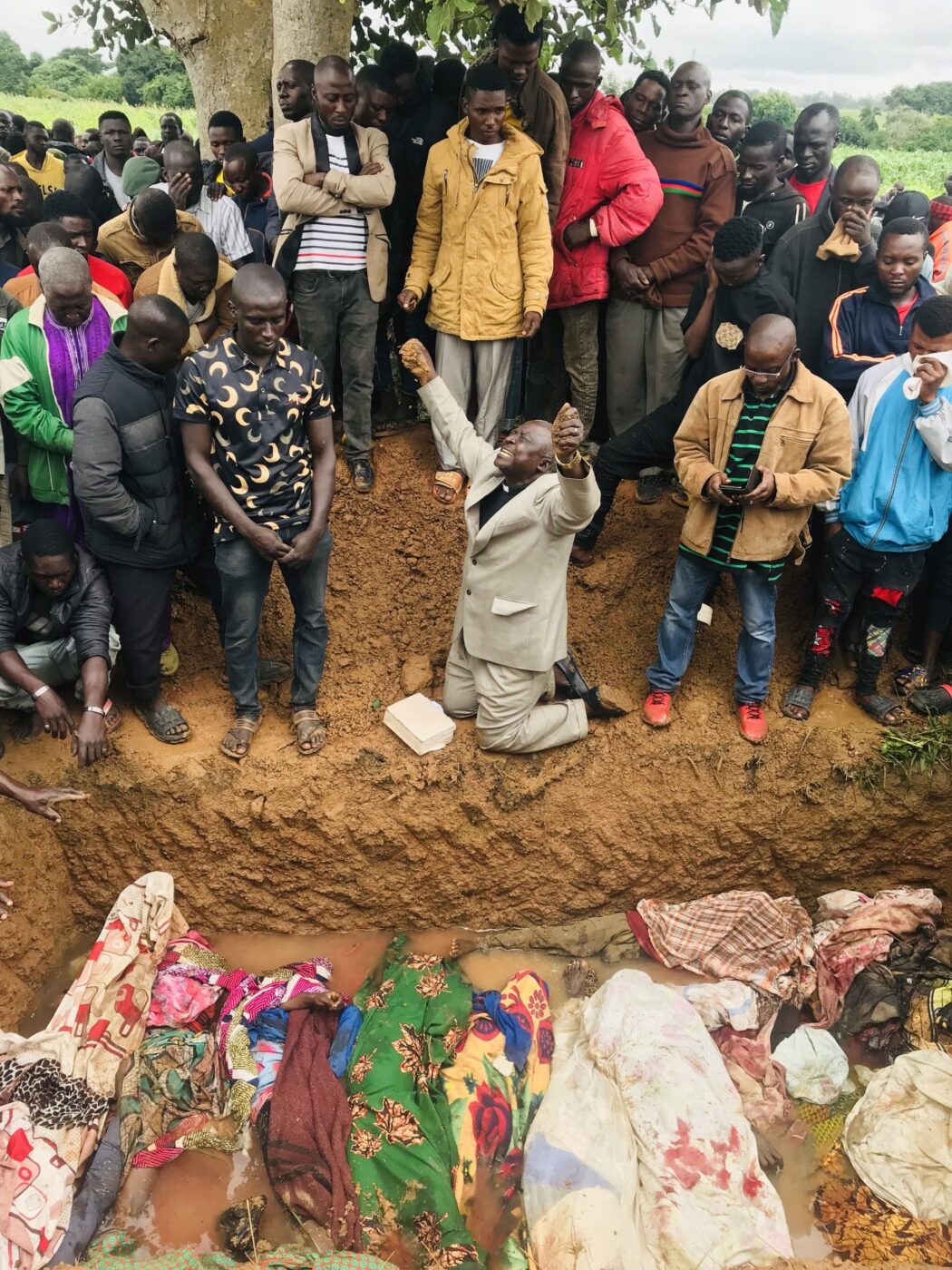
Fiery Nigerian cleric Rev. Ezekiel Dachomo cries to God at the mass burial of 23 members of his congregation murdered in cold blood by suspected Fulani terrorists in Barkin Ladi Local Government Council, Plateau State, north-central, in August 2023. Credit: Masara Kim/TruthNigeria.
The Jihad of Usman dan Fodio (1804-1808) in present-day Nigeria and Cameroon was a precursor to Jihadi movements like Maitatsine, Boko Haram, and ISWAP. René Wadlow, President of the Association of World Citizens, noted in his article Boko Haram: The Long Shadow of Usman dan Fodio that despite their differences, Boko Haram is part of the legacy of Usman dan Fodio and the Sokoto Caliphate, which was West Africa’s largest state in the nineteenth century. Radical and political Islam entered northern Nigeria in 1875, leading some Muslims to feel that British colonial rule hindered the progress of Islam. The indirect rule system favored the north due to its organized governance.
At Christmas and New Year, my Mum would arrange for a Malam to slaughter a chicken, goat, or cow for our festivities and extend an invitation to our Muslim neighbors. We watched as they recited prayers before the slaughter. My parents showed remarkable tolerance by embracing this practice, something that feels rare today.
When Nigeria gained independence in 1960, northern elites warned of threats to Islamic values imposed by Western-Christian dominance and cast doubt on Western education. They deemed Islamic education, or “Ilimin Islamiya”, superior and proliferated the Almajiri system, a method of informal training conducted under a Malam (Islamic or Qur’anic scholar). In my Muslim-dominated primary school, we sang songs criticizing Western education and denouncing it as prohibited, or haram. At Christmas and New Year, my Mum would arrange for a Malam to slaughter a chicken, goat, or cow for our festivities and extend an invitation to our Muslim neighbors. We watched as they recited prayers before the slaughter. My parents showed remarkable tolerance by embracing this practice, something that feels rare today.
From Kano to Kaduna and Bauchi, local authorities forbade the construction of cathedral churches inside the ganuwa, or city gates, that now serve as metropolitan city centers. Christians face persecution in various forms, including torture, kidnapping, and violence. The defense of Deborah Emmanuel’s killers by 52 Muslim lawyers, including 34 Senior Advocates of Nigeria, coupled with the government’s failure to secure Leah Sharibu’s release, highlights the profiling of Christians. Major riots such as the Maitatsine riots of the 1980s, the Kano riots of 1991, the Kaduna Sharia crisis in 2000, the riots of 2001, 2008, 2010, and 2011, the Nigeria carton riots of 2006, and ongoing Jihadi attacks mark significant scars on Nigeria’s conscience.
Looking Ahead: Legal and Political Considerations
Despite the 1999 Constitution’s provision against state religions, twelve northern states adopted various forms of Sharia law between 2002 and 2003, violating Nigeria’s secular status.
Based on the international legal framework referred to earlier, the situation in Nigeria raises serious concerns of genocide against Christians. The intertwining of religion and politics in Islam creates complex challenges, particularly for the 35 ethnic Christian minorities submerged under the Fulani Islamic Emirate System.
Despite the 1999 Constitution’s provision against state religions, twelve northern states adopted various forms of Sharia law between 2002 and 2003, violating Nigeria’s secular status. Since the 2000s, Sharia laws and Hisbah boards, or Islamic police, have enforced strict measures including gender segregation in public transport, disruption of gatherings, and harsh punishments like flogging and amputations.
Although Section 38(1) of the Nigerian Constitution requires the government to protect religious liberty, its implementation remains uncertain. In our article, “Nigeria, the Church, and Religious Freedom: Challenges and Opportunities to Secure this Right,” published in the 2022 Cornerstone Series, Fr. Atta Bardinko and I noted that the Church in Nigeria faces obstacles like inconsistent international engagement, limited public awareness, and a disunited Christian response to religious freedom issues. Religious and political leaders must recognize that terrorism affects everyone. To move past discussions of genocide, the Nigerian government must resolve its dual-legal framework (the presence of Sharia law in 12 northern states despite the constitutional prohibition on state religions), secure its borders, protect citizens’ lives and property, and improve diplomatic relations with the U.S. and the West.