





Russian Influence and the Russian Orthodox Church: A Connection to Think About
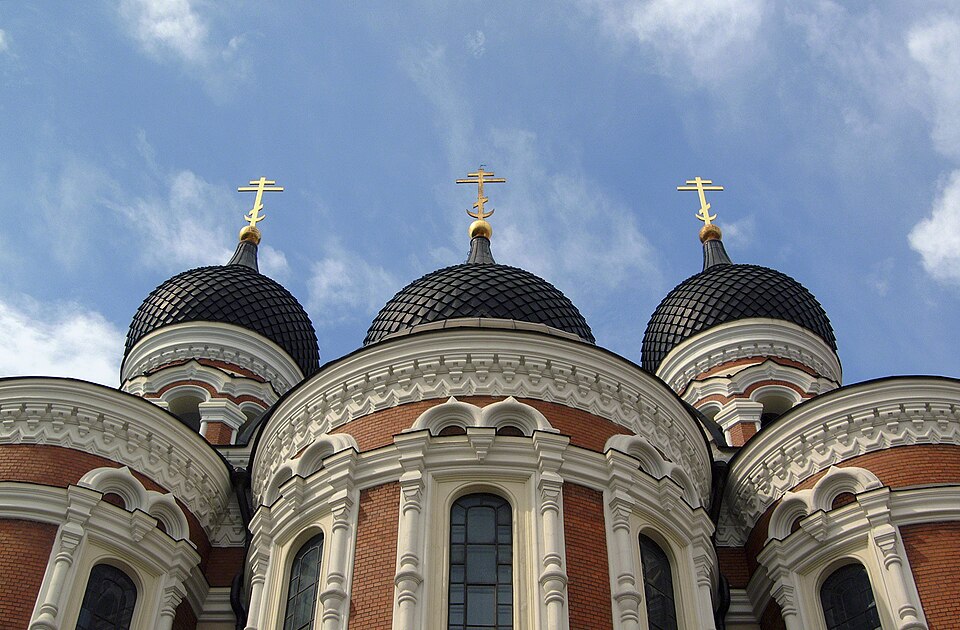

“O God, God of our salvation, look with mercy upon your humble servants, hear us and have mercy on us: for behold, those who desire to fight have gathered against Holy Rus’, seeking to divide and destroy its unified people.”
Introduction
Since the reforms of Peter the Great, the Russian Orthodox Church (ROC) has been tangibly connected to the Russian government. Accordingly, its historical and spiritual influence on Ukrainian Orthodox and Russian Orthodox believers, in general as members of the Orthodox Church family, cannot be discounted. In light of the continuation of Russian aggression in Ukraine, it is important to consider the teleological dimension of Russian beliefs in its actions within the operational environment. This suggests the war is more than territorial; its roots go deeper than surface-level rhetoric and politics, and its sociopolitical implications should be interpreted with something more than a map and demographic chart. The ideological war between Moscow and Kyiv has created a conflict of its own – one that is civilizational but is at risk of its meaning falling between the cracks, as it is being fought without guns and rockets. Russian influence wields considerable power in modern times. It holds the ability to affect believers and non-believers alike and inspire sympathy towards Russia in the hearts of outside people. The Russian Orthodox Church, more than just being a religious organization, may be viewed as extending the Russian government’s goals to the individual and transforming their personal telos to that of the State’s. In the struggle for power with the West, this may be a cause for concern, as Russian influence has the potential to brush against Western inhabitants and reorient their support to the East and its mission.
Historical Background
The current war being fought in Ukraine is between the Eastern and Western civilizations. However, it is key to note that it connotes more than just geographic distinctions, especially considering modern conflicts often occur according to historic fault lines. The modern divide between the East and West may be traced back to the 16th-century Orthodox monk Filofei, who sent then-Tsar Vasiliy III a letter stating the empires of Orthodox Christianity had conglomerated into one entity – the Russian Empire. This Empire was destined for greatness because the First and Second Romes (Rome and Constantinople) had fallen. The Third Rome, that of Moscow, “…alone would continue.” Filofei wrote, “Russia, what country can compare with thee in magnitude?… A population of sixty million people… Who can compare with us? Whom will we not force into submission? Is not the political fate of the world in our hands whenever we want to decide it one way or the other?” Russia, by virtue of its sheer size and divinely appointed destiny, will force all others to submit to its rule and thus create peace.
Russian Exceptionalism
The ROC’s geopolitical influence in the post-Soviet space is inherently connected to Russia’s exceptionalism, which automatically places Moscow’s political actions on God’s “side”. This is especially true considering it is the final authority in terms of religious sanctions. Looking back in time, in 1589, the Metropolitan of Moscow was elevated to a Patriarchate, thereby removing the need for it to report to the ecclesial authority of the Constantinople Patriarchate. The sacred idea of Moscow was later eliminated under the reforms of Peter the Great in 1712, when Peter moved the capital of Russia to Saint Petersburg, away from the holy city of Moscow. The political power of Moscow, however, was not diminished. With the elimination of the Patriarchate and the institution of the Holy Synod (a state-operated and approved substitute for the ROC that normalized state intervention in Church affairs), the Church became subservient to the State. With this diminishing, the tsar became the manifestation of God’s voice on earth, and the Church became a state body. Russia as the Third Rome evolved into an idea beyond the religious sphere, embodying Russia’s destiny. It will stand as “…the ‘last country’ of world history, the rulers of which would bear a lofty moral responsibility for the destinies of all humankind and who ought not to place their hope in the transient riches, power, and glory of ‘this age,’ but solely in God.” Any actions needed to achieve that goal are allowed, and ostensibly, other Slavic nations are destined to fall under Russia’s power to fulfill this ambition. The Russian government has become the vehicle for achieving the success of the mission. This was seen when Russia made Kyiv part of the ROC in 1685. This act imbued Moscow with power and authority, which could even be applied to the historic cradle of Slavdom. In contemporary times, the “Russia as the Third Rome” concept supports many of Russia’s goals, both strategic and foreign policy. From a religious perspective, how can one argue with the country destined to bring mankind back to God? From a political perspective, how is it possible to reason with a country that believes its destiny is to dominate part of the world?
A Teleological Change
In pre-Soviet times, the Russian man was Orthodox automatically because he was born Russian. During the Russian Revolution, “Orthodox” as an identificatory label was no longer applied to the person. Communism, as a way of life, a belief system, and a state of existence, became the substitute for personal identification. Thus, the very criteria by which Russian society and the individual defined themselves were changed. Russian society was wholly transformed as the Soviet system replaced orthodoxy and the most basic teleological understandings of life; believers became comrades, the Church hierarchy was substituted by the Party leaders, and Communist ideology replaced theology. The “opiate of the masses” was utterly extracted by the Party, which replaced Christianity’s eternal salvation with “revolution”. Even the Orthodox calendar, with its religious feast days, was exchanged for the Party’s “year”, featuring annual holidays for the Soviet citizen to observe. As the Russian Orthodox Church’s societal role was altered by the Soviet Union, the destiny of the Russian person evolved from that of individual “salvation” to the collective achievement of worldwide revolution by the Soviet people. The individual was made part of a group and their good was now effectively what was good for the group.
Patriarch Kirill and Why He Matters
Patriarch Kirill is the head of the modern ROC; included within his spiritual authority are the Orthodox peoples of Russia and Belarus, who together represent the largest group of Eastern Orthodox Christians in the world. Whereas the Church had been stifled under Communism, President Putin has allowed it the oxygen needed to breathe, restore itself, and grow. While the Church’s head, Patriarch Kirill, is not President Putin’s personal chaplain, it is critical to keep in mind the alleged KGB ties that may exist in their working relationship. While living in Switzerland in the 1970s, Kirill worked for the Soviet intelligence. Putin would later join the KGB in 1975, so the possibility of their paths crossing is not remote. Considering Kirill’s support for the Ukraine conflict, the ordinary Russian citizen is constantly reminded of the ROC’s subsequent support for the conflict. The Patriarchate has portrayed the conflict as essentially a clash of civilizations, wherein Ukraine represents Western depravity, and Russia represents Eastern morality. According to this rhetoric, Ukraine must be subjugated to prevent the further moral decline of the Orthodox peoples and their societies. Thus, the conflict is not merely political, but also a matter of religion, identity, and values. Essentially, it is a fight between good and evil.
From the information presented, some conclusions may be drawn. Patriarch Kirill is the faith leader for millions of people. His support of Putin demonstrates a solidarity between the ROC and Putin’s actions. This support underpins the appearance of divine legitimization. Consequently, it further emphasizes Russia’s divine destiny to lead the Christian peoples as the Third Rome. This position is key in light of the divisive March 1, 2022 letter from 300 ROC clergy, who opposed the conflict in Ukraine and called for an end to military action in the country. These individuals were not supporters of the approved, mainstream line. Society is not at peace with the conflict. Rather, sections of it are against the conflict, and so parts of society stand against the Church. In the view of the ROC, this stance ultimately places these parts against God. After the priests’ letter, ROC priests were made to say the prayer in quotations, found at the beginning of this article:
“O God, God of our salvation, look with mercy upon your humble servants, hear us and have mercy on us: for behold, those who desire to fight have gathered against Holy Rus’, seeking to divide and destroy its unified people.”
According to the Moscow Patriarchate, “…priests are to recite the prayer daily, both in church services and at home. They are also to recommend reciting it to monks and laypeople.” Many of those clerics who have spoken out have faced punitive repercussions: “Clergy have been defrocked and fined in court for speaking out against the war in Ukraine as the ROC brings members into line ideologically.” Continuing this vein of authoring the thoughts of believers, Kirill spoke out as well. On March 9, 2022, he said, “Our Church is one, whether in Russia or in Ukraine […] we shall pray for the Unity of Holy Rus’, so that no forces dare divide our nation and, of course, that no forces may divide our Church.” “Holy Rus” is a reference to “Kyivan Rus” – the birthplace of Modern Russia. Patriarch Kirill maintains the belief that Kyiv is part of Moscow, reminiscent of Peter the Great’s move to absorb Kyiv into the Moscow patriarchate in 1685. In contrast to Kirill’s (spiritual) call to prayer during this time of conflict, Ukrainian Metropolitan Onufriy called for a tangible ceasefire of what he termed a “fratricidal” war and requested the Ukrainian Army protect the Ukrainian land and people. Nonetheless, what is key here is that Peter the Great’s efforts to sanctify Russia’s political actions by making Kyiv part of the Moscow patriarchate seem to echo in modern times as the head of a religious institution has crossed the borders between the divine and the secular in an attempt to justify actions taken by the government. Peter the Great did so because Moscow was holy. And for the same reason, Patriarch Kirill spoke out.
A Shift from the Religious Standpoint
In December 2022, the Ukrainian Orthodox Church granted permission to its followers to celebrate Christmas on the Roman Catholic date – December 25th, rather than the Orthodox January 7th. An increasing number of Orthodox adherents have shifted their celebrations to December 25th as they seek to put distance between themselves and the ROC, even as Russia seeks to reduce the physical distance between itself and Ukraine. This demonstrates a conscious social divide of people shifting their recognition of ecclesiastic authority – and thereby, shifting their identities – in response to the attack on their territory and their ethnic identification, beliefs (i.e., Ukrainians are Slavic brothers and war against them is fratricide), and values.
Recommendations
Two questions were posed at the beginning of this article: from a religious perspective, how can one argue with the country destined to bring mankind back to God? And from a political perspective, how is it possible to reason with a country that believes its destiny is to dominate part of the world? The answer is to neither argue nor reason with the country, but rather limit its reach and the influence on the people it seeks to target. This necessitates identifying the means of influence and limiting or eliminating them entirely. Influence was not discussed within this article as the main subject. Nonetheless, it is a side effect of Russia’s teleological beliefs. Russia influences people in order to achieve its goals and fulfill its purpose; Russian Orthodox believers are affected by an influence that comes from the State and the Church. Therefore, it is this influence that must be combatted.
It is possible to counter Russia’s reach with soft power. To do this, though, it is important to realize the connections between religion, teleology, and the person. As a form of soft power, religion affects people directly and therefore can be understood as holding influence over them both directly – i.e., a minister delivering a sermon to a group of worshipers – and indirectly – i.e., a family experiencing feelings of sympathy for a suffering people and doubting their government’s actions upon watching a news story on Russian Orthodox believers. The result is a change in the teleological inclinations of the person. Rather than their personal telos, they experience a connection with Russia – and therefore gradually develop a need to dedicate themselves to it in some way and so foster the fulfillment of its destiny. Perhaps by moving to Russia in search of a better life, sharing with friends the “truth” about Russia that the government does not want us to know, or forming a lobby to broach dialogue with the government in the name of relations with Russia.
To counter the powerful connection between soft power and teleology, the informational sphere must be focused on. The Russian informational sphere is one of Russia’s strong manifestations of soft power, and in recognition of how the Russian Orthodox Church is a mouthpiece of the government in the informational sphere that is used to manipulate people and their loyalties, the following recommendations are geared towards this modern method of influence. Faith and purpose are timeless – they motivate people and drive countries. Countering them must be done on a wide-scale basis – but with an aim scaled down to the individual. Consequently, some suggestions for fighting back on the level of civilians and those prey to informational influences are:
- Russian Orthodox rhetoric is potentially harmful as Russian Orthodoxy aligns with aspects of Western Christianity enough to form a sympathetic bond with the observer, who finds it sufficiently close to their teleological beliefs to be credible. To combat this, the US military should consider a proactive public education channel where articles and infographics can be produced and circulated on a weekly basis to the average citizen.
- Varied electronic content should be produced that is related to the topics of this article and should be widely shared on the internet and the public education channel recommended in suggestion 1.
- A public-facing digital dashboard should be started, which US citizens can call to ask about the validity of rumors or internet claims they have encountered regarding Russian action across the Diplomatic, Informational, Military, and Economic (DIME) scale. This should be curated by the US military – ideally, a combination of military and civilian analysts utilizing the DIME instruments of national power.
As a political tool, Russian Orthodoxy is powerful because it is rooted in the values of the person. This means even non-believers may pay more attention to its messages and subconsciously absorb its teachings. This is why the Russian government’s utilization of the Church as a justification for its actions is so powerful. The government influences the Church, which impacts the individual, who then reacts as their values are invoked and their beliefs are challenged. Support and empathy for the Russian government’s causes can be built in this way and a voter base can be affected. Consequently, in answer to the question regarding how to reason with a country that believes its destiny is to dominate part of the world, some suggestions for counteracting Russia’s influence on individuals in the military are:
- Weekly for your situational awareness(FYSA) bulletins may be written with updates on Russia’s activities across the DIME. Political comments or writings from prominent Russian Orthodox figures should be shared, elaborated on, and “debunked”.
- In-person classes may be held once a quarter for officers and enlisted personnel, introducing and updating information on how Russia exercises informational influence against other countries and explicating various tools it has used in the past. The classes should develop an understanding of Russian Orthodoxy, Russian propaganda, and Russia as a nation and base their informational discussion on this.
Educational endeavors are key because they reach the person. It is the person who is targeted for their allegiance by Russia. The person is targeted for the same reason their religion is scrutinized – teleology. The person’s purpose can be many things. Governments may contribute to the formation of a person’s regard for their purpose – be it to live in the pursuit of happiness or spread worldwide revolution. Closer examination may even reveal the person’s “purpose” is supported by the government and aligns with its goals – and this cause for concern should be met proactively to staunch the problem before it begins.
Concluding Thoughts
War is war, regardless of the environment within which it is waged or the instruments used to conduct it. Russia’s civilizational war between Orthodox Christianity and the West on the whole should be treated exactly as this – a war. Even if this civilizational war tends to be more metaphysical than tangible, it is a war, nonetheless. It is a war that will claim the minds of people as Russia seeks to spread its influence, thereby expanding the Russian informational reach if it is allowed to continue without counteraction. The Russian Orthodox Church perpetuates this goal by disseminating Patriarch Kirill’s messages to its members – wherever they are located.
Military actions in Russia have roots that go beyond supporting strategic or political goals. In Russia, the military is the chosen instrument of national power used by a government that works to project its national power to the international sphere as it strives to maintain its position in world politics and pursue its destiny. To understand the Russian operational environment and the usage of its instruments of national power, a study of its cultural, historical, religious, and philosophical spheres is necessary. These areas shed light on why Russian authorities continue to be willing to sacrifice Russian manpower and why negotiations to conclude their actions in Ukraine are, and will continue to be, difficult. This article has endeavored to foster an understanding of the Russian operational environment and, in doing so, explained a motivating factor in Russia’s actions. Within the greater military conflict in Ukraine, another war between the Orthodox East and the Christian West is visible. This conflict stands on civilizational faults and, as carefully devised speeches flood the airways and propaganda fills people’s minds, leads the fight for the person’s destiny – one can be an individual fulfilling their own individual purpose or one can be a tool in a government’s plan to fulfill its goals in pursuit of what rests in the eternal.
Decisions made in the conflict in Ukraine must be placed in the context of Russian history, as well as Russia’s future ambitions, which are intrinsically connected. It cannot be assumed that the Russian government will remain content with sections of Ukraine. Furthermore, Russian-speaking populations exist in Moldova, Armenia, and the entire Commonwealth of Independent States (CIS) region. Will these eventually fall prey to the Third Rome’s destiny? From the Russian perspective, actions are made for a greater purpose, more than merely political. Russia’s telos is to submit the world to itself. From this perspective, one life or a hundred lives is not significant. One year or ten years to take a region does not matter. This is what should be remembered while following the war in Ukraine. In this conflict, one may look at Russia’s actions as work as ensuring a world in line with Russian teleological thought. Within this scope, the war waged by the East has the potential to grow into something much bigger than anticipated, wherein whether one is liberal or conservative, Catholic or Protestant, university-educated or skills-trained does not matter. Ultimately, Russia utilizes its religious reach to sway the teleological understandings that people hold, thus spreading its dominion. Aided by such influence, the Third Rome’s goals can ultimately be achieved.
Check out all of Small Wars Journal’s great content!



.jpg)