





Trafficking at Scale: Why Narco-Submarines Are No Longer One-Way Assets


In The Guardian article “Falling price of cocaine forces drug traffickers to reuse narco-submarines, say Spanish police,” Sam Jones reports on a fundamental shift in transatlantic trafficking logistics driven by collapsing profit margins. Wholesale cocaine prices in Europe have halved to €15,000 per kilo in recent years due to massive production and market saturation, forcing criminal networks to abandon their previous practice of scuttling narco-submarines after single cargo runs. These fiberglass semi-submersibles, which cost approximately €600,000 to build and typically carry three to four tons of cocaine, were once treated as expendable assets and sank at a “narco-sub graveyard” between the Azores and Canary Islands.
Now, traffickers establish refueling platforms at sea to rotate vessels back into service for multiple transatlantic voyages, maximizing returns on rather than writing off the cost against high-margin deliveries. Spain’s seizure of 123 tons of cocaine in 2024 (up from 58 tons in 2022) underscores both the scale of trafficking flows and the persistence of networks adapting to compressed economies and intensifying maritime enforcement.
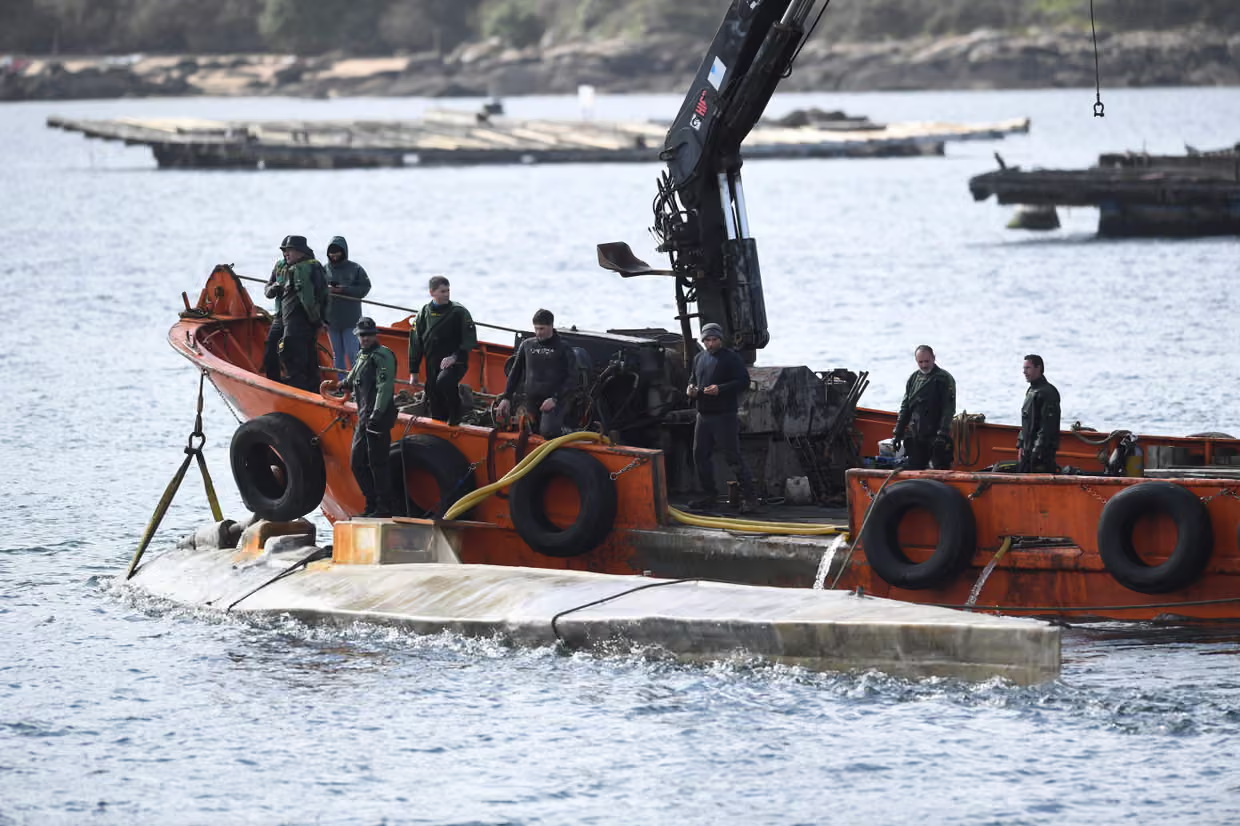
“Spanish Guardia Civil stand as boat crew members tie an alleged narco-submarine before towing it, off Illa de Arousa, in Galicia region, northwestern Spain, in March 2023” (photo and caption courtesy The Guardian)
This operational evolution complicates interdiction strategy by replacing predictable, one-way delivery patterns with increasingly evasive illicit maritime operations. Law enforcement must now track reusable trafficking infrastructure across multiple voyages rather than isolated incidents, anticipating networks that manage fleets and optimize assets, just as legitimate logistics operators do.
The shift also reflects the limitations of coastal surveillance: with 8,000 kilometers of Spanish coastline and only 10 narco-subs officially detected the past two decades, authorities acknowledge significant undetected traffic. As traffickers increasingly favor narco-subs and merchant vessels over sailboats for year-round operations, intelligence sharing, presence patrols, and attribution capabilities must evolve to counter organizations treating the high seas as a persistent operational space rather than temporary delivery corridors.

