Pakistan’s Army Rocket Force: Strategic Leap or Burdened Gamble?

Introduction
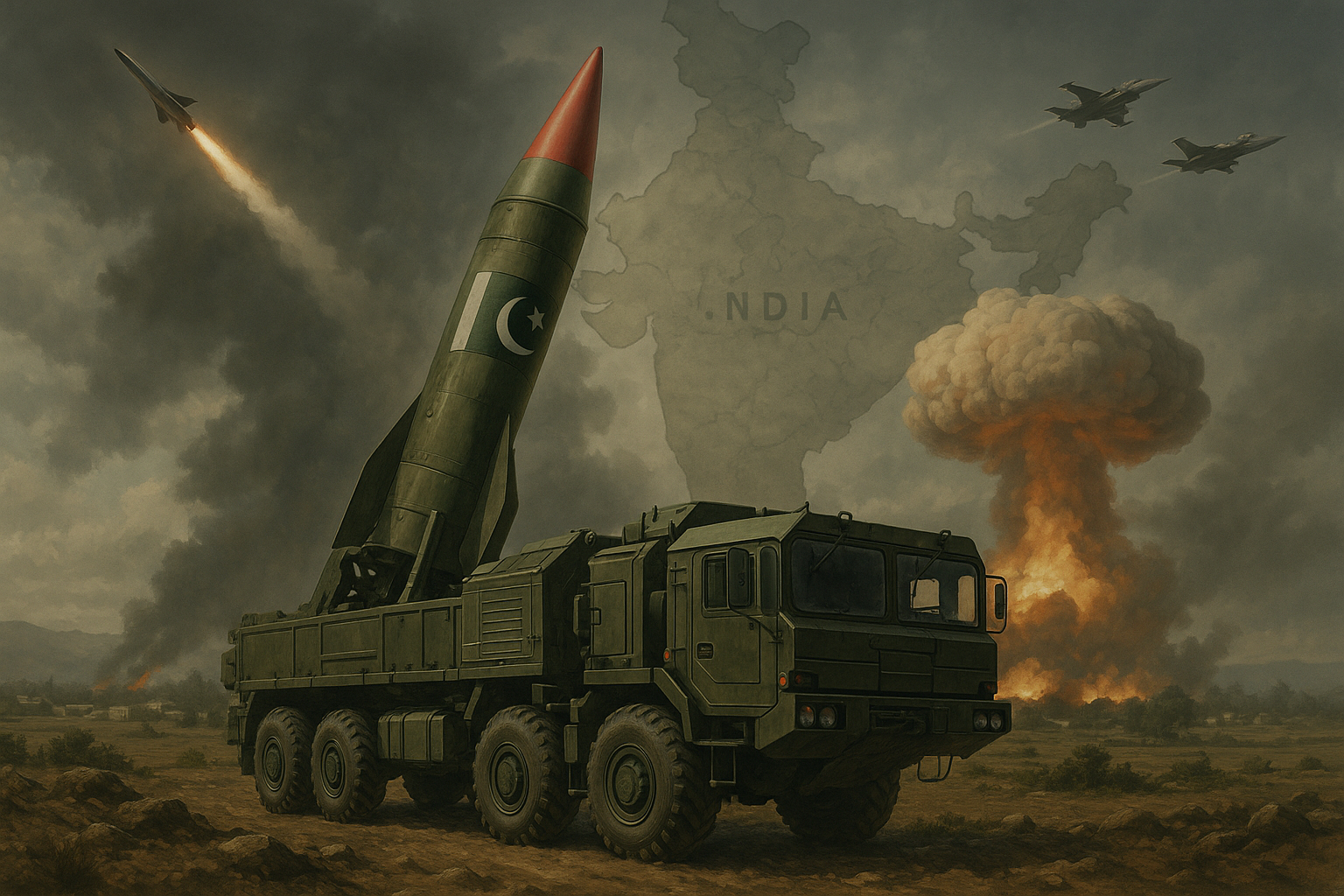
On August 13, 2025, the Prime Minister of Pakistan announced the establishment of a new Army Rocket Force Command (ARFC). This directive would possess contemporary technology and the capability to engage the adversary from all directions. There is no revealed public information regarding the ARFC structure, size, or mission. The official statement just discusses that the focus will be on conventional missile systems rather than nuclear delivery vehicles, which remain under the prime control of the Strategic Plans Division (SPD). Some commentators thought that this announcement of an ARFC was a vital step to deter India, which is growing its missile and hypersonic capabilities. However, this ARFC has raised various questions. What is the need for raising a separate command while Pakistan already has an established strategic forces command structure? Additionally, it is also confronting many domestic challenges, such as its political instability, a suffering economy, and security problems. The discussion regarding the formation of a distinct rocket force in Pakistan, or the evolution of its current Full Spectrum Deterrence (FSD) strategy into an advanced variant known as Full Spectrum Deterrence Plus (FSD+) is pivotal to the changing geopolitical landscape of South Asia.
FSD, a concept that ensures a reaction to threats across all tiers of conflict, has long been integral to Pakistan’s deterrence strategy. Since the early 2010s, this posture has served as a robust barrier against Indian military pressure. However, the May 2025 conflict between India and Pakistan has revealed significant vulnerabilities and gaps. India utilized enhanced models of the BrahMos missile, capable of travelling at nearly supersonic speeds. These missiles successfully penetrated Pakistani defenses and struck vital targets, including those in proximity to the capital Islamabad. The strikes were alarming both symbolically and strategically, as they demonstrated that Pakistan’s air defense systems and conventional deterrent missiles were unable to consistently intercept or neutralize India’s precision-guided threats. India’s Defence Research and Development Organisation (DRDO) has successfully conducted a test of the Extended Trajectory Long Duration Hypersonic Cruise Missile (ET-LDHCM), in July 2025, a new hypersonic weapon developed under Project Vishnu. For the first time in decades, Pakistan’s authorities confront the disconcerting prospect that India might execute a limited, rapid strike campaign beneath the nuclear threshold with a significant likelihood of success.
Advocates of the planned ARFC emphasize that consolidating all conventional missile units under a single command will enhance their readiness, training, and operational efficiency. However, these explanations fail to consider that establishing a new military branch is not only excessively costly but also strategically unwise. Establishing a rocket force will further exacerbate an already strained defense budget. Pakistan’s economy has often faced crises, depending on IMF bailouts while contending with inflation, debt, and sluggish progress. Although defense spending remains a paramount priority, fulfilling critical civilian needs such as post-flood reconstruction, natural disaster relief, combating poverty, and implementing governmental reforms is increasingly challenging. The establishment of a new rocket force command will necessitate an expenditure of billions of rupees for infrastructure, bases, supplies, personnel, and secured integrated communication systems. A new command-and-control system that operates in conjunction with the SPD would also be necessary. In summary, it may evolve into an additional expensive military organization at the most inappropriate moment for Pakistan, which cannot afford to replicate institutions.
Maintenance Issues
Concerns also exist about the technical and operational implications of a rocket force. Missile brigades must remain mobile, dispersed, and vigilant to avert pre-emptive destruction. If these forces were deployed along the border or at strategic locations, they would require sophisticated methods for communication and collaboration with the Navy and Air Force as well. The May 2025 crisis revealed issues with the deconfliction of drone operations, cruise missile strikes, and air defense deployments. In the event of a war, India would likely conduct a comprehensive strike targeting missile units, air bases, naval ports, command centers, and radar installations. If a rocket force operates as an independent entity, the likelihood of coordination issues may diminish the efficacy of retaliation. Possessing missiles alone is insufficient for effective deterrence; they must also be integrated into a cohesive Command, Control, Communications, Computers, Intelligence, Surveillance, and Reconnaissance (C4ISR) network. A rocket force may evolve into a distinct and ineffective branch if Pakistan fails to invest significantly in its integration.
A further unanswered question is the quantity of missiles required to render such a force credible. Nuclear deterrence requires only a limited quantity of robust missiles, but conventional missile deterrence is contingent upon the total number available. Pakistan requires several short and medium-range missiles to overwhelm Indian defenses and inhibit India’s conventional military options. India’s land size, terrain, and missile defense systems like the S-400 would again be a serious challenge for ARFC. However, each missile system is prohibitively costly to manufacture, maintain, and operate. Maintaining brigades on heightened alert renders training, logistics, and command readiness increasingly critical. Currently, the SPD, the secretariat and operational arm of the National Command Authority (NCA), oversees the Employment Control Committee (ECC) and Deployment Control Committee (DCC). It ensures that both nuclear and conventional missiles are perpetually prepared for deployment. Establishing a new rocket force would necessitate the replication of this role, the allocation of resources, and the redistribution of personnel, finances, and expertise. This type of duplication may exacerbate the situation by establishing two competing bureaucracies vying for the same finite resources.
Communication Issues
The transfer of authority also presents security concerns. The SPD and the NCA administer Pakistan’s nuclear command system in a centralized and professional manner, garnering global recognition. Introducing an additional rocket force command may obfuscate the chain of command on the oversight of specific rockets and their operational timelines. Furthermore, safety and security concerns and unauthorized use are additional issues. During a crisis, it may be challenging for India or other nations to ascertain whether a Pakistani missile launch is nuclear in nature. The risk of misinterpretation and inadvertent escalation would be far greater. The US Department of Defense has issued warnings regarding these risks in China, where the People’s Liberation Army Rocket Force (PLARF) possesses dual-capable missile brigades, complicating the distinction between nuclear and conventional armaments. For Pakistan, rivalling this paradigm may result in increased instability rather than enhanced stability.
Hypersonic Deterrence Over Conventional Defense
This concept is reinforced by examples from across the globe. The utilization of hypersonic Kinzhal missiles by Russia in the conflict with Ukraine has demonstrated how velocity and agility may circumvent air defenses. Ukraine’s utilization of Western-supplied systems, such as Patriot missiles, has enhanced its missile interception capabilities; nonetheless, this advancement has incurred significant costs and limitations in coverage. In June 2025, in response to Israel’s airstrikes, Iran commenced a synchronized attack on Israel using high-speed missiles and drones, overwhelming even the most sophisticated layered missile defense system globally. Although Israel successfully intercepted the majority of the missiles, the strain on its systems demonstrated the challenges of maintaining a prolonged defense against high-velocity saturation attacks. These recent examples validate that the future of deterrence resides not in conventional missile brigades, but in hypersonic capabilities, the integration of electronic warfare, and robust command networks. Conventional missile forces are increasingly vulnerable to pre-emptive attacks or interceptions prior to missile launch. Conversely, hypersonic weapons, until now, remain exceedingly difficult to defend against.
India’s confidence in the S-400 Triumph system demonstrates this predicament. It is a fact that the S-400 can intercept and defend against aircraft, drones, and conventional ballistic or cruise missiles in many layers; however, it is incapable of countering hypersonic glide vehicles (HGVs) that travel at Mach 7 and display unpredictable maneuverability. Pakistan might counter India’s multibillion-dollar S-400 and other missile defense systems by prioritizing hypersonic research and development. This would re-establish the equilibrium of deterrence at a considerably lower expense than the formation of a new rocket force. Hypersonic weapons affiliate effectively with an FSD+ doctrine, wherein survivability, precision, and velocity offer substantial deterrence without necessitating a significant expansion of force structures.
Other Areas of Focus
The development of news on the rocket force is particularly strange given Pakistan’s domestic non-traditional security challenges. The nation is perpetually vulnerable to terrorist assaults, experiencing terrorism in Baluchistan and Khyber Pakhtunkhwa, and is rife with corruption. Natural disasters, such as floods, continue to devastate infrastructure and require assistance from other nations. In this context, allocating funds for a new rocket force may be perceived as misplacing priorities domestically with military vanity projects being developed amidst economic hardship and inadequate governance. Critics have often cautioned that augmenting military power without enhancing civilian authority in Pakistan exacerbates authoritarianism and complicates governmental accountability. The ARF may exemplify military institutional inflation at a time when Pakistan requires a more equitable distribution of power between civilian authorities and the military.
Alternative Ideas and Conclusion
Modernizing existing structures inside an FSD+ framework would be advantageous. This would position hypersonic weapons as central to deterrence, use electromagnetic warfare to disrupt Indian targeting and surveillance, implement layered missile defenses to intercept incoming strikes, and establish a fully integrated C4ISR network that links air, naval, and ground forces. Pakistan should refrain from usurping the SPD’s responsibilities; rather, it needs to reinforce its position as the sole custodian of missile forces. This approach conserves resources, enhances clarity, and reinforces deterrence in the era of hypersonic weaponry. This also enhances Pakistan’s capacity to interact with China, which is rapidly advancing in hypersonic technologies and may be willing to share certain capabilities or engage in joint research. This proposal would enable Pakistan to advance to modern deterrence strategies rather than allocate resources to outdated missile battalions.
The issue is not whether Pakistan must alter its deterrent posture; the May 2025 crisis unequivocally demonstrated that it must. The inquiry pertains to the manner in which it will transform. Establishing an independent rocket force may provide prestige, but it could also result in redundancy, excessive expenditure, and instability. Conversely, transforming FSD into FSD+ through substantial investment, integration, and defensive innovation offers enduring deterrence aligned with the evolving strategic landscape in South Asia. Pakistan is unable to implement a new command structure at this time due to the prevailing economic, political, and national conditions. It must undertake strategic investments, rather than institutional ones, to survive in the hypersonic era.