





Tomorrow’s Wars, Today’s Problems

“To maintain our edge on the battlefield, our Army will transform to a leaner, more lethal force by adapting how we fight, train, organize, and buy equipment.”
The character of war is shifting faster than traditional defense institutions can adapt. Autonomous systems are proliferating, sensors are everywhere, and dual-use technologies evolve at a pace that continually threatens to outmatch U.S. forces. To remain dominant and decisive, the Army must transform not only how it fights, but also how it trains and develops Soldiers and leaders. The recent consolidation of Army Futures Command and Training and Doctrine Command into the Army Transformation and Training Command (T2COM) signals that transformation and training can no longer be treated as separate enterprises. Instead, transformation must be embedded in the way Soldiers are trained, units are organized, and leaders are educated. T2COM enables Transformation in Contact (TiC) by reshaping training at the tactical level, institutionalizing new capabilities, sustaining operational reach, blending innovation with competition, and cultivating data-literate leaders who can think and adapt in real time.
Always Begin With the Cognitive
“Hell is not fire; that would be the ultimate in suffering. Hell is mud.”
Attributed to a British Soldier who spent nearly every moment in the mud of trenches during World War I (WWI), this quote describes the misery and hellish conditions nearly all experienced. The psychological effect mud had on troops in WWI was haunting, and Soldiers returning from the trenches following the war often had visceral reactions to mud based on the trauma they experienced. For many Iraq and Afghanistan veterans, the fear of improvised explosive devices (IEDs) hidden on, beneath, and beside roads or in culverts provoked similarly visceral reactions when they returned stateside. Today’s fear is the menacing sound of a first-person view (FPV) drone hunting for its next target. The whizzing and buzzing sound signals near-certain death for troops in the open on the battlefields of Ukraine. YouTube abounds with videos of Ukrainian and Russian Soldiers running for their lives from the FPV drones. This is the harsh reality our current and future generations of Soldiers are likely to experience, and for which the Infantry School is currently preparing.
“So, one morning, I wondered: How would you train Soldiers for combat in the future? I didn’t bother thinking of new land-based weapons systems – what was on my mind…was space. Soldiers and commanders would have to think very differently in space, because the old ideas of up and down simply wouldn’t apply anymore. I had read in Nordhoff and Hall’s history of World War I flying that it was very hard at first for new pilots to learn to look above and below them rather than merely to the right and left, to find an enemy approaching them in the air. How much worse, then, would it be to learn to think with no up and down at all?”
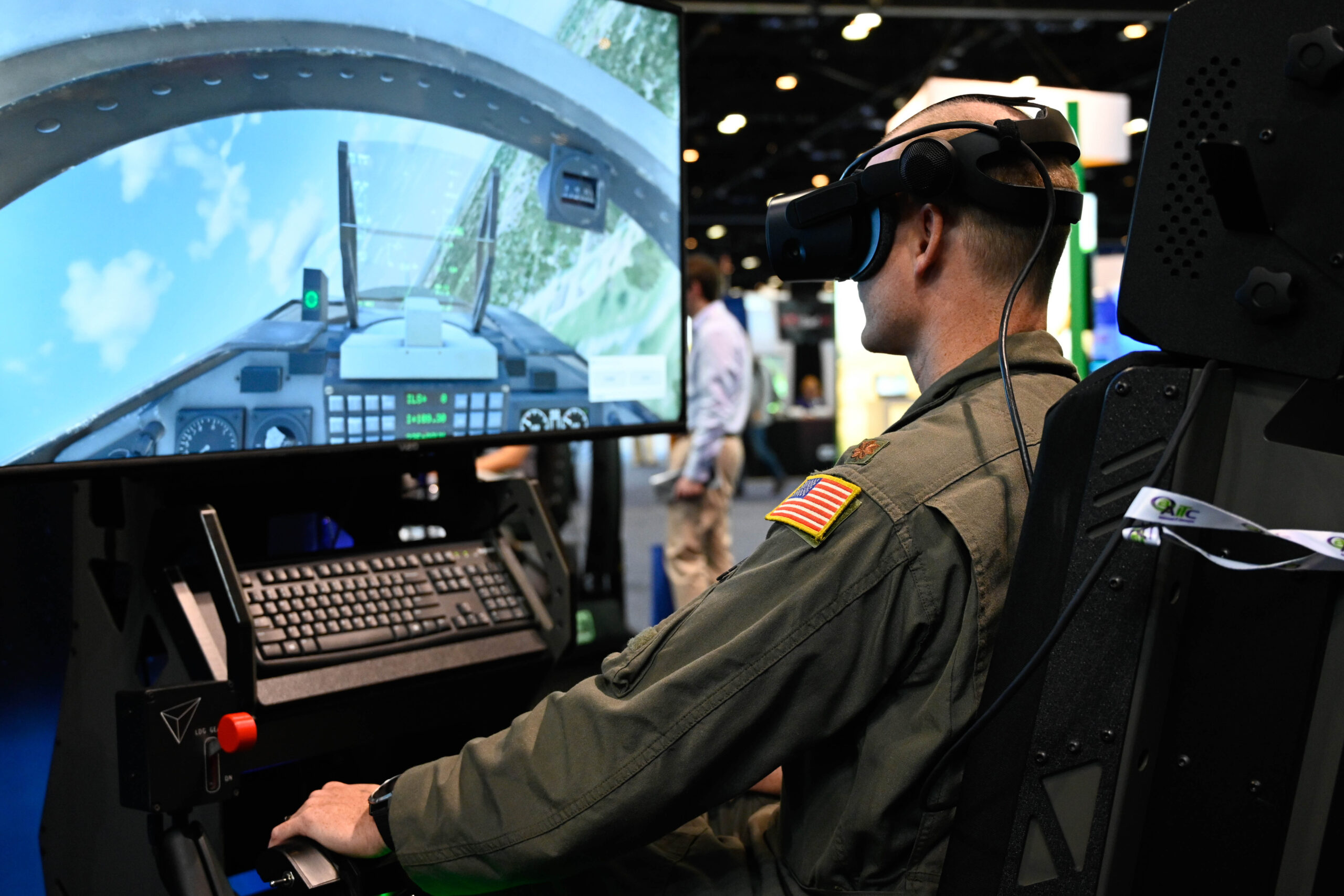
Focusing on cognitive and behavioral conditioning, Infantry One-Station Unit Training (OSUT) can enable transformation in contact by changing the way it introduces trainees to tactical movement formations. Assuredly, Soldiers moving tactically will be threatened by small, unmanned aviation systems (sUAS), and therefore, how Soldiers move in tactical formations must fundamentally transform to address this threat. The conditions in which many tasks are trained must include the threat of sUAS. During all BCTs, Soldiers navigate the night infiltration course, the intent of which is to introduce trainees to the sights and sounds of the battlefield during limited visibility. The lesson plan clarifies further, “…this course is meant to give you the most realistic experience as possible to combat…You will be crawling under machine gun fire like many Soldiers before you in such battles as D-Day and the Battle of the Bulge during WWII.” History demonstrates that battlefield environments create deep psychological imprints, and it will remain instructive to expose Soldiers to direct fire, instilling in them the fear that cultivates the requisite instinct to avoid getting shot, but it begs the question: how best to prepare Soldiers for future threats?
The night infiltration course must change to reflect the chaos of future battlefields. However, there are immediate challenges that arise when considering the incorporation of sUAS in the night infiltration course. Despite this, Infantry OSUT recently included a “React to sUAS” course, which immediately precedes the night infiltration course. Following this first exposure to sUAS, the trainees are placed on a crawl-walk-run training trajectory, which incorporates sUAS and C-sUAS in all field training leading up to graduation. While this does not fully realize the vision General Brito described, it does “expose them [trainees] to operational threats that they may see if they were to deploy tomorrow, and also so they haven’t seen it for the first time when they join whatever unit they’re going to…” In short, Infantry OSUT is beginning to condition Soldiers to think and move tactically under new realities, much like the “Battle Room” in Battle School in the book Ender’s Game.
Despite this, Infantry OSUT must never let the desire to incorporate sUAS eclipse the importance of Soldiering and the focus on the fundamentals. Abrupt changes in the focus of the Army can creep into the basics of basic training, and while it is important we expose trainees to the menacing threats of sUAS, survival in battle will continue to depend on mastery of the fundamentals. Unless, of course, it is the fundamentals that must be reevaluated to ensure they remain the foundation of an anticipated future war. Therefore, it is imperative that sUAS realities and capabilities become inextricable to small unit tactics but never become the sole focus – unless, perhaps, there is a military occupation specialty entirely dedicated to sUAS.
Lethality requires Mastery; Mastery requires Focus: The 11W & 19W MOS’s
“Victory will belong to those who integrate unmanned systems into the very core of their tactical thinking, not just by issuing drones, but by rewriting doctrine.” Mastery of a skill requires thousands of hours of training. Given how units are currently organized and the subpar lethality that can be achieved from a task relegated to an additional duty, it is time for the Army to establish a new military occupational specialty for drone operators. Small, unmanned aviation systems (sUAS) must belong to tactical ground units to avoid aero-centric predilections.
In fact, it is key that this position is within Infantry or Cavalry formations, and not within the aviation branch, because it is fundamentally meant to create drone operators at the squad, platoon, and company level. This military occupational specialty (MOS) would require them to become Infantry or Cavalry Soldiers first, and then all-type, drone operators. Much like our 11C mortar Soldiers, who certify as Infantryman first, this drone operator or an “11W/19W” would conduct one-station unit training (OSUT) at Fort Benning and then become sUAS operators at companies across the Western Hemisphere Command.
The requirement to perform security and reconnaissance functions did not disappear with the inactivation of the units assigned to perform these functions. Based on the recent reductions in manned reconnaissance across light and Stryker formations, the “11W” MOS enables small unit reconnaissance, call for fire training, advanced communications training, and training on how to use 3D printers, so they can rapidly fabricate pieces for the sUAS. The “19W” MOS will focus on supporting the BCT to enable its ability to gain and maintain contact with the enemy without direct human involvement. The 19W training will be like the 11W, but it will focus on informing commanders of enemy positions and providing eyes on employing an array of indirect weapon systems and enabling domination in the close fight. The drone operator course is not enough – there must be an MOS dedicated to this, otherwise we risk operating in the delusion of lethality. Neither exposure nor familiarity is enough. To win, we require overwhelming mastery at scale, because mastery is the essential preliminary to lethality. Furthermore, the military occupational specialty (MOS) cannot be bound by programs of record for sUAS. Rather, since sUAS technology is rapidly advancing, the MOS must be focused on the fundamentals of sUAS and drone fabrication, operation, and tactics as opposed to training on a single piece of material through a program of record.
A recent concept, the Amor Strike Platoon, is a zero-growth reorganization of existing capabilities that could be made remarkably more effective by including 19Ws. Additionally, the 198th Infantry Brigade in Fort Benning is about to begin a pilot program during which recently graduated 11Bs and 11Cs remain at Fort Benning for an additional ten days to learn how to use drones. However, this is admittedly a discrete solution to a systemic problem, for which the development of an MOS would systemically solve.
Consider Operational Reach for Small Unmanned Systems (sUAS)
Transformation also requires sustainment solutions that extend operational reach. Armor Brigade Combat Teams have long appreciated the critical importance of forward repair systems (FRS) as part of the company trains and battalion trains. The FRS is essentially a mobile maintenance shop designed to enable military mechanics to repair battle-damaged vehicles and systems “on-site” or as far forward of the rear area as possible to help sustain the operational reach of units. As an element of operational art, operational reach is the distance and duration across which a force can successfully employ a military capability. Operational reach balances the natural tensions among endurance, momentum, and depth. Like the FRS in an ABCT, which enables operational reach, light infantry units will need an analogous capability for sUAS, which are essentially mobile drone building and repair factories.
Recent conflicts illustrate this need. During Israel’s “Operation Rising Lion” in June 2025, pre-positioned drone teams played a crucial role in disrupting Iranian defenses and facilitating Israeli airstrikes. Many lessons can be learned and mislearned from this incredibly daring operation, most notably that human-machine integration cannot be mistaken for human-machine supersession. As it turned out, to get the sUAS positioned to strike critical, high-payoff targets, Israel still required troops (in this case, Mossad agents) on the ground, deep in Iranian territory, to release the sUAS, which operated below the threshold of detection for larger air defense capabilities. The point is that even the most advanced systems require personnel in contested terrain to launch and recover drones. A mobile drone factory manned by 11 and 19 Whiskey’s could provide this capability for light infantry, allowing them to sustain reconnaissance, security, and dynamic targeting missions deep in contested space. The mobile drone factory, operated with 11 and 19 W’s who can rapidly manufacture and repair drones in the battlefield will help us achieve the goal of always having robots, not Soldiers, gain and maintain first contact with the enemy.”
Innovation Through Trial, Error, and Competition
“Thomas Edison’s approach was one of trial and error, hard work, and persistence, being methodical, rigorous, and purposeful, and using prepared minds and careful monitoring. He believed innovation arose not from individual genius but collaboration, and this capacity to work together and across boundaries resulted from a supportive culture, environment, and social and industrial relations.”
The essence of training is to allow error without consequence. In August 2000, two men organized an event in which competitors designed and operated remote-controlled armed and armored machines to fight in an arena. The show, BattleBots, continues to air on the Discovery Channel today – for entertainment. While active conflicts provide fertile ground for observers to conjure ideas about future war and warfare, all two-star commands within both T2COM and FORSCOM should develop and participate in a competition like BattleBots – for lethality and robotics dominance. The 18th Airborne Corps’ Dragon’s Lair successfully introduced the force to home-grown, bottom-up ideas in a variety of arenas. Likewise, major commands should consider developing teams and leagues where land, sea, and air-based sUAS are created to fight each other in a competition like the best warrior, best squad, and best Ranger competitions. Consider the value of having many teams attempt to conduct a combined arms breach with robotics. Many installations already have innovation labs and centers with massive 3-D printers. Applying a lethality-focused, competitively driven purpose to them will expedite further efforts to transform in contact.
The next step in robotics dominance is preparing Soldiers to enter the Army already possessing the STEM skills necessary to drive TiC from the ground up by supporting robotics programs in our nation’s schools. An example is VEX Robotics, which holds the world’s largest robotics competition every year. Children in elementary grades through high school form teams and work to build creative solutions through real-world innovation. On any given weekend you can encounter a group of children who can fabricate, code, drive, and fight a robot to accomplish a task and complete its mission. These are exactly the critical thinkers and collaborators that we need to serve in the previously described whiskey MOSs. Robotics programs can be easily incorporated into existing JROTC and ROTC programs. Additionally, community partnerships with local innovation driven partners like the FISTA Innovation Park found outside the gates of Fort Sill, Oklahoma, can provide a state-of-the-art facility committed to supporting these future Soldiers as they learn the skills needed to foster innovation, collaboration, and triumph in the dynamic landscape of defense and security, resulting in recruits that enter the force today with the skills needed to dominate the battlefield tomorrow.
Leading Transformation is Learning and Teaching Transformation
“A military historian recently asked me how the United States, indifferent and even contemptuous of the military in peacetime, had been able to produce a group of generals proficient enough to lead armies successfully against German might…I am now convinced that the intensive and imaginative training at the Command and General Staff College had a great deal to do with it…Most of us saw Armageddon as a certainty.”
We are in an interwar period, and there is no denying it. Interwar periods are marked by the absence of large-scale conflict but underscored by rapidly evolving threats, and despite the overconfidence of many who claim the U.S. Army is the best in the world, we stand at an inflection point. The Chief of Staff’s call for “transformation in contact” reflects an urgent imperative: to restructure the force for the future while simultaneously maintaining readiness for combat today. Central to this transformation is the cultivation of intellectual and tactical excellence among the Army’s officer corps. Prioritizing instructor assignments for high-potential officers is a historically grounded and strategically sound means of achieving this aim. This approach mirrors the U.S. Army’s successful practices between WWI and WWII, as detailed in Peter Schifferle’s America’s School for War and in Military Innovation in the Interwar Period by Williamson Murray and Allan Millett. To transition an organization as large and complex as the United States Army, there must be a group of selected individuals who help teach and train those who will execute the transformation.
As noted in his book, America’s School for War, Dr. Schifferle emphasizes the role of the Command and General Staff School (CGSS) at Fort Leavenworth in shaping the Army’s operational competence during the 1920s and 1930s. He illustrates how a cadre of intellectually curious, forward-thinking officers—many of whom were identified as high-potential—were selected to serve as instructors stating, “assignment as an instructor at Leavenworth became a plum assignment during the interwar years, with selection routinely coming from the highest rated graduates of the school; assignment as an instructor was highly regarded by army officers at large”. These officers not only refined their own understanding of doctrine and tactics through teaching but also played a formative role in educating a generation of leaders who would go on to command in World War II. Of the thirty-four corps commanders in World War II, over half served as instructors at Fort Leavenworth. The instructor role, far from being a career detour, was a deliberate investment in future operational excellence. Replicating this model today would create a force that is intellectually agile and capable of leading transformation into a fast-changing operational environment.
Murray and Millett’s Military Innovation in the Interwar Period further supports this argument by showing that meaningful military transformation is driven by a culture of experimentation, critical thinking, and education. Their case studies demonstrate that militaries that encouraged debate and analytical rigor within their educational institutions were far better prepared for the next war. The U.S. Army’s ability to rapidly adapt its combined arms doctrine and integrate emerging technologies before World War II was not accidental—it was the result of deliberately assigning top-tier officers to educational and doctrinal development roles. Selecting leaders who are naturally innovative will not be enough. We must create generations and cohorts of leaders who will endure multiple leadership positions in both the operating and generating force. Prioritizing high-potential officers for instructor duty today would similarly foster this mindset and generate the professional excellence required of the spirit and the intent to transform in contact.
As the U.S. Army transforms amid new domains of warfare—cyber, space, and information—it needs leaders who are both tactically grounded and intellectually adaptive. Instructors have a unique opportunity to shape these leaders, both by teaching and by driving doctrinal evolution. Officers who have been successful in command and other CSL positions should be prioritized as instructors at the Captains’ Career Course and Command and General Staff School. By making instructor duty a competitive, high-prestige assignment for top-performing officers, the Army signals its commitment to transformation not as a future goal, but as a present, contact-driven imperative. In doing so, it builds the intellectual foundation for a force capable of prevailing in the uncertainty of tomorrow’s battlefields.
Achieve Data Literacy by Incubating it in the Generating Force
“Going digital is a mindset, it’s culture change…it’s about how we can fundamentally change how we operate as an Army through transformative digital technologies, empowering our workforce, and re-engineering our rigid institutional processes to be more agile…”
The Army is woefully behind in data literacy. We are, in effect, data illiterate. Data literacy is more than building a dashboard on Power BI. It’s about understanding the meaning and significance of the numbers represented on the dashboard. Put differently, data literacy is one of the key vehicles for moving at the speed of relevance. All our efforts to procure the most advanced command and control equipment for winning in a multi-domain environment will amount to nothing more than extravagant expenditures if our Soldiers and leaders do not remotely understand how the expensive software and hardware came to give them the answers. Consequently, we must evolve our strategic approach to institutionalize the data literacy required to thrive in a multidomain environment. Pressing the matter further, the Vice Chief of Staff of the Army most recently emphasized that, “there needs to be a common set of understanding amongst all leaders, regardless of branch, on data literacy.”
Recently, the U.S. Army, in conjunction with Carnegie Mellon University, developed the Army Data Driven Leadership Program, which aims to inform leaders on how best to leverage data and drive transformative changes across the Army enterprise. As an enterprise-leader level course, however, it does not fully operationalize the skills required to generate momentum at the platoon and company level, which is what is necessary right now. In fact, we need to educate today’s junior leaders, who will become tomorrow’s future commanders on how to leverage data to enhance Soldier performance and lethality. This must be a generative approach. This approach must also smartly integrate the institutional, operational, and self-development domains to foster continuous leader development as leaders advance in the Army. Effectively, data literacy should become a thread that binds every component at every echelon.
In fact, there is no greater assignment for educating leaders on data than in generating force assignments such as basic training and advanced individual training, where tens of thousands of newly arrived trainees and newly minted Soldiers cycle through these organizations. While drill sergeants focus on indoctrinating trainees on the fundamentals of soldiering, the senior drill sergeants, first sergeants, platoon leaders, and company commanders focus on collecting, organizing, refining, understanding, and analyzing training, biometric, and demographic data. This introduction to data fundamentals will pay dividends when they advance to future operational assignments, which will similarly require data literacy, albeit with much more risk to readiness. However, there must be a formal education curriculum preceding this informal on-the-job training (OJT), which introduces data literacy basics to these leaders. This curriculum should be crafted based on the echelon of leaders and professional military education.
Transformation is not a project that can be deferred until the next conflict – it must occur now, in contact with the changing character of war. T2COM enables this by ensuring Soldiers experience realistic battlefield threats from their first days in uniform, by institutionalizing mastery through new specialties like the proposed 11W and 19W drone operators, by sustaining operational reach with mobile drone repair and production systems, by using competition as a vehicle to drive innovation, and by cultivating data-literate leaders who can guide doctrinal evolution as instructors. Just as the interwar Army built the intellectual foundation for victory in WWII, today’s Army must align transformation with training at every echelon. Put differently, we must train for the known, while educating for the unknown. By doing so, T2COM ensures the Army does not merely prepare for tomorrow’s war, but that it prepares in contact, with the urgency that tomorrow demands of today.
(The views and ideas expressed here are solely those of the authors and do not represent the United States Army, the United States Department of War, or the United States Government).



