





Weaponizing Supply Chains: How Iran and China Drive Strategic Food Insecurity in Modern Conflict
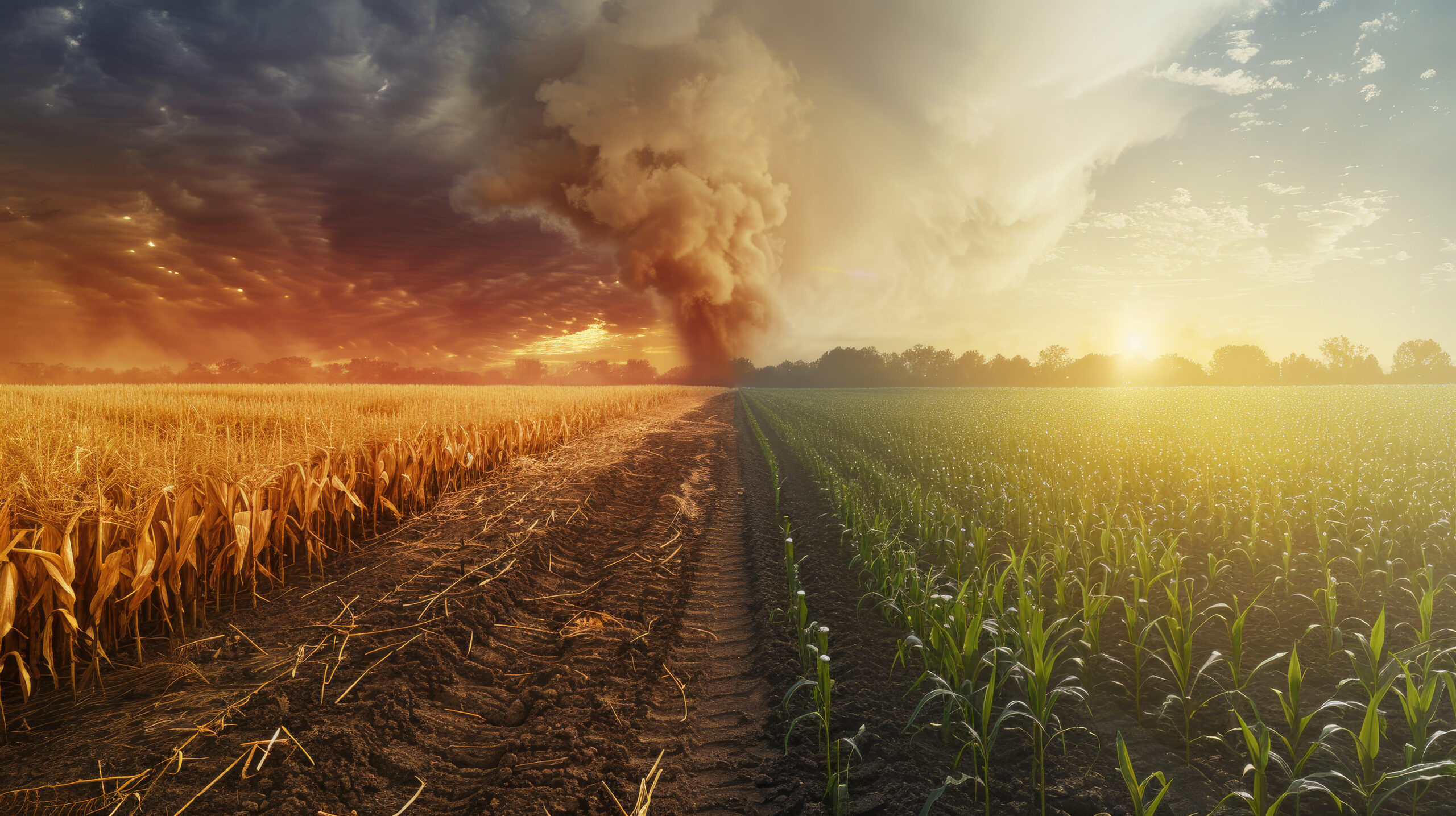

Iran did not improvise the Hormuz crisis. The mine stockpiles, the Islamic Revolutionary Guards Corps’ fast-boat fleet, and the Houthi program at Bab al-Mandab are a coordinated architecture assembled over the years to make commercial insurance a controllable coercive mechanism. The 2024 Houthi campaign proved the concept. Without sinking a vessel, it drove Asia-Europe freight rates up sevenfold and collapsed Suez Canal revenues roughly 50%. Iran does not need to sink fertilizer ships. It needs to make them uninsurable. Any sufficiently concentrated agricultural input supply chain is a targetable strategic system. No G7 government has built the architecture to manage this kind of deliberate attack.
The convergence of two distinct supply restrictions, one geographic, one political, constitutes a compound chokepoint on global agricultural inputs. The geographic gate is the Strait of Hormuz, through which roughly one-third of global seaborne fertilizer trade transits, including the ammonia, urea, and sulfur that underpin crop production on five continents. The policy gate is China’s export licensing regime, through which Beijing periodically restricts urea and NPK exports. When the U.S.-Israeli campaign against Iran commenced on February 26, 2026, both gates closed within three weeks. This convergence makes 2026 structurally unprecedented.
Fertilizer Dependency
Nitrogen-based fertilizers, urea, ammonia, and NPK compound blends, are not optional crop inputs. Without nitrogen fertilization, global crop yields could decline on the order of 40 to 50 percent, making food production for a population of 8.2 billion impossible. The global supply chain for these inputs has highly concentrated ownership and geography.
China accounts for approximately 25% of global fertilizer production. Its urea capacity was projected to reach 75 million tons by 2025 against domestic consumption of approximately 65.5 million tons. The Gulf states, Qatar, Saudi Arabia, and the UAE, collectively handle roughly 43% of seaborne urea exports and 44 percent of global sulfur production, an essential precursor to phosphate fertilizer manufacturing. Russia, despite Western sanctions, anticipated reaching 45 million metric tons of fertilizer exported in 2025 via third-country routing including Turkey, Brazil, India, and the UAE, a tenuous resilience built through intermediaries who could withdraw cooperation under pressure, not structural redundancy.
What differentiates fertilizer from oil is the absence of any reserve mechanism. The IEA coordinated the release of 400 million barrels from strategic reserves in response to the Hormuz closure. G7 governments maintain no comparable strategic fertilizer reserves. Saudi Arabia’s East-West Petroline allows oil to circumvent Hormuz. There is no similar infrastructure for ammonia, urea, or sulfur. When the Strait closes, there is no fertilizer reserve to release and no way around.
Gate One: Hormuz
On March 4, 2026, six days after the commencement of Operation Epic Fury, Iranian forces began attacking commercial shipping and declared the Strait closed. Maersk, CMA CGM, and Hapag-Lloyd immediately suspended transits. NorthStandard, the London P&I Club, and the American Club suspended war-risk coverage. QatarEnergy declared force majeure as LNG operations were disrupted. Monthly Arab Gulf fertilizer exports, over 1.5 million tons of urea alone, became unavailable.
Three separate authorities govern when fertilizer moves again: the Navy declares a corridor clear, military escorts extend protection, and the International Group of P&I Clubs decides whether to resume issuing the Blue Cards that allow vessels to berth, secure cargo financing, and transit major waterways. Military clearance is measured in days. Actuarial certainty is measured in months.
Iran’s estimated 5,000-to-6,000-weapon mine stockpile, including rocket-propelled EM-52 rising mines designed to defeat Western magnetic minesweeping equipment, is calibrated to prevent the sustained incident-free period underwriters require. A fast-boat crew re-seeds a cleared corridor in hours. Clearance takes days. The measure of strategic success is not a secured corridor. It is the date the International Group’s Blue Cards resume for unescorted Gulf transits.
For fertilizer, which sits behind petroleum in every cargo queue, the insurance gap is wider and closes later. Iran’s selective grant of passage to Indian, Pakistani, and Turkish flagged vessels rewards deference to Tehran and does nothing for neutral buyers of Gulf ammonia or urea. Ambiguity and fragmentation of access are coercive.
Gate Two: Beijing
In mid-March 2026, Beijing instructed exporters to halt outbound shipments of nitrogen-potassium blends and reinforced existing urea restrictions. Restrictions now cover an estimated half to three-quarters of China’s 2025 export volume, potentially 40 million metric tons. This pattern is established, not improvised. In 2022, China curtailed urea and DAP exports sharply. In 2024, Chinese nitrogen fertilizer exports droppedmore than 90 percent year-on-year. By March 2025, phosphate exports had fallen from 950,000 metric tons to 13,000 compared to the same month in 2022, a reduction exceeding 98%. BMI analysts stated it plainly: “China restricts supplies rather than coming to the rescue during global tightness.” Beijing’s actions deepened the deficit.
Convergence
The danger is not either gate alone. The Gulf provides roughly one-third of seaborne fertilizer trade; China supplies approximately one-fifth of global imports for countries including Brazil, Indonesia, and Thailand. These are independent pillars of a system without backup. When both are unavailable during the Northern Hemisphere planting window, farmers cannot substitute at scale. They plant with what they have, reduce area and/or apply insufficient inputs. Each path cascades into harvest results six months later. China imports Brazilian soybeans in massive quantities; Brazilian soy depends heavily on Gulf-sourced urea. The Hormuz closure thus threatens the food security of the country whose export restrictions are simultaneously deepening the shortage, a self-reinforcing negative feedback mechanism.
Price Effects and Operational Implications
Urea at the New Orleans import hub moved from $516 per metric ton on February 27 to $672.50 on March 23, a 30% increase. Global urea prices rose approximately 40% from pre-war levels within three weeks. For American corn farmers, one ton of urea now costs the equivalent of 126 bushels, up from 75 bushels in December 2025, a 68% deterioration in input affordability in three months. The system is inelastic, not binary. Farmers can be expected to reduce demand when prices spike. Application reduction reduces yield across millions of acres; a graduated crisis. What adaptation cannot address is calendar rigidity. Supply disrupted in early March forces missed peak planting windows regardless of when the Strait reopens. The agricultural calendar does not slide.
Famine
Price effects on commodity markets are the proximate shock. What follows is not only market correction. It is a sequenced humanitarian and security crisis mappable by country, harvest cycle, and quarter, against populations already at or near crisis thresholds before the spring 2026 shock.
Drawing upon current Integrated Food Security Phase Classification (IPC) and the Famine Early Warning Systems Network baseline classifications, the fertilizer shock produces three exposure waves. The first, Q3 to Q4 2026, hits countries where missed or under-applied spring nitrogen reaches harvest: Yemen, Somalia, and Sudan, all already at IPC Phase 3 or above, all conflict-active, all without economic capacity to offset input shortfalls. Somalia’s Gu season harvest arrives in September; Sudan’s sorghum crop in October and November. Yemen has no harvest buffer at all.
The second wave, Q4 2026 through Q1 2027, is price transmission to import-dependent urban populations. Bangladesh imports 2.7 million metric tons of urea annually for its Boro rice season. Pakistan’s wheat crop is critically nitrogen-dependent and enters the fertilizer shock under International Monetary Fund fiscal constraint with limited subsidy capacity. Both have fragile security environments where urban food price spikes have accelerated instability.
The third wave, Q1 to Q2 2027, is global commodity price transmission as 2026 harvest shortfalls reduce export availability. In Egypt, now tied with Indonesia as the world’s largest wheat importer, bread subsidies are politically load-bearing. The Sahel G5, Mali, Burkina Faso, Niger, Chad, and Mauritania, are all at or near IPC Phase 3 baseline, and all under active insurgency or military governance. This is exposure mapping against documented baselines, not worst-case projections. The link between food price thresholds and political instability is established in the conflict literature.
The IPC Famine Review Committee defines famine as at least 20% of households facing an extreme lack of food, acute malnutrition rates exceeding 30%, and two or more deaths per 10,000 people per day. Yemen currently has approximately 17 million people in acute food insecurity; Somalia has roughly 5.5 million; Sudan has approximately 26 million people at high levels of acute food insecurity. Bangladesh and Pakistan together carry urban populations in the hundreds of millions with thin buffers. Egypt’s 120 million people depend on a bread subsidy system. West Africa and the Sahel have nearly 53 million people facing acute food insecurity. The mortality reference class is the 2011 East Africa famine, in which 258,000 died in Somalia alone, applied to populations whose 2026 baseline vulnerability exceeds that of 2011 across indicators.
For AFRICOM, CENTCOM, and INDOPACOM planners: an input shock in March becomes a harvest shortfall by October, a food price crisis by January, and an insurgency-accelerating condition by the following spring, in precisely the theaters where U.S. and allied forces are most persistently committed.
Three Structural Vulnerabilities
Concentration Without Reserve
The global fertilizer supply chain is structurally analogous to the 1970s oil supply chain: concentrated in adversarially-positioned suppliers, with no reserve mechanism, no bypass infrastructure, and no institutional architecture for managing supply shocks. The SPR holds months of petroleum buffer. No strategic fertilizer reserve exists in any G7 country. The result is a global market one closed strait and one export directive away from crisis.
Adversarial Swing Supplier Problem
China will supply global fertilizer markets only when its domestic balance permits and will withdraw precisely when global markets most need supply. This dynamic is well-documented for rare earths andsemiconductors but inadequately anticipated for agricultural inputs. The policy response is not negotiating reliability commitments from Beijing. It is to eliminate dependency.
Insurance Gap No Military Action Resolves
When the Navy clears a corridor, ships do not move. They move when the International Group resumes issuing Blue Cards, the instruments port authorities and cargo lenders require before they will handle a vessel. That decision belongs to underwriters, not admirals, and requires months of incident-free unescorted transits. Iran’s mine re-seeding capacity is designed to prevent that condition from being met. Restoring commercial fertilizer flows is an actuarial problem for which military action is necessary but insufficient.
Policy Priorities
Build the fertilizer reserve now
Stockpiles covering 45 to 60 days of agricultural consumption would buffer the worst planting season disruptions. Burden-sharing frameworks under the G7 would distribute costs across allies with aligned interests. Without reserves, political pressure to accept supply on whatever terms it is offered becomes irresistible, and the terms will be Moscow’s.
Eliminate swing supplier dependency because the alternative is Russia
When the Gulf closes and China restricts, the world turns to Russian and Belarusian fertilizer. Russia never fully left the market. The UN explicitly carved fertilizer from Russia sanctions in 2022 because the alternative was a global food crisis, and Russian exports continued through third-country routing. A severe enough compound shock produces irresistible pressure to formally reintegrate supply. India, Brazil, Indonesia, and Bangladesh will demand it. American farm-state senators facing a 68% deterioration in input affordability will not hold the line on Belarus sanctions when their constituents cannot plant. Russia re-enters as a critical geopolitical creditor, and the world emerges having traded one chokepoint for another, under duress, on Moscow’s terms. U.S. natural gas resources make domestic nitrogen fertilizer production economically competitive; capacity expansion incentives should be treated as national security investments on an 18-to-36-month horizon. CF Industries, Nutrien, and Koch Fertilizer collectively operate the domestic nitrogen production infrastructure that could reduce American exposure to Gulf and Chinese supply within a single presidential term, given the right policy signal. Allied diversification in the Indo-Pacific, through technology transfer, investment facilitation, and trade architecture rewarding supply chain resilience, operates on a five-to-ten-year horizon.
Integrate agricultural input supply chains into military planning
The three-wave famine exposure map, Yemen and Somalia by Q4 2026, Bangladesh and Pakistan by Q1 2027, Egypt and the Sahel G5 by Q2 2027, should appear in AFRICOM, CENTCOM, and INDOPACOM planning documents now, not after harvests fail. The causal chain from input shock to famine and insurgency-enabling conditions is documented and theater-specific.
Address the insurance architecture
The principal metric is not military clearance. It is when Blue Cards are issued. Between now and then the Trump administration’s $20 billion DFC reinsurance program, with Chubb as lead underwriter, deploys a sovereign balance sheet to replace private capacity. Policies aimed at restoring fertilizer flows must treat Iran’s mine re-seeding capacity as a primary objective.
Strategic Choices
Without reserves and without diversified production, Western governments face a binary choice at the next planting window: accept continued supply failure or rehabilitate Russian and Belarusian fertilizer trade on Moscow’s terms. That is not a solution to the dependency problem. It is the dependency problem wearing a different flag.
The famine timeline is already running. Yemen, Somalia, and Sudan by Q4 2026. Bangladesh and Pakistan by Q1 2027. Egypt and the Sahel G5 by Q2 2027. These are the expected outputs of a causal chain applied to populations already at or near crisis thresholds before the spring 2026 shock.
Several decisions available right now may moderate this trajectory. Emergency grain releases through the World Food Programme to Yemen, Somalia, and Sudan buy time before late 2026 harvest failures manifest as mortality. Bilateral fertilizer agreements with India, which has domestic production capacity and Gulf-independent port routing, could redirect urea stocks to Bangladesh and Pakistan ahead of the Boro rice season. Pre-positioning food supplies in the Sahel G5 reduces response lag when Wave Three arrives. Accelerating USDA’s Food for Progress disbursements to Egypt closes the bread subsidy fiscal gap before it becomes a political crisis. None of these actions resolves structural dependency. Each temporarily reduces the cost of impending failure. The populations most acutely exposed, in Yemen, Somalia, Sudan, Bangladesh, and the Sahel, are the same populations that decades of U.S. foreign assistance have sought to stabilize; a fertilizer shock that triggers famine in those regions does not merely create a humanitarian emergency, it destroys the investment.
Small wars will be fought in the conditions these economic and agricultural shocks create. History will record that the compound chokepoint of spring 2026 was predictable, that the architecture capable of managing it was never built, and that when the moment arrived the relief valve was held by Moscow. The question now is whether the next chapter reads the same way. That window is open. It will not stay open. Moscow is patient. The agricultural calendar is not.


