





Caught in the Crossfire: African Host Nations, Russian PMCs, and the Shadow of the Ukraine War
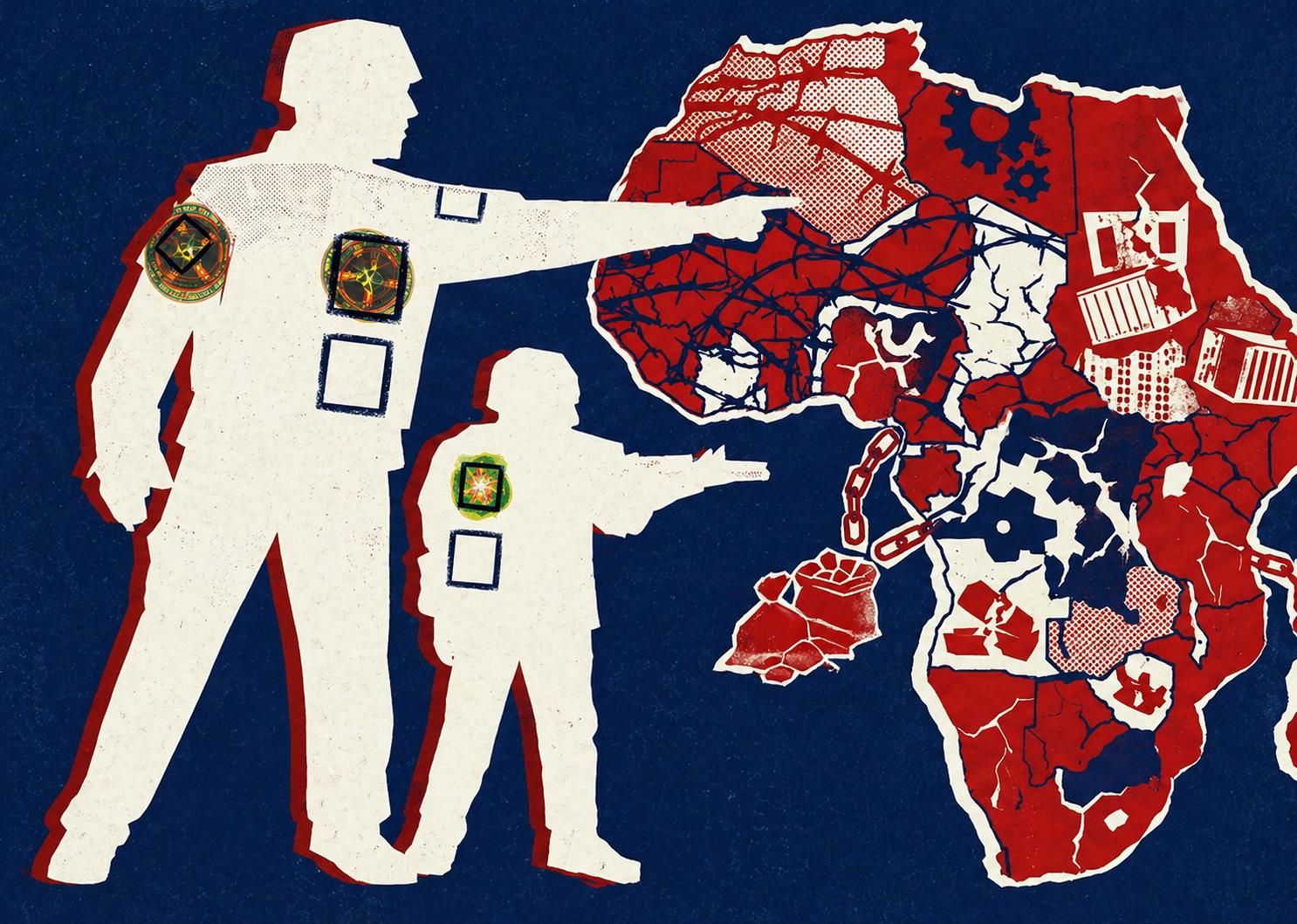

“Russian Private Military Companies May Become a Security Threat to Their Hosts in Africa,” published by David Kong at the Irregular Warfare Center’s IW Perspectives, argues that Russian private military companies (PMCs) now pose a dire security threat to the African nations that host them. Following Prigozhin’s death in 2023, the Kremlin absorbed the Wagner Group under the Afrika Corps brand and redirected it toward geopolitical objectives rather than profit-driven operations.
Russia has very little to offer in terms of investment or aid. This prospect might drive these nations to align more with China, which would limit PMCs’ opportunities to profit. Russia could leverage its PMC assets in Africa to push back against such competition, create a security threat that could block the path to African prosperity.
Russian PMCs spread pro-Kremlin propaganda, commit human rights abuses, including torture and summary executions, and accumulate sensitive intelligence about host nations’ military structures and vulnerabilities. African governments that rely on Russian PMCs for regime security risk deepening dependence, increasing susceptibility to coups, civil-military tensions, and internal destabilization, even as PMCs market themselves as coup-proofing solutions.
Should its agenda in Africa falter, Russia can be expected to leverage its PMC incumbency in Africa to disrupt African cooperation with its competitors like the U.S. and China. This grim prospect is not only potentially devastating in its own right but could also allow violent non-state actors like terrorist groups to expand, creating security threats beyond the immediate region.
Russia can leverage PMC assets to obstruct Chinese and Western competitors on the continent, generating security threats that block African economic development. As the U.S. shifts from value-based to trade-focused Africa policy, Russia deepens its footprint, and the author calls on Washington to deploy policy tools to help concerned African nations escape the Russian PMC dilemma.
Lindhardtsen and Mitchell’s Inter Populum article, “Proxy Battlespaces,” introduces a framework for understanding Ukraine’s deployment of Special Operations Forces in Mali, Sudan, and Syria as a deliberate strategy to impose strategic dilemmas on Russia by targeting the economic and military enablers of Russia’s war effort, including mercenary forces tied to gold extraction and recruitment networks supporting the main front.
Read alongside the IW Perspective article, the two pieces reveal a strategic feedback loop: Kong identifies Russian PMCs as instruments of Kremlin geopolitical power in Africa, while Lindhardtsen and Mitchell document Ukraine’s active efforts to degrade that very infrastructure through out-of-theater special operations.
In Mali and Sudan, strikes against mercenary forces and support to rebel groups undermined Russian operations, limiting both influence and revenue derived from gold. In Syria, operations sought to constrain Russian presence in the country and disrupt facilities used for recruiting personnel for deployment to Ukraine. In each case, Russia was confronted with a strategic dilemma: either reallocate scarce resources to defend overseas interests — resources that could otherwise support operations in Ukraine — or accept a reduction in services rendered abroad, resulting in diminished income and influence.
Together, they suggest that Africa’s PMC battlespace has become a genuine second front of the Russia-Ukraine conflict, with African host nations caught between Russian extraction and an increasingly contested proxy environment that neither Western policy frameworks nor existing military doctrine have fully reckoned with.

