





Lessons From Ukraine’s Dead Zone | Modern War Institute
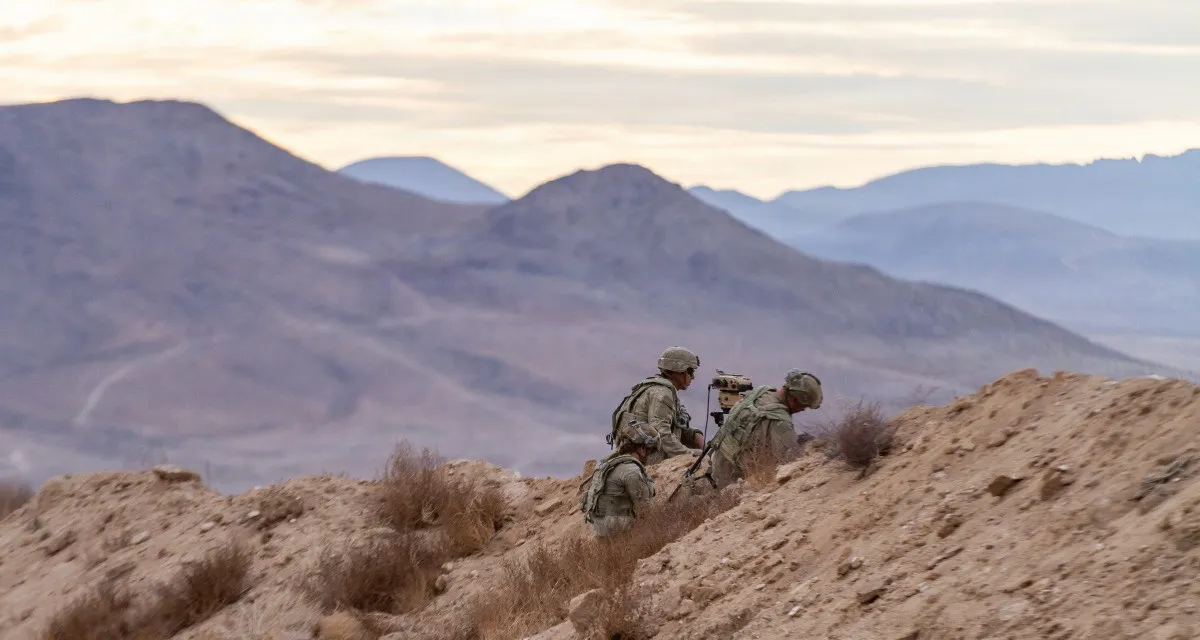

“Like the face of the moon, chaotic, crater-ridden, uninhabitable, awful, the abode of madness.”
That’s how Wilfred Owen described no man’s land, an image that frames popular memory. But that image obscures variation. Even in the First World War, trench warfare shifted across time and theater. Col. Kevin T. Black, Lt. Col. Tarik Fulcher and Capt. Joshua Ratta of the Modern War Institute write in “The Dead Zone and the Empty Battlefield” that the same distortion now shapes readings of the Russo-Ukrainian War.
Initial maneuver in 2022 gave way to fortified belts, then to a battlefield transformed by persistent reconnaissance and strike systems. By 2025, fixed positions grew increasingly untenable. Both sides shifted toward small, concealed elements serving as sensors and triggers for fires. Infiltration and counter-infiltration spread across wider zones, producing a fragmented form of maneuver embedded within attrition.
Three dynamics define this environment.
1: A mutually contested “dead zone” now extends deep behind forward elements.
Reconnaissance-strike complexes on both sides compress time and punish aggregation. At the National Training Center, opposing formations using UAS, electronic warfare, and precision fires degrade one another in parallel, producing systemic friction rather than unilateral advantage.
2: The battlefield is growing increasingly empty.
Echoing James J. Schneider, dispersion reduces density while total destruction rises. Small units sense, fix, and cue fires, followed by short, violent attempts to seize ground. Attrition enables maneuver, which in turn invites renewed attrition.
3: Dispersion looks to be approaching diminishing returns.
Dense sensor networks detect even small elements, while precision systems ensure high lethality. Dispersion strains command and control, dilutes mass, and leaves gaps in protection. William DePuy’s insight remains true: what can be seen can be hit.
The Ukrainian case shows how survivability now depends on layered protection, counter-reconnaissance, and deception across depth.
The authors conclude:
“Combat has never been more complex.”
While you’re here:
Read former British Army and Ukrainian Armed Forces reconnaissance operator Kai Gilmour Gath’s perspective piece on the importance of modernizing the craft of reconnaissance, which “lags behind reality”: “The Reconnaissance Reality Gap: Western Doctrine vs. the Ukrainian Battlefield.”

