





SOJ Throwback Thursday: The Will to Fight in Modern War

Throwback Thursday returns to the Special Operations Journal archives to revisit a foundational question that continues to shape modern conflict: what motivates individuals to fight for their country? In “Factors Affecting Willingness to Fight for One’s Own Country: The Case of Baltic States” (2018), Virgilijus Rutkauskas examines the social, political, and psychological drivers behind national resistance in the Baltics, offering a framework for understanding how states generate resilience against external aggression.
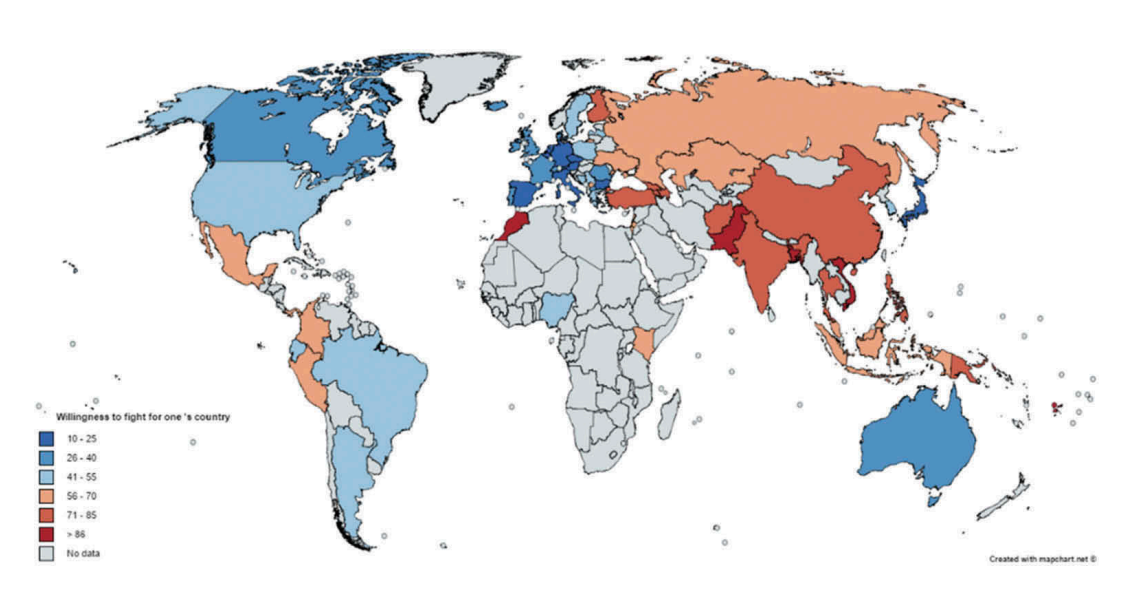
Willingness to Fight for One’s Own Country in The World (2014)
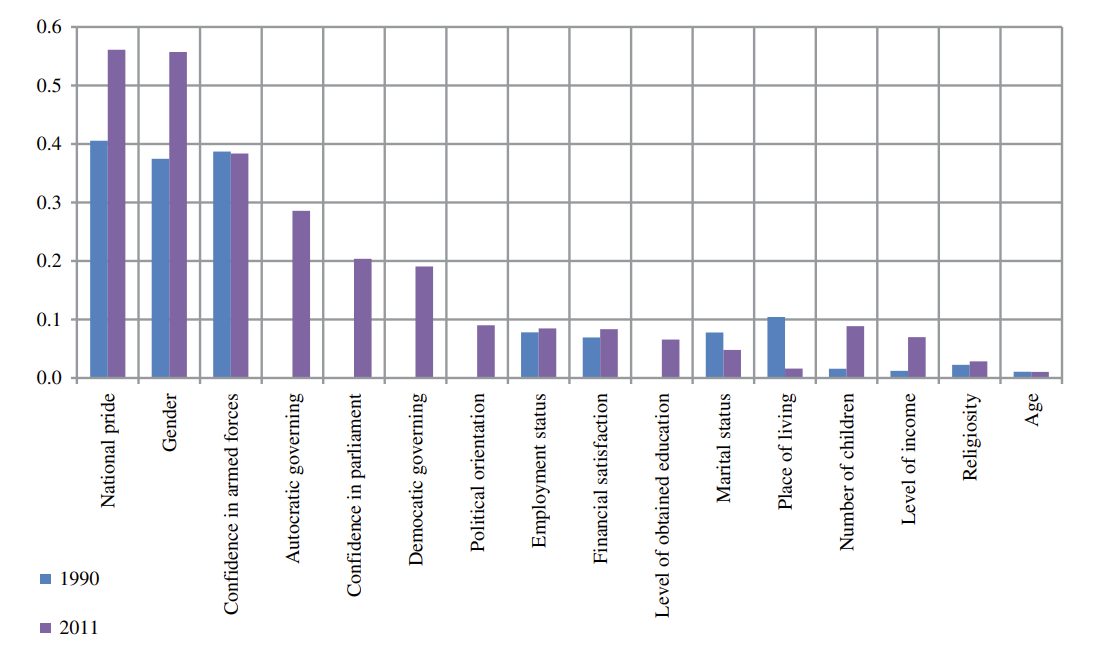
Rather than treating willingness to fight as an abstract concept, Rutkauskas identifies concrete drivers rooted in institutional trust and individual characteristics. Quantitative analysis across Estonia, Latvia, and Lithuania shows that “national pride, confidence in government and the armed forces, and financial satisfaction” are among the most significant predictors of willingness to fight. The findings demonstrate that willingness to fight varies across demographic and socio-economic lines, including age, gender, employment, education, and place of residence, reinforcing that societal cohesion is uneven and must be actively cultivated. Rutkauskas illustrates each Baltic state’s willingness to fight based on those factors, as seen below in the case for Estonia.
Distance of Odds Ratios for Estonia (willingness to fight, IVs are sorted in importance left-to-right).
Rutkauskas also highlights that willingness to fight fluctuates over time in response to political stability, economic conditions, and external threats, noting sharp increases following events such as Russia’s annexation of Crimea. As a result, the article concludes that willingness to fight is not static but a strategic variable and a “primary target for special operation forces” through information, psychological, and civil affairs activities that shape legitimacy, identity, and trust before conflict begins.
These findings carry direct implications for how military planners and policymakers approach national defense and partner force development. If willingness to fight functions as both a predictor of resistance and a target for adversary influence, then it must be treated as a center of gravity at the societal level rather than a secondary consideration to material capability. Rutkauskas’ framework suggests that efforts to strengthen resilience must extend beyond force structure and training to include deliberate investments in national identity, public trust, and perceptions of government and military legitimacy. This requires integrating civil affairs, psychological operations, and strategic communication into broader campaign design to influence the underlying drivers of willingness to fight.
The ongoing war in Ukraine provides a contemporary validation of these findings. Commentary by RAND in 2022 noted that the will to fight remains the decisive factor in war despite being consistently undervalued in military planning. And Ukrainian’s will to resist Russia since 2022 demonstrates how legitimacy, identity, and threat perception translate into battlefield effectiveness, with early polling showing roughly 70 percent of Ukrainians willing to fight until victory and more than 80 percent rejecting territorial concessions despite the costs of war. This dynamic also helps explain Russian miscalculation, as highlighted in “Putin’s Bad Math,” which argues that Moscow underestimated Ukrainian will to resist while overestimating the effectiveness of its own coercive strategy. Despite these early assessments, however, more recent data reflects the strain of prolonged conflict, including declining support for total victory and growing openness to negotiations among Ukrainians.
The contrast with the United States underscores how willingness to fight depends on deeper societal conditions rather than material strength alone. As detailed in the Center for a New American Security’s report, Short Supply, the US faces a sustained decline in willingness to serve, with youth propensity falling from 16 percent in 2003 to roughly 10 percent in 2022 alongside a shrinking pool of eligible recruits, reflecting broader issues such as declining social capital and a widening civil-military gap.
Percentage of Americans Who Say They Have a Great Deal or Quite a Lot of Confidence in the Military, 1975–2023
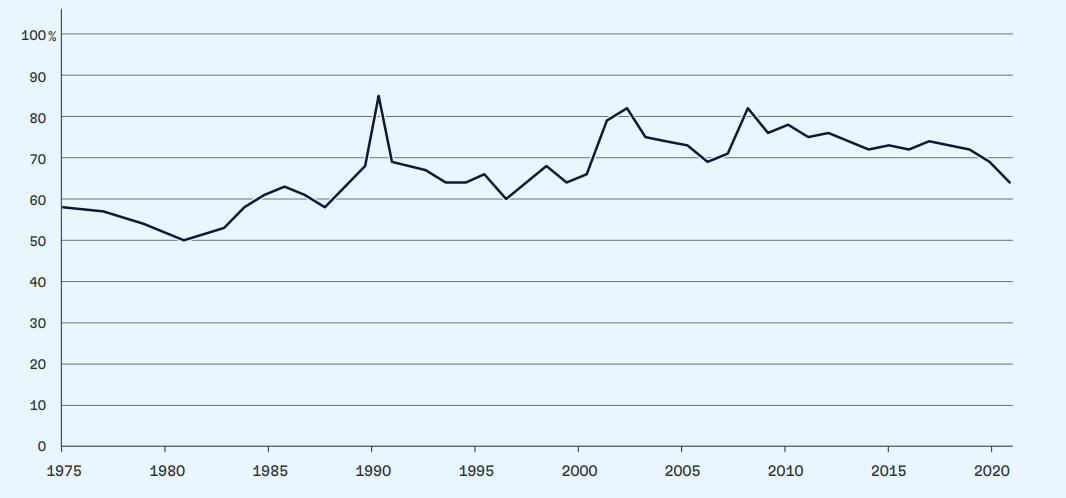
The military has enjoyed a much higher degree of trust from the general public than the government overall between 1975–2023. However, since 2009, the percentage of Americans who place high confidence in the military has declined steadily from a high of 82 percent to a low of 60 percent
At the same time, civil-military relations scholar, Heidi Urben, argues in “Politicization of The Military” that the relationship between the military and society has experienced “a slow, steady normative degradation,” driven by increasing politicization and weakening shared understanding of the military’s role. Together, these trends suggest that in the absence of an existential threat, willingness to serve and fight becomes contingent on trust, legitimacy, and national identity, reinforcing Rutkauskas’ central insight that these societal factors constitute a critical foundation of military effectiveness that must be actively sustained over time.

