Winning an Unpopular War? The United States–Israel War Against Iran: Strategic Miscalculation, Escalation Dynamics, and a Lose–Lose Dilemma

Executive Summary
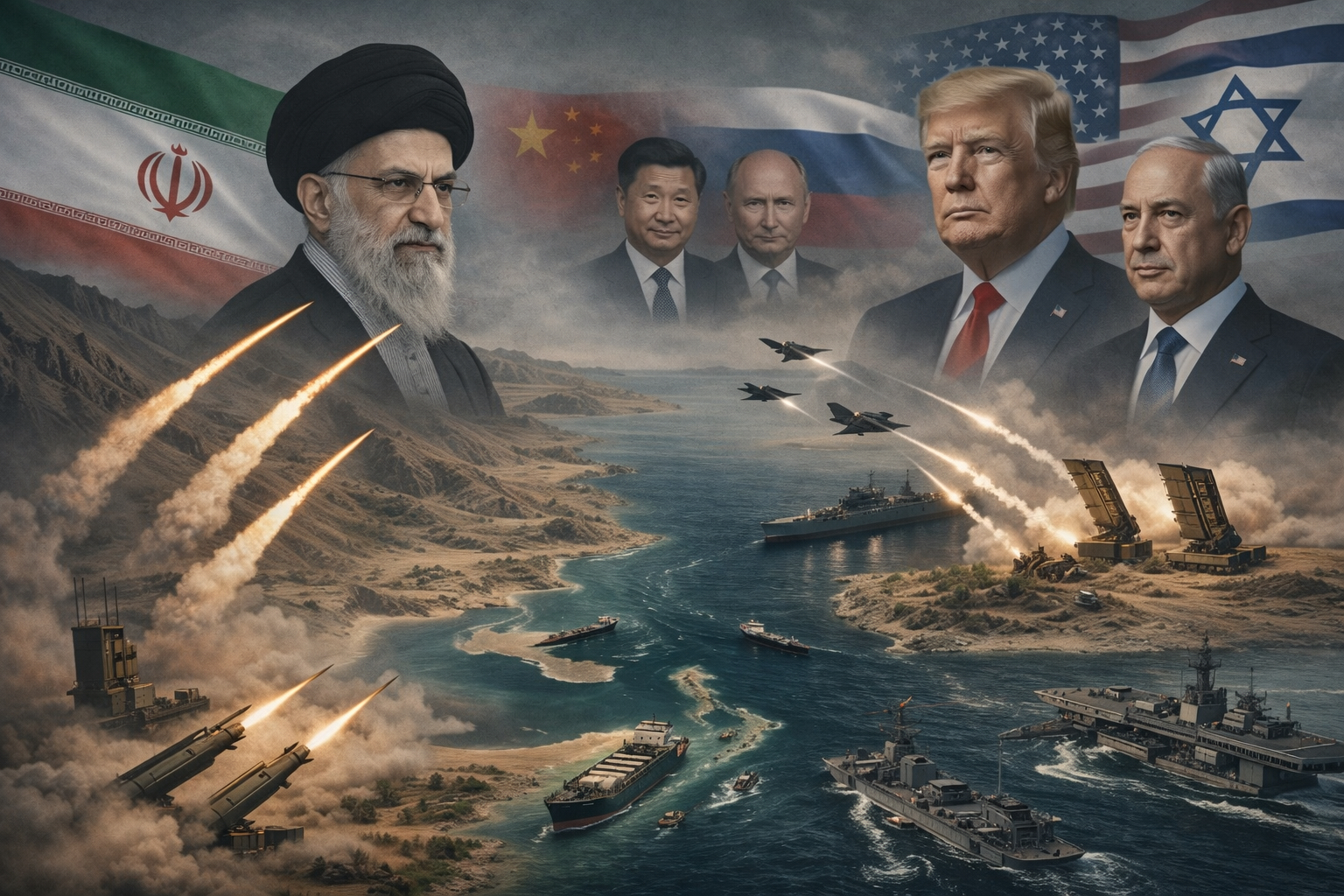
The United States–Israel war against Iran, initiated in February 2026, represents one of the most consequential — and strategically flawed — military undertakings in recent American foreign policy history. Launched without clearly articulated end-state objectives and premised on dangerously optimistic assumptions about Iranian fragility, the conflict has rapidly evolved into a multidimensional crisis threatening to destabilize the entire Middle East and accelerate a structural shift in the global order.
This paper argues that the war presents the United States with no favorable exit. Both plausible outcomes — military victory or strategic failure — carry consequences profoundly damaging to American interests, credibility, and influence. The paper further contends that this predicament is the direct product of poor strategic planning, a fundamental misreading of Iranian society, and a wilful disregard for the escalatory logic that has historically governed conflicts in the region.
Key Findings
- War objectives remain undefined, contradictory, and operationally incoherent — a structural flaw that ensures no decisive political outcome.
- Israel’s deliberate escalatory posture is designed to widen the conflict, drawing neighbouring states into a regional war that serves Israeli strategic interests at American expense.
- Iran’s societal cohesion and strategic culture make regime collapse or national submission categorically unlikely, regardless of military losses.
- China and Russia have strong structural incentives to prevent Iranian defeat, and credible evidence suggests material support is already being extended.
- A US–Israeli “victory” would produce an ungovernable post-conflict environment, sustained insurgency, and a legitimacy crisis of historic proportions.
- An Iranian strategic success would shatter the petrodollar architecture, expose Gulf monarchies, constrain Israel’s operational freedom, and accelerate the decline of American hegemony.
- President Trump and Prime Minister Netanyahu bear direct personal responsibility for initiating an illegal war. The killing of 168 schoolchildren at Al-Farabi School constitutes a war crime under international humanitarian law and will define both leaders’ historical and legal legacies.
- Pakistan’s 2025 defense pact with Saudi Arabia has trapped Islamabad in an untenable position: unable to honour Saudi requests without triggering sectarian conflict, unable to side with Iran without destroying Gulf relationships, and unable to sustain neutrality as the war’s consequences close off the space for non-commitment.
- In either scenario, the United States loses. This is not a war that can be ‘won’ in any meaningful strategic sense.
1. Introduction: A War Without a Winning Condition
On 28 February 2026, the United States and Israel initiated direct military operations against Iran, marking a dramatic escalation in a confrontation that had simmered for decades. The immediate justifications centred on Iranian nuclear advancement and the broader objective of restoring regional deterrence. Early strikes reportedly eliminated senior elements of Iranian military and political leadership and targeted critical infrastructure across the country. Official statements projected confidence. The underlying strategic logic, however, was brittle from the outset.
Wars launched without clearly defined, mutually compatible, and operationally achievable objectives have a well-documented tendency to expand rather than conclude. The 2026 campaign against Iran exemplifies this pathology. Official justifications have shifted between degrading nuclear capacity, achieving regime change, restoring deterrence, and reasserting US primacy in the region. These are not merely different framings of the same goal — they are structurally incompatible objectives that require different strategies, different instruments, and different definitions of success.
The absence of a coherent end-state reflects a deeper intellectual failure: the assumption that overwhelming military force applied rapidly would produce political outcomes without the need for a post-conflict political framework. This assumption has been falsified in every major American military engagement since the Cold War. Iran in 2026 is unlikely to prove an exception.
Compounding this is the divergence of interests between Washington and Tel Aviv. The United States ostensibly seeks a controlled reduction of Iranian power, ideally through a negotiated or imposed settlement. Israel, by contrast, appears to view this as a generational opportunity to permanently degrade Iran’s capacity and reshape the regional balance. Israeli strategic behaviour — characterized by deliberate escalation rather than controlled application of force — suggests a war-fighting posture designed to widen the conflict, not conclude it. This divergence has already created significant friction and will become increasingly unmanageable as the conflict intensifies.
2. Strategic Miscalculation: The Iranian Nation is Not the Arab Street
The foundational strategic assessment error underlying this campaign is the conflation of Iranian society with those Arab political environments in which regime change efforts have succeeded — however temporarily and incompletely. This is a category error of the first order.
Iran is not Iraq in 2003, nor Libya in 2011, nor any of the Arab states whose political orders fractured under external pressure. The Islamic Republic, despite its deep internal contradictions and genuine popular grievances, rests upon a revolutionary ideological foundation tempered by four decades of sanctions, war, and external hostility.
Iran fought a devastating eight-year war with Iraq in the 1980s, absorbing catastrophic losses without capitulating.[1] Its population has endured sustained economic privation as a direct consequence of Western pressure without producing the collaborative regime change that American strategists appear to have anticipated.
The targeting of senior leadership, far from inducing a collapse of political will, is more likely to reinforce the nationalism and resistance narrative that sustains the regime’s popular legitimacy in moments of external crisis.[2] This is not a prediction — it is a pattern consistently observed across the history of coercive military campaigns against states with strong national identities.
The Iranian political culture is shaped by the memory of the Constitutional Revolution, the 1953 coup, and the imposed war with Iraq.[3] External military pressure activates these memory structures in ways that consolidate rather than fragment national cohesion. The expectation of rapid political collapse underestimated the depth of Iranian strategic culture and the degree to which national identity has been forged through the experience of external aggression.
Iranian operational resilience has already confounded initial assessments. Despite reported leadership losses, Iran has maintained coordinated military responses, conducting sustained missile and drone operations against Israeli territory, US regional assets, and Gulf infrastructure. The claim that a swift decapitation strike would precipitate rapid political disintegration has been empirically falsified within the conflict’s opening weeks.
3. Escalation Dynamics: Israel’s Design and Regional Consequences
It is important to distinguish between American and Israeli strategic intent. The weight of evidence suggests that Israel is not merely a junior partner executing a shared campaign plan; it is an independent actor pursuing strategic objectives that extend considerably beyond the stated US rationale for the war. Israeli strategic behaviour throughout this conflict has been consistently escalatory, extending beyond core military targets to economic infrastructure and political symbolism in ways that harden Iranian resistance rather than degrade it.
The Strait of Hormuz, through which approximately 21 million barrels of petroleum liquids transit daily — roughly one-fifth of global supply — has become an active theatre of strategic competition.[4] Disruptions in this corridor have triggered sharp increases in global oil prices, underscoring the war’s immediate economic consequences for states well beyond the immediate theatre.
Gulf states occupy an especially precarious position.[5] Historically aligned with American security architecture, they now face direct vulnerabilities from Iranian retaliation for hosting US military assets, combined with mounting domestic pressure against perceived complicity in the destruction of a Muslim-majority state. Saudi Arabia and the UAE face a strategic dilemma that may ultimately force a degree of public distancing from Washington — a development that would constitute a significant erosion of the US regional position regardless of battlefield outcomes.
The longer the conflict persists and the more broadly it extends, the greater the probability that it transforms from a bilateral military confrontation into a multi-actor regional war — precisely the outcome that strategic planners in Washington should most urgently seek to prevent, and which Israeli strategic behaviour appears designed to produce.
4. Scenario One: A Us–Israel ‘Victory’ And its Hollow Strategic Yield
Suppose, for analytical purposes, that the United States and Israel achieve military dominance over Iran. Iranian military infrastructure is substantially degraded, leadership continuity is disrupted, and conventional force projection capabilities are significantly reduced. On the surface, this constitutes a military victory. The strategic analysis, however, reveals an outcome deeply problematic for American interests.
4.1 The Governance Vacuum
Military dominance does not produce political order. Iran is a nation of nearly ninety million people, with a sophisticated state apparatus, deep ideological reserves, and a population with a documented historical willingness to sustain resistance under extreme duress. The occupational and stabilization challenge would dwarf those of Iraq and Afghanistan combined.[6] The United States has shown no capacity — military, political, or financial — to manage such an enterprise. The result would be a power vacuum of regional dimensions, filled by a multiplicity of competing actors, none reliably aligned with American interests.
4.2 China and Russia Will Not Allow a Complete Iranian Defeat
The assumption that a US–Israeli military campaign can proceed to decisive conclusion without triggering a substantial counter-response from China and Russia reflects a serious misreading of structural incentives. For China, Iran is not merely a diplomatic partner — it is a critical energy supplier and a strategic node in its broader Eurasian integration project.[7] A complete Iranian military defeat would represent a direct threat to Chinese energy security and a demonstration of American willingness to use military force to exclude Chinese interests from strategically vital regions.
Beijing has consequently developed strong structural incentives to prevent such an outcome. Credible reports already suggest that China has extended advanced military-technological assistance to Iran, potentially including capabilities designed to counter US and Israeli assets.[8] This is consistent with Chinese behaviour in analogous situations and should not have surprised American strategic planners. Russia, for its part, views any extension of US military engagement in the Middle East as an opportunity — to divert American resources and attention from Ukraine, to demonstrate the limits of US power to wavering states, and to strengthen its own leverage in any eventual diplomatic settlement.
4.3 The Iranian Nation Will Not Surrender
Even in a scenario of maximal military degradation, the Iranian nation will not accept occupation, domination, or the imposition of external political order. Control of Iranian energy resources, the Strait of Hormuz, and associated regional architecture would require a sustained military and administrative presence that the United States is neither willing nor able to maintain. What a military ‘victory’ would produce, in practical terms, is not strategic control but strategic entanglement — an indefinite commitment that drains American resources, credibility, and strategic attention from other theatres.
5. Scenario Two: Iranian Strategic Success and the End of American Hegemony
The alternative scenario — in which Iran achieves strategic success defined not as outright military victory but as the denial of American objectives and the demonstration of US strategic overreach — carries consequences equally, and perhaps more profoundly, damaging to American interests globally.
5.1 The Petrodollar Architecture
American dominance in global energy markets and the foundational role of the dollar in international energy transactions is structurally dependent on US strategic primacy in the Gulf. The petrodollar system — the arrangement by which Gulf states price and trade oil in US dollars, recycling petrodollar surpluses through US financial institutions — is not a natural market outcome; it is a political-military arrangement sustained by American security guarantees to Gulf monarchies.[9] A demonstrable US strategic failure would undermine the credibility of those guarantees catastrophically.
China has been systematically cultivating this eventuality for years. The Shanghai Cooperation Organization, the expansion of the BRICS framework, and bilateral currency agreements between China and Gulf states all reflect a long-term Chinese strategy of offering credible alternative institutional arrangements.[10] An Iranian strategic success would dramatically accelerate the uptake of these alternatives. The consequences for the dollar’s global reserve currency status and for the financial architecture that underpins American power would be severe.
5.2 Gulf Monarchies and Political Legitimacy
The Gulf monarchies—Saudi Arabia, the UAE, Bahrain, and Qatar—derive a substantial portion of their internal legitimacy from their ability to deliver security and economic prosperity while managing the contradiction between their pro-American foreign policies and the anti-American sentiments of significant portions of their populations. An Iranian strategic success would dissolve that credibility at a stroke.
The political consequences across the region would be significant and potentially rapid. Countries such as Pakistan and Egypt, both of which host significant populations with deep grievances against Western-aligned governance, would face particular pressure.[11] This does not predict any specific revolutionary outcome; it does suggest a substantial increase in political instability across the region, including in states well beyond the immediate conflict zone.
5.3 Israel’s Strategic Exposure
For Israel, the consequences of an American strategic failure in Iran would be existentially significant. Israel’s operational freedom—its ability to conduct strikes in Syria, Lebanon, and beyond, to maintain deterrence against multiple adversaries simultaneously, and to sustain its strategic depth—is structurally dependent on American power projection and on the deterrent value of the American security guarantee. Without a strong and credible American military presence, Israel would face a dramatically more hostile strategic environment, with reduced options and reduced margins for error. The very strategic overreach that Israel encouraged and exploited would have produced a regional environment more dangerous to Israeli security than the one it sought to transform.
5.4 Russia’s Strategic Gain
An American strategic failure in the Middle East would deliver significant benefits to Russia at a moment when Moscow is already testing the limits of Western resolve over Ukraine. A United States simultaneously managing a failing Middle Eastern campaign and domestic political backlash would have substantially reduced capacity to sustain its Ukraine commitment. Russia would likely exploit this window to consolidate territorial gains, press for a negotiated settlement on terms favourable to Moscow, and extract maximum diplomatic leverage from an America diminished in both material capacity and political credibility.
6. The Great-Power Dimension: A Proxy Arena in Formation
The US–Israel war against Iran cannot be adequately analysed within a purely regional framework. It intersects with — and is being actively shaped by — the broader dynamics of great-power competition that define the current international moment.
For China, the strategic calculus is relatively straightforward. Iran provides approximately twelve percent of China’s crude oil imports[12], a figure that understates Iran’s importance as a price-setting influence in the broader Gulf market. More importantly, Iran is a partner in China’s long-term strategic design for Eurasia — a design that requires a balance of power in the Middle East preventing any single external power from dominating the region’s energy resources.
China’s support for Iran, whether through military technology transfer, intelligence sharing, or diplomatic obstruction of US-led international pressure, reflects hard-nosed strategic interest calculation rather than ideological affinity. Iran’s formal integration into Belt and Road frameworks[13] has made its stability a material Chinese interest that Beijing cannot afford to allow US military action to extinguish.
Russia’s interest in the conflict is more opportunistic and complex. Moscow is not a direct stakeholder in Iranian survival in the way that Beijing is, but it has significant interests in the erosion of American credibility, the diversion of American strategic attention and resources, and the demonstration to third countries that American security guarantees are not reliable. The interaction of these great-power interests means that the conflict is becoming a proxy arena for the broader contest over the future of the international order.
7. Domestic Constraints and the Strategic Trap
The domestic political context in which the Trump administration entered this conflict has materially constrained its options from the outset. The administration entered the war carrying significant political baggage: contested economic policies, fractured alliances, and a domestic political environment in which the costs of failure are amplified, and the rewards of success are uncertain.
The economic consequences of the conflict have materialized faster than the administration’s public communications suggested they anticipated. Rising energy prices—a direct consequence of Iranian disruption to Gulf supply chains and the spectre of Strait of Hormuz instability—have imposed immediate and visible costs on American consumers. Unlike the early phases of previous Middle Eastern engagements, where costs were deferred through deficit financing and distributed across a long-time horizon, the inflationary impact of this conflict is front-loaded and politically salient.
This creates a strategic trap from which there is no clean exit. Withdrawal or de-escalation would signal weakness, validate Iranian resistance, undermine the credibility of American security commitments globally, and expose the administration to devastating domestic political attack. Continued engagement risks escalating costs, widening the conflict beyond manageable parameters, and producing a defeat that is visible, attributable, and politically catastrophic. The administration is caught in a situation of its own making, in which all available options are bad, and the least bad option is not obviously identifiable.
8. Individual Accountability: The Question that Cannot be Deferred
No serious analysis of this war can avoid the question of individual accountability. Wars are not conducted by abstractions. They are initiated by specific individuals who issue specific orders, and when those orders result in the killing of civilians on a mass scale, international law provides mechanisms – however imperfect and politically constrained – for assigning criminal responsibility.
8.1 The Architecture of Decision
The decision to initiate hostilities was made by a narrow circle of senior political leadership in Washington and Jerusalem, without formal congressional authorization on the American side and without any pretence of legal justification under the UN Charter framework. President Trump, as Commander-in-Chief, bears primary political and legal responsibility for the initiation of a conflict with no defensive justification under international law. The legal architecture of preventive war—already profoundly contested since its articulation in the 2002 National Security Strategy[14]—does not provide cover for the deliberate targeting of foreign state leadership and civilian infrastructure in the absence of an imminent and demonstrable threat.
Prime Minister Netanyahu’s culpability is, if anything, more direct and more premeditated. His government has systematically manoeuvred the United States toward this confrontation over a period of years, exploiting American domestic political dynamics, intelligence relationships, and alliance commitments to draw Washington into a conflict that serves Israeli strategic ambitions at the cost of American interests and Iranian civilian lives. Netanyahu did not stumble into this war. He engineered it. The record of his public statements, his government’s operational decisions, and his demonstrable manipulation of the Washington decision-making environment establishes a degree of premeditation directly relevant to questions of legal accountability.
8.2 The Killing of Iran’s Supreme Leader
The targeted killing of Iran’s Supreme Leader Imam Khamenei constitutes one of the most consequential acts of state-sponsored political assassination in the modern era. Whatever one’s assessment of the Supreme Leader’s governance record, the targeted elimination of a sitting head of state—without declaration of war, without legal authorisation, and without any cognisable act of aggression by Iran—represents a violation of foundational norms of the international order. The prohibition on the assassination of foreign leaders is not a courtesy; it is a structural norm grounded in customary international law whose erosion carries systemic consequences for all states.[15] The precedent established by this action is available to every state that can muster the capability, and its normalization erodes one of the most fundamental protections against interstate conflict escalating to existential dimensions.
8.3 The Al-Farabi School Massacre: 168 Children
The killing of 168 schoolchildren in a strike that destroyed the Al-Farabi School does not admit of strategic framing or policy-language softening. One hundred and sixty-eight children were killed. They were not combatants. They were children attending school. Their deaths constitute, by any credible application of the Rome Statute, a war crime.[16] The deliberate or reckless failure to take adequate precautions to distinguish civilian from military targets is prohibited under customary international humanitarian law, the Geneva Conventions, and the foundational principles of the laws of armed conflict.
Article 57 of Additional Protocol I to the Geneva Conventions requires parties to take all feasible precautions to avoid incidental civilian casualties.[17] The attacking forces knew, or should have known, that the Al-Farabi School was a civilian object in active use during school hours. The political effort to obscure, minimize, or contextualize this atrocity has been immediate and systematic on both the American and Israeli sides. It will not succeed over time.
Beyond the legal dimension, the strategic consequences of the school massacre are profound and lasting. Images and accounts of the event have circulated across the Muslim world with an intensity and emotional force that no counter-narrative can neutralize. In Pakistan, Egypt, Indonesia, and Turkey, the Al-Farabi massacre has become a symbol with a mobilizing force comparable to the most consequential atrocity images of the late twentieth century. The strategic cost in terms of the legitimacy of any US-led regional order is incalculable.
A genuine reckoning with individual responsibility is not merely a matter of justice, though it is emphatically that. It is a functional prerequisite for any durable post-conflict regional settlement. Without accountability, there is no legitimacy. Without legitimacy, there is no stability. The chaos this war has generated cannot be sustainably addressed without confronting the decisions — and the decision-makers — that produced it.
9. South Asian Tremors: Pakistan’s Impossible Dilemma
The geopolitical shockwaves from the US–Israel war against Iran extend well beyond the immediate theatre of conflict. South Asia—and Pakistan in particular—has been thrust into a strategic predicament of unusual severity, one that exposes the fragility of the country’s foreign policy architecture and the deep structural vulnerabilities of its current political order.
9.1 The Saudi Defense Pact and Its Contradictions
Pakistan signed a formal defense cooperation pact with Saudi Arabia in 2025—a natural extension of the two countries’ long-standing security relationship that reflects decades of Pakistani military deployments to the Gulf, Saudi financial transfers to Islamabad, and mutual ideological and diplomatic alignment.[18] What the agreement’s architects did not adequately anticipate was the scenario in which Saudi Arabia’s security interests and Pakistan’s own strategic calculations would come into direct and unmanageable conflict.
That scenario has now materialized. Saudi Arabia, facing direct Iranian retaliatory pressure on its energy infrastructure and deeply invested in the US–Israeli campaign’s success, has invoked the spirit if not yet the letter of the 2025 pact in requesting Pakistani security assistance and at minimum a public declaration of solidarity. Pakistan is constitutionally, politically, and strategically unable to comply. The result is a bilateral relationship under acute strain, with consequences for Pakistani financial flows, diplomatic standing, and military cooperation that the current government in Islamabad has no clear strategy to manage.
9.2 The Sectarian Fault Line
Pakistan’s demographic and sectarian composition make any overt alignment against Iran not merely politically costly but potentially existentially dangerous for the governing order. Pakistan has the second-largest Shia Muslim population in the world—estimates range between fifteen and twenty percent of the population, concentrated in Karachi, the Punjab’s industrial cities, Gilgit-Baltistan, and significant portions of Sindh.[19] For this population, the US–Israeli war against Iran is not a distant geopolitical event; it is a war against a state central to their religious identity and the global Shia community.
Any Pakistani government that openly sided with Saudi Arabia—or, more directly, with the US-Israeli campaign—against Iran would immediately face the prospect of mass domestic mobilisation by Shia communities, almost certainly triggering sectarian violence at a scale the state’s internal security apparatus is poorly equipped to manage. Pakistan’s history with sectarian conflict is long and devastating. A sectarian trigger of this magnitude, added to an already volatile political environment, could prove uncontainable.
9.3 The Military Establishment’s Paralysis
Pakistan’s military establishment — which remains the effective determinant of the country’s security and foreign policy — finds itself in an unprecedented position of strategic paralysis. Its dependence on Gulf financial flows argues for accommodation of Saudi requests. Its assessment of the domestic sectarian risk argues against any public alignment. And its awareness of the Chinese position — Beijing’s strong structural interest in Iranian survival — creates additional inhibitions about being seen to facilitate the US-led campaign. The China-Pakistan Economic Corridor[20] is a foundational pillar of Pakistan’s strategic posture; antagonizing Beijing to satisfy Riyadh is not a trade the establishment can contemplate.
The military establishment cannot openly side with Saudi Arabia without triggering the domestic consequences described above and antagonizing China. But it cannot openly side with Iran without destroying the Saudi relationship and its financial lifelines. And it cannot maintain the fiction of neutrality indefinitely in a conflict whose regional consequences are closing off the space for non-commitment. The establishment is therefore doing what it characteristically does in moments of strategic overload: delaying, hedging, and hoping external developments resolve the dilemma before a decision is forced. That strategy is running out of time.
9.4 A Government Without Public Legitimacy
The current civilian government in Pakistan entered this crisis already weakened by contested electoral legitimacy, popular discontent, and the widespread perception that it governs by establishment fiat rather than democratic mandate. Its capacity to manage the foreign policy crisis generated by the Iran war is therefore severely constrained. A government with genuine popular legitimacy could make difficult foreign policy choices and absorb the political costs through its democratic mandate. A government that lacks that mandate has no political reservoir to draw on.
The Al-Farabi school massacre has placed additional acute pressure on Islamabad’s calculus. Pakistani public opinion—already hostile to the US–Israeli campaign—has been radicalised by the killing of 168 children in a manner that makes any government association with the attacking coalition politically unsurvivable. Street protests have erupted across the country’s major cities with an intensity that reflects not merely the immediate atrocity but the accumulated weight of Pakistani public sentiment about Western military conduct in Muslim-majority states.
9.5 How This War Will Change Pakistan
The trajectory of Pakistani politics is being reshaped by this conflict in ways that will outlast the war itself. The first structural consequence is the further delegitimization of the current governing arrangement — a process already advanced and dramatically accelerated by the war. The second is the strengthening of Islamist and religious-nationalist political forces, which are the primary organized expression of the public sentiment the war has mobilized. The third is the deepening of Pakistan’s strategic dependence on China — not only as an economic partner but as the external power most aligned with Pakistani public opinion’s instinctive rejection of the US–Israeli campaign.
The medium-term consequence may be a significant reorientation of Pakistan’s foreign policy away from its historically ambiguous relationship with the United States and toward a more explicitly China-anchored strategic posture. If the war’s outcome is Iranian strategic success, the political space in Pakistan for those who argued for American alignment will be extinguished for a generation. The war is not merely destabilizing the Middle East. It is reshaping the politics of the world’s fifth-most-populous nation in ways that serve neither regional stability nor American strategic interests.
10. Conclusion: An Unnecessary War with No Winning Outcome
The US–Israel war against Iran is structurally unwinnable in any strategically meaningful sense. It was launched without coherent objectives, premised on false assumptions about Iranian societal fragility, conducted through an Israeli strategic posture designed to maximize escalation rather than manage it, and executed without adequate consideration of the great-power dynamics that would inevitably shape its trajectory. It was also launched without legal authorization, without democratic mandate, and by individuals — Trump and Netanyahu — who understood the human costs that would follow and proceeded regardless.
Both plausible outcome scenarios carry consequences deeply damaging to American interests. A victory produces an ungovernable occupation challenge, a sustained insurgency, Chinese and Russian counter-mobilization, and a legitimacy deficit of historic proportions. A failure accelerates the decline of American hegemony, shatters the petrodollar architecture, destabilizes Gulf monarchies, and creates political space for challenges to Western-aligned governance across the broader region. Russia gains in both scenarios. China gains in both scenarios. Only the United States and, ultimately, Israel lose.
The killing of 168 children at the Al-Farabi School is not a footnote to this conflict. It is its moral centre of gravity. Wars produce statistics; this war has produced a specific, named, photographed atrocity that has mobilized opinion across the Muslim world in ways that no military outcome can reverse. In Pakistan, the ripple effects — compounded by the impossible position in which the Saudi defense pact has placed Islamabad — are already reshaping domestic politics in ways that will outlast the conflict by a generation.
There can be no durable peace, and no legitimate post-conflict order, without a serious reckoning with individual accountability. The leaders who ordered this war — who killed a supreme leader, who struck a school full of children, who initiated a conflict without legal authority or democratic mandate — must face accountability through the mechanisms that international law provides. Without it, the message delivered to every future leader is that civilian massacres are a cost-free instrument of state power, provided one possesses sufficient military capability and political protection.
The deepest strategic lesson of this conflict — one that American foreign policy has repeatedly declined to absorb from its own recent history — is that military superiority is not a substitute for political strategy. The capacity to destroy is not the capacity to govern. Iran is not a problem that can be solved by force, because Iran is not merely a set of military targets; it is a nation, with the full depth of identity, memory, and resistance that nationhood implies.
The war will be remembered not for its immediate tactical outcomes but for what it reveals about the current moment in international history: the limits of unilateral military action, the resilience of states with deep national identities, the catastrophic consequences of leadership without accountability, and the accelerating redistribution of strategic influence in a world that is no longer organized around American primacy. That is the enduring strategic meaning of an unnecessary war, fought without a plan, conducted without legal authority, in the service of objectives that were never clearly defined — and at the cost of 168 children whose names will outlive the careers of those who killed them.
Policy Recommendations
The following recommendations are offered to US policymakers in recognition that the most urgent priority is to limit further damage rather than achieve an objective that was never clearly defined.
- Immediate Objective Clarification: The administration must define, in specific and operationally coherent terms, what constitutes an acceptable end-state and what conditions would allow for the cessation of hostilities. Continued ambiguity serves no one’s interests except those seeking to widen the conflict.
- Reassert Control over Israeli Escalation: Washington must communicate clearly to Jerusalem that continued escalatory action without US authorization will result in the suspension of operational and intelligence support. The United States cannot be drawn indefinitely into a war by an ally pursuing its own strategic agenda.
- Engage China as a Stakeholder in Stability: Rather than treating Chinese support for Iran as an adversarial act to be countered, Washington should explore whether Beijing’s interest in regional stability can be leveraged as a back channel for de-escalation. China does not benefit from a destabilized Iran any more than from a destroyed one.
- Pursue Accountability Through Available Mechanisms: The US Congress must initiate independent investigations into the legal authorization and targeting decisions that produced the Al-Farabi School massacre. International partners should refer the matter to the International Criminal Court. Accountability is not incompatible with de-escalation — it is its precondition.
- Acknowledge Pakistan’s Dilemma and Offer Relief: Washington must recognise that pressure on Islamabad to align openly with the US–Israeli campaign will not succeed and will damage a relationship of far greater long-term strategic value. Washington should actively relieve pressure on Pakistan by publicly acknowledging its legitimate constraints.
- Prepare a Diplomatic Off-Ramp: A negotiated framework for de-escalation, however politically costly in the short term, is preferable to all medium-term alternatives. The longer this war continues, the less favourable the terms available. The window for a managed exit is narrowing rapidly.
- Invest in Post-Conflict Stability Planning: Regardless of the conflict’s outcome, the United States must begin serious planning for the regional political environment that will follow. The absence of such planning transformed military success in Iraq and Libya into strategic disasters. It must not be repeated.
Endnotes
[1]Efraim Karsh, The Iran-Iraq War 1980–1988 (Oxford: Osprey Publishing, 2002), 12–30. See also Dilip Hiro, The Longest War: The Iran-Iraq Military Conflict (New York: Routledge, 1991).
[2]Jenna Jordan, “Attacking the Leader, Missing the Mark: Why Terrorist Groups Survive Decapitation Strikes,” International Security 38, no. 4 (2014): 7–38. Jordan’s empirical study of 298 leadership targeting operations finds that decapitation rarely produces organisational collapse and often strengthens group cohesion through rallying effects.
[3]Ervand Abrahamian, A History of Modern Iran (Cambridge: Cambridge University Press, 2008), 1–25. See also Ali M. Ansari, Modern Iran since 1921: The Pahlavis and After (London: Longman, 2003), for the long-term political consequences of the 1953 coup on Iranian national identity.
[4]US Energy Information Administration, “The Strait of Hormuz Is the World’s Most Important Oil Transit Chokepoint,” Today in Energy, January 4, 2024, https://www.eia.gov/todayinenergy/detail.php?id=61002. The EIA estimates that approximately 21 million barrels per day transited the strait in 2023, representing roughly 21 percent of global petroleum liquids consumption.
[5]Gregory F. Gause III, The International Relations of the Persian Gulf (Cambridge: Cambridge University Press, 2010), 45–78. Gause provides a detailed structural analysis of how Gulf states manage competing pressures from external great-power patrons and domestic publics, a dynamic acutely relevant to the current crisis.
[6]Thomas E. Ricks, Fiasco: The American Military Adventure in Iraq (New York: Penguin Press, 2006); Rajiv Chandrasekaran, Little America: The War Within the War for Afghanistan (New York: Knopf, 2012). Both works document systematically how military success in the initial phase of operations failed to translate into political order or sustainable governance.
[7]US Energy Information Administration, “China,” Country Analysis Brief, August 2023, https://www.eia.gov/international/analysis/country/CHN. China’s dependence on Gulf and Iranian energy makes the security of these supply routes a core national interest.
[8]Andrew Small, The China-Pakistan Axis: Asia’s New Geopolitics (London: Hurst, 2015), 88–112. See also Anoushiravan Ehteshami and Niv Horesh, eds., China’s Presence in the Middle East: The Implications of the Arab Spring (London: Routledge, 2018), for China’s growing military-technological relationships in the region.
[9]David E. Spiro, The Hidden Hand of American Hegemony: Petrodollar Recycling and International Markets (Ithaca: Cornell University Press, 1999), 1–42. Spiro’s foundational study demonstrates that the petrodollar arrangement was a deliberately constructed political-financial architecture rather than a spontaneous market outcome, and therefore subject to deliberate dismantlement by states with sufficient incentives.
[10]Oliver Stuenkel, Post-Western World: How Emerging Powers Are Remaking Global Order (Cambridge: Polity Press, 2016), 78–115. See also Jim O’Neill, “Building Better Global Economic BRICs,” Goldman Sachs Global Economics Paper No. 66, November 2001, for the original framing of emerging-power convergence, and subsequent literature on SCO institutional development.
[11]Pew Research Center, The World’s Muslims: Unity and Diversity (Washington, DC: Pew Research Center, 2012), 28–31. The Pew survey estimates Pakistan’s Shia population at 10–15 percent of the total Muslim population; other demographic assessments, including those of the Aga Khan Development Network, suggest figures closer to 20 percent depending on methodology and regional definitional variation.
[12]US Energy Information Administration, “China,” Country Analysis Brief, August 2023. China’s crude oil imports from Iran have varied significantly due to sanctions enforcement fluctuations; estimates of Iranian share of Chinese crude imports range from 10 to 14 percent in periods of reduced enforcement. See also Gabriel Collins, “China’s Evolving Oil Demand,” Baker Institute for Public Policy, 2021.
[13]Nadège Rolland, China’s Eurasian Century? Political and Strategic Implications of the Belt and Road Initiative (Seattle: National Bureau of Asian Research, 2017), 44–78. Iran’s formal accession to BRI frameworks was consolidated through the 25-year Comprehensive Cooperation Agreement signed in March 2021, covering energy, infrastructure, and security cooperation.
[14]The White House, The National Security Strategy of the United States of America (Washington, DC: The White House, September 2002), 15–16. The 2002 NSS articulated the doctrine of pre-emption, asserting the right to act against threats before they were fully materialised. This doctrine was widely criticised in international law scholarship as incompatible with Article 51 of the UN Charter, which restricts the right of self-defence to responses to actual armed attacks.
[15]Jean-Marie Henckaerts and Louise Doswald-Beck, eds., Customary International Humanitarian Law, Volume I: Rules (Cambridge: Cambridge University Press / ICRC, 2005), Rule 1 (Principle of Distinction) and associated commentary. The prohibition on the assassination of foreign heads of state is grounded in customary international law, the 1907 Hague Regulations, and, in the context of armed conflict, the requirement that attacks be directed only at military objectives. See also W. Hays Parks, “Executive Order 12333 and Assassination,” The Army Lawyer, December 1989.
[16]Rome Statute of the International Criminal Court, UN Doc. A/CONF.183/9 (17 July 1998), Article 8(2)(b)(i)–(iv), which criminalises intentional attacks on civilians and civilian objects, and Article 8(2)(b)(xxv), prohibiting attacks that cause excessive civilian casualties in relation to anticipated military advantage. Article 8(2)(a)(i) further criminalises wilful killing of protected persons.
[17]Protocol Additional to the Geneva Conventions of 12 August 1949, and Relating to the Protection of Victims of International Armed Conflicts (Protocol I), adopted 8 June 1977, entered into force 7 December 1978, Article 57(2), which requires parties to take all feasible precautions in the choice of means and methods of attack with a view to avoiding, and in any event minimising, incidental loss of civilian life.
[18]Husain Haqqani, Magnificent Delusions: Pakistan, the United States, and an Epic History of Misunderstanding (New York: PublicAffairs, 2013), 290–315. For the structural character of Pakistan’s security relationship with Saudi Arabia, including financial transfers, military deployments, and the strategic logic of Gulf alignment, see also Bruce Riedel, Deadly Embrace: Pakistan, America, and the Future of the Global Jihad (Washington, DC: Brookings Institution Press, 2011). The 2025 defense pact is treated in this paper as a plausible extension of this well-documented relationship within the speculative scenario.
[19]Pew Research Center, The World’s Muslims: Unity and Diversity, 28–31. On the political significance of Shia identity in Pakistani domestic politics, see Vali Nasr, The Shia Revival: How Conflicts within Islam Will Shape the Future (New York: Norton, 2006), 155–185, which documents the sectarianisation of Pakistani politics and the vulnerability of governing orders to mobilisation along Shia–Sunni lines under conditions of external crisis.
[20]Andrew Small, The China-Pakistan Axis, 155–178. For CPEC’s strategic dimensions and the degree to which it has deepened Pakistan’s structural dependence on Chinese investment and political support, see also Siegfried O. Wolf, The China-Pakistan Economic Corridor of the Belt and Road Initiative: Concept, Context and Assessment (Cham: Springer, 2020).