Testing The Limits of Aegean Deterrence, Gray Zone Warfare, & Sovereignty

Abstract
Through a case study of Turkish overflights above Greek islands in April 2022, this article analyzes how routine, cost-free interception erodes deterrence in the Eastern Aegean. It proposes a framework of automatic mechanisms—documentation and bilateral suspension—to impose predictable costs without escalation.
The Incident
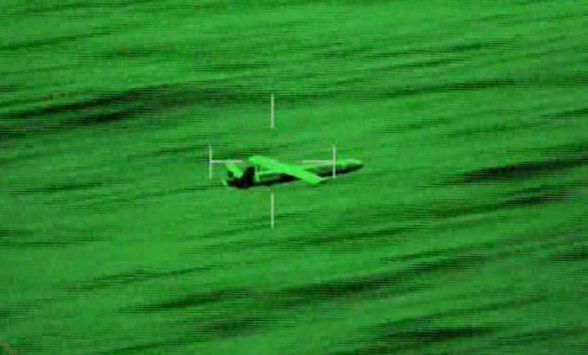
In April 2022, several public, official, and military sources reported Turkish fighter aircraft conducted overflights above Greek islands in the eastern Aegean. The move exemplified grey-zone tactics: sustained pressure below armed conflict. These actions constituted national airspace violations rather than mere FIR rule violations. Flight Information Region (FIR) is an internationally designated airspace within which a state provides air traffic and flight information services. Entering national airspace at low altitudes over inhabited islands left no room for misinterpretation. The Hellenic Air Force deployed pairs of F-16s to intercept. An official incident was recorded. In line with established practice, standard diplomatic protests were lodged, and the day fortunately ended without further escalation.
Herein lies the problem.
In 2022, according to HNDGS data, there were 11,256 violations of national airspace, 234 overflights above islands, and 333 engagements between Greek and Turkish aircraft. In total, 2,758 aircraft were involved. The numbers do not point to a “crisis,” but rather patterns of routine activity.
Turkey’s April 2022 airspace violation occurred during a period of heightened tension. Greece had recently reinforced its military presence in the Aegean, prompting Turkey to respond with a show of force just short of direct engagement. However, persistent hostilities of this nature pose the constant risk of escalation while shifting the dispute from national airspace to the issue of sovereignty itself.
Rules of Engagement and Response Thresholds
Greek Rules of Engagement (ROE) in the Aegean are not publicly disclosed. This deliberate limited transparency facilitates political control over operational choices without explicit intervention at the tactical level. The arrangement produces asymmetric costs: both air forces bear operational strain and accident risk, but Greece disproportionately faces sovereignty erosion. NATO benefits, so far, from avoided escalation yet pays in ally fatigue and exported risk—unmanaged bilateral friction becomes collective burden.
The available data reveal a basic framework. Entry into national airspace triggers interception. Interception means visual contact, identification, and—if engagement occurs—maneuvering. It does not mean use of force, forced landing, or deliberate escalation.
Political control over the situation is concentrated at two points. First, the decision to make the interception “aggressive” or routine—that is, from a distance and only recording the aircraft numbers. Second, whether the incident will be publicized. This control is not an intervention at the operational level. It is a signal of frustration sent to the adversary.
The distinction between FIR rule violations and national airspace violations is critical. Turkey exploits this distinction. Flights beginning as FIR rule violations can develop into violations, testing Greek responses without starting as a “major incident”.
The Response in Practice
Interception has become a routine process. The radar detects, Greek aircraft deploy, visual contact is established, and maneuvers are executed. The Turkish aircraft often departs, sometimes it remains for an additional period. The Greek aircraft return. The cycle repeats daily—333 engagements in 2022, nearly one armed interception per day. Imagine daily reports of foreign military aircraft entering Texas airspace. Routine erodes urgency. In 2022, 333 engagements were recorded. Each was technically carried out. Greek interceptions did not alter the frequency or pattern of subsequent violations. Interception is no longer followed by diplomatic escalation. It does not activate international institutions. It does not create political cost for Turkey while imposing sustained operational strain on Greece.
This pattern reflects institutional inertia. First, in the choice not to consistently publicize specific incidents. Second, in the deliberately systematic absence of public assessment of cost and effectiveness. In 2009, Minister of Defense Evangelos Venizelos reported to Parliament an annual surveillance cost of approximately €20 million, an amount that exclusively covered fuel, maintenance, and operational expenses—not aircraft purchases or training.
The total burden is higher. Since 1990, the Hellenic Air Force, Army Aviation, and Naval Aviation have lost over 100 aircraft and helicopters. Only two fell during interception. The rest are attributed either to human error or to mechanical failure—thus indicating, not without basis, operational intensity as the responsible factor. On the Turkish side, from 1977 to 2006, 91 pilots died in 141 accidents. Not all 91 pilot fatalities and 141 accidents were linked to operations over Greece, but certainly contributed to operational intensity.
The weight of action is visible and measurable; however, Greece’s political and military inability to prevent Turkish incursions has desensitized the general public and indeed the world to a highly volatile situation. Both sides’ inability to resolve this conflict have led to the gradual erosion of boundaries, which may one day lead to significant unintended consequences.
The Pattern 2016-2022
From the above data, it is evident that 2022 was not an exception. Since 2016, violations have remained at high levels: 1,671 (2016), 3,317 (2017), 3,705 (2018), 4,811 (2019), 4,157 (2020), 2,744 (2021), 11,256 (2022). The same applies to overflights: 57 (2016), 39 (2017), 47 (2018), 124 (2019), 364 (2020), 48 (2021), 234 (2022).
Intensity varies by year. Yet the response remains predictable and ineffective. Every interception that fails to impose a consequence inevitably leads to the next violation, given the assured low level of risk. Nor has this pattern of repeated violations led to a change in Greek military, political, or diplomatic doctrine. The response always has a low ceiling, regardless of the provocation. What does this imply about Greek sovereignty, and the Turkish military?
The Strategic Problem
How can Greece deter violations without triggering escalation? The answer lies not in abandoning interception, but in making it consequential.
Repeated violations risk normalizing contestation; sovereignty erodes gradually, boundaries shift, and deterrence credibility weakens.
Interception functions tactically: aircraft are identified, monitored, and depart. Strategically, however, repeated incidents have not altered the pattern of violations. Each unpunished episode lowers the perceived cost of the next.
The cost is political as much as operational. Escalation carries accident risk. Non-escalation carries erosion risk. Avoiding conflict today may transfer risk to less favorable conditions tomorrow.
Precision—not aggression—is required. Interception need not change; what follows must. Automatic mechanisms can link act and consequence: real-time documentation to international bodies and calibrated suspension of bilateral arrangements. The connection is predefined, reducing the need for ad hoc decisions.
Critics may argue that automatic mechanisms would reduce flexibility. Yet the current system already operates through automatic inaction.
If the pattern persists, multilateral elevation to NATO and the EU becomes the next step. Predictability at that level stabilizes rather than inflames.
Clarity reduces miscalculation more effectively than ambiguity.
Implications & Conclusions
What lessons on grey-zone warfare can be derived from Turkish airspace incursions over Greece? The Aegean is a case study for regions where sovereignty is contestable but not contested, where large-scale violence is unacceptable but controlled pressure is tolerated—both by the revisionist actor exercising it and by third parties observing. In these regions, it is predictability that makes deterrence fail.
Traditional deterrence theory relies on the presence of clear signals. The Aegean shows the opposite. The choice of ambiguity may bring temporary stabilization, but in the medium-to-long term, it erodes boundaries. Without boundaries, opportunism becomes more viable. Stability produced by inaction is therefore not peace; it is crisis postponement under worse conditions.
For other cases such as the South China Sea, the Black Sea, and the Arctic, the lesson is that frequency is not all that matters. Cost variation matters. Deterrence weakens when the consequence (or lack of one) remains the same while provocation escalates.
Consistency does not only concern the adversary. It concerns allies. Predictable response linked to specific cost reduces ally fatigue during repeated low-intensity crises. Conversely, unmanaged friction exports risk to both NATO and the European Union—transforming a bilateral problem into an allied burden. Clearly, therefore, consistent deterrence functions as a stabilization mechanism within the alliance.
There is no choice between escalation and passivity, only between routine reaction and strategic deterrence. This is not escalation. It is a calculated, deliberate cost imposition, designed to alter the adversary’s calculations without provoking an uncontained conflict. The first is safe but ultimately ineffective. The second requires deciding when tactical interception will carry a cost that alters strategic calculations, possibly resulting in short-term friction but long-term stability.
In the Aegean, this decision is being postponed. With each day that passes, reconciliation becomes more difficult. Every recorded violation without consequence makes the next more likely. Deterrence does not fail with war. It fails when the routine—especially those which violate established international norms and laws–becomes the standard.