





Decentralize or Defeat: How Institutional Ego Slows U.S. Military Intelligence

Abstract
Ukraine’s drone war has revealed not simply a technological shift in warfare, but an organizational one. While the United States has built its intelligence enterprise around centralized, high-value platforms optimized for permissive airspace, Ukrainian forces have constructed a disposable, decentralized reconnaissance-strike network that pushes sensing and decision-making to the tactical edge. Small, commercially derived drones have collapsed the traditional hierarchy of intelligence collection, validation, and authorization. Platoons and companies now generate their own target-quality intelligence, coordinate their own fires, and assess effects in minutes rather than waiting on authorization from a distant headquarters. This transformation challenges a deeply embedded assumption within the U.S. military: that control, validation, and authority must flow downward from higher echelons. Adapting to the speed and demands of modern warfare requires more than just producing small drones equipped with emerging technology. It demands relinquishing institutional ego and redistributing command and control. In future large-scale combat operations (LSCO), success will depend less on preserving hierarchical control and more on trusting tactical-level commanders to fight and think for themselves. There is glory in victory, but there is no victory in ego.
Introduction
For more than two decades, the United States has been lulled into complacency fighting counterinsurgencies against foes who were woefully overmatched by the technical prowess of the U.S. military. Satellites and high-altitude surveillance aircraft thrived in uncontested airspace which provided American forces the distinct intelligence advantage. This advantage seemed so dominant that the United States stopped evolving. In Ukraine, our illusion is being dismantled by $500 drones.
Across a battlefield saturated with electronic warfare and long-range fires, Ukrainian units now use cheap commercial drones to spot targets, track movements, provide surveillance and reconnaissance, and organize strikes in real-time. These systems do not belong to a rigid, centralized enterprise. Instead, they belong to platoons, companies, and volunteer operators scattered across hundreds of miles along the warfront. Together, they have built something no Western military currently possesses: a disposable, decentralized intelligence network designed to survive in a high-attrition war.
There is glory in victory, but there is no victory in ego.
The Traditional Method
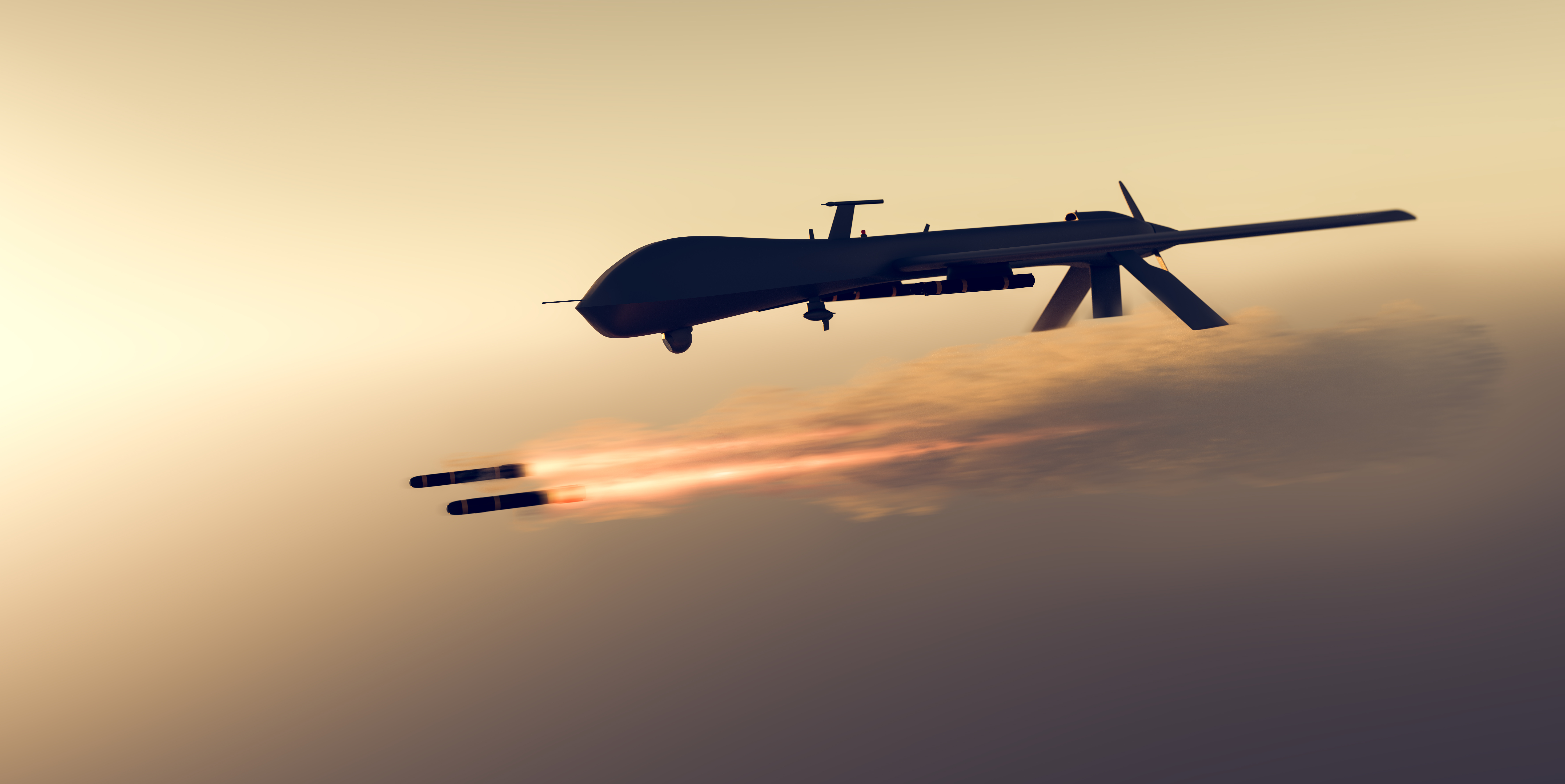
For most of the past two decades, the United States built its intelligence, surveillance, reconnaissance, (ISR) and targeting enterprise around a set of assumptions shaped by counterinsurgency and permissive airspace. U.S. unmanned aircraft operated in environments where adversaries lacked the ability to meaningfully contest drone systems, allowing centralized, high-value systems to loiter overhead with relative impunity. Under these conditions, large fixed-wing, high-altitude drones became the backbone of American aerial intelligence, providing persistent surveillance, wide-area coverage, and precision targeting for joint and coalition forces.
This architecture reflected both technological and organizational logic. Intelligence, surveillance, and reconnaissance were designed around limited but exquisite platforms that are expensive to procure, costly to operate, and politically sensitive to lose. As a result, these systems were prioritized at higher echelons, tasked through formalized tasking orders, and managed through centralized command-and-control structures. Intelligence collected flowed upward for processing and validation before being disseminated downward to maneuver units and fires elements. This hierarchical model emphasized control, deconfliction, and platform survivability over speed or redundancy.
Within this system, tactical units were largely consumers rather than producers of aerial intelligence. Ground forces depended on commanding officers within headquarters to allocate aerial assets, analyze collected data, and authorize engagements. Targeting followed a linear sequence: collection by high-altitude platforms, processing by intelligence analysts, validation through fire control authorities, and eventual execution by strike or artillery systems. This model produced high confidence targeting and minimized fratricide and escalation risks, but it also imposed significant delays and bottlenecks in dynamic combat environments.
The centralized ISR cycle was well suited to the counterinsurgency wars in the Middle East, where U.S. forces enjoyed air dominance and faced adversaries with limited ability to contest the electromagnetic spectrum or shoot down high-value aircraft. Long-endurance drones could orbit above the battlefield for hours, gathering intelligence, tracking insurgent networks, and cueing precision strikes with minimal risk. Under these conditions, platform sophistication and endurance mattered more than attrition tolerance or numerical scale.
However, this model created structural dependencies. Because traditional drones were expensive and fewer in number, their loss carried operational and political costs that discouraged aggressive employment in contested environments. Intelligence coverage was therefore episodic rather than ubiquitous, and units often competed for limited access to aerial intelligence support. The resulting system, born of the culture from that era of warfare, favored centralized control and careful allocation over rapid, distributed sensing at the tactical edge.
In short, the U.S. approach to ISR evolved around exquisite platforms, hierarchical intelligence flows, and permissive airspace. It delivered precision and global reach, but it also embedded assumptions about control, survivability, and scarcity that no longer hold in high-intensity, electronically contested battlefields.
Ukraine’s Method
The cost disparity between traditional U.S. unmanned aircraft and small drones is stark. For example, a single MQ-9 Reaper costs approximately $30 million to procure, with an additional $162 million just to operate and maintain the aircraft over its lifespan. By contrast, the higher-end Ukrainian small drones employed along the frontlines costs roughly $2,000 per unit, often incorporating artificial intelligence for navigation, targeting, and resistance to Russian electronic-warfare. Using these price points, the investment made into a single MQ-9 Reaper could finance a fleet of approximately 96,000 higher-end small drones. As demonstrated repeatedly through the years of the Russia-Ukraine war, mass matters. Large numbers of cheap, expendable drones saturate counter-UAS defenses, impose cost-imposition dilemmas on the defender, and enable persistent, real-time intelligence collection and targeting at the tactical level.
Emerging Technology Aids Decentralized Intelligence
Ukraine’s drone campaign is not being driven by any single technological breakthrough. Instead, it reflects the fusion of electronic warfare, artificial intelligence, autonomous navigation, and distributed command and control into a single, adaptive combat ecosystem. Together, these technologies allow cheap, expendable drones to survive, strike, and coordinate inside one of the most electronically hostile battlespaces observed in modern warfare.
Russian electronic warfare has transformed the electromagnetic spectrum into a frontline battlespace. Jamming systems routinely degrade satellite navigation and control links, forcing Ukrainian drone operators to assume that communications will be intermittent or absent during critical phases of a mission. Rather than eliminating drones, this environment has accelerated adaptation as Ukrainian units plan reconnaissance and strike windows around localized “electronic bubbles”, exploiting short periods when Russian jammers are repositioned, saturated, or temporarily ineffective.
Navigation has become as important as targeting. Russian jamming and spoofing of Global Navigation Satellite Systems, routinely make traditional waypoint navigation unreliable or useless. Ukraine has responded by deploying drones that can navigate using inertial sensors, machine vision, terrain matching, and pre‑programmed routes that do not depend on external signals.
These technologies are bound together by a radically decentralized command architecture. Ukrainian drone teams operate as distributed sensor‑shooter nodes rather than subordinates waiting for centralized tasking. Digital platforms such as Delta, GIS Arta, and Kropyva link drone feeds, targeting data, and unit locations across frontline formations, creating an ad hoc mesh network of intelligence and fires.
This network allows platoons and companies to identify, strike, and assess targets in minutes without routing requests through higher headquarters. Operators divide roles between flying, observing, targeting, and fires coordination, allowing small teams to conduct reconnaissance‑strike cycles continuously even under attrition. At the operational level, this distributed C2 model allows Ukraine to survive constant electronic attack by protecting its ability to regenerate combat power through redundancy and horizontal information sharing.
A New Model of Warfare
Taken together, these adaptations reveal a new model of warfare. Victory no longer depends on fielding the most exquisite platforms, but on sustaining the fastest learning and replacement cycle under fire. Ukrainian drones endure not because they are invulnerable, but because they are autonomous enough, networked enough, and inexpensive enough to be replaced faster than they are destroyed.
This shift is organizational as much as technical. Ukraine has built a distributed reconnaissance-strike enterprise in which small drones connect sensing, decision-making, and fires at the tactical edge. Platoons and companies do not wait for centralized ISR tasking or higher headquarters approval. They generate target-quality intelligence, coordinate strikes, and assess effects within their own battlespace while feeding data into a broader operational network. The result is bottom-up situational awareness that is faster and more resilient than hierarchical intelligence architectures.
In this model, the distinction between ISR platforms and strike systems collapses. Detection, authorization, and engagement occur within compressed timelines, forming a continuous loop rather than a linear kill chain. Attrition favors the force that adapts and regenerates fastest, not merely the one with the largest inventory. The battlefield has become a learning system where tempo determines advantage. The side that can see, decide, and adapt faster, at the tactical level, wins.
Lessons for the U.S. Military
While there are many technical lessons to learn, the biggest lesson is organizational. Modern battlefields, defined by persistent surveillance and compressed timelines, cannot be managed through rigid, hierarchical intelligence systems optimized for control and validation by higher echelons. In high-intensity conflict, delay is vulnerability. When information must travel up a chain of command before action is authorized, tempo is surrendered to the adversary.
Ukraine’s experience demonstrates that intelligence must be treated as a distributed function embedded at the tactical edge. Collection, analysis, and decision-making cannot remain exclusive domains of distant headquarters. Platoon and company-level commanders operating under fire possess the most immediate understanding of their battlespace. Empowering them to generate intelligence, share it horizontally across the front lines, and act upon it without prolonged approval cycles is not a risk; it is a necessity.
This shift requires confronting an uncomfortable reality: hierarchical control has fostered institutional habits that prioritize oversight over speed and adaptability. Over time, layers of validation have become intertwined with professional identity and authority. Yet in LSCO, preserving centralized control at the expense of tempo becomes self-defeating. Adapting to modern warfare demands relinquishing institutional ego and redistributing decision authority downward. Trust must replace reflexive oversight. Intelligence must flow laterally as well as vertically amongst the ranks. Victory will belong to the force that empowers its tactical commanders to see, decide, and act in real time.


