





Easier to Kill Than to Text: A Mandate for Information Warfare Reform


Abstract
In an era where national narratives are the primary instrument of national power, the United States Army’s Information Forces are structured for past conflicts and failing to keep pace. To regain the advantage in global confrontation, the army must not only realign its high-demand talent and delegate authorities but also fundamentally reframe its role as a key actor in a narrative-centric national strategy. This mandate for reform is essential for winning the war of narratives.
Introduction
The nature of global confrontation has fundamentally changed. It is now evident that the primary instrument of national power is the power of the national narrative; its foundation: diplomacy, information, military and economics (DIME). From the deception plans of the American Revolutionary War to the integration of space, cyberspace, drones and artificial intelligence (AI), the US military’s capabilities have evolved, but our core structures for manning and employing them have not kept pace. From the halls of academia to the front lines of statecraft, a clear consensus has emerged: we are in a persistent, global war of narratives. This is a battle of “narratives,” where adversaries seek to break beliefs, shape perceptions, sow division, and achieve their objectives before a single shot is fired. This call for change is not novel; it echoes a growing sentiment within professional military education advocating for “a return to information warfare” as a primary, not supporting, effort. This is the true nature of “gray zone” confrontation as it allows adversaries to avoid direct conflicts with the well-resourced US Department of War, a murky battlespace where ambiguity is a weapon, the line between peace and war is deliberately blurred, and our policies, systems, processes, and bureaucracy are exploited by our adversaries.
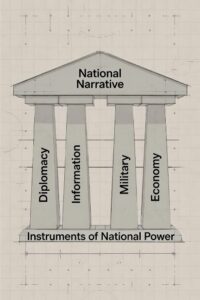
This reality, and the challenges of information warfare, has not gone unnoticed. The Senate Armed Services Committee (SASC) recently put the Pentagon on notice, demanding a new, more effective deterrence plan because our current posture is failing to win this narrative/information fight. The committee’s frustration signals a wider recognition that our industrial-age processes are ill-suited for information-age warfare. To answer this call and to effectively engage in confrontation, the United States Army must reforge itself, not just as a fighting force, but as the master of strategic narrative. This requires a radical and urgent transformation of our talent management, army priorities, and delegated authorities.
A Strategic Realignment of Talent
The United States military’s current force structure for information warfare is largely a relic of the Global War on Terror (GWOT). The counterinsurgency (COIN) campaigns in Iraq and Afghanistan necessitated a massing of information forces, pushing a broad spectrum of specialists down to the tactical edge to support Brigade Combat Teams (BCTs) and division-level joint task forces (JTFs). This approach was logical for its time; it enabled direct intelligence support for local operations, helped counter local insurgent propaganda, and provided commanders on the ground with dedicated assets and authorities to influence their immediate area of operations.
This legacy structure is dangerously outmatched by the modern information warfare model perfected by adversaries like Russia and China. These states operate with a “whole-of-government” approach to meet their strategic objectives, yet they execute their plans through a vast, decentralized, and often plausibly deniable network. This ecosystem includes formal intelligence services, state-sponsored media, “patriotic” hackers, and co-opted social media influencers, and media journalists. Operating with far fewer restrictions, these actors are empowered to act with a speed the United States cannot currently match. Their primary objective is often not to build a competing narrative but call into question our own. They seek to destroy US national narratives, shatter social cohesion, and erode trust in our institutions. By continuing to distribute our most valuable assets so widely in a no-growth Army, we cede the strategic initiative while our adversaries achieve overwhelming effects.
To reverse this in confrontation, we must concentrate our high-demand information warfare, cyberspace, and space personnel in strategic units. The Army is already taking steps in this direction with plans to launch new information warfare units, but to make them effective, they must be properly manned and empowered. Army service component commands (ASCCs), joint task forces (JTFs), and other theater-level units such as Multi-Domain Task Forces (MDTFs), Cyber National Mission Forces (CNMFs), Theater Information Advantage Detachments (TIADs), Theater Special Operations Commands (TSOCs) and 1st Space Brigade should be maximized and prioritized to contain these experts. This allows them to function as a true theater-level “Information Force,” orchestrating effects across a region. This concentration allows for the deconfliction of messaging, the synchronization of effects, and the allocation of scarce resources to the most critical fronts of the narrative war. Tactical units would be supported by tailored Liaison Officers (LNOs) and specialized planning teams dispatched from the theater level, ensuring expertise is applied with precision and strategic focus to enable Multi-Domain Operations should conflict occur, and provide streamlined updates on convergence windows to enable Commanders on the ground.

This structural realignment, however, is meaningless without the right people. The army faces an existential crisis in recruiting and retaining the personnel who can wage and win a narrative war. This has led to concrete proposals from within the defense community, including a powerful call for “creating the Information Warfare Branch.” Such a move would professionalize the career field and immediately ignite a critical debate over its intellectual home: should it fall under the technical mastery of the Cyber Center of Excellence (CCoE), or the human-centric influence expertise of the U.S. Army John F. Kennedy Special Warfare Center and School (USAJFKSWCS)? This institutional tension is a frequent topic of debate, with some arguing that the technical expertise of the cyber community is paramount, while others contend that influence is fundamentally a human-centric art best housed with special operations proponents. The challenge often lies in integrating SOF’s human-centric approach with CYBERCOM’s technical capabilities. To place the new branch wholly in either school risks creating a branch that is either technically brilliant but narratively tone-deaf, or masters of influence who cannot fight for digital access. The answer, therefore, cannot be to choose one. The solution is to create a federated training model that forces the integration of both. The ideal “Information Warfare Officer” is a hybrid talent, as comfortable planning a deception campaign based on cultural nuance as they are integrating an AI tool that scales effects, because the future of SOF in this domain is inextricably linked with cyber and space capabilities. This requires a fundamental rethinking of our personnel system to allow for lateral entry, flexible career paths, and retention incentives that value unique skills. Furthermore, the promise of executing real-world operations daily—rather than endlessly refining contingency plans—is how we will retain top talent. While training has its merits, it is operational experience that forges true experts.
Granting Authority at the Speed of Relevance
Perhaps the greatest impediment to effectively confronting adversaries in the information environment is the crushing weight of our own bureaucracy. As experts such as those at the Cognitive Crucible, the U.S. military is often not structured to operate at the speed of the cognitive dimension of warfare. A narrative moves at the speed of culture, and in the digital age, that speed is blistering. An adversary can fabricate a deepfake video or manipulate a real event, seed it through a network of bots, and watch it incite violent protests in a partner nation and at home—all in the span of a few hours.
While a commander on the battlefield can be quickly granted the authority to approve a lethal strike under established rules of engagement, the authority to approve a simple, non-lethal message can be trapped for days, weeks, or longer in a multi-layered review process spanning multiple agencies, commands, services, and time zones. This is not a sustainable model for confrontation. To effectively wage narrative warfare, authorities must be delegated to the operational edge. The new joint doctrine, JP 3-04, Information in Joint Operations, directs commanders to “integrate informational power throughout operations” to achieve objectives. However, without the ability to act at the speed of relevance, this is an impossible task. Therefore, O-6 level commanders of designated information forces must be granted “the power of the story” to allow them to execute the information joint function as doctrine intends. This proposal is often met with fears of a rogue commander causing an international incident. But this fear is misplaced and ignores the immense trust we already place in commanders. We entrust brigade commanders with the authority to employ lethal fires within the commander’s intent and the rules of engagement, as outlined in joint doctrine. We must similarly empower information commanders to deliver effects within that same disciplined framework.
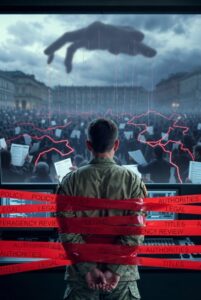
This is not a call for unchecked action. Delegated authority would be strictly bound by guardrails: pre-approved operational themes and messages consistent with national policy, close coordination with the command’s Public Affairs Officer (PAO) and Staff Judge Advocate (SJA), and a robust feedback loop to the JTF and combatant command. The goal is to empower commanders to act on transient opportunities and threats in real-time. It enables them to counter an adversary’s lie in minutes, not weeks when effectiveness is lost. It transforms OIE from a ponderous, pre-planned activity into a dynamic, daily engagement. In the current environment, the risk of inaction and ceding the entire information space to our adversaries is far greater than the managed risk of empowering our commanders to fight.
Operations in the Information Environment (OIE): Operation Absolute Resolve
Absolute Resolve is defined as “a total commitment to a goal, meaning a willingness to pay any price or overcome any obstacle.” The title of the operation, those two words were carefully and deliberately chosen. The dramatic success of Operation Absolute Resolve in Venezuela provides a stunning blueprint for this integrated approach. While news outlets from the BBC to Task & Purpose rightly focused on the daring capture of Nicolás Maduro by Delta Force operators, the physical success was merely the visible act of a much larger, quieter battle that had already been won. The operation, involving over 150 aircraft, was made possible by weeks of preparation in the information environment. Offensive cyberspace operations reportedly dismantled Venezuela’s integrated air defense system and severed communications between senior military leaders. A sophisticated military deception campaign, later analyzed as a key factor in the operation’s success, convinced the regime that the main threat was a maritime invasion, drawing forces away from the capital. Army Space Support Teams, leveraging a constellation of assets, ensured that SOF elements had unbreakable satellite communications and precision navigation, even as local infrastructure was disrupted.
The victory, however, was not secured with the capture. The information battle immediately went into a new phase. A decisive address from President of the United States, framed by proactive public affairs releases, set the initial national narrative. This was sustained by a continuous drumbeat of international news coverage, fueled by declassified footage, and amplified by a relentless wave of curated social media content directed at global audiences. Together, these efforts delivered one unambiguous narrative to allies and adversaries alike: the strength and capability of the United States military are not up for debate. Operation Absolute Resolve is the blueprint: when non-lethal effects shape the environment and are seamlessly integrated with a powerful narrative, decisive national outcomes become possible. The critical question is whether we are organized and authorized to replicate this success at will.
Conclusion
The war of narratives is not a future concept; it is the defining characteristic of twenty-first-century global communications and confrontation. The demand to win in this domain, as reflected in professional dialogue and congressional mandates, is a demand for a new American way of war. The reforms required are not minor adjustments; they are a fundamental shift in how the army views, mans, and employs its forces to support a national narrative-centric strategy. By realigning our talent, creating a professionalized career path, and empowering commanders to act at the speed of relevance, the army can answer the call. This is not just about winning a messaging campaign; it is about mastering the art of wielding diplomacy, information, military might, and economic strength, the very foundations of national power—through a narrative-centric framework to secure victory. In this relentless, twenty-four-seven war, it is time to take the gloves off.



Key Excerpt:
Comment: We must embrace, own, and employ the “power of the story.”
The title is a riff off of what 5 PSYOP officers told me at Leavenworth sitting in the High Noon Saloon more than a decade ago: It is easier to get permission to put a hellfire missile on the forehead of a terrorist than it is to get permission to put an idea between anyone’s ears.
White implies the Army still treats information as support when adversaries treat it as the main effort. That means the United States is organized to win battles while its opponents are organized to shape the war before battle begins. He suggests that delay is not an administrative flaw but an operational vulnerability. In narrative warfare, slow approval is self-deterrence. A force that cannot speak in time yields the field without being defeated.
This is the fundamental strategic question: If an information warfare campaign must synchronize narrative, cyber, deception, space, and public affairs at theater speed, what command structure, delegated authorities, and talent model are required to run it as a daily campaign rather than an episodic supporting activity? Establishing the Information Warfare (IWar) branch in the Army is an important step. The National Center for Narrative Intelligence (NCNI) https://nationalcenterfornarrativeintelligence.org/ is another. Congress’s language in the NDAA calling on DOD/W to define cognitive warfare and narrative intelligence is another positive step as well. https://www.congress.gov/committee-report/119th-congress/senate-report/39/1
From the 2026 NDAA:
See p. 200:
“Narrative intelligence and cognitive warfare
The committee recognizes that the rapidly evolving global
security landscape and the increasing sophistication of
information-centric threats pose significant strategic
challenges, particularly as peer and near-peer competitors
increasingly prioritize efforts and investments in this domain
of warfare. The committee notes that the People’s Republic of
China, for example, is actively engaged in developing what it
terms
informatized warfare” andintelligentized warfare,”with a strong emphasis on cognitive domain operations,
involving the integration of information warfare across
military and civilian sectors and viewing information as a
critical domain for achieving strategic advantage in great
power competition. The committee believes there is an urgent
need for a coherent understanding of and investment in
cognitive warfare to address these challenges.
The committee notes that despite multiple congressional
actions, there remain ambiguities and challenges in core
definitions relating to information warfare, with frequent
conflation of terms such as information warfare, information
operations, cyberwarfare, cognitive warfare, and influence
operations. The committee believes this definitional ambiguity
contributes to a lack of strategic clarity.
Therefore, the committee directs the Secretary of Defense
to provide a report on cognitive warfare and narrative
intelligence to the Committees on Armed Services of the Senate
and the House of Representatives, not later than March 31,
2026. In this report, the Secretary of Defense shall define
cognitive warfare as it relates to the Department of Defense
and assess how this definition aligns with or relates to
existing doctrinal elements, including information warfare,
psychological operations, and military information support
operations. Additionally, the committee directs the report to
include an assessment of which Department of Defense
organizations contribute to and have functional responsibility
for cognitive warfare efforts. Finally, the report must include
an examination of the relative value of narrative intelligence,
defined as intelligence of the story or narrative an adversary
is attempting to build, to cognitive warfare and related
disciplines. The committee expects this evaluation to consider
how narrative intelligence can enhance military operations,
including information operations and irregular warfare.”
As an aside this is from one of my standard lectures on learning to lead with influence:
Views on Warfare:
•What is the major difference in the views of conflict, strategy, and campaigning between China, Russia, Iran, nK, AQ, and ISIS and the US?
–The psychological takes precedence and may or may not be supported with the kinetic – they focus on exploiting grievances
–Politics is war by other means
–For the US kinetic is first and the psychological is second
–War is politics by other means
–Easier to get permission to put a hellfire on the forehead of terrorist than to put an idea between his ears
•Napoleon: In war, the moral is to the physical as three is to one
•In the 21st Century the psychological is to the kinetic as ten is to one
•The US has to learn to put the psychological first – lead with influence
–Can a federal democratic republic “do strategy” this way
–Or is it only autocratic, totalitarian dictatorships that can “do strategy” this way?
An American Way of Political Warfare: A Proposal https://www.rand.org/content/dam/rand/pubs/perspectives/PE300/PE304/RAND_PE304.pdf