





Seeing It Through: Views From The Gulf On The Iran War
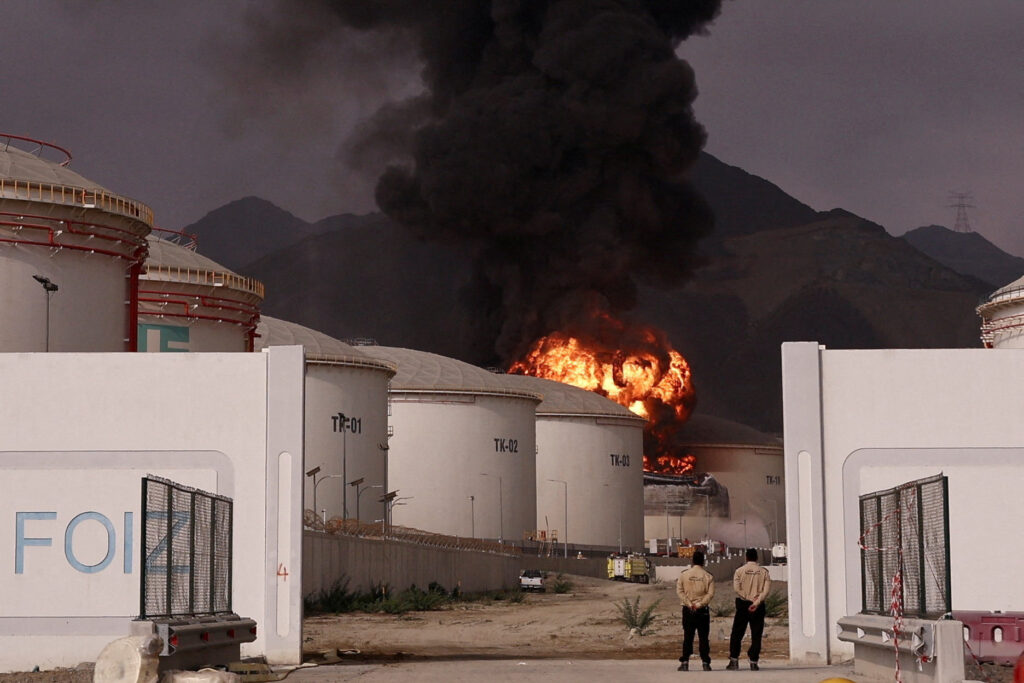

“Now that the Iran war is here, the US must complete its mission”
The war with Iran reflects a trajectory long recognized by Gulf states, writes the Atlantic Council’s Frederick Kempe in his March 18 Inflection Points newsletter. Regional officials view the conflict as the culmination of sustained pressure from Iran’s missile programs, proxy networks, and coercive strategy. For many, the central issue has never been limited to nuclear capabilities, but the broader system through which Iran projects instability across the region.
For many of them, this conflict was not a matter of if, but when.
The war’s inevitability was not due to any one factor, the officials told me. Rather, it was a cumulative consequence of a revolutionary regime that for nearly half a century built its power through murderous proxies, deadly missiles, nuclear aspirations, and relentless intimidation.
Regional Stakes
A reduced capacity for regional disruption is viewed as a sufficient condition for improving long-term stability, regardless of internal political outcomes in Tehran.
Their bottom line: If Iran comes out of this neutered and defanged, it’s better for everyone, even if the regime can’t be fundamentally changed from one that’s run through some combination of theocratic and Islamic Revolutionary Guard Corps leaders. Put more diplomatically, a senior Gulf official told me: “If Iran is incapable of inflicting harm and exporting instability to its neighbors, that will be a good thing.”
Operational Imperative
The decisive factor is time. A truncated campaign risks allowing the regime to absorb damage and reconstitute its capabilities.
As for Iran’s leaders, they likely are betting that US domestic politics will save the regime from total collapse. If [the war] costs Trump’s party control of Congress in the country’s upcoming midterm elections, it would be Tehran’s “own form of regime change,” as the Atlantic Council’s Alex Plitsas put it to me.
Economic Pressure and the Strait
Iran’s strategy includes leveraging economic disruption, particularly through threats to the Strait of Hormuz. Securing freedom of navigation is therefore central to sustaining the campaign and limiting Iran’s leverage.
US officials have told their Gulf partners that they have made progress in bringing together a coalition of countries to escort ships through the strait, despite several countries publicly refusing to contribute to that effort. More US military assets are arriving in the region to provide protection for shipping while continuing to strike at Iran’s ability to disrupt that traffic.
Conclusion
The central requirement is strategic completion. Sustained operations, combined with maritime security and coalition coordination, are necessary to translate battlefield gains into durable regional effects.
So how can the United States get from here to there?… Above all, the United States should not end its military campaign early. That could inadvertently strengthen the position of a weakened Iranian regime. And the regime is weak; its attacks on its neighbors are more the desperate flailing of a failed regime than the resurgence of the revolution…. But the next two to three weeks will be critical, as the United States continues to target Iranian capabilities.
Read the original piece here.

