How Russia Leveraged Asian Partnerships in the Ukraine War

A War That Reconfigured Eurasia
Russia’s full-scale invasion of Ukraine made Europe’s eastern flank the main battleground for modern great-power politics. However, the war’s infrastructure has become more Eurasian than just European. As NATO countries increased their military, intelligence, training, and financial support for Ukraine, Moscow responded by expanding its strategic depth to the east and south. It did this by using partnerships with Asian countries to make up for losses on the battlefield, restock its supplies, stabilize its revenue streams, and make its war economy more resistant to sanctions. This was not an “alliance system” in the way that people thought of it during the Cold War. It looked like a flexible, uneven, and often deniable ecosystem of state ties, business connections, and military-technical exchanges.
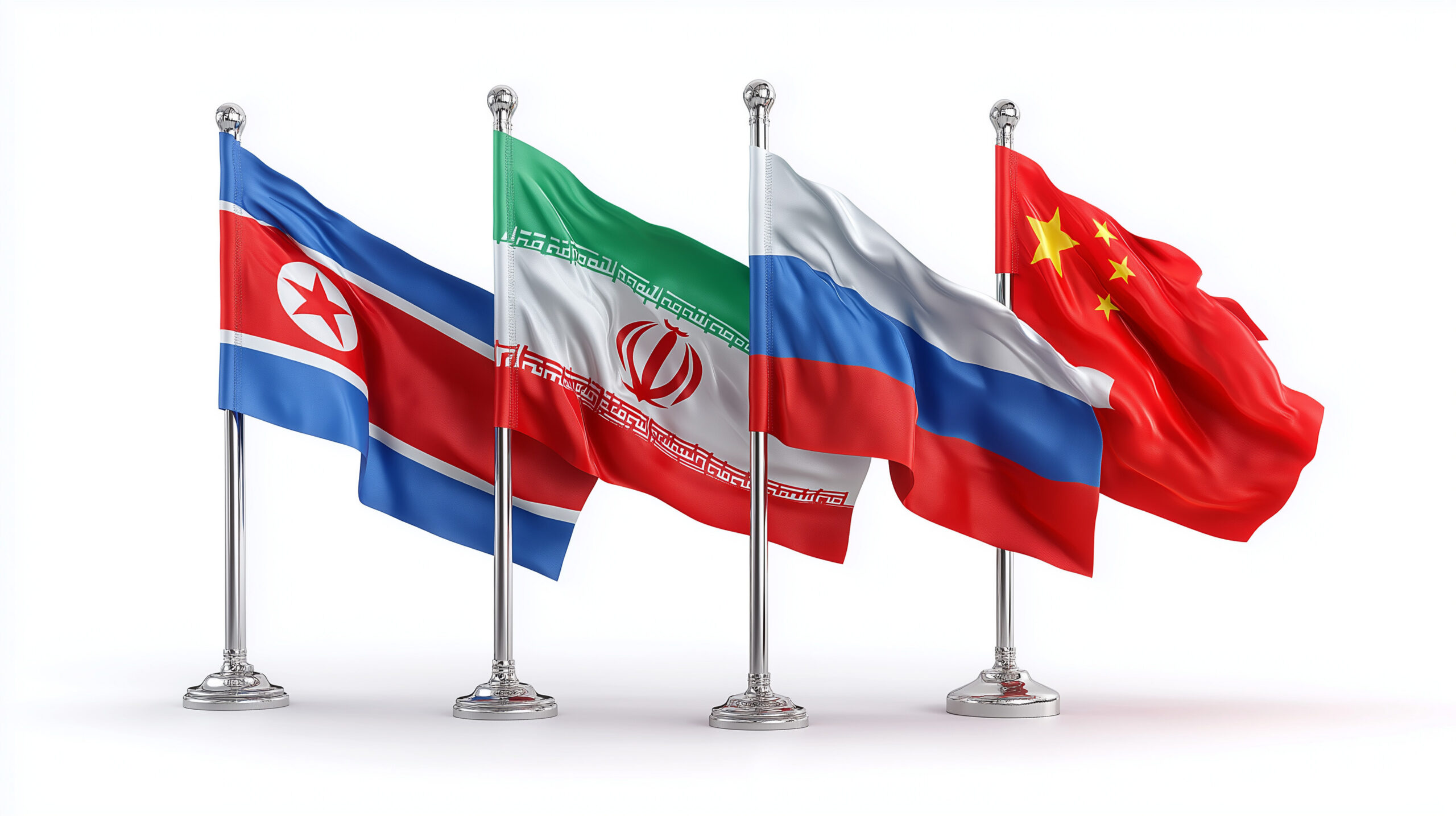
The core idea is simple: Western support made it more expensive for Russia to be aggressive, but it also gave third parties, especially those who were sanctioned, strategically non-aligned, or revisionist, reasons to work more closely with Moscow. North Korea’s weapons and troops, Iran’s drone and missile transfers, and China’s role as an economic and dual-use “backbone” all helped Russia stay connected and keep its operations going. At the same time, major Asian energy importers, especially India and China, helped keep Russia’s economy strong by buying oil and doing shipping and financial workarounds – like the “shadow fleet” – even as sanctions got stricter.
Framing the Puzzle with Academic Paradigms
A deep analysis benefits from combining theoretical approaches rather than forcing the war into a single paradigm.
- Offensive realism and war endurance: Russia’s preference is to convert military force into a durable revision of the European security order. When direct victory is costly, the strategic aim shifts toward endurance – denying Ukraine a decisive advantage and outlasting Western cohesion. Third-party support becomes a key variable in “staying power”.
- Neoclassical realism and domestic extraction: Russia’s ability to mobilize domestic industry, labor, and finance is filtered through state capacity, elite cohesion, and coercive extraction. Asian inputs – machine tools, electronics, drones, ammunition – reduce pressure on domestic bottlenecks, letting the state sustain prolonged attrition.
- Sanctions, interdependence, and network resilience: Liberal theories of interdependence assume economic ties raise the price of conflict; the Ukraine war shows interdependence can also enable sanctions evasion Russia leveraged trade rerouting, third-country intermediaries, and maritime opacity to keep revenue flowing. The “shadow fleet” and the redirection of oil to Asian markets are central here.
- Authoritarian alignment and “entente” politics: Constructivist and regime-security perspectives help explain why certain partners – especially North Korea and Iran – saw strategic value in Russia’s defiance of Western pressure. The relationship is not purely transactional; it also carries a shared political narrative about resisting “Western domination”, combined with mutual interest in technologies, cash, and diplomatic cover.
These frameworks point to the same empirical claim: Russia did not merely “find buyers” or “buy weapons”. It constructed an ecosystem of support where each Asian linkage answered a different vulnerability – manpower, munitions, industrial inputs, revenue, and signaling.
North Korea: Ammunition, Manpower, and Battlefield Learning
North Korea has been the most openly military in its contributions among Asian partners. Open-source and intelligence-linked reports show that Pyongyang gave Russia millions of artillery rounds, which is enough to cover a large part of Russia’s costs in high-intensity operations. RUSI reported that up to 5.8 million artillery rounds were sent, which shows how big and important this was for strategy. Reuters and other news outlets said that North Korean weapons were also important for keeping Russian artillery fire rates up at certain times.
The manpower aspect is more unusual: several reliable sources say that North Korea deployed troops to help Russia, with estimates usually ranging from 14,000 to 15,000 soldiers since late 2024 (including rotations and role changes). Reports from early 2026 show that North Korean troops are moving away from expensive frontal assaults and toward more “specialized” roles, such as artillery support, drone reconnaissance, and mine clearance. This shows that they are adapting and trying to learn from modern combat.
This arrangement can be read through a principal–agent lens: Russia (the principal) wants volume, like shells, labor, and people, while North Korea (the agent) wants compensations and to learn. It also makes sense for the safety of the regime. Pyongyang gets real-world battlefield experience, and the two regimes that have been sanctioned become more dependent on each other strategically. In return, Moscow gets a supplier that doesn’t care much about its reputation and isn’t as limited by international rules. The relationship also creates a feedback loop: as the war turns into a battle of artillery and drones, North Korea’s industrial output and stockpiles become more valuable.
Iran: Drones, Missiles, and the Economics of Saturation
Iran’s most obvious contribution has been to the drone war. The Shahed family of loitering munitions became a key part of Russia’s long-range strike campaign, especially as Moscow looked for cheap ways to put pressure on Ukrainian air defenses and civilian infrastructure. Research has shown that Shahed-style attacks work like saturation by making Ukraine spend a lot of money on interceptors to fight cheap drones. Reuters has reported that Iran-made drones are being used a lot in the conflict, which gives us a starting point for how big this part of the conflict is.
Reuters reported in 2024 that Iran gave about 400 ballistic missiles to other countries. These missiles came from families that included Fateh-110 variants like Zolfaghar. As military cooperation grows, IISS analysis has also looked into how missiles are delivered.
There are two strategic effects that stand out. Firstly, Iran helped Russia find new ways to attack when Russia had trouble getting precision-guided munitions and wanted to put long-range pressure on its enemies. Secondly, Iran’s help made it possible for air attacks to become more industrialized, with drones and missile salvos being used all the time instead of just “shock” strikes. That reasoning fits with modern coercion theory, which says that the goal is not only to destroy things physically, but also to lower morale, hurt the economy, and make air defenses less ready over time.
China: Decisive Enabling Without Direct Troop Deployment
It is better to think of China’s role as not “sending troops” but as helping industries stay strong and keeping the country safe. There is no credible public evidence that China sent regular combat troops to fight for Russia in Ukraine. The story with more evidence is about trade, industrial inputs, and economic ties that can be used for both military and civilian purposes.
Carnegie’s research has shown trends in China’s dual-use exports to Russia, such as machine tools, semiconductors, and telecommunications equipment. These are all types of goods that can keep or grow defense-industrial output even without “lethal aid” in the strictest sense. Analysis focused on Europe also stresses how important it is for Russia to get high-tech goods “from or via China” that can help it produce military equipment. Policy research focused on the U.S. follows the ongoing fight: Western officials claim that China is helping Russia’s war effort by providing dual-use parts; however, China denies providing deadly weapons and says it controls exports.
From a hedging point of view, Beijing’s strategy can be seen as trying to achieve several goals at once: preventing a Russian collapse (which could give the U.S. more power), avoiding direct conflict with NATO, retaining access to European markets, and maintaining its narrative positions on security and sovereignty. As a result, the posture is well-balanced, strong enough to influence Russia’s industrial base, but not so strong that it closes off diplomatic and economic opportunities with Europe and parts of the Global South.
India and Wider Asian Economic Linkages: Oil Revenue, Sanctions, Frictions, and Bargaining
Military supplies change the battlefield, but money changes how long the war lasts. Russia’s economy has stayed strong because it has been able to send energy exports to Asia instead. After Europe put restrictions on Russian oil, India and China became major destinations for cheap crude oil. Recent news shows that this phenomenon is still politically contested and likely to change. For example, a Reuters report from early February 2026 said that the U.S. and India made a trade deal that would gradually stop India from buying Russian oil. It stated that oil imports were expected to drop from about 1.2 million bpd in January to 800,000 bpd by March. Reports from the same source have followed the tightening of sanctions and the resulting strain on Russia’s oil revenues and export logistics.
This leads to a bigger theoretical claim: sanctions are a type of economic coercion, but they only work if third parties follow the rules and there are other markets available. For India, Russian oil became both an economic opportunity and a diplomatic bargaining chip. This let New Delhi keep its strategic independence while balancing its ties with the West. The result is not just alignment with Russia, but a constantly renegotiated balance based on price, the risk of sanctions, and geopolitical bargaining.
Ukraine as a Laboratory: Weapons Testing and Strategic Signaling:
A common part of modern warfare is using real combat to test new skills, improve tactics, and send messages to enemies. This logic has been demonstrated many times in Ukraine’s war, especially with missiles and strike systems. Recent news and analysis from early 2026 talk about Russia’s use (or alleged use) of newer missile types along with older systems and stocks that have been repurposed. There has also been a lot of talk about hypersonic systems like Zircon and the signaling value of limited deployments.
From a deterrence and signaling point of view, using “new” or highly publicized weapons from time to time serves several purposes: it puts pressure on Ukrainian defenses, tests how well they work in real-world situations, and shows NATO audiences that they can escalate. This aligns with traditional signaling theory: a state’s credibility is enhanced when it exhibits capability through costly, observable means, even if the tactical impact is minimal.
Comparative Overview Table: Asian Inputs into Russia’s War Effort
| Partner (Asia) | Reported troop contribution | Reported military-technical contribution | Strategic effect for Russia | Key public-source examples |
|---|---|---|---|---|
| North Korea | ~14,000–15,000 troops reported since late 2024 (rotations; roles evolving) | Millions of artillery rounds; rockets; heavy weapons reported | Sustains artillery-centric attrition; adds manpower and specialized support; reduces Russia’s ammunition constraints | CFR Troop Estimates; RUSI Artillery Estimates; Reuters' Graphic Large-Scale Munitions Reliance |
| Iran | No credible public evidence of regular Iranian combat units deployed to fight | Shahed-family drones; Reuters reported ~400 ballistic missiles provided (per sources) | Enables cost-effective strike saturation; diversifies long-range attack options; sustains coercive pressure campaign | CSIS on Shahed Saturation Logic IISS on Shahed Production Dynamics Reuters on Missile Provision |
| China | No credible evidence of state troop deployment to fight in Ukraine | Dual-use exports (machine tools, semiconductors, telecom equipment categories); industrial inputs | Maintains defense-industrial throughput; cushions sanctions impact; strategic depth without overt escalation | Carnegie on Dual-Use Exports; MERICS on High-Tech Exports; U.S. Policy Research on Dual-Use Exports |
| India | None | Energy purchases and refining/trade dynamics; shifting under sanctions pressure | Supports fiscal endurance and war economy indirectly; bargaining arena with the West | Reuters on Impacts of US-India Trade Deal; AP on Sanctions’ Impact and Revenue Decline |
This data reflects publicly reported estimates from cited sources; they are best treated as ranges rather than precise totals, given wartime opacity and propaganda incentives on all sides.
What This Means for the NATO–Ukraine Strategy
Western support has significantly increased Russia’s military losses, fiscal strain, sanctions pressure, and dependence on costly war production, making the conflict economically and operationally burdensome for Moscow. Russia’s partnerships with Asian states help offset these pressures by supplying manpower, weapons, industrial inputs, and energy markets, thereby stabilizing and spreading the costs over time.
This means that there are a few strategic lessons to be learned.
First, the war is not only about front-line tactics, it is also about supply chains, industrial capacity, and the strength of the coalition. North Korea’s artillery flows and Iran’s drones are important because they fit into the war’s main operational grammar, which is attrition, saturation, and persistence.
Second, “sanctions effectiveness” cannot be separated from how third parties act. Asian markets and middlemen can lessen coercive pressure, and changes in policy, like stricter enforcement of shipping, finance, and refined products, can have a big effect on revenue trends.
Third, weapons that make headlines are not the only things that matter in technological competition. Dual use systems, machine tools, electronics, and precision parts that can be used for more than one thing are often more important for long wars than a few very good systems.
Conclusion
Russia’s ability to keep fighting depends on more than just getting people to fight and adapting to the battlefield; it also depends on building a network of support in Asia. North Korea supplied the most direct “war inputs” in the form of troops and ammunition. Iran provided scalable strike systems and saturation capability. China supported industrial resilience through economic and dual-use ties. Major Asian energy dynamics affected Russia’s fiscal endurance, but this is becoming more contested as sanctions enforcement changes.
Theoretical frameworks converge on a disconcerting conclusion: when a significant power can tap into alternative markets and military suppliers, coercion becomes more gradual and unpredictable, rendering the cessation of wars increasingly challenging. In this interpretation, Ukraine is not merely contending with Russia, it is also combating a decentralized Eurasian support network that transforms geography, trade routes, and regime affiliations into a capacity for sustained warfare. The strategic discourse must transcend individual-centric narratives and conceptualize the war as a systemic phenomenon, wherein Asian alliances are not marginal, but fundamentally integral to Russia’s sustained military efforts.