





Could a Pacific War Be Lost in the Atlantic? Lessons from a USNI “Useful Fiction”
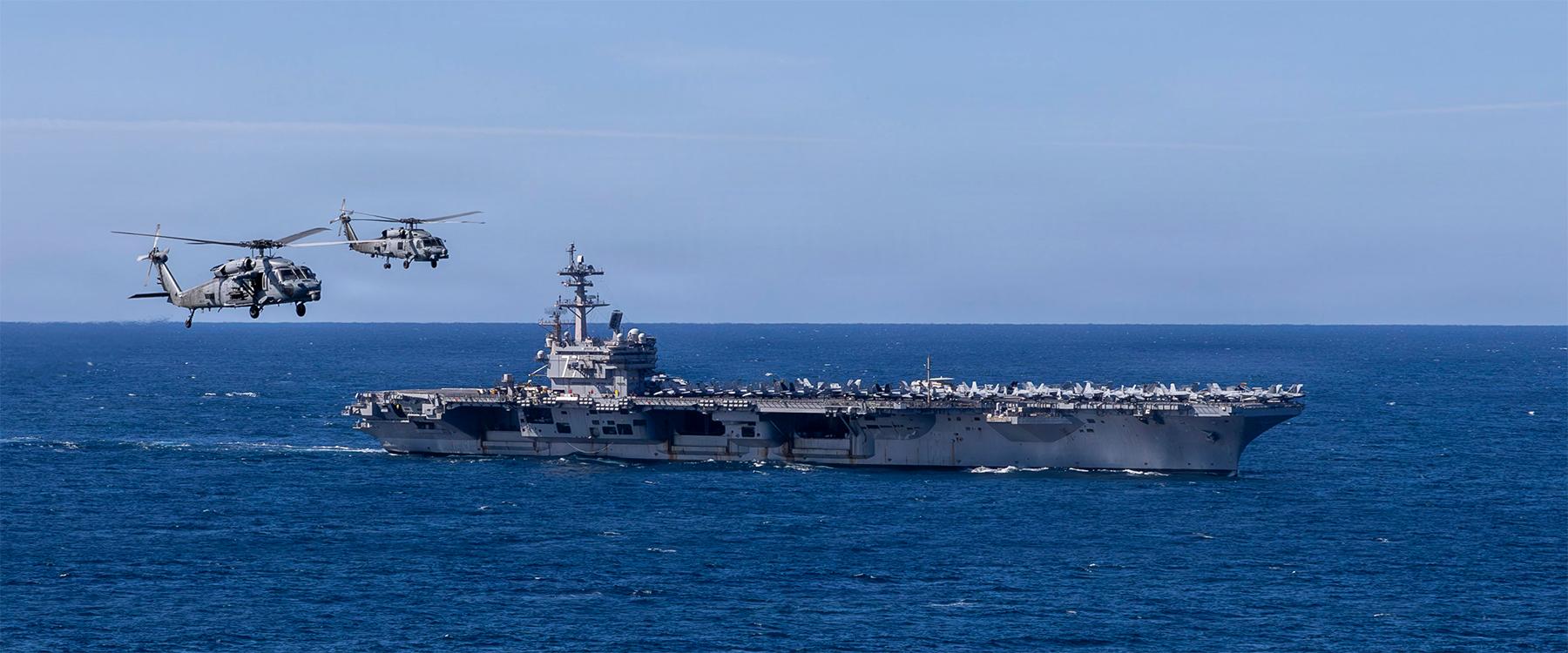

“A ‘useful fiction’ narrative promotes reflection on what global trends and new technologies might mean for the U.S. Navy and Atlantic security.” USNI Proceedings 152, no. 3 (March 2026).
In the U.S. Naval Institute Proceedings’ recent article, “How a Pacific War Could Be Lost in the Atlantic,” authors August Cole and Peter Singer present a speculative “useful fiction” narrative set in the aftermath of a future war with China to explore vulnerabilities in current U.S. naval strategy. Cole and Singer argue that although the fictitious conflict was focused on contesting China throughout the Pacific, decisive failures occurred in the Atlantic, where global networks, economic influence, and maritime infrastructure were targeted to disrupt American power projection.
China’s strategy leveraged diplomatic, informational, military, and economic (DIME) tools over decades to expand influence across Africa and Latin America, gradually eroding U.S. access to ports, bases, and logistics networks. During the scenario, attacks on sea lines of communication, undersea cables, ports, and supply chains crippled U.S. logistics and complicated operations in the Indo-Pacific. The narrative ultimately warns that future conflicts will be global and systemic, requiring the U.S. Navy to secure not only Pacific battlefields but also the broader geopolitical networks that enable America’s strategic maritime depth.
Understanding the Enemy’s Asymmetric Plans in the Atlantic
For more than a decade we were obsessed with what we thought was our adversary’s obsession with a single scenario. We were unwilling to think of Beijing as a peer global power. We were taken aback when China acted just like we would have in their position: using new military, economic, and political means to act globally…Systems confrontation was about looking at our military, our economy, and our overall security as a system and seeking vulnerabilities to take it down, much as a skilled hacker would patiently size up a network for exploitable gaps in the defenses.
In state after state, Chinese presence and influence grew at U.S. expense, year after year. We should not later have been shocked when crucial naval facilities and airbases were suddenly off-limits to us in the Atlantic when the war began.
Pacific Ambitions, Atlantic Effects
It was easy to discount the importance of efforts in the Atlantic during peacetime. But when war came, they transformed into a nearly untenable situation for U.S. political and military leaders, for whom there were no answers, only bad choices… In operational terms, those efforts allowed the enemy to threaten the U.S. homeland; deny U.S. and allied sea lines of communication; and either deny or control global naval basing and maritime infrastructure. Together, these effects created many dilemmas for the U.S. Navy in not only the Atlantic, but also the Pacific.
Maritime Threats to the Homeland
The mere threat bottled up a significant portion of the U.S. nuclear submarine force… The Atlantic also provided staging for aerial strikes on the United States, which were different from the ballistic missiles we had long feared, but just as effective… Yet for all the high-tech threats to infrastructure, the most damaging effects might have come from the simple use of dragging anchors to damage fiber optic cables in the Baltic and Caribbean Seas, and even deep in the North Atlantic.
Hundreds of Red Dots
The day the war began, suddenly there were hundreds of red dots in the Atlantic that we had to try to run down…. The Department of Defense has not revealed the exact number of PLA-controlled or -affiliated ships that operated in the Atlantic during the conflict, but media reports conservatively estimated that at least 150 vessels were potential threats.
Much Yet to Settle
Recognizing the strategic dimension of the Atlantic’s importance, not just to our overall security at home and for our NATO allies, but also to operations against a Pacific nation, is an urgent matter for Navy leaders… If the United States has ceded the first half of the 21st century to China and its authoritarian partners, the second half certainly has not yet been decided.

