Iran and the Taliban: An Axis of Convenience the United States Cannot Ignore

Introduction
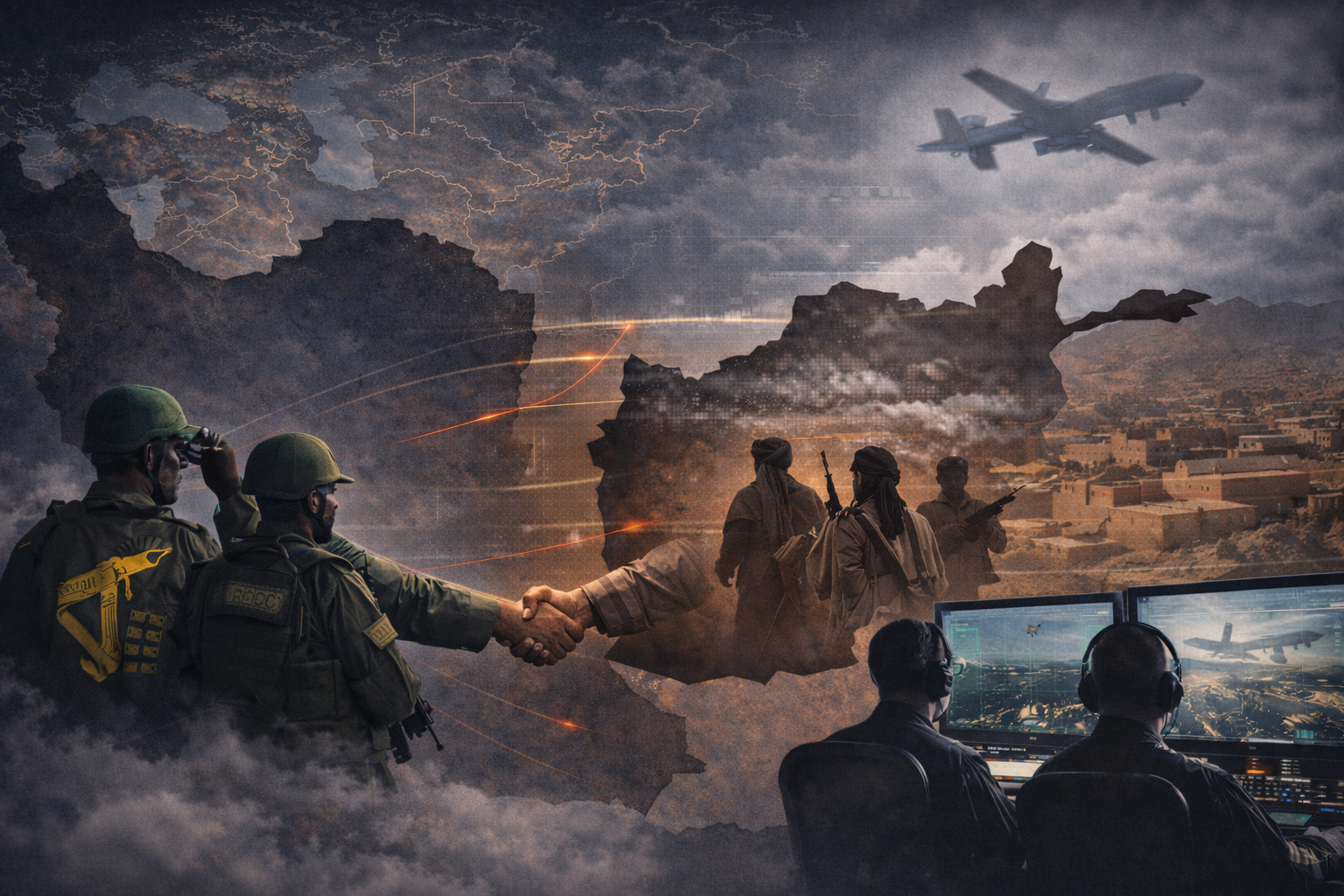
At a time when Washington is deemphasizing the Middle East—while remaining committed to Israel’s security—it is crucial to pay closer attention to Iran’s evolving relationship with the Taliban. Iranian leadership remains committed to the destruction of Israel, and the Taliban are hostile toward Israel as well. Beyond ideology however, the deeper concern for U.S. policymakers is how Tehran and Kabul are aligning pragmatically to undermine American influence in South and Central Asia.
For nearly a quarter-century after the September 11 attacks, U.S. policy rested on a useful assumption: that Iran and the Taliban were irreconcilable enemies whose ideological and sectarian differences would prevent meaningful cooperation. That assumption was convenient for a time—but it is no longer valid.
Despite persistent friction and mutual distrust, Tehran and the Taliban have demonstrated that shared interests—above all, opposition to U.S. presence and influence—can outweigh historical animosities. What has emerged is not an alliance of shared values, but an axis of convenience with tangible consequences for American security interests.
Washington’s continued tendency to view the Taliban as an isolated pariah misses the larger strategic environment. Afghanistan is becoming a contested space shaped by regional actors comfortable operating in ambiguity, leveraging extremist proxies, and waiting out American attention spans as U.S. priorities shift focus to the Western Hemisphere to prevent and counter narco-terrorism, cartels, and any other threats inimical to U.S. interests.
From Near War to Strategic Hedge
Hostility between Iran and the Taliban was once acute. In 1998, the Taliban’s killing of Iranian diplomats in Mazar-e-Sharif nearly triggered open war. Iran mobilized forces along its eastern border, and Taliban leaders openly embraced anti-Shi’a violence. Few relationships appeared less salvageable.
That calculus began to change after 2001. Once Washington toppled the Taliban—and later labeled Iran part of the “Axis of Evil”—Iranian strategists reassessed their threat hierarchy. Sunni extremism on Iran’s eastern flank posed a danger, but U.S. military power deployed on both Iran’s eastern and western borders represented a more immediate strategic threat.
By the mid-2000s, Iran quietly opened channels to Taliban elements. As documented in U.S. and UN reporting over time, this included arms transfers, limited training, facilitation, and safe passage. Even al-Qaeda operatives benefited from Iranian transit and logistical support. The objective was never ideological alignment. It was an asymmetric strategy: bleeding U.S. forces, shaping battlefield dynamics, and ensuring Tehran retained leverage in any eventual political settlement.
This approach mirrored Iran’s broader strategy—indirect, deniable pressure designed to offset conventional military inferiority while avoiding direct confrontation.
The Taliban’s Return and Iran’s Strategic Payoff
The U.S. withdrawal from Afghanistan in 2021 transformed a tactical alignment into a strategic payoff for Tehran. With American forces gone and the Taliban restored to power, Iran moved quickly to consolidate ties. Diplomatic engagement expanded, cross-border trade increased, and Tehran positioned itself as an indispensable regional interlocutor.
From Iran’s perspective, Afghanistan reinforced a lesson drawn elsewhere: the United States can be outlasted.
Tehran did not defeat Washington militarily. It endured. Afghanistan now joins Iraq, Syria, and Lebanon as case studies in how patience, proxies, and asymmetric leverage can erode U.S. influence over time without triggering a direct, large-scale confrontation.
For Iran, this is not strategic improvisation—it is validation of a long-standing playbook.
A Shared Interest in Containing Islamic State Khorasan
One of the most underappreciated drivers of Iran-Taliban cooperation is their mutual hostility toward Islamic State Khorasan Province (IS-KP). IS-KP poses a direct threat to Iran due to its virulent anti-Shi’a ideology, operational reach, and intent to destabilize the region.
The Taliban, though brutal, have proven to be pragmatic in the face of regime survival. They seek to present themselves as a governing authority rooted in a Sunni Hanafi-Deobandi model—one that Iran has tolerated, and at times quietly supported, as a buffer against more extreme Salafi-jihadist movements.
This convergence helps explain why Iran has been willing to tolerate Taliban governance—despite its repression—so long as IS-KP remains contained. Disorder benefits IS-KP; harsh order, from Iran’s perspective, does not. It also explains why Iran has resisted efforts to fully isolate the Taliban, arguing that exclusion increases instability and transnational jihadist risk.
Afghanistan in Iran’s Asymmetric Playbook
Iran’s engagement with the Taliban reflects a familiar pattern: influence without ownership, leverage without responsibility. Across the Middle East, Tehran has cultivated armed groups and political movements that advance its interests while preserving deniability. Afghanistan is no exception.
The Taliban are not an Iranian proxy in the mold of Hezbollah, nor do they take orders from Tehran. Instead, they function as a partner of opportunity—one Iran can influence through trade, border access, intelligence coordination, and selective cooperation. The Taliban, in turn, draw lessons from Iran’s experience surviving sanctions, isolation, and sustained external pressure.
This is low-cost, high-impact statecraft. Iran shapes outcomes without committing itself to the Taliban’s long-term success or failure, preserving flexibility while constraining U.S. options.
Implications for U.S. Counterterrorism and Intelligence
For the United States, this alignment further complicates already fragile counterterrorism efforts. Washington’s reliance on over-the-horizon capabilities cannot assume reliable access, meaningful intelligence partnerships, or a permissive operating environment. Iran’s growing influence in Afghanistan erodes all three.
Iranian intelligence presence, influence over transit routes, and engagement with Taliban security services increase the risk of intelligence blind spots and operational compromise. Taliban assurances that Afghan territory will not be used to threaten U.S. interests remain unverifiable and unenforced.
It remains implausible to expect the Taliban to serve as a reliable counterterrorism partner against IS-KP. Iran’s willingness to work with the Taliban further reduces incentives for Kabul to make meaningful concessions to Washington on counterterrorism cooperation.
Friction Is Not a Deal Breaker
None of this suggests a friction-free partnership. Disputes over water rights, refugees, border security, and the treatment of Shi’a minorities persist, and armed clashes along the border underscore real tensions.
But friction does not equal failure. Iran has repeatedly demonstrated an ability to manage contradictory relationships when strategic interests demand it. There is little reason to believe Afghanistan will be an exception.
The Strategic Warning for U.S. Policymakers
The fall of Kabul did not end competition in South and Central Asia—it removed the U.S. from the center of it. Iran has filled part of that vacuum by leveraging proximity, patience, and asymmetric relationships at minimal cost.
For U.S. policymakers and practitioners, the lesson is clear. The Iran-Taliban relationship is not an anomaly; it is a warning. Complete disengagement does not produce long-term stability—it creates opportunity for adversaries willing to operate in the gray.
Rather than extending full diplomatic recognition to the Taliban, the U.S. should pursue a strategy of conditional engagement and limited containment. This includes sustaining sanctions pressure, coordinating closely with regional partners, and preserving contingency options—including selective support to anti-Taliban opposition actors—should conditions warrant.
Treating the Taliban as an isolated actor ignores the broader strategic environment metastasizing around Afghanistan. Ignoring this axis of convenience risks repeating the same miscalculations that allowed it to form. While the Taliban may ultimately undermine themselves through internal repression and external hedging, U.S. policy should not rely on that outcome alone.