





Mapping the Human Terrain: The Enduring Role of Human Intelligence in the U.S. Army

Abstract
The direct collection of intelligence information from human sources is highly sensitive for good reason. Many people have risked their lives to pass valuable information to the United States, and practitioners have a strict responsibility to protect their assets and tend to avoid publicity. Nonetheless, spy novels and films have popularized human intelligence (HUMINT), though these often misrepresent the realities experienced by military HUMINT professionals. U.S. Army HUMINT soldiers quietly contribute meaningful intelligence successes through the identification, development, and maintenance of valuable human relationships worldwide.
Very little is written about the experience of these service members and, accordingly, very little public discourse takes place about their role within the military and the intelligence community. However, it is important to discuss this critical intelligence function in the context of the modern era of irregular warfare and strategic competition. As the Army moves beyond the Global War on Terror and the military adapts to a new future, our primary ground force will need to design a clear pathway to train, equip, and deploy its human-intelligence soldiers.
Although intelligence issues can be difficult to discuss due to classification, all information related to methods and capability in this writing can be found in the unclassified field manual FM 2-22.3 Army Human Intelligence Collector Operations.
Introduction
The current and future battlespace is a wicked information environment, with AI-generated content and near-instantaneous information delivery changing the rules and expectations of the cognitive domain on a moment-to-moment basis. Blended with malicious disinformation campaigns and increasingly complex surveillance environments, intelligence collectors face the formidable challenge of sifting through this rapidly changing, highly irregular battlespace for valuable information. Despite the difficulties, one rule remains true: the human element remains at the foundation of all intelligence work.
Great and middle powers are actively fighting irregular, conventional, and clandestine warfare over control of populations. This means that the ability to understand the intentions, emotional states, and motivations of the human actors who make decisions that affect this global balancing act is of critical importance. Human intelligence collection, the oldest and least technologically oriented method available, remains the most effective way to gather this kind of information. Unfortunately, the US Army has fragmented the skill set through a reduction in missions and a downgrading of its training pipeline. Unchecked, this regression will strip the Army of its primary means of interacting directly with foreign persons for the purpose of collecting intelligence.
The Case for Scalable HUMINT Collection in Modern Warfare
It should go without saying that the United States Army fundamentally requires an intelligence element capable of directly engaging with populations in both conventional and irregular warfare. The requirement has become increasingly critical as the nature of conflict evolves, yet the Army’s human intelligence (HUMINT) forces remain inadequately adapted for irregular operational environments. During the Global War on Terror, the Army identified a need to interact directly with populations in order for counterinsurgency (COIN) to succeed. The Army built a new capability by adapting its existing interrogators and retraining them to perform source operations. This empowered the Army to gather information from multiple sources within the population rather than relying solely on detainees, thereby establishing modern Army HUMINT collection practices.
It should go without saying that the United States Army fundamentally requires an intelligence element capable of directly engaging with populations in both conventional and irregular warfare.
In the post-GWOT shift to strategic competition, the service has reverted to a focus on HUMINT soldiers for interrogation, a capability reduction that will ultimately lead to obsolescence. Training opportunities on basic to mid-level tradecraft and operational skills that would enable collectors to safely meet and engage with sources are being systematically reduced across the force. Critically, this trend threatens the Army’s ability to understand and influence populations in contested environments where such understanding proves decisive, leaving the force especially vulnerable during Phase 0 operations across multiple fronts (as is currently the case). By reducing the Army’s human intelligence collection capability, field commanders are left with no means to gather intelligence from the people immediately outside their gates.
To be successful across the competition continuum, the Army must develop and deploy a rapidly scalable force of human sensors capable of operating in competitive environments, both permissive and semi-permissive, and interact directly with local populations to collect critical information. Local commanders cannot rely exclusively on information collected by separate intelligence agencies or through technical means alone. Direct human contact with civilian and military populations remains essential (despite common regressive attitudes about the superiority of overhead and technical capability), requiring adequately skilled collectors who can operate effectively at lower echelons.
Some argue that the Army should instead produce case officer-equivalent collectors comparable to those produced by intelligence agencies, or that other military occupational specialties can fulfill the HUMINT role just as well, but these alternatives fail to address the fundamental requirements of military commanders. Full case officers require years of training, cannot be produced at scale, and must remain focused on high-priority, high-risk sources. They play an important role but are underutilized when tasked with the common military applications required by company- to brigade-sized echelons.
Other occupations, such as counterintelligence agents, civil affairs personnel, foreign area officers, and special operations forces (SOF), cannot accomplish this mission either due to similar limitations in scalability or to their specialized mission focuses. The HUMINT collector specializing in limited, mid-level tradecraft and interpersonal collection techniques occupies a unique position ideally suited to serve local commanders in various roles while simultaneously contributing to the broader intelligence picture.
The Multifaceted Role of the HUMINT Collector
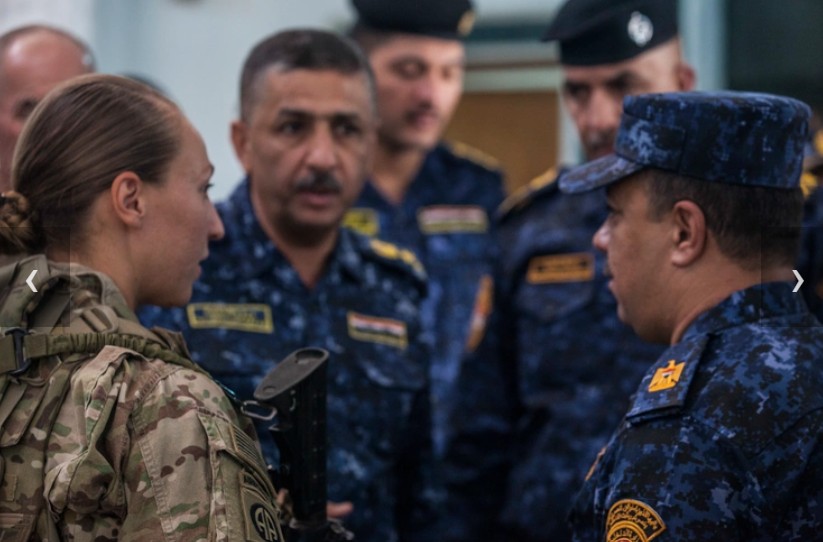
The modern HUMINT collector must be trained to execute a diverse array of missions across the operational spectrum, serving as the critical interface between military forces and the human terrain. Prior to the degradation of their mission, their responsibilities included debriefing friendly forces, liaison with foreign counterparts, conducting target analysis to identify high-value individuals, detainee interrogations, and, critically, managing low and mid-tier human sources. During the Iraq and Afghan wars, HUMINT collectors were often attached to maneuver elements, performing field interrogations and key leader engagements while on patrol. Outside active combat zones in permissive countries, collectors served as key liaisons to local populations. These core competencies were also significantly more effective when enhanced with appropriate language skills, which enabled direct communication and deeper cultural understanding.
The breadth of these responsibilities reflects the reality that human intelligence collection cannot be reduced to a single function, and none of these roles are directly replicated by other military occupations from a strictly intelligence-collection standpoint. Other soldiers will, of course, interact with foreign populations to some degree, but they are not driven by intelligence requirements and are not trained in the discreet questioning techniques and human engineering skills necessary to elicit useful information. Unlike other touchpoints, everything the HUMINT soldier does is recorded through formal reporting channels, which contribute essential pieces to the intelligence mosaic that commanders require for decision-making.
Direct Applications Across Echelons
The practical applications of properly trained HUMINT collectors extend across all echelons of military operations, from tactical to strategic levels. Perhaps most importantly, they develop and maintain relationships with local civilian population sources, creating information networks that provide early warning of threats and insight into population sentiments. Higher-echelon assets or technical collection platforms cannot replicate HUMINT collectors ground-level engagement.
HUMINT collection at scale can create its own sort of “persistent stare” directly into the collective consciousness of a given social network. This is what sets Army HUMINT apart from specialized, high-level collectors who spend years developing individual sources in the hopes of extracting some exquisite intelligence coup. It also sets them apart from other non-reporting military personnel who may gather insights but lack a mechanism to document and disseminate their observations. Army HUMINT is uniquely capable of casting a dragnet across an entire population to glean competitive insights at the local or regional level that can specifically inform military decisions.
At higher echelons, HUMINT collectors can also perform functions with greater operational and strategic significance. They can conduct demographic and sentiment analysis to transform individual data points into comprehensive assessments of dynamic populations. Collectors develop HUMINT targeting packets that guide field collectors toward priority intelligence requirements, ensuring efficient allocation of collection resources. Additionally, collectors also serve as liaisons to host nation and allied forces, facilitating information exchange and building the relationships essential for effective coalition operations. This higher-level analysis and coordination is a force multiplier to the effectiveness of tactical collection efforts.
Beyond conventional military operations, HUMINT collectors also serve as critical enablers for special operations forces. They provide expertise and capabilities that enable their supported teams to focus on operating seamlessly with partner forces, while the HUMINT element focuses on gathering incidental information from their activities and documenting it for broader dissemination, thereby allowing non-SOF and higher headquarters elements to benefit from these interactions. In nonstandard outstation operations, where small teams operate with minimal support in isolated locations, the ways in which HUMINT collectors interface with local populations and collect the observations and experiences of the team have the potential to elevate outstations from isolated observation posts into integrated intelligence nodes. Their ability to operate independently while remaining connected to the higher intelligence apparatus makes them uniquely valuable in the decentralized operations that characterize modern special operations.
The Strategic Imperative for Human Sensors
The importance of maintaining robust HUMINT collection capabilities becomes clear when examined through the lens of contemporary strategic competition. In irregular warfare environments where competition exists below the threshold of declared war, contests take place over populations rather than key terrain, and victory belongs not to whoever possesses superior firepower, but to whoever better understands and influences the population. Human sensors provide the necessary touchpoints at all levels, enabling military units to collect qualitative data on target populations. When those sensors comprise properly trained and authorized HUMINT elements deployed across the human terrain, they create an information network that operates at low cost and provides near-real-time intelligence unavailable through other means.
The value proposition becomes even clearer when considering resource allocation in budget-constrained environments. Technical intelligence platforms require enormous investments in equipment, maintenance, and specialized personnel. They excel at quantitative data collection but struggle to answer questions about motivation, intention, and sentiment. Agency-level case officers produce exceptional intelligence, but their high cost and limited availability prevent their deployment at the scale required for tactical and operational needs. Mid-level HUMINT collectors offer a more effective balance: commanders can train them in months rather than years, deploy them widely across the battlespace, and rely on them to deliver intelligence of sufficient quality and relevance.
Human sensors provide the necessary touchpoints at all levels, enabling military units to collect qualitative data on target populations.
The human dimension of warfare remains irreducible despite the age-old tendency to discard analog capability in favor of new technologies. Satellites can observe movements, and communications intercepts can reveal conversations. However, neither can explain why a local leader chooses to support one faction over another, or why a particular village proves more susceptible to enemy influence than its neighbor. Human interaction can answer questions of motivation, culture, and intention. When commanders lack access to the human dimension of the battlespace, they make decisions based on what adversaries have already done rather than why they act, forfeiting predictive analysis and forecasting.
Addressing Limitations and Investing in Capability
Critics correctly note that intelligence derived from human sources differs fundamentally from quantitative or technical intelligence. Human sources remain susceptible to misinformation, whether by deliberate deception or honest misunderstanding. They filter information through their own perspectives and biases with limited or secondhand access to information. The reliability of information from human sources can prove difficult to assess, requiring careful evaluation and corroboration. These limitations pose genuine challenges that intelligence collectors must account for through rigorous planning, effective questioning and elicitation, and thoughtful post-collection analysis.
However, these limitations apply to all intelligence disciplines, not uniquely to HUMINT. All intelligence requires corroboration from different sources before analysts can assess it with high confidence. Communication security measures or deliberate deception can deceive signals intelligence. Imagery intelligence shows what exists, but not why it exists or what it means, and open-source intelligence reflects the biases and agendas of its creators. The intelligence community has long recognized that effective intelligence requires integration of multiple disciplines, each compensating for the others’ weaknesses. HUMINT contributes unique strengths to this mosaic: access to intentions, motivations, and the human factors that drive decision-making. Combining a strong collection across all platforms under a team of skilled analysts creates an unparalleled force multiplier.
Rather than reducing or redirecting HUMINT capabilities in response to these challenges, the Army should reinvest in its HUMINT corps. The service should develop and field a large number of foreign-language-enabled human sensors equipped with attainable, mid-level tradecraft and honed oral and written communication skills. The approach should prioritize scalability and practical applicability to the current operating environment over speculative notions of utility in future conflicts. The United States has no need for pure interrogators in the irregular competition it faces globally at any given moment. Ten adequately trained collectors dispersed across the battlespace provide more valuable military intelligence in aggregate than one or two exceptional case officers working priority targets. Although agency officers may produce higher-quality intelligence from their specific sources, the information collected is not necessarily relevant or accessible to commanders in the field.
The training pipeline should focus on developing practical skills applicable across the range of military operations. Collectors need sufficient tradecraft to operate safely, build rapport with sources, assess source reliability, and protect themselves and their sources from adversary counterintelligence efforts. They need cultural awareness and linguistic skills sufficient for effective communication in their assigned region, along with targeting workflows to identify and prioritize collection opportunities. Additionally, recruiters should seek to identify intellectual generalists, assessed for their tolerance for ambiguity and their adeptness at innovative communication. This mid-level competency represents the sweet spot between the months required for basic military intelligence training and the years required to develop full-case officers capable of handling high-risk sources in denied areas.
Conclusion
The HUMINT collector represents a professional intelligence discipline requiring unique skills, knowledge, and authorities. While other personnel can and should engage with local populations as part of their missions, they cannot replace trained intelligence collectors any more than infantrymen can replace combat engineers or medics can replace physicians. The strategic environment now more than ever demands that military commanders understand populations as thoroughly as they understand terrain, and they will need skilled specialists to navigate and dominate that space.
In both irregular warfare, characterized by competition below the threshold of armed conflict, and in conventional warfare conducted in populated areas or alongside partner forces, human intelligence provides irreplaceable insights into the human dimension of the battlespace. The Army’s current trajectory, emphasizing either interrogation-focused collectors or relying on small numbers of high-level specialists, inadequately addresses this requirement. Neither approach provides the scalable, versatile, operationally focused capability that military commanders need. Instead, the Army needs to recognize that the prevailing importance of the human terrain requires a modernized human intelligence solution that enables direct contact by intelligence collectors.


