The Institutional Battlefield: Why Irregular Warfare Must Contemplate Path Dependence

Full Commentary: The Institutional Battlefield: Why Irregular Warfare Must Contemplate Path Dependence, by Ian Murphy, Inter Populum: The Journal of Irregular Warfare and Special Operations (Spring 2026).
This latest commentary in Inter Populum explains that irregular warfare analysis suffers from a critical blind spot. It focuses too heavily on tactics while ignoring institutions as a battlefield in their own right. Russia’s occupation of the Donbas is used as a case study to show how governance systems, education policy, citizenship, and economic integration function as tools of long-term control.
These institutional changes create path-dependent effects that reshape political and cultural realities even if military control shifts. The article ultimately shows that Russia is waging a war “not with bullets, but with bureaucracy,” producing enduring outcomes that may outlast the conflict itself. Below are key excerpts from the report.
A Conceptual Blind Spot: Institutions in Irregular Warfare
Discourse on irregular warfare often focuses on its operational and tactical dimensions… However, this focus has created a conceptual blind spot: the role of institutions in long-term irregular conflicts…From governance to education, economic systems, and infrastructure, the deliberate manipulation and imposition of new institutions can serve as a tool states use to alter an adversary’s political and social equilibrium, creating new realities that persist long after kinetic fighting has ceased…Regardless of military victory, Ukraine will have to confront the enduring outcomes of an irregular war fought not with bullets, but with bureaucracy.
A Deep-Seated Culture of Control: Russia’s Imperial Continuity
The current actions undertaken by the Russian Federation… represent not a spontaneous geopolitical maneuver but the modern execution of a deep-seated Russian imperial culture of control…The significance of this Tsarist policy lies in its establishment of a doctrine of institutionalized identity denial: first negating the existence of an identity and then systematically dismantling the educational, religious, and publishing institutions required to sustain it…This rhetoric of conditional statehood is a direct ideological continuation of the Tsarist policy… elevated from the denial of a language to the denial of the state itself.
Forced Assimilation in Contemporary Donbas: Weaponizing Education and Ideology
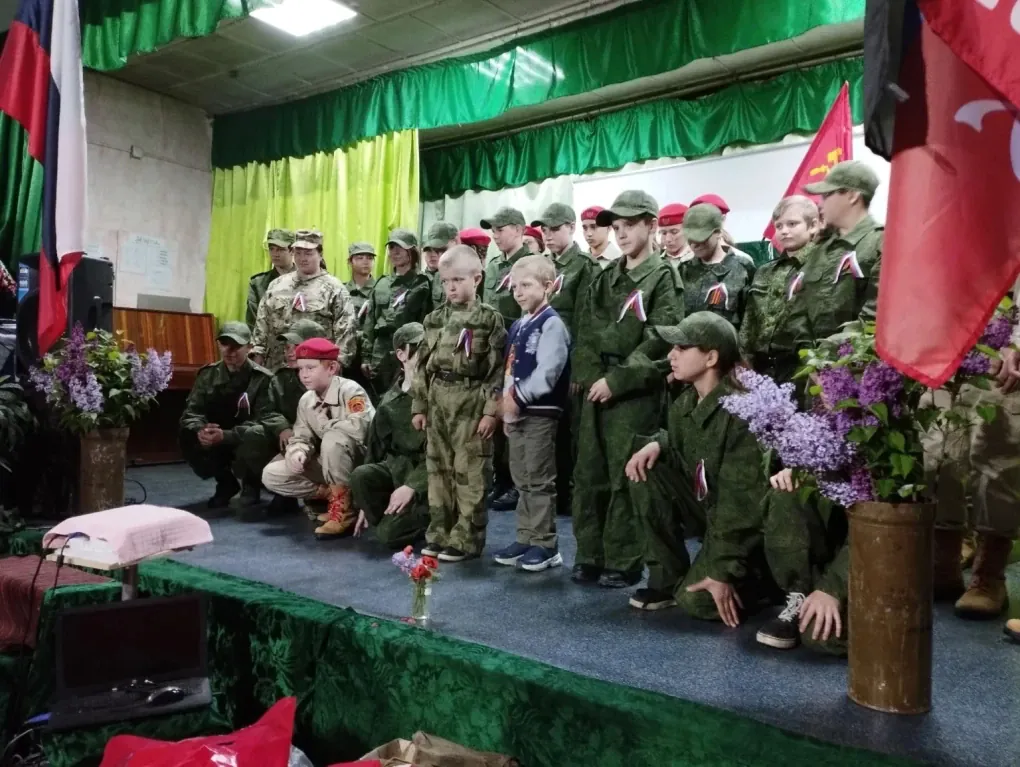
A central pillar of Russian governance in the occupied territories is the forced ‘passportization’ of the local population, a process that coerces Ukrainian citizens into accepting Russian citizenship…Those who refuse to take a Russian passport face severe penalties, including denial of access to essential services such as healthcare, employment, and social security benefits…Schools are being repurposed as instruments of war, with a focus on ‘military-patriotic education.
The Myth of Russian Reconstruction in the Donbas: Industrial Colonialism
Ukrainian experts and regional analysts dismiss the narrative of reconstruction as Kremlin propaganda designed to project legitimacy over occupied territories and distract local populations with ‘grandiose promises…The gap between Russia’s rhetoric and its actions indicates that the primary objective is not to restore the Donbas for its people, but to extract its strategic military and economic value for Russia…This economic strategy constitutes a form of industrial colonialism.
The History Versus Geography Debate
Rather than viewing history and geography as binary determinants of a society’s future, it is through history that we can better understand geography—and thus better predict the future…The Donbas’s developmental trajectory is not a simple product of geography, but rather the result of geography operating through history.
The Role of Institutions in Path Dependence
A similar dynamic is unfolding in the Donbas. The Russian-imposed governance structures… are not an accident; they are a deliberate imposition of an extractive institutional model…Russia has actively weaponized education and media to engineer a profound cultural shift that did not previously exist in the region…The long-term result is likely to be a generation shaped by a fundamentally different worldview and value system… rendering future social and political reintegration nearly impossible.
Multiple Equilibria and Path Dependence
In models with multiple equilibria, a temporary shock can cause a permanent shift from one equilibrium to another…The sunk costs and path dependence created by the conflict are so significant… that a return to the pre-2014 equilibrium is no longer feasible, even if politically desired…Any future peace will merely institutionalize the schism rather than bridge it.
Conclusion
Irregular warfare analysis must expand beyond tactics and operations to account for the long-term, path-dependent effects of institutional imposition…Ultimately, regardless of the military outcome, Ukraine will be left to confront the enduring consequences of a war fought not with bullets, but with bureaucracy. The developmental schism between the occupied territories and the rest of Ukraine is becoming a self-reinforcing, permanent condition.