





Rio’s bloodiest day: the untold story of Brazil’s most deadly police raid
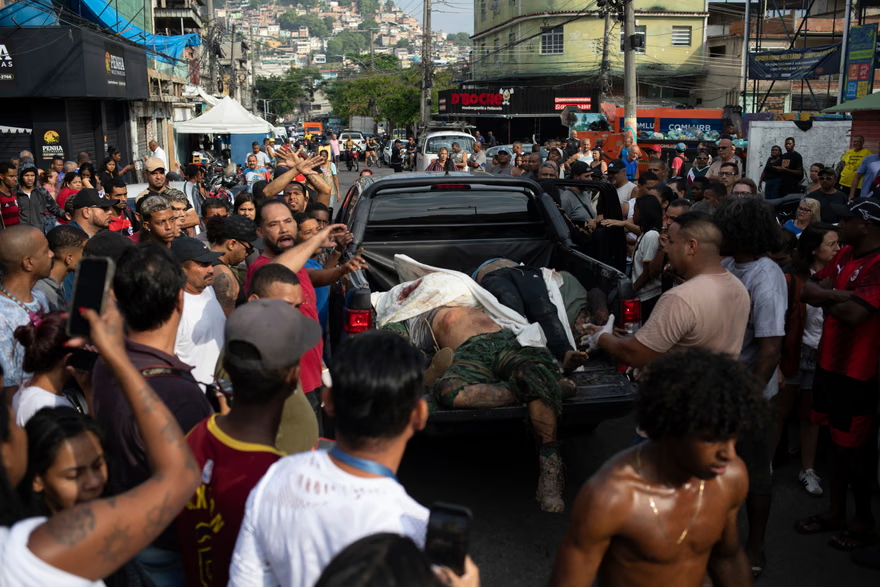

Rio’s Bloodiest Day is an impressively detailed report by The Guardian that reconstructs a 17-hour police operation in Rio de Janeiro’s Complexo da Penha that left 122 people dead, including five officers, raising questions about the legality and proportionality of lethal force against Rio’s gangs. Through interviews with dozens of residents, police commanders, lawyers, and bereaved families, the report traces how a warrant-based operation targeting the Red Command gang escalated into a sprawling urban battle across favela streets.
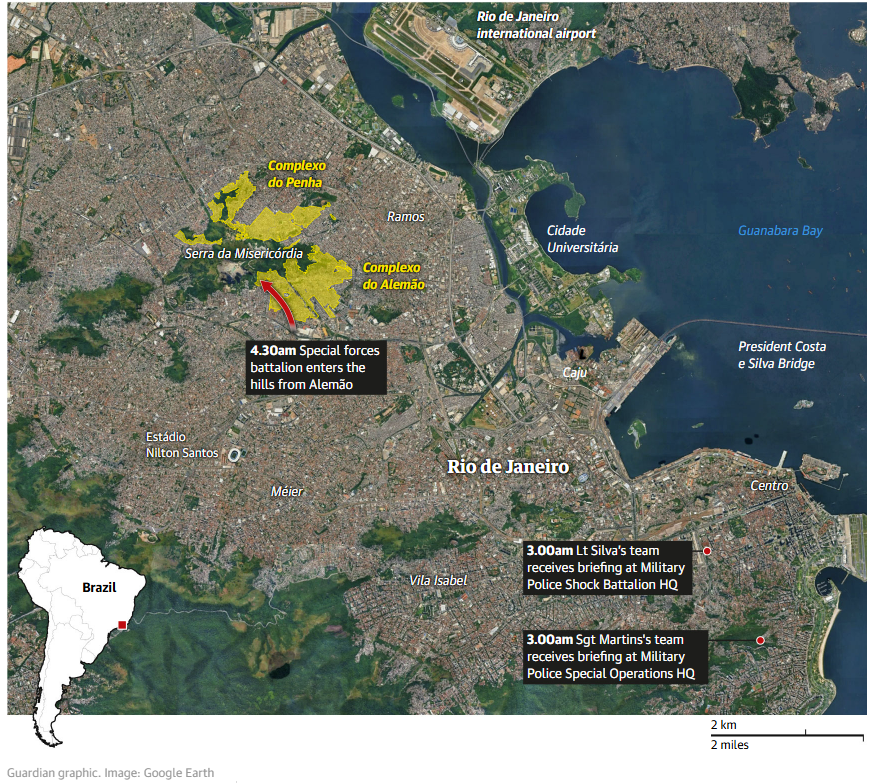
“Police estimated the area was guarded by 800-1,000 traffickers armed with automatic rifles, explosives and grenade-launching drones. To outnumber them, 2,500 officers would be deployed – at least twice as many as in past operations.”
The reporting shows that none of the 117 civilians killed appeared on the list of arrest warrants and that police later admitted at least 17 had no criminal record. Visual timelines and mapping graphics document how officers sealed escape routes, formed a “wall” on the Hill of Mercy, and pursued suspects into scrubland where most deaths occurred. Prosecutors and legal experts question the 23-to-one fatality ratio and whether the operation shifted from arrest execution to punitive killing. The article concludes with residents describing a conflict that reproduces itself, calling Rio’s cycle of violence “an infinite war.”

