The Gunpowder Hegemony: The Assault Rifle as a Vector of Sociopolitical and Territorial Transformation in Rio de Janeiro
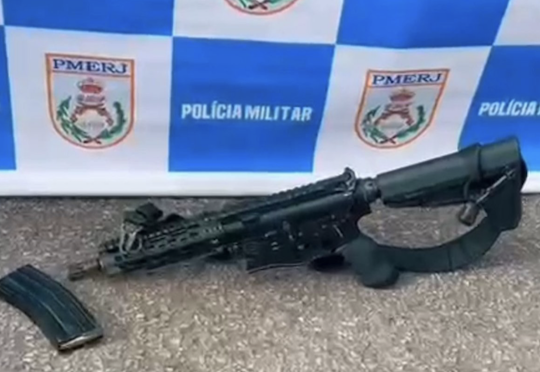

Analyzing public security in Rio de Janeiro over the last four decades requires isolating a variable that transcends its tactical function to assume an ontological status in criminal governance: the assault rifle, locally known as the fuzil. This research note proposes a dissection of the phenomenon, not through the lens of ballistics or conventional criminology, but by interpreting the rifle as a sociological category, a watershed element that has redefined power relations, the political economy of illicit markets, and the urban architecture of the metropolis itself.
Unlike other global cities where organized crime operates under the logic of dissimulation and silent corruption, Rio de Janeiro has developed a “spectacularization” of armed power, where the visibility of the war arsenal is a central component of territorial authority. The ostensive presence of automatic weapon platforms, initially comprising Kalashnikov-pattern rifles (such as the AKM and Type 56 variants) and the AR-15 platform, evolving into complex modular systems and ‘Ghost Guns,’ has irrevocably altered the social fabric. The transition from the revolver to the rifle represented not merely an increase in lethality, but a metamorphosis in the figure of the criminal, the structure of factions, and the often spasmodic and militarized response of the State.
This analysis is structured on four fundamental axes: the rifle as a historical watershed; the genesis and logistical evolution of arsenals; the arms race evidenced by recent statistics (2008–2025); and the territorial governance imposed through armed dominion. The findings rely on data from the Institute of Public Security (ISP), Federal Police investigations, and reference literature, offering a panoramic view of how a bellicose instrument became the scepter of a parallel sovereignty.
The Rifle as a Watershed: From Malandragem to Militarization
The historiography of crime in Rio de Janeiro identifies a clear inflection point in the early 1980s. Until the late 1970s, violence in favelas operated on a scale of low technological intensity. The predominant weaponry consisted of revolvers of permitted calibers (.32 and .38), small pistols, razors, and hunting shotguns. During this period, the central figure of marginal sociability was the malandro. As analyzed by sociologist Michel Misse, the malandro was a subject who operated in the crevices of legality, whose principal “weapon” was not firepower, but astuteness, rhetoric, and the capacity for social mediation.[1] The malandro avoided direct confrontation with the police, preferring flight or negotiation.
However, the introduction of cocaine into the Rio market, transforming the city into a vital transshipment point for Andean drugs to Europe and Africa, altered the political economy of crime. The exponential profitability of cocaine required protection infrastructure compatible with the merchandise’s value. Accumulated capital allowed investment in fixed defense assets: war-grade weaponry. It was in this context that the first semi-automatic carbines (Ruger Mini-14) and, subsequently, automatic rifles began to appear in the favelas. The rifle arrived not only to combat the police but, primarily, to defend enriched territories against the covetousness of rival gangs, inaugurating the era of “factions” and positional warfare.
The Metamorphosis of the Subject: The “Soldier”
The arrival of the rifle catalyzed an anthropological shift in the hierarchy of criminal organizations. The need to operate heavy weaponry and maintain armed vigils 24 hours a day, the so-called contenção (containment), demanded the creation of a specialized and numerous workforce. Thus emerged the category of the “drug trade soldier”, described extensively by Luke Dowdney.[2] Unlike the malandro, who valued individual autonomy, the soldier is defined by hierarchical subordination, rudimentary tactical discipline, and a willingness for lethal confrontation.
The rifle confers upon these youths, historically excluded from traditional mechanisms of social mobility and consumption, an immediate status of power and belonging. The aesthetics of the rifle have deeply permeated local culture, manifesting in the musical subgenre of funk proibidão. Songs such as ‘Rap das Armas’ transcend mere narration or fetishization; they function as a mechanism of Information Operations within the faction’s territorial marketing. By lyrically detailing the inventory of heavy weaponry, citing specific models like the AR-15 or Sig Sauer, these cultural productions broadcast a ‘sonic sovereignty.’ They serve a dual purpose: internally, they reinforce the cohesive identity of the ‘soldier’ through a shared techno-militant vocabulary; externally, they project a deterrent capacity to rivals and the State, transforming the acoustic space of the favela into a domain of proclaimed military superiority.
Logistical Genesis and the “Ghost Gun” Revolution
The composition of arsenals seized in Rio de Janeiro reflects global geopolitical transformations. In the 1980s and 90s, a significant portion of weaponry consisted of Cold War surplus. The AK-47 (and its variants) became ubiquitous due to its robustness and low cost, arriving via complex routes often triangulated through Paraguay. However, the turn of the millennium brought a shift. The US civilian market consolidated as the primary source of supply, particularly for the AR-15 platform. The ease of acquiring semi-automatic rifles in the United States, combined with the availability of conversion parts (“auto sears”), created a continuous logistical flow from Miami to Rio de Janeiro.[3]
Yet, the period from 2020 to 2025 marked a new and alarming phase: the internalization of industrial production. While organized crime previously depended on importing finished weapons, customs barriers and increased fiscalization drove the development of clandestine weapons factories within national territory. The phenomenon of “Ghost Guns.” weapons without serial numbers and impossible to trace, exploded in Rio de Janeiro.
Data indicates that a significant percentage of 5.56 caliber rifles seized in the Southeast between 2019 and 2023 were weapons without origin identification, many assembled from parts kits. This shift towards distinctively ‘native’ logistics is corroborated by recent forensic analyses, which indicate that the standardization of 3D-printed receivers and CNC-milled components has allowed factions to bypass traditional international interdiction checkpoints.[4]
The supply chain mechanism involves the separate importation of non-controlled or hard-to-identify components (springs, triggers, pins) and the local manufacturing of receivers using CNC lathes and high-resistance 3D printers. Recent Federal Police operations have uncovered factories operated by armorers of the Comando Vermelho (CV) and militias producing rifles with industrial finishes. This “nationalization” of production nullifies international tracing agreements and represents a monumental challenge for police intelligence.
The Arms Race: Statistical Analysis (2008–2025)
Quantitative analysis of rifle seizures serves as a precise thermometer of the state’s arms race. Data from the Institute of Public Security (ISP) reveals an upward curve that defies security policies implemented in recent decades.
- Period of Relative Stability (2008-2014): Annual seizures remained relatively stable, oscillating between 183 and 279 units. This coincided with the implementation of the Pacifying Police Units (Unidades de Polícia Pacificadora–UPPs).
- The Rupture (2015-2019): 2015 marked a dramatic inflection, jumping to 344 rifles, coinciding with the crisis of the UPPs. This trend consolidated, reaching 550 in 2019, reflecting the aggressive expansion of militias.
- The Bellicose Explosion (2020-2025): Following a pandemic-related dip, the curve returned to unprecedented levels. The years 2023 (610 rifles) and 2024 (732 rifles) demonstrate a replacement capacity that surpasses all operational losses. In 2025 the record of seizures (920).[5]
The 2025 record is a direct reflection of the intensification of the war between the CV and Militias in the West Zone (Zona Oeste) and the explosion of Ghost Guns. While the CV traditionally focused on importing heavy weaponry (including .50 caliber), militias initially relied on diverted state weapons. However, logistics are converging: the CV has adopted local assembly to reduce costs, while militias seek international connections for heavier armaments.
Territorial Governance and the Architecture of Fear
The hegemony of the rifle has permitted a physical transformation of the favela landscape. The territory is not merely occupied; it is engineered for resistance. Barricades have evolved from improvised obstacles to complex civil engineering works. The use of vertically concreted rail tracks (known as “alligators” or jacarés), welded naval steel plates, and remotely operated hydraulic gates is now common.[6]
This territorial control is enhanced by the integration of the rifle with surveillance technologies, establishing what Quirino (2025) conceptualizes as a ‘Criminal Panopticon’. Unlike the centralized architectural model described by Foucault, this regime distributes the ‘armed gaze’ across the territory through a network of lookouts, drones, and cameras. In this context, the rifle equipped with optical sights acts as the ultimate enforcement mechanism of this scopic regime. It transforms the abstract threat of surveillance into a lethal probability, enforcing a ‘discipline of silence’ where residents internalize the faction’s rules under the constant perception of being watched. The shooter on the tower is not merely an observer; he is the operator of a governance technology that fuses visibility with immediate coercive capacity.[7]
For the residents, life is managed by the imminence of the firefight. The “stray bullet,” a euphemism for high-kinetic-energy rifle projectiles, is a constant threat. Furthermore, the rifle guarantees a model of predatory economic exploitation. Militias and traffickers impose a coercive monopoly on services (internet, gas, water), charging abusive fees under the explicit threat of war-grade weaponry.
State Response: The Dialectic of the Armored Vehicle
The primary tactical response of the State to the proliferation of rifles was the mechanization of the police force. The introduction of the Armored Personnel Carrier (VBTP), popularly known as the Caveirão, in the early 2000s marked the tacit admission that standard police vehicles could no longer patrol areas under rifle dominion.
The doctrine of the Caveirão generated what Peter Andreas describes as a symbiotic escalation between enforcers and smugglers. As Andreas notes regarding border policing, high-profile enforcement campaigns often rely on ‘theatrical metaphors’ and spectacular displays of force to signal state resolve. In Rio, the armored vehicle functions as this theatrical prop.[8] However, this spectacle generates a perverse feedback loop: the State’s escalation to heavy armor justifies and necessitates the factions’ acquisition of anti-material rifles and armor-piercing ammunition. Thus, the rifle becomes not just a tool of criminal defense, but a requisite response to the State’s own militarized performance, locking both actors in a mutually reinforcing cycle of technological adaptation.[9]
The failure of the UPPs demonstrated that territorial occupation without dismantling logistical and financial networks is unsustainable. Rio de Janeiro boasts some of the highest police lethality rates in Brazil, yet the “kill and die” cycle perpetuates itself: the presence of rifles justifies lethal operations; lethal operations justify the acquisition of more rifles for defense and vengeance.
Conclusion
The omnipresence of the rifle in Rio de Janeiro cannot be treated as a temporary anomaly or a mere problem of ostensive policing. It is a structural characteristic that has consolidated over four decades, becoming the central pillar of criminal governance. The rifle has ceased to be merely an instrument to guarantee the drug market; it has become an end in itself. It legitimizes local authority and fuels the demand for ever-larger public security budgets.
The evolution toward domestic production of Ghost Guns indicates that organized crime has reached a level of logistical autonomy that renders traditional repression obsolete. The solution for disarmament does not reside in intensifying firefights in the favela, a strategy that has only accelerated the arms race, but in dismantling the transnational and interstate networks supplying this war, rigorous control of institutional diversion, and the financial asphyxiation of groups that have turned the rifle into the true currency of power in the city.
Endnotes
[1] Michel Misse, “Mercados ilegais, redes de proteção e organização local do crime no Rio de Janeiro.” Estudos avançados, Vol. 21. 2007: pp. 139–157, https://doi.org/10.1590/S0103-40142007000300010.
[2] Luke Dowdney, Crianças do tráfico: um estudo de caso de crianças em violência armada organizada no Rio de Janeiro. Rio de Janeiro: 7letras, 2003. https://necvu.com.br/wp-content/uploads/2020/11/DOWDNEY_Criancas-do-Trafico-2003.pdf.
[3] Anna Lourenço, “O ‘Senhor do Senhor das Armas’: PF mira real chefe de esquema que enviou 2 mil fuzis de Miami ao Rio; alvo é policial federal aposentado.” G1 (O Globo). 20 March 2025, https://g1.globo.com/rj/rio-de-janeiro/noticia/2025/03/20/pf-deflagra-operacao-cash-courier.ghtml.
[4] Bruno Langeani and Natalia Pollachi, “Blind Fire: The Rise of Military-Style Firearms amid Regulatory Failures and Data Deficiency in Brazil.” Journal of Illicit Economies and Development. Vol. 7, no. 1. 2025, https://doi.org/10.31389/jied.300.
[5] “Apreensão de Fuzis no Estado do Rio de Janeiro: Série Histórica.” Instituto de Segurança Pública (ISP). 22 January 2026, http://www.ispdados.rj.gov.br/.
[6] Anita Prado and Leandro Oliveira, “’Trincheiras’ na Cidade Alta impedem acesso de professores às escolas,” G1 (O Globo). 16 August 2024, https://g1.globo.com/rj/rio-de-janeiro/noticia/2024/08/16/barricadas-na-cidade-alta-afetam-acesso-complexo-israel.ghtml.
[7] Júlia Quirino, “O panóptico criminal: poder armado, vigilância e expansão transnacional do PCC e CV.” Dilemas. Vol. 18, no. 3. 2025, https://doi.org/10.4322/dilemas.v18.n3.69219.
[8] Peter Andreas and Angelica Martinez, “The international politicis of drugs and illicit trade in the Americas” in Jorge Dominguez and Ana Covarrubias, Eds., Routledge Handbook of Latin America in the World. New York: Routledge, 2014: pp. 376–390.
[9] Luiza Sansão, “Caveirão: o carro da morte.” Outras Palavras. 25 June 2019, https://outraspalavras.net/luizasansao/2017/12/15/caveirao-o-carro-da-morte/.