Nuremberg’s Shadow: Accountability, Psychology, and Modern War

Abstract
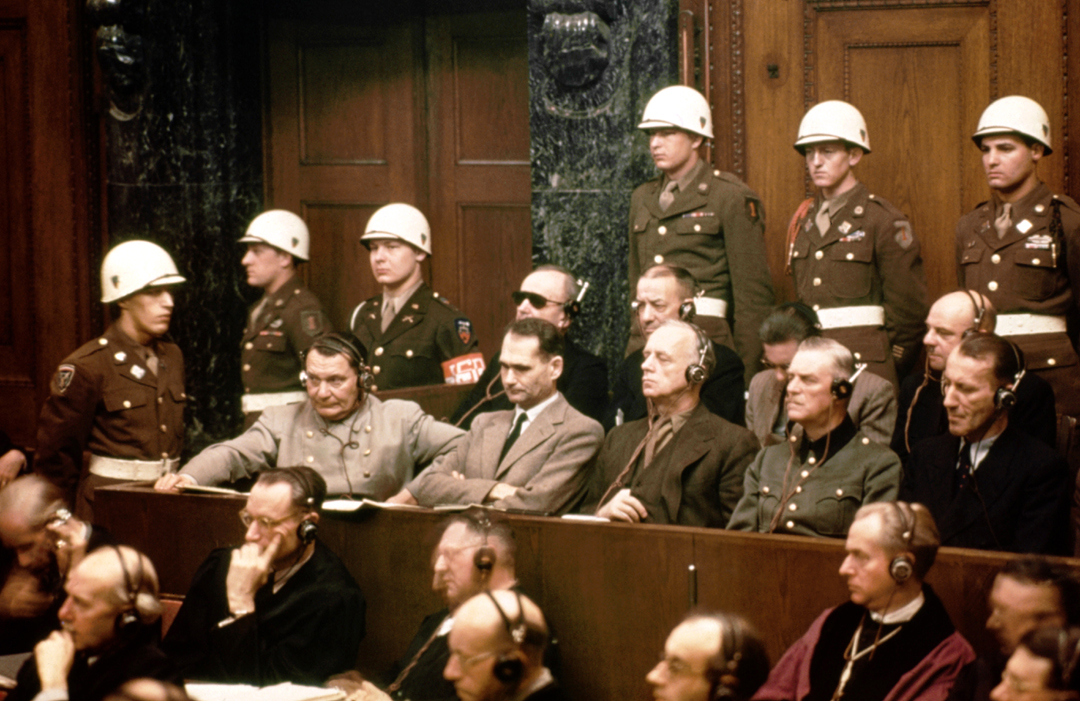
The Nuremberg Trials transformed international law by establishing individual criminal responsibility for wartime atrocities and rejecting defenses based on orders or state policy. This article argues that Nuremberg’s enduring relevance lies not only in legal doctrine but in its integration of accountability with an implicit understanding of human psychology under conditions of war. By examining the trials, behavioral research, subsequent international jurisprudence, and contemporary conflict scrutiny, it explains why these principles continue to shape modern conflict analysis and policymaking.
Introduction
Recent renewed public attention to the Nuremberg Trials, prompted in part by contemporary cultural representations, has revived broader discussion about how accountability in war is understood and applied. While such portrayals often emphasize historical symbolism, the deeper significance of Nuremberg lies in the durable frameworks it established for evaluating conduct during armed conflict.
Accountability during war remains one of the most contested issues in modern conflict. Civilian protection, proportionality, and command responsibility are debated in nearly every major military operation, yet the frameworks guiding these debates emerged from a specific historical moment. The Nuremberg Trials of 1945–46 marked the first sustained effort to operationalize individual criminal liability under international law, rejecting claims based on superior orders, state policy, or wartime necessity, as articulated in the Charter of the International Military Tribunal.
The continuing relevance of Nuremberg is not solely legal. The trials reflected a deeper insight: War alters decision-making environments, but it does not erase moral agency. This article argues that modern accountability frameworks remain anchored in Nuremberg’s integration of law and behavioral understanding. By examining the trials, research on wartime decision-making, post–Cold War international jurisprudence, and contemporary applications, it explains why these principles continue to structure how modern conflicts are assessed, debated, and judged.
Nuremberg and the Foundations of Individual Responsibility
The Nuremberg Trials marked a decisive shift in international law by establishing that individuals—not just states—could be held accountable for wartime atrocities. Senior leaders of the Nazi regime were prosecuted for crimes against peace, war crimes, and crimes against humanity. In doing so, the tribunal explicitly rejected the defense of superior orders, holding that obedience to authority does not absolve criminal responsibility.
Although genocide had not yet been codified as a legal term at Nuremberg, the evidentiary record assembled during the trials directly informed the adoption of the Convention on the Prevention and Punishment of the Crime of Genocide in 1948, which formalized genocide as a crime under international law. Postwar accountability thus emerged incrementally, grounded in documented patterns of mass violence rather than abstract moral theory.
These legal innovations responded to historical conditions that had enabled mass violence. Longstanding antisemitism, nationalist ideology, and racial thinking were embedded in German society well before the Second World War, allowing exclusion, discrimination, and dehumanization to become normalized and politically mobilized. Such ideological foundations were central to how violence against Jews and other targeted groups became justified and systematized under the Nazi regime.
More broadly, Nuremberg established that sovereignty does not shield individuals from accountability. Civilians retain protection even during war, and leaders who authorize violence against them remain responsible regardless of political, strategic, or ideological context. This principle remains foundational to modern international humanitarian law.
Psychology and Wartime Decision-Making
Legal rules ultimately respond to human behavior. Understanding how individuals and institutions operate under conflict conditions helps explain both the persistence of violations and the necessity of accountability mechanisms.
Research consistently shows that war environments alter moral perception, narrowing ethical horizons and increasing tolerance for violence. Historical and behavioral analysis demonstrates how ordinary individuals can become perpetrators when embedded in coercive systems, as documented in Christopher Browning’s study of German reserve police units involved in mass shootings during the Holocaust.
Hierarchy further shapes behavior. Experimental research on authority illustrates how individuals may comply with harmful directives when legitimacy, institutional pressure, and role conformity are present, even when actions conflict with personal moral beliefs. The concept of moral disengagement explains how individuals cognitively reframe harmful actions as necessary, defensive, or inevitable during conflict, reducing perceived personal responsibility and moral self-sanction.
Together, these mechanisms explain why violations of the law of armed conflict are often systemic rather than accidental. They also reinforce why accountability frameworks must focus on individuals operating within institutions, rather than attributing wrongdoing solely to abstract structures or wartime chaos.
Psychiatric Findings at Nuremberg
Psychological explanations for Nazi crimes were directly examined at Nuremberg. Allied authorities commissioned psychiatrists and psychologists to evaluate senior Nazi defendants to determine whether mental illness could explain their actions.
Psychologist Gustave Gilbert and psychiatrist Douglas Kelley conducted interviews, behavioral observations, and psychological testing while defendants awaited trial, documenting their findings in extensive records. Their conclusions challenged popular assumptions. The clinicians did not identify a shared psychopathological profile among the defendants. While some exhibited paranoia or emotional instability, others appeared strategic, ambitious, and cognitively intact.
Subsequent analysis demonstrated that projective testing methods could not reliably distinguish Nazi defendants from non-Nazis, underscoring the limits of psychiatric diagnosis in explaining ideological violence. The significance of these findings lies in what they ruled out: Mass atrocity could not be explained as collective insanity. Responsibility, therefore, remained with individuals embedded in ideological, bureaucratic, and institutional systems, reinforcing the legal logic of Nuremberg.
Genocide, Intent, and Legal Thresholds
These behavioral dynamics raise an unavoidable question for law: How should different forms of mass violence be legally distinguished?
The Genocide Convention defines genocide as specific acts committed with the intent to destroy, in whole or in part, a national, ethnic, racial, or religious group. This requirement of specific intent distinguishes genocide from other grave violations such as war crimes or crimes against humanity.
International courts rely on patterns of conduct, institutional documentation, and corroborated testimony to establish intent and responsibility, as articulated in landmark jurisprudence from international criminal tribunals. For policymakers and military professionals, this distinction is not semantic. Misapplication of legal categories can undermine credibility, complicate operational decision-making, and weaken the normative force of international law.
From Nuremberg to The Hague: Jurisprudential Continuity
The legal and moral logic established at Nuremberg did not end with the postwar tribunals. It has been reaffirmed and operationalized through subsequent international courts, most notably the International Criminal Tribunal for the former Yugoslavia (ICTY) and the International Criminal Court (ICC). These institutions extended Nuremberg’s core principles—individual responsibility, rejection of superior orders as a defense, and the protection of civilians—into late twentieth- and early twenty-first-century conflicts.
The ICTY affirmed this continuity in Prosecutor v. Tadić, holding that individuals bear criminal responsibility for serious violations of international humanitarian law regardless of official position or domestic legal authorization. The judgment reinforced that armed conflict does not suspend legal accountability, even in complex internal or non-international conflicts.
Command responsibility, implicit at Nuremberg and later formalized, became a central doctrine in ICTY jurisprudence. In Prosecutor v. Delalić et al. (the Čelebići case), the tribunal held commanders criminally responsible for crimes committed by subordinates when they knew or had reason to know of the offenses and failed to prevent or punish them (held).
The ICC further institutionalized these principles through the Rome Statute, which affirms that official capacity does not exempt individuals from liability. In Prosecutor v. Bosco Ntaganda, the court reaffirmed that individuals within organized armed groups remain accountable for war crimes and crimes against humanity, emphasizing personal agency within hierarchical structures.
For contemporary military professionals, these cases clarify that accountability is no longer retrospective symbolism but an operational reality shaping command decisions in real time.
Contemporary Relevance and Modern Conflict Scrutiny
Nuremberg-derived accountability norms now shape how contemporary conflicts are scrutinized by international institutions. Legal expectations regarding civilian protection, proportionality, and individual responsibility continue to guide investigations, reporting, and diplomatic engagement.
The conflict involving Israel and Palestine illustrates how these frameworks operate in practice. United Nations agencies have documented civilian harm and humanitarian constraints affecting both populations, repeatedly calling for adherence to international humanitarian law. Public discourse frequently invokes legal terms such as war crimes, crimes against humanity, and genocide.
Consistent with the post-Nuremberg legal order, however, formal determinations remain the responsibility of authorized judicial bodies, including the International Court of Justice. The relevance of this example lies not in adjudicating the conflict itself, but in demonstrating how Nuremberg-derived principles structure modern scrutiny of warfare long before any legal verdict is rendered.
Conclusion
The principles articulated at Nuremberg continue to shape how modern conflicts are analyzed, investigated, and judged. By affirming individual responsibility, rejecting defenses based on orders, and emphasizing civilian protection, they created a framework that remains central to international law and military ethics.
Psychological research, including psychiatric observations conducted at Nuremberg itself, reinforces the necessity of these principles. Atrocity does not require madness. It emerges from ordinary human behavior operating within permissive ideological and institutional systems. For policymakers and military professionals, Nuremberg’s enduring relevance lies in its insistence on clarity, evidence, and accountability in war.
Check out all of Small Wars Journal’s great content.