Post-Khamenei Iran: Who’s Who Among Potential Alternatives
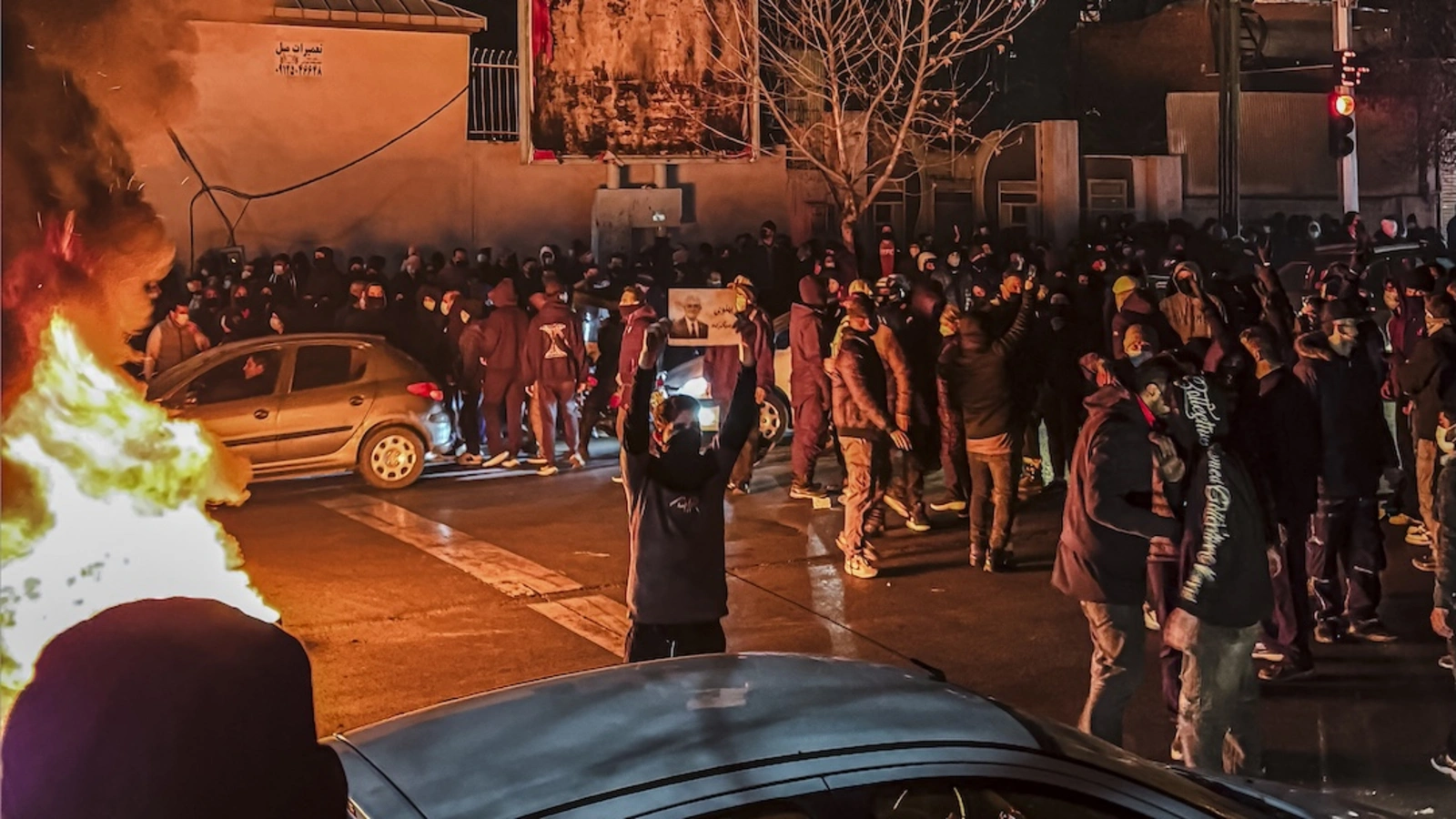

Iran is at a turning point. The Supreme Leader Ayatollah Ali Khamenei is 86 years old (born in 1939). The 12-Day War with Israel and the United States in June 2025 was a catastrophic defeat for Khamenei and his regime. The economy has been deteriorating fast in 2025. Rather than changing course, Khamenei’s response has been to rebuild Iran’s missile and nuclear programs as well as rejuvenate it’s proxy groups. Officials and observers in Iran, Israel, and the United States have publicly stated that if Khamenei’s policies continue, another far more devastating war is forthcoming.
The political situation in Iran is volatile and fluid. Khamenei’s policies have come under criticism from figures inside the regime and Iranian citizens opposed to fundamentalism. Iranian society is highly fragmented and polarized. No leaders and no popular movements have succeeded in garnering the support of even a simple majority. In this article, I will discuss alternative scenarios for Iran’s future and analyze the strengths and weaknesses of each group and personality that might play a major role in Iran’s politics.
Khamenei Triumphant
Ayatollah Ali Khamenei has been the Supreme Leader since June 1989. The political system in Iran is called “Velayat Motlagh Faghih” [Absolute Rule of a High-Ranking Shia Cleric]. This system was developed by Ayatollah Ruhollah Khomeini and is the Shia version of the Sunni variety that was developed by The Muslem Brothers under the leaderships of Hassan Al-Banna and Seyyed Qotb. It is a far-right wing totalitarian politicized interpretation of Islam and argues that the sole legitimate form of government is an Islamist form of government whereby Sharia [Islamic theological law] is the sole or primary basis of government and laws of a country. I use the term “fundamentalist” to refer to this extremist right-wing form of ideology and form of government.
The regime believes that it could continue these policies until either Israeli Prime Minister Benjamin Netanyahu or American President Donald Trump is out of office.
Khamenei and his hardline supporters believe that the fundamentalist regime is strong enough to survive any potential wars with Israel and the United States. By continuing former policies, they want to increase the regime’s power to respond to any attacks from Israel or the United States, which they believe will deter future attacks. Domestically, the regime has both drastically increased repression and made minor, easily reversible concessions. The regime has drastically increased executions since 2021. Executions went up by 106 percent in 2025 to over 1,920. Since the revolution, Iran has had the highest per capita executions in the world. It has drastically increased arrests of political and civil society activists. Conversely, however, it has relaxed the harsh enforcement of compulsory hijab. It has allowed music and singing in public. It has also made appeals to Iranian nationalism, which the Shia Islamic fundamentalist ideology of the regime has attacked since the revolution. The regime believes that it could continue these policies until either Israeli Prime Minister Benjamin Netanyahu or American President Donald Trump is out of office. In the long run, another hardline person – such as Khamenei’s son Mojtaba – could become the next Supreme Leader.
Ultra-Hardline Supreme Leader
The October 7, 2023, Hamas attack on Israel further increased the power of ultra-hardliners in Iran. Until his death on May 19, 2024, it was widely believed that Ebrahim Raisi would become the next Supreme Leader. Until the 12-Day War in June 2025, one of the most likely candidates to succeed Khamenei was Ayatollah Mohammad Mehdi Mir-Bagheri. Ayatollah Mir-Bagher is the clerical leader of the Steadfast Front, the most extreme ultra-hardline faction in the regime. Mir-Bagheri is a powerful member of the Assembly of Experts (the body which the fundamentalist constitution assigns the responsibility to select the Supreme Leader) and a persuasive public speaker. The Steadfast Front is highly organized and possesses enormous influence within the Islamic Revolutionary Guards Corps (IRGC) and Iranian intelligence organizations. If Khamenei were to die of natural causes or assassinated by Israel, Mir-Bagheri is the most likely person to become the Supreme Leader. Mir-Bagheri advocates war with infidels (e.g., the U.S. and Israel) until they are defeated. According to Mir-Bagheri:
We believe in peace, but lasting peace comes after a lasting war and jihad, and until you leave this lasting jihad behind and eliminate the false front, lasting peace will not be established in the world…. It is naïve and superficial to say: We are also in favor of peace; you must eliminate sedition so that peace can come about… We must go through a long war and there is no room for complacency at all.
Mir-Bagheri also argues that the powers of the President should be further reduced and the powers of the Supreme Leader further increased.
There are major differences between Khamenei and his hardline supporters and Mir-Bagheri and his ultra-hardline supporters. Khamenei did allow reformist, expedient, and chameleon factions of the fundamentalist oligarchy to exist and hold power in the Majles (fundamentalist-only parliament) and the Presidency. Mir-Bagheri and the ultra-hardliners wish to monopolize power in the hands of ultra-hardliners and hard-liners. At a minimum, the ultra-hardliners (Mir-Bagheri and the Steadfast Front) want to deny any political power to other factions. They routinely call for executions of top members of the fundamentalist oligarchy such as Rouhani, Mir-Hussein Moussavi, Mehdi Karrobi, and Khatami, who have criticized Khamenei and his policies.
Mir-Bagheri was born in 1961. If he became Supreme Leader, he might hold that position for decades. Mir-Bagheri is young in comparison to other top leaders in the regime. For example, the Head of the Assembly of Experts Ayatollah Mohammad-Ali Movahedi Kermani was born in 1931 and the Head of the Council of Guardians Ayatollah Ahmad Jennati was born in 1927. Factions within the fundamentalist oligarchy who are not ultra-hardline or hardline would strongly oppose Mir-Bagheri. President Pezeshkian told the Majles on November 11, 2025, that during the 12-Day War, his major worry was that if Khamenei was eliminated, then the different factions would attack each other and the regime would collapse; Israel would not even need to invade. Pezeshkian made public the possibility of major bloody war among fundamentalist elites for the position of Supreme Leader.
Salvaging the Fundamentalist Regime Via Fundamentalist Elites
Former President Ayatollah Hassan Rouhani has emerged as the main fundamentalist leader arguing that fundamental changes are necessary if the fundamentalist regime is going to survive. Before the October 7, 2023 Hamas attacks on Israel, Khamenei successfully marginalized and isolated Rouhani. After the 12-Day War, Rouhani made several highly effective public speeches arguing that the regime could collapse if the current policies continue and how the regime could survive by pursuing different policies.
Rouhani (born November 12, 1948) is a founding member of the fundamentalist regime. He has consistently been one of the top 20 leaders of the fundamentalist oligarchy since 1979. Rouhani is one of the most articulate members of the fundamentalist oligarchy and one of the least ideological and most pragmatic members of the oligarchy. His primary objective is the continuation of the fundamentalist regime. After October 7, 2023 and before the 12-Day War, Rouhani publicly warned of the threat to the regime if the regime made “one mistake.” After the 12-Day War, his warnings became more ominous. Rouhani advocates major diplomatic concessions to the U.S. as well as major changes in domestic politics. Rouhani argues that he has the diplomatic skills to make deals with the U.S. that could save the fundamentalist regime. Hardliners have increased their attacks on Rouhani in reaction to his calls for change with some calling for his trial and execution.
Fundamentalist Gorbachev
Reformist members of the fundamentalist oligarchy argue that the best way to save the regime is making serious reforms in politics, economy, and foreign policy. The top two such members are Ayatollah Mohammad Khatami (former President) and Ayatollah Hassan Khomeini (the grandson of Ayatollah Ruhollah Khomeini, the founder of the regime). They advocate for generally progressive political reforms such as reducing repressive policies, easing restrictions on the press, and allowing all fundamentalist factions to run for various offices. They advocate for economic reforms such as reducing the economic stranglehold of fundamentalist entities and the IRGC who control at least 60 percent of the economy. They advocate major diplomatic concessions to the U.S., Europe, neighboring countries like Saudi Arabia and Turkey, as well as de facto détente with Israel. The reformists believe that the position of the Supreme Leader is too strong to be challenged as long as Khamenei is alive. Before the 12-Day War, this scenario was not realistic. Since the 12-Day War, they sheepishly increased public advocacy for their views. They plead with other powerful members of the oligarchy, arguing that the regime risks being overthrown if the current policies continue. The hardliners argue that the concessions suggested by the reformists would cause the collapse of the fundamentalist regime similar to Gorbachev’s reforms that caused the collapse of the Soviet Union.
Fundamentalist Yeltsin
There are former members of the fundamentalist oligarchy who argue that the fundamentalist experiment is a total failure and that the only possible solution is to transition to democracy. The most prominent members of this group are former prime minister Mir-Hussein Moussavi and former Interior Minister Mostafa Tajzadeh. Members of this group fear that Khamenei’s policies would not only cause the collapse of the regime but also cause the disintegration or destruction of Iran.
IRGC Junta
A military coup by the IRGC is a major possibility. This is particularly likely if Khamenei is assassinated, either by Israel or a figure inside the regime. Leaders of the IRGC are extremely despised by the public; in presidential elections, IRGC generals (e.g., Mohsen Rezaee, Mohammad-Bagher Ghalibaf, and Ali Shamkhani) that were allowed to run were defeated in landslides. Despite repeated attempts, no IRGC general has become president. It is not clear whether an IRGC military regime would be more or less bellicose. It is also not clear whether an IRGC regime would be more or less repressive than the current regime.
Opposition to the Fundamentalist Regime
According to GAMAAN, between 16 and 20 percent of Iranians inside Iran support the fundamentalist regime while about 70 to 80 percent of the population opposes the regime.
There are no reliable opinion polls of the Iranian public because the regime is extremely repressive and violent. The people are afraid to share their true opinions with pollsters for the real possibility of arrest, torture, execution, and murder by the regime if they expressed support for changing the regime. One of the few polls that might closely capture the opinion of Iranians is the “Group for Analyzing and Measuring Attitudes in Iran” (GAMAAN). Unlike phone calls, GAMAAN uses VPNs and social media platforms to reach a representative sample of the Iranian population and allows safe way for the respondents to provide their answers. According to GAMAAN, between 16 and 20 percent of Iranians inside Iran support the fundamentalist regime while about 70 to 80 percent of the population opposes the regime. If one group or one person represented 70 to 80 percent of the population, then that opposition would have been able to mobilize and organize the population to overthrow the regime. Like the fundamentalist regime, the opposition is also terribly fragmented and polarized. About 26 percent of the population supports a secular democratic republic, the largest group out of those who oppose the regime. The second largest group is the monarchists with about 21 percent. Democratic advocates and monarchists also suffer from internal divisions.
Democratic Republicans
The largest group within the pro-democracy forces is the Iran National Front (INF). The INF was founded in 1949 by Dr. Mohammad Mossadegh. The INF has been a coalition of secular social democrats, secular liberal democrats, liberal Islamists, democratic socialists, and liberal nationalists. According to GAMAAN, a little over 10 percent of the population supports the INF. The INF struggles to replace the fundamentalist regime with a secular democratic republic that has a multiparty parliamentary system. The INF is highly active both inside and outside Iran. The inside organization is under the courageous leadership of Dr. Hussein Moussavi. The outside branch is called “INF-Organizations Abroad” (INF-OA). The INF-OA has been highly active under the able leadership of Dr. Homayoun Mehmaneche. The INF-OA has entered into a broad coalition with several other republican groups. The coalition is called “Coalition for a Secular and Democratic Republic in Iran” (CSDRI), called “Hamgami” in Persian, a term for “coalition.” The members of the coalition include the Left Party of Iran (LPI), the Solidarity for Secular Republic in Iran, and United Republicans of Iran. The LPI is the largest leftist party in Iran. After the INF, the Solidarity for Secular Republic and the United Republicans are the largest republican parties in Iran. The democratic republicans advocate a non-violent transition to democracy in Iran.
Not all democratic republicans have joined the Hamgami. If there are free elections in Iran, this group has the highest likelihood of winning such elections. Their social base is the highly educated modern middle class; they are over-represented among university students. For example, in early 2003 a large internet poll of students at the Amir Kabir University (the second most prestigious university in Iran) was conducted by the Daftar Tahkim Vahdat, the official student umbrella group (affiliated with the reformist faction of the regime). The results were posted on the university’s student website until they were ordered to remove it. In the poll, 6 percent of the students supported the hard-liners, 4 percent supported the reformists, 5 percent supported the monarchy, and 85 percent supported the establishment of a democratic and secular republic.
Many civil society activists are democratic republicans. Civil society groups include university students, university professors, lawyers, women’s rights, labor rights, human rights, and physicians.
Monarchists
The Pahlavi monarchy was a right-wing dictatorship put in power by the British. Its founder, Reza Shah Pahlavi, was brought to power by a coup orchestrated by the British in February 1921. Reza Pahlavi established his dynasty in late 1925. Reza Shah Pahlavi moved away from the British and became close to Nazi Germany and fascist Italy. In August 1941, the British and USSR invaded Iran and replaced Reza Shah with his son Mohammad Reza Shah Pahlavi.
A popular liberal democratic nationalist movement under the leadership of Dr. Mossadegh challenged British colonial control of Iran. Mossadegh’s government was overthrown in a coup organized by the CIA and MI6 in August 1953, re-imposing Mohammad Reza Shah Pahlavi as absolutist king. Between 1953 and 1979, the Shah was a conventional right-wing dictator and puppet of the United States. For example, Iran’s oil that was nationalized by Mossadegh was given to a consortium of major western oil companies (40% American, 40% BP, 14% Royal Dutch Shell, and 6% French company Total). The Shah also sent Iranian troops to Oman to suppress leftist guerrillas and keep the pro-British king in power. When Arab members of OPEC boycotted oil to Israel’s allies in 1973-74, the Shah sent Iran’s oil to Israel, South Africa, the U.S., the U.K., and the Netherlands.
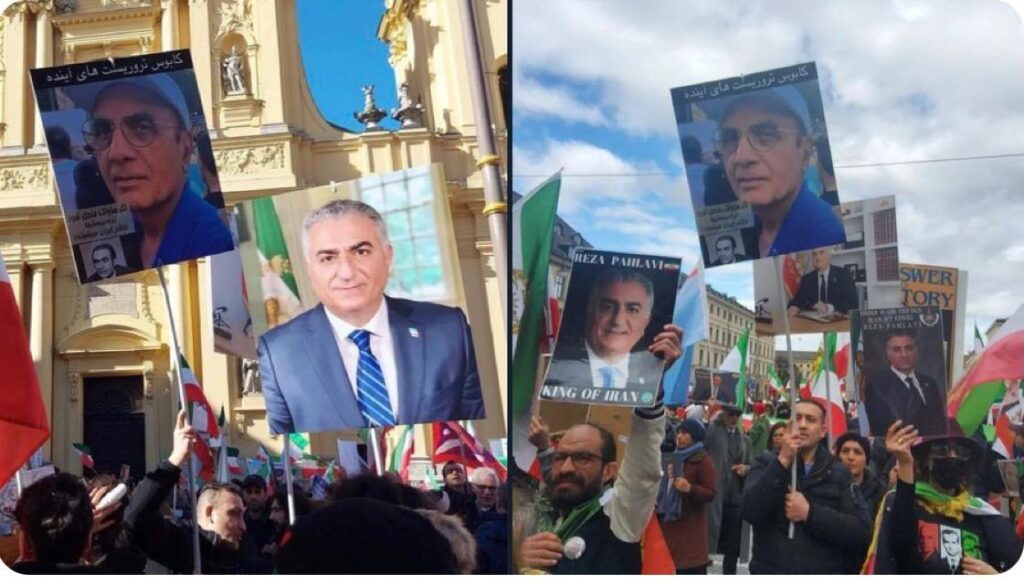
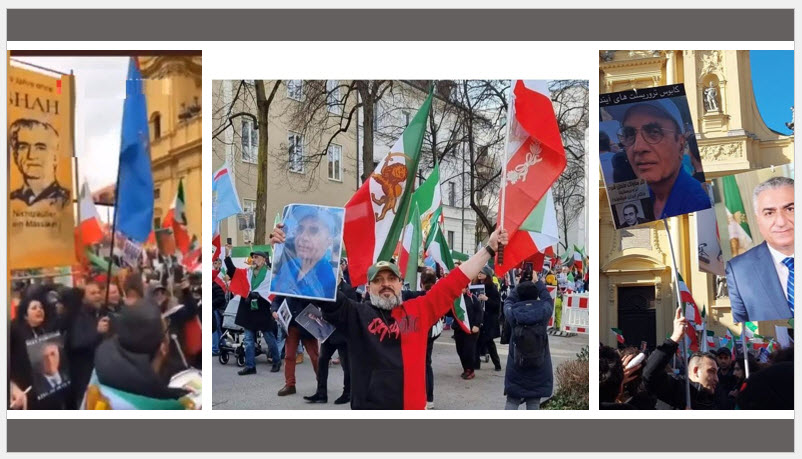
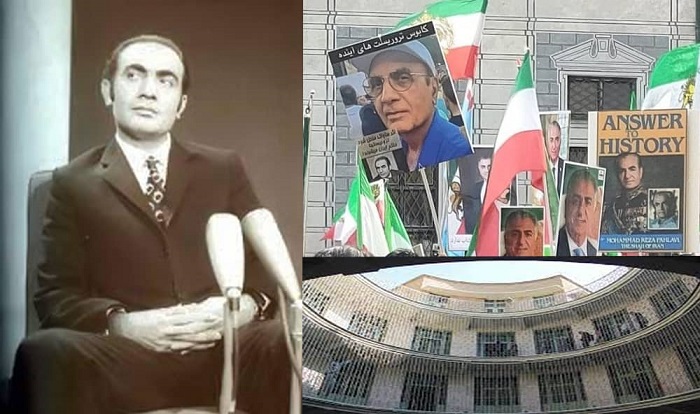
Since mid-1990s, most Iranian groups gradually become less authoritarian and more democratic with the notable exception of the monarchist movement. The monarchists transformed from a relatively mild right-wing authoritarians to extremist fascist. This is not to say that all Iranian monarchists are fascist; some are constitutional monarchists. However, fascist factions among the monarchists completely dominate the monarchist movement and marginalize the mild authoritarians. In earlier periods, the monarchist slogan was “Today, Only Unity.” In the past several years, one of their slogans are: “Death to Three Corrupts: Clerics, Mojahedin, and Leftists; Long Live the King.” In the earlier period, the monarchists used to say that SAVAK (Persian acronym for Organization for Intelligence and Security of the Country) – the Shah’s dreaded secret police – had made mistakes. In the past few years, monarchists parade with portraits of Parviz Sabety, the Head of SAVAK’s office for Domestic Affairs. Sabety is responsible for the horrendous torture of dissidents (including university students) and murder of political prisoners. In their official meetings, monarchists hoist SAVAK’s flag.
The monarchist strategy has been to viciously attack anyone who is a democratic republican so that they could impose Reza Pahlavi as the sole leader.
Monarchists refuse to apologize for their grotesque repression, including extreme torture (e.g., of non-violent pro-democracy activists – namely university students – for merely reading books), bombing the homes and offices of INF leaders, and beating INF leaders (merely for writing a polite letter asking the Shah to respect the Constitution and allow free elections). Monarchists blame the current situation in Iran for all those who resisted the Shah’s dictatorship.
Reza Pahlavi and the monarchists were supported by the CIA in the 1980s. Today, the main overt support is from the Israeli government (particularly the Netanyahu government) and pro-Israeli groups in the United States. The Israeli government also covertly supports Reza Pahlavi and the monarchists. In an investigative report, entitled “The Israeli Influence Operation Aiming to Install Reza Pahlavi as Shah of Iran”, prominent liberal Israeli newspaper Haaretz revealed that the Netanyahu government paid a private group to create a massive internet campaign supporting Reza Pahlavi and attacking his rivals (e.g., democratic republicans). With the help of AI, this covert operation created about 800 fake bots and spread propaganda and fake news in support of Reza Pahlavi on a daily basis on social media. These fake accounts use vicious attacks on democratic republicans, human rights activists, and anyone who is not monarchist. They advocate far-right views and their attacks are terribly vulgar and crass. It is believed that the U.S. government and Saudi Arabia’s government also covertly support Reza Pahlavi and the monarchists. For example, it is widely believed that the U.S. government (Pentagon) funded the satellite television Manoto, an extremist monarchist television. Manoto TV’s funding ended in 2023 during the presidency of Joe Biden.
According to GAMAAN, Reza Pahlavi’s peak popularity was in 2022-2023 when his public approval rate reached about 39 percent. By mid-2024, about 21 percent supported the monarchy and about 31 percent supported Reza Pahlavi. Furthermore, about 20 percent of the population does not hold strong views about a monarchy or republic. As the monarchists began to openly and brazenly attack non-monarchists, a popular pro-democracy reaction emerged that strongly condemned the monarchists. Rather than criticize and condemn the violent fascistic actions and behaviors of the monarchists, Reza Pahlavi remained either silent or supportive of his followers.
The turning point was perhaps the events of December 12, 2025, in Mashhad (the second largest city in Iran. Dr. Khosrow Alikurdi – human rights lawyer and democratic republican – died in his office under mysterious circumstances. The regime claimed he died of a heart attack then confiscated 16 security cameras in his office and refused to share the videos with the family. Alikurdi was a democratic republican activist affiliated with the INF, defending many political prisoners including those affiliated with the monarchy, the PMOI (People’ Mojahedin Organization of Iran), and leftists. For the commemoration of his death, a large number of people and activists came to Mashhad to pay their respects. Dr. Javad Alikurdi, Khosrow’s brother and a lawyer – hosted the commemoration of about 1,000 people. He invited Narges Mohammadi, a 2024 Nobel Peace Prize Laureate, and Sepideh Gholiyan, progressive journalist and labor and human rights activist, to speak at the commemoration. Ms. Mohammadi has been viciously attacked by the monarchists since her award because she is not a monarchist and supports Dr. Mossadegh. Narges Mohammadi climbed up to the back of a pickup truck to address the people when a small crowd disrupted the gathering, shouting monarchist slogans including “Death to Three Corrupts: Clerics, PMOI, and Leftists.” The monarchists threw stones at Ms. Mohammadi and bloodied her right eye. Monarchists ignored the pleas of Javad Alikurdi and continued to disrupt the commemoration. The coercive apparatuses then came in and arrested around 50 pro-democracy and human rights activists. Surprisingly, the monarchists who were shouting slogans and throwing stones were not among those arrested. Although there is a long history of monarchists (and fundamentalists) violently attacking the meetings of other groups (e.g., liberals, human rights activists, progressives, women’s rights), the democratic republicans were cautious with their reaction. However, Reza Pahlavi publicly thanked the monarchist crowd for shouting slogans in his support. Monarchist spokespersons on television strongly supported the actions of the monarchist crowd and condemned Ms. Mohammadi for refusing to bow down and submit to the monarchists and declare Reza Pahlavi as her leader. On December 25, about 1,000 prominent pro-democracy activists and celebrities signed a letter of supporting Ms. Mohammadi and Ms. Gholiyan, condemning the vicious attack on them.
The monarchist strategy has been to viciously attack anyone who is a democratic republican so that they could impose Reza Pahlavi as the sole leader. Monarchists use character assassinations on media and online as well as physical attacks on other opposition figures. Monarchists have posted photos of the leaders of INF, Narges Mohammadi, Sepideh Gholiyan, Ms. Shirin Ebadi (2003 Nobel Peace Laureate), and Nasrin Sotoudeh (Iran’s foremost human rights lawyer and herself political prisoner for the crime of defending political prisoners) online with attacks and insults.
Before December 12, 2025, conflicts occurred inside Iran between the fundamentalist regime and various opposition groups. Outside Iran, there have been relatively minor conflicts between monarchists and other opposition groups (e.g., pro-democracy, leftists, PMOI, ethnic parties). After December 12, the biggest fights have been between monarchists and pro-democracy forces. Initially, many democratic republicans, assumed that regime intelligence entities might have been behind the December 12 event. However, the monarchists and Reza Pahlavi treat the event as a major monarchist victory over the democratic republican forces inside Iran. The monarchists have further escalated the fight since then. On December 24, 2025, BBC Persian featured a documentary on Taraneh Alidoosti, a famous actress who publicly supported the mass protests in 2022-2023 and was jailed by the regime. Hardline fundamentalists began attacking Ms. Alidoosti. A large number of Iranians showed their support for Ms. Alidoosti and expressed their appreciations for her support of the struggles against the fundamentalist regime. The monarchists began a vicious campaign of attacking Ms. Alidoosti for not being a monarchist. The monarchist strategy appears to have evolved from attacking pro-democracy and human rights activists to attacking even celebrities who are not monarchists.
The monarchists claim that they constitute between 80 and 90 percent of the population and thus viciously attack anyone who is not a monarchist. The monarchist strategy to impose Reza Pahalvi’s leadership is based on the assumption that: (1) over 80 percent of the population supports the monarchists; and (2) the Iranian people would be intimidated into silence by vicious verbal and physical attacks. The reactions of the pro-democracy forces and others have been to stand up to the monarchists and fight back, to which the monarchists have reacted strongly. The monarchists and Reza Pahlavi badly miscalculated. If they retreat, they look bad and weak. If they escalate, they look even more fascist and out of touch with the overwhelming majority of the Iranian people.
The PMOI
The People’s Mojahedin Organization of Iran (PMOI) was founded in 1965 as a far-left guerrilla group that opposed the Shah’s regime. It grew tremendously after the 1979 revolution. In the early 1980s, it abandoned its left-wing ideology and became fully concentrated on overthrowing the fundamentalist regime at any cost. Initially, it allied with Saddam Hussein’s Iraq and Jordan’s King Hussein. Then, it became close to the United States and Israel. The PMOI has enormous funds of unknown origins, is highly organized, and has a highly sophisticated lobby in Washington. It has gained public support from both Democrats and Republicans in the United States. Among its Republican supporters are Mike Pompeo, Rudy Giuliani, Mike Pence, and John Bolton. GAMAAN’s poll usually finds that their support in Iran is about 1 percent. However, I estimate that the popularity of PMOI is between 1 and 5 percent. They could not win any elections. However, they are able to hold rallies outside Iran.
Ethnic Parties
According to GAMAAN, a very small percentage of the population supports ethnic parties. However, we observe that in ethnic minority (e.g., Kurds, Baluchis, Turkoman, and Azari) areas there are higher levels of resistance to the fundamentalist regime. Under certain circumstances, ethnic parties could support secessionist movements. Nevertheless, the ethnic minorities in Iran do not appear to be strong enough to overthrow the regime. If they can form a coalition with national parties, then they could play a role in the overthrow of the regime.
Far-Left Parties
There are about a dozen far-left parties in Iran. They do not pose any challenge to the regime. If they form a coalition with democratic republicans, they could play a role. The far-left parties are extremely hostile to both the fundamentalist and monarchists.
Policy Ramifications
If the United States, Israel, pro-Israel groups in the U.S., and Saudi Arabia wish to use the monarchists as a nuisance to bother the fundamentalist regime, then their investments make sense. But if they wish for regime change in Iran then their support for Reza Pahlavi and the monarchist has been a terrible mistake.
Various domestic and foreign players could determine whether the regime would survive or collapse. The IRI has been able to sell about 2 million barrels of oil a day. About 91 percent of this oil was purchased by Chinese entities. If China would stop purchase of oil from Iran, that would drastically increase the likelihood of regime collapse. Russia prefers to see the fundamentalist regime in power and present a nuisance to the U.S. and Europe. Russia, however, does not want to see war between the IRI and Israel or the United States. Both Russia and China know that the Iranian population is highly pro-West and pro-American; therefore, any democratic elections would result in a government highly critical of Russia and China. Europeans greatly fear instability and civil war in Iran because of the possibility of mass refugees and terrorism.
If the United States, Israel, pro-Israel groups in the U.S., and Saudi Arabia wish to use the monarchists as a nuisance to bother the fundamentalist regime, then their investments make sense. But if they wish for regime change in Iran then their support for Reza Pahlavi and the monarchist has been a terrible mistake.
No group or person enjoys the support of a simple majority in Iran. But all the groups have second choices, and all the groups absolutely (and violently) oppose a particular group. Most major groups have a second choice if they themselves cannot come to power; no major group considers the monarchists as their second choice whereas all the major groups in Iran consider the democratic republicans to be their second choice. In other words, the fundamentalists believe that if they are going to be overthrown, they would prefer to be replaced by the democratic forces rather than by any other group. The same is true for the monarchists. If it is certain that the monarchists could not come to power, they would prefer a democratic republic to other systems like fundamentalism or communism. The same is true for the PMOI, the far-left communists, and ethnic minority parties. In other words, all groups strongly oppose the return of the monarchy dictatorship. Therefore, no major party from any group has made any actual alliance with the monarchists.
In late December 2025, many democratic and progressive intellectuals (e.g., Kambiz Ghafouri, Dr. Mehrdad Darvishpour) began publicly calling on all pro-democracy, republican, leftist, PMOI, and ethnic parties to make a broad-based anti-fascist coalition to oppose the two fascist threats of the fundamentalist regime and monarchists. Such a call is without precedent in Iran’s recent history. The leftists, ethnic parties, and the PMOI do not have any realistic chance of coming to power. However, they do have enough support to mount a prolonged armed struggle against the monarchists. The Pahlavi monarchy has a history of violent repression of these groups. Moreover, in their slogans, the monarchists call for death of these activists. There is no doubt that if the fundamentalist regime were overthrown, all oppositions groups would mount an armed struggle against the monarchists. An attempt to install the monarchists will result in a prolonged civil war in Iran.
What this means is that the only group that could establish a stable democracy in Iran is the democratic republicans. As of this writing, the Trump administration has wisely kept its distance from Reza Pahlavi and the monarchists. Also wisely, the U.S. State Department has repeatedly condemned the repression of Narges Mohammadi. The best policy for the U.S., Israel, and Europe is demanding secession of violence against the Iranian people by the fundamentalist regime as well as support for free and democratic elections in Iran. The world should put pressure on China to stop all oil purchases from the Islamic Republic.
Conclusion
If the U.S. and Israel wish to see the fundamentalist regime overthrown, they should stop all support to anti-democratic forces such as Ayatollah Rouhani and Reza Pahlavi.
The temptation to support Ayatollah Rouhani to get rid of Khamenei and keep the fundamentalist regime in power while drastically changing the regime’s policies is great. The Iranian people obviously want better economic situation, but they also want freedom, democracy, human rights, and social justice. Since 1890s, large swaths of the Iranian people have been struggling for freedom and democracy. They achieved these ideals in the 1905 Constitutional Revolution and during the pro-democracy movement of the 1949-1953 period. The democratic forces were defeated by the anti-democratic forces in 1925, 1953, and 1979. Today, Iran stands at another historical juncture.
The support given to Reza Pahlavi and the monarchists have had the opposite of their intended effect. It has weakened and divided opposition to the fundamentalist regime. In other words, the outside assistance to Reza Pahlavi has had the actual effect of slowing the movement against the fundamentalist regime. The biggest beneficiary of such support to the monarchists is the fundamentalist regime. If the U.S. and Israel wish to see the fundamentalist regime overthrown, they should stop all support to anti-democratic forces such as Ayatollah Rouhani and Reza Pahlavi.