





Countering the Swarm: Protecting the Joint Force in the Drone Age | CNAS
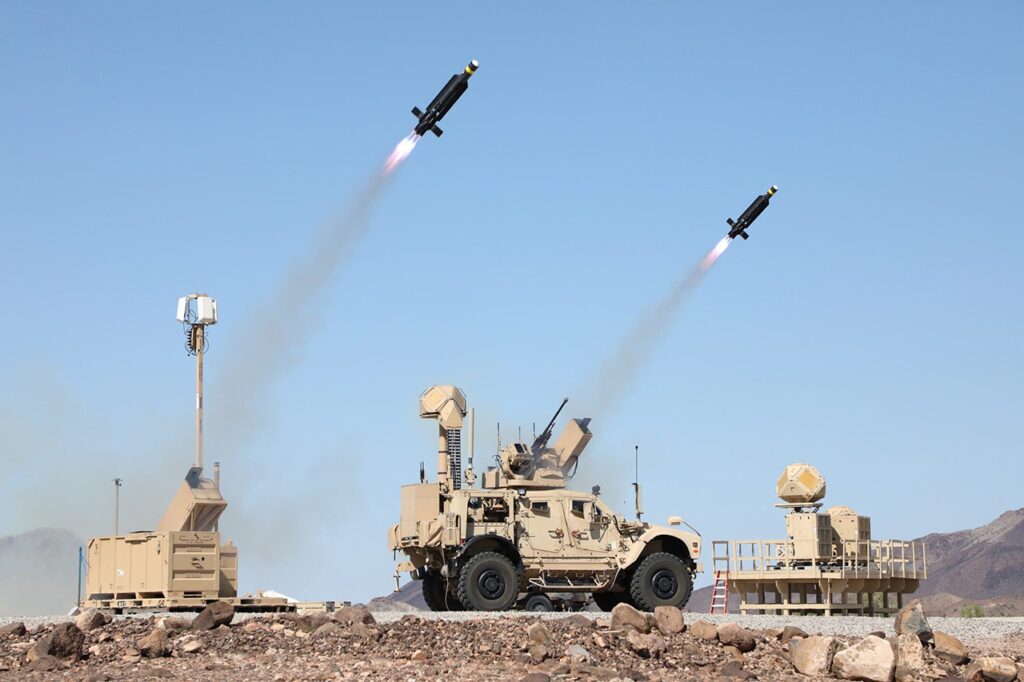

Countering the Drone Swarm: Protecting the Joint Force in the Drone Age, by Stacie Pettyjohn and Molly Campbell, Center for a New American Security.
Executive Summary
After decades of air dominance and a near monopoly on precision strike, the United States now faces a dramatically different, more hostile world as the proliferation of cheap drones has democratized mass precision fires. It is likely that in any future conflict, drones will pose an unavoidable threat to American forces.
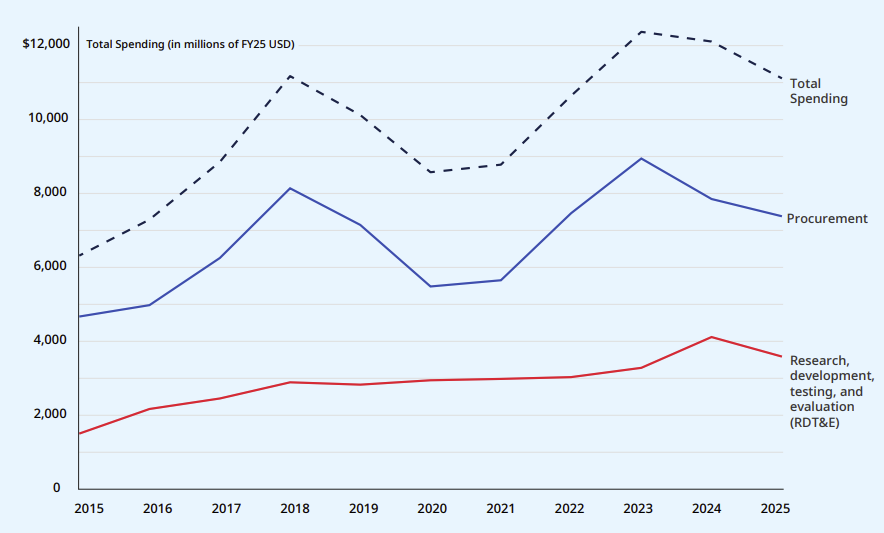
As this report’s analysis of U.S. defense spending reveals, the Department of Defense (DoD) has invested in both legacy and emerging counter–uncrewed aerial systems (C-UAS) capabilities for nearly a decade. However, these efforts have been hindered by insufficient scale and urgency. Despite the Pentagon’s shortfalls in procuring purpose-built C-UAS capabilities, U.S. counter-drone operations in the Middle East have been notable.
Joint Counter-Drone Spending, 2015-2025
The United States views China as its foremost strategic threat, and the People’s Liberation Army (PLA) is rapidly advancing its drone capabilities by developing more autonomous systems and acquiring them at scale. Without deep magazines of substantially enhanced counter-drone capabilities, the United States risks having its distributed warfighting strategies overwhelmed by massed Chinese drone attacks, and the United States could lose a war over Taiwan. This is a complex challenge with no silver bullet solution. The DoD must act swiftly. The stakes are not theoretical—without adequate defenses, even the most advanced systems and tactics will be rendered irrelevant in the face of overwhelming drone attacks.
Overall Recommendations for the Department of Defense
Prioritize counter-drone defense and extend capabilities beyond the air defense community. Drone defense cannot be siloed to dedicated air defense units. Every unit will need the ability to defend itself against small uncrewed aerial systems (UAS).
Expand counter-drone training across the Joint Force. The Pentagon needs to develop and share best tactics, techniques, and procedures and ensure that all forces are trained in drone self-protection.
Improve the rigor and realism of counter-drone prototype testing. The current test and evaluation process fosters a false sense of confidence in prototype counter-UAS, as they are often assessed using unrealistic facsimiles of enemy drones and low-fidelity tests of electromagnetic weapons.

