





At a Tipping Point: Failed Expansionism and Domestic Crises in Iran
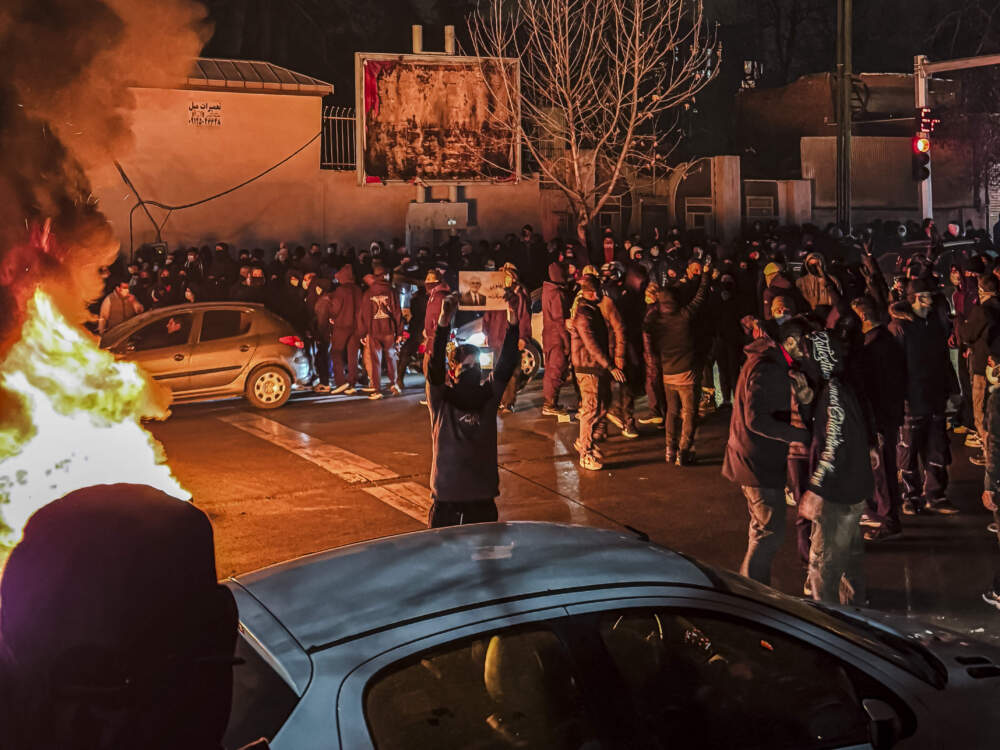

Growing Protests
Iran is experiencing a growing wave of protests, which started in December 2025 over worsening economic conditions. The result of economic mismanagement by the Islamic Republic’s leadership, the problems include the fall of the local currency – the rial – to a record low and inflation soaring to 40 percent. As the protests gain momentum across Iran’s cities with the chants “Death to the dictator”, the Iranian authorities have taken preventive measures to contain the situation and stop it spinning out of control, cutting Internet and telephone connections in the country. Violent encounters between protestors and the security forces have so far resulted in the loss of dozens of lives and the burning of regime symbols, police motorcycles, cars and administrative offices in different regions. Iranian leader Ayatollah Khamenei’s threats to crush the rioters were met by a stark warning from US President Donald Trump that the United States would intervene militarily if Tehran killed protestors. The former Iranian crown prince Reza Pahlavi is attempting to hijack the nationwide protests and promote his return to Tehran and installation as an absolute monarch; however, this is not welcomed by the mostly non-Persian ethnic groups of Iran, who have not forgotten the Shah’s attempts to homogenise Iran’s diverse ethnic make-up via Persianisation.
Geopolitical Setbacks for Iranian Expansionism
The current external and domestic crises gripping the Islamic Republic have their roots in the 12 Day War with Israel in June 2025. Iran and Israel have been locked in a proxy confrontation across the Middle East and beyond, practically since the Islamic Revolution in 1979. The ideological identity of the Islamic Republic, coupled with its ambition to become the regional hegemon via the export of the Islamic revolution to neighbouring Muslim-majority countries, defined the cycle of confrontation. Iran’s Khamenei praised the 7 October 2023 Hamas terrorist attack on Israel that ignited the war in Gaza. This was a key part of the Iranian strategy for a Ring of Fire around Israel, which included Lebanese Hezbollah’s involvement in the war by opening a second front on October 8, 2023. The Iran-backed Yemeni Houthis launched cruise missiles and UAVs at Israel on October 19, 2023, including rocket launches from the then Assad-controlled Syria, attacks by pro-Iranian Iraqi militias on US military installations in Syria and Iraq, and UAV attacks on Israel by Iraqi Shia militia groups. The assassination of the Hezbollah leader Hassan Nasrallah, the weakening of Iran’s proxies Hamas and Hezbollah, the fall of the Assad regime in Syria, the Rising Lion and Midnight Hammer operations, and strikes on its nuclear infrastructure have been major geopolitical setbacks for Iran’s regional ambitions and overall expansionism. Looking through a Neoclassical Realist lens, one can argue that the systemic changes – the 12 Day War with Israel and the US, the defeat of Iran’s regional proxies by Israel since October 7, 2023, and the fall of the Assad regime – coupled with domestic intervening variables such as the worsening economic conditions in Iran, water shortages, power crises, and assimilatory policies in the non-Persian regions of the country, should have had an impact on Iran’s foreign policy. However, Iran’s leaders still adhere to the same revolutionary and hegemonic ambitions, and, if the regime survives, the current protests will have a significant impact on its foreign policy.
Financial Burden of Expansionism and Nuclear Program
A substantial amount of the Iranian state budget has been spent on the expansionist adventurism in the Middle East, more specifically via the IRGC Quds Force channels to prop up proxies such as Lebanese Hezbollah, Palestinian Hamas, the Islamic Jihad, and the former Assad regime in Syria, Iraqi Shia militias, among others. It is difficult to estimate the exact financial costs of the Tehran regime’s expansionist regional ambitions, but some IRGC officials claim 20 billion USD have been spent, whereas Iranian lawmaker Heshmatollah Falahatpisheh was quoted by Iranian media as saying that the spending on sustaining the former Assad regime in Syria alone might have been between 20 and 30 billion USD. According to various pieces of research into Iranian expansionism, the Islamic Republic spent 16 billion USD in Syria between 2012 and 2018. In addition to expenditure, regional expansionism has also cost Iran the impact of economic sanctions. Together with the enrichment of IRGC officials and IRGC control over the country’s economy, corruption amongst the ruling elite, and economic mismanagement, these costs have increased economic hardships and placed systemic pressures on the country’s economy over the years. As a result of these systemic factors and costly geopolitical expansionism, since 2019, protests in Iran at the deteriorating economic conditions have adopted mainstream slogans such as “No to Gaza, no to Lebanon. We sacrifice our lives for Iran”. These are popular chants by the protesters in the ongoing public outrage as well. The significant geopolitical and military defeats since October 7, 2023, as well as the direct economic impact of the financial costs of expansionism, show that sustaining proxies has become a liability for the Iranian regime, both geopolitically and financially. The notion of outsourcing war to the neighbouring countries and engaging in a low-cost war with Israel created solid plausible deniability that secured Iranian soil from direct Israeli and US attacks. However, this failed with the completion of the Israeli Rising Lion and US Midnight Hammer operations in June 2025. Therefore, former Iranian Foreign Minister Javad Zarif blamed Iran’s proxies, accusing them of not firing “a single shot for Iran”, and said that Tehran paid a “heavy price” for supporting the Palestinian “cause” more than Arab states, signalling a change in perception of the failures of expansionism for the Islamic Republic. Iranian President Masoud Pezshkian publicly acknowledged that the current inflation in the economy makes it hard for his government to raise wages. In the midst of the ongoing protests, President Pezeshkian said that the government’s mismanagement, not Iran’s foreign woes, is to be blamed for the deteriorating economic conditions in the country.
In addition, Iran’s nuclear program – intended to boost the country’s geopolitical position in the region, act as a deterrent against direct foreign intervention, and provide strong non-fossil fuel energy capabilities – has lost its significance with the joint Israeli and US actions during the 12-Day War between Israel and Iran in June 2025. According to some estimates, Iran has invested a significant proportion of its financial revenues in its nuclear program, estimated at around 500 billion USD since 2006. The financial cost of the nuclear program varies, according to other sources. For instance, Iranian official Ali Akbar Salehi claimed on March 11, 2021, that the total spending of Iran’s Atomic Energy Organization in the past three decades had been around 7 billion USD, or 250 million USD per year. Despite the claims that Iran’s nuclear program is intended for domestic medical use and energy production, the financial cost of the nuclear program and its unfeasibility in the geopolitical environment have been predicted by researchers over the years. Despite its significant investment in the nuclear program, Iran experiences severe power and water shortages, with power cuts having become a frequent occurrence across the country, including in the capital, Tehran. Power shortages affect industrial production, communications and Internet services, and force the closure of government offices, as seen in August 2025 in Tehran and some provinces. The regime remains adamant in its refusal to abandon uranium enrichment on Iranian soil in exchange for a new nuclear deal with the Trump administration, which, in turn, is persistent in its desire to halt Tehran’s nuclear and ballistic missile programs and is demanding zero enrichment.
Environmental Issues and Water Crises
Iran is facing significant water crises as the country’s water resources, which play a key role in the livelihood of farmers and communities, are running out, and groundwater supplies are being depleted at a rate that exceeds replenishment. Increasing demands, escalating environmental challenges, and ongoing shortcomings in policy are putting unsustainable pressures on Tehran’s water supplies to the extent that President Masoud Pezeshkian has repeatedly called for the capital to be relocated. Environmental and water shortages are affecting the country’s non-Persian regions too. As a result of climate change – coupled with mismanagement and neglect by the Iranian authorities – Lake Urmia, which straddles Iran’s West and East Azerbaijan provinces, has almost dried up completely. The Iranian regime blames climate change and even foreign plots to avoid responsibility for the environmental catastrophe around Lake Urmia, though researchers and Azerbaijani environmental activists place the blame firmly on the actions of the Tehran government. Experts predict that the desiccation of Lake Urmia could lead to the relocation of an estimated four million residents in Iran’s Azerbaijan provinces because of toxic salt storms and soil salinity, which make the land uninhabitable.
Assimilatory Policies and Ethnic Minorities
Iran is an ethnically diverse country, with significant non-Persian ethnic groups such as Azerbaijanis, Kurds, Arabs, Baluchs, and others who make up almost half of the country’s population, primarily concentrated in Iran’s peripheries. Almost all non-Persian ethnic minorities face systemic assimilatory policies by the Iranian regime, which, as a nationalizing state, promotes a Shia Persian identity to homogenise the country, a policy inherited from the deposed Pahlavi regime. Azerbaijani Turks, who are the largest ethnic group in Iran after Persians, face a wide range of rights abuses, including the refusal to allow parents to give their children Turkic names, the lack of Azerbaijani language schools and education (despite the provision in Article 15 of the Iranian Constitution of the right for ethnic minorities to have education in their mother tongue), and the state’s treatment of non-Persian languages as a “security threat”. Discrimination against Azerbaijani and other non-Persian activists includes limitations on their access to education, job opportunities, and political positions, arbitrary detention, wrongful prosecution, torture, and other forms of mistreatment. The systematic discrimination against non-Persian ethnic groups has resulted in alienation and marginalization, and has damaged the sense of compatriot links with Persians, as ethnic groups like Azerbaijanis, Kurds, Arabs and Baluchs consolidate around their national identities in striving for their national rights. One example of ethnic variations can be seen in the current protests where, for example, protestors in the Azerbaijani-majority regions reject both the Islamic Republic and Reza Pahlavi with chants like “Freedom, Justice and National Government” alongside condemnation of the Islamic Republic, compared with pro-Pahlavi chants in the Persian-dominated regions.
Conclusion
In conclusion, external and domestic challenges facing the Islamic Republic pose the most serious threat to its existence since it came into being in 1979. The situation is fluid. The regime is not helped by its refusal to change its confrontational ideological course, such as halting its expansionist foreign policy ambitions and reaching a deal on its nuclear program, or by its reluctance to introduce economic and social changes, increase civil liberties amid the rapidly changing cultural and generational dynamics in society, and stop repressive actions against protesters. In other words, the Islamic Republic’s ruling methods are in a deep crisis, and its survivability is in question, with changes in the country only a matter of time.


