





Modern Warfare and Risk
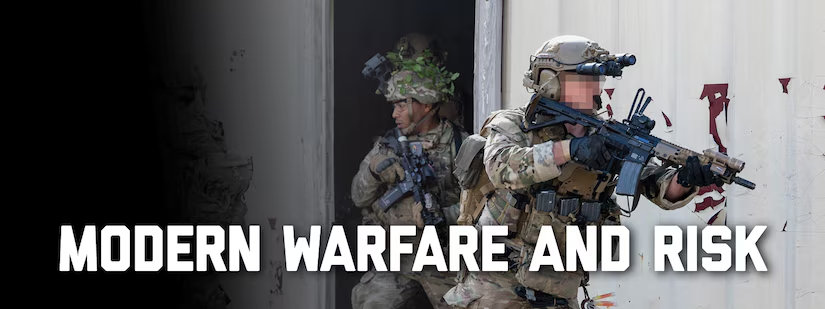

“Modern Warfare and Risk,” by Chief Warrant Officer 2 Matthew van der Graaff, Special Warfare Journal, January 22, 2026.
Chief Warrant Officer 2 Matthew van der Graaff examines how institutional risk aversion shaped by the Global War on Terror undermines Special Operations effectiveness in future large-scale combat operations. He argues that persistent oversight and centralized control degraded subordinate decision-making and initiative. The article asserts that near-peer conflict demands empowered commanders who accept calculated risk under conditions of uncertainty. Van der Graaff concludes that mission command, permissive rules of engagement, and realistic training must anchor this cultural shift.
Introduction
To maintain its decisive edge, the Army must shift its culture from a constraint-based mindset to one that strategically embraces prudent risk in decision-making. The Global War on Terror created a risk-averse culture and a lack of empowered leadership at lower echelons, which will limit the effectiveness of United States Special Operations Forces support to conventional forces during future large-scale combat operations.
Historical Context
During the GWOT, technological advances allowed commanders at higher echelons to maintain continuous oversight, enabling them to scrutinize tactical operations…Excessive control fostered a risk-averse culture in which constant operational oversight limited tactical commanders’ decision-making and, at times, led to decision paralysis due to fear of reprisal from higher…Commanders at higher echelons must become comfortable with less visibility of maneuver elements in a communications-denied environment against a near-peer adversary.
Challenges and Benefits of High-Risk Operations
There are many challenges with high-risk operations conducted during LSCO, foremost among them a projected increase in casualties during combat operations…The Golden Hour concept undoubtedly saved hundreds if not thousands of lives… however, the concept assumes the existence of resources and access that will not be present during a future fight with a strategic adversary…Calculated risk-taking provides opportunities for decisive action against strategic competitors, increasing overall lethality and effectiveness.”
Reducing Risk-Adversity
It is imperative that units focus on realistic, high-risk training that will force subordinate commanders to make decisions in an uncertain environment…Subordinate leaders must be allowed to make mistakes and learn from them without fear of reprisal…Commanders must have full trust and confidence in their subordinate leaders’ ability to make sound decisions in the face of adversity.
Conclusion
The importance of creating a culture of calculated risk-acceptance at all echelons is critical to keeping pace with near-peer competitors during LSCO…A shift in mindset, realistic training, and the instillation of the tenets of mission command from senior commanders will breed a new generation of capable leaders, flexible and confident in their decision-making. We must embrace change if we are to be successful in modern conflict.

