





2026 National Defense Strategy
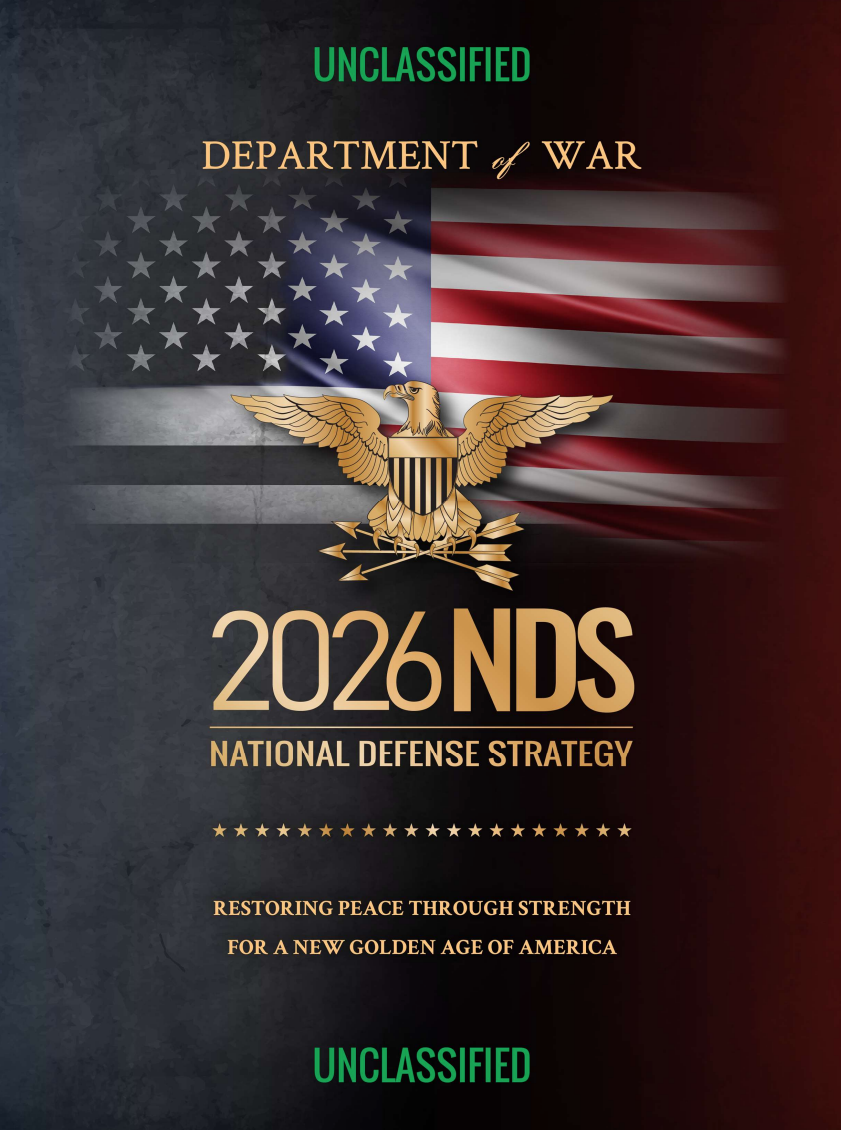

Two things about this year’s strategic document stood out to us: the absence of Taiwan and the emphasis on homeland defense. Col. Maxwell, Editor-at-Large of SWJ noted in his daily news roundup and commentary:
“In my entire 30 years in the Army, defense of the homeland has always been the number one priority of the military. This is not new.
While the NSS was defined as “Colby-lite with a Western Hemisphere twist,” (see Michael McNair HERE), this NDS can be described as “Colby-HEAVY with a Western Hemisphere twist.” This leans heavily on Colby’s work, Deterrence by Denial.
The Korea section (my bias) surely seems to imply there will be a large restructuring of US forces in Korea. This must be foreshadowing the Global Force Posture Review.”
He also notes:
“What a luxury it must be to rehearse in the actual operational area in which you will fight. So how will our strategy of deterrence by denial counter the future activities? If Beijing’s tempo is governed more by internal readiness cycles than external triggers, what indicators should drive allied decision-making for escalation control and crisis response when “warning” through signalling becomes unreliable? Or again, in short, how will we execute deterrence by denial? Can Colby’s strategic concept in the NDS be operationalized? Interestingly, Taiwan is not specifically mentioned in the NDS.
Words NOT used in the NDS: irregular warfare, political warfare, unconventional warfare, information and influence activities, information warfare, cognitive warfare and narrative intelligence, psychological warfare/operations, large scale combat operations, asymmetric or hybrid warfare, gray zone, resilience, air power, maritime power, land power, special operations, AND TAIWAN. (note resistance is used only in the context of Iran’s “Axis of Resistance”)”
Dr. Robert Bunker, Senior Fellow and Associate Editor of SWJ’s El Centro noted the heavy emphasis on homeland defense and the Western hemisphere. Now more than ever, SWJ El Centro serves as a critical platform for analysis, discourse, and knowledge exchange focused on irregular warfare, transnational threats, and security challenges affecting the United States and the Western Hemisphere. Its mission directly supports contemporary national security priorities related to homeland defense, hemispheric stability, great power competition, and the prevention of asymmetric and non-state threats.
Homeland and Hemisphere Focus
Current U.S. defense priorities emphasize the protection of the Homeland and the defense of American interests throughout the Western Hemisphere. These priorities encompass border and maritime security, counter–narco-terrorism, protection of critical terrain and infrastructure, and the mitigation of cyber, space, and unconventional threats. El Centro contributes to this effort by providing a forum for practitioners, scholars, and policymakers to examine how irregular actors, such as narco-terrorist organizations, transnational criminal networks, and terrorist groups, operate across borders and exploit governance gaps.
Irregular Warfare and Narco-Terrorism
Narco-terrorist organizations present a complex security challenge that blends criminal activity, political violence, territorial control, and great-power competition. These threats are not confined to borders; they operate across the hemisphere and directly affect U.S. homeland security. El Centro enables sustained examination of partner capacity-building, unilateral and multilateral military options, and the operational, legal, and ethical dimensions of countering these networks. This analysis supports informed decision-making related to operations similar in scope and intent to those described in recent hemispheric actions.
Strategic Terrain and Access
U.S. interests depend on secure access to key terrain and lines of communication throughout the hemisphere, including maritime approaches and critical infrastructure. El Centro provides space to assess how state and non-state actors contest access to these areas through gray-zone tactics, influence operations, and irregular force employment. This focus contributes to a clearer understanding of how local instability, criminal governance, and external influence undermine regional security.
Adaptive Threats and Institutional Learning
Adversaries continue to adapt across domains, including cyber, space, information, and electromagnetic environments. El Centro supports institutional learning by capturing lessons, synthesizing operational experience, and fostering dialogue across civilian, military, and academic communities. This function strengthens the ability of the national security community to anticipate, understand, and respond to evolving threats without relying on episodic or purely tactical perspectives.
Communications and Accessibility
By translating complex security challenges into structured, accessible discourse, El Centro strengthens public understanding and professional education related to homeland defense and hemispheric security. The Small Wars Journal team works day and night to ensure that insights reach audiences ranging from students and analysts to operational leaders and policymakers, reinforcing informed engagement with issues central to U.S. national defense priorities. Be sure to check out all that SWJ’s El Centro has to offer.
INTRODUCTION
President Trump in his first term and since reentering office in January 2025 has rebuilt the American military to be the world’s absolute best—its most formidable fighting force. But it is essential to emphasize how much of an achievement this has been.
The fact is that President Trump took office in January 2025 to one of the most dangerous security environments in our nation’s history. At home, America’s borders were overrun, narcoterrorists and other enemies grew more powerful throughout the Western Hemisphere, and U.S. access to key terrain like the Panama Canal and Greenland was increasingly in doubt. Meanwhile in Europe, where President Trump had previously led North Atlantic Treaty Organization (NATO) allies to begin taking their defenses seriously, the last administration effectively encouraged them to free-ride, leaving the Alliance unable to deter or respond effectively to Russia’s invasion of Ukraine. In the Middle East, Israel showed that it was able and willing to defend itself after the barbaric attacks of October 7th—in short, that it is a model ally. Yet rather than empower Israel, the last administration tied its hands. All the while, China and its military grew more powerful in the Indo-Pacific region, the world’s largest and most dynamic market area, with significant implications for Americans’ own security, freedom, and prosperity.
None of this was foreordained. America emerged from the Cold War as the world’s most powerful nation by a wide margin. We were secure in our hemisphere, with a military that was focused on warfighting and far superior to anyone else’s, engaged allies, and powerful industry. But rather than husband and cultivate these hard-earned advantages, our nation’s post–Cold War leadership and foreign policy establishment squandered them.

Secretary of War Pete Hegseth meets with World War II veterans in Normandy, France, on the 81st Anniversary of D-Day. These American heroes exemplify the warrior ethos at the heart of the U.S. military.
Rather than protect and advance Americans’ interests, they opened our borders, forgot the wisdom of the Monroe Doctrine, ceded influence in our hemisphere, and outsourced America’s industry, including the defense industrial base (DIB) upon which our forces rely. They sent America’s brave sons and daughters to fight war after rudderless war to topple regimes and nation-build halfway around the world, in doing so eroding our military’s readiness and delaying modernization. They condemned our warfighters, criticizing and neglecting the warrior ethos that was once cultivated and heralded by our forerunners—and that made this American military the envy of the world. They allowed, even enabled, our cunning adversaries to grow more powerful, even as they encouraged our allies to behave as dependents rather than partners, weakening our alliances and leaving us more vulnerable. And so we found ourselves, in January 2025, facing not only a world with individual regions at war or descending toward it but also increased risk of America itself being drawn into simultaneous major wars across theaters—a third world war, as President Trump himself warned.
That is all changing now. Under President Trump’s leadership, consistent with his vision and direction as laid out in the National Security Strategy (NSS), the Department of War (DoW) is laser-focused on restoring peace through strength. As detailed in the NSS, the President’s approach is one of a flexible, practical realism that looks at the world in a clear-eyed way, which is essential for serving Americans’ interests.
This has clear implications for the Department of War. Above all, it means prioritizing the missions that matter most for Americans’ security, freedom, and prosperity. This means concentrating the Department’s efforts to:
Defend the U.S. Homeland.
We will secure America’s borders and maritime approaches, and we will defend our nation’s skies through Golden Dome for America and a renewed focus on countering unmanned aerial threats. We will maintain a robust and modern nuclear deterrent capable of addressing the strategic threats to our country, raise and sustain formidable cyber defenses, and hunt and neutralize Islamic terrorists who have the ability and intent to strike our Homeland. At the same time, we will actively and fearlessly defend America’s interests throughout the Western Hemisphere. We will guarantee U.S. military and commercial access to key terrain, especially the Panama Canal, Gulf of America, and Greenland. We will provide President Trump with credible military options to use against narco-terrorists wherever they may be. We will engage in good faith with our neighbors, from Canada to our partners in Central and South America, but we will ensure that they respect and do their part to defend our shared interests. And where they do not, we will stand ready to take focused, decisive action that concretely advances U.S. interests. This is the Trump Corollary to the Monroe Doctrine, and America’s military stands ready to enforce it with speed, power, and precision, as the world saw in Operation ABSOLUTE RESOLVE.
Deter China in the Indo-Pacific Through Strength, Not Confrontation.
President Trump seeks a stable peace, fair trade, and respectful relations with China, and he has shown that he is willing to engage President Xi Jinping directly to achieve those goals. But President Trump has also shown how important it is to negotiate from a position of strength—and he has tasked DoW accordingly. Consistent with the President’s approach, DoW will therefore seek and open a wider range of military-to-military communications with the People’s Liberation Army (PLA) with a focus on supporting strategic stability with Beijing as well as deconfliction and de-escalation, more generally. But we will also be clear-eyed and realistic about the speed, scale, and quality of China’s historic military buildup. Our goal in doing so is not to dominate China; nor is it to strangle or humiliate them. Rather, our goal is simple: To prevent anyone, including China, from being able to dominate us or our allies—in essence, to set the military conditions required to achieve the NSS goal of a balance of power in the Indo-Pacific that allows all of us to enjoy a decent peace. To that end, as the NSS directs, we will erect a strong denial defense along the First Island Chain (FIC). We will also urge and enable key regional allies and partners to do more for our collective defense. In doing so, we will reinforce deterrence by denial so that all nations recognize that their interests are best served through peace and restraint. This is how we will establish a position of military strength from which President Trump can negotiate favorable terms for our nation. We will be strong but not unnecessarily confrontational. This is how we will help to turn President Trump’s vision for peace through strength into reality in the vital Indo-Pacific.
Increase Burden-Sharing with U.S. Allies and Partners.
Ours is not a strategy of isolation. As the NSS directs, it is one of focused engagement abroad with a clear eye toward advancing the concrete, practical interests of Americans. Through this America First, commonsense lens, America’s alliances and partners have an essential role to play—but not as the dependencies of the last generation. Rather, as the Department rightly prioritizes Homeland defense and deterring China, other threats will persist, and our allies will be essential to dealing with all of them. Our allies will do so not as a favor to us, but out of their own interests. In the Indo-Pacific, where our allies share our desire for a free and open regional order, allies and partners’ contributions will be vital to deterring and balancing China. In Europe and other theaters, allies will take the lead against threats that are less severe for us but more so for them, with critical but more limited support from the United States.
In all cases, we will be honest but clear about the urgent need for them to do their part and that it is in their own interests to do so without delay. We will incentivize and enable them to step up. This requires a change in tone and style from the past, but that is necessary not only for Americans but also for our allies and partners. For too long, allies and partners have been content to let us subsidize their defense. Our political establishment reaped the credit while regular Americans paid the bill. With President Trump, a new approach is in effect. Already, President Trump has set a new global standard for defense spending at NATO’s Hague Summit—3.5% of gross domestic product (GDP) on core military spending and an additional 1.5% on security-related spending, for a total of 5% of GDP. We will advocate that our allies and partners meet this standard around the world, not just in Europe. As our allies do so, together with the United States, they will be able to field the forces required to deter or defeat potential adversaries in every key region of the world, even in the face of simultaneous aggression. This is how we will set conditions for lasting peace through strength around the world.
Supercharge the U.S. Defense Industrial Base.
President Trump is leading a once-in-a century revival of American industry, re-shoring strategic industries to the United States and revitalizing the industries previous generations had shipped overseas. We will harness this historic initiative to rebuild our nation’s defense industry, which underpins our defense and that of our allies and partners. We must return to being the world’s premier arsenal, one that can produce not only for ourselves but also for our allies and partners at scale, rapidly, and at the highest levels of quality. To achieve this, we will reinvest in U.S. defense production, building out capacity; empowering innovators; adopting new advances in technology, like artificial intelligence (AI); and clearing away outdated policies, practices, regulations, and other obstacles to the type and scale of production that the Joint Force requires for the priorities before us. We will simultaneously leverage allied and partner production not just to meet our own requirements but also to incentivize them to increase defense spending and help them field additional forces as quickly as possible. In the process, we will not only ensure our own defense industrial advantage but also put our alliances on stronger footing so that they can do their part to maintain peace through strength on a strong, equitable, and enduring basis.
With the Department laser-focused on these priorities, we will ensure that the Joint Force is ready to deter and, if called upon, to prevail by achieving the nation’s objectives against the most dangerous threats to Americans’ interests. At the same time, this Strategy will enable the Joint Force to provide President Trump with the operational flexibility and agility required for other objectives, especially the ability to launch decisive operations against targets anywhere—including directly from the U.S. Homeland, as America’s servicemembers so memorably demonstrated in Operation MIDNIGHT HAMMER. By ensuring that the Joint Force is second to none, we will ensure the greatest optionality for the President to employ America’s armed forces.
The core logic of this Strategy, consistent with President Trump’s historic and needed shift, is to put Americans’ interests first in a concrete and practical way. This requires being clear-eyed about the threats that we face, as well as the resources available to both us and our allies to confront them. It requires prioritizing what matters most for Americans and where the gravest and most consequential threats to their interests lie. It requires being honest and clear with our allies and partners that they simply must do more rapidly, not as a favor to Americans but for their own interests. This will entail a sharp shift—in approach, focus, and tone. But that is what is needed to shift away from the legacy course headed for disaster and toward making America great again. It is also the one that will set the conditions for lasting peace not only at home but abroad—in other words, a better outcome not only for Americans but also for our allies and partners. Out with utopian idealism; in with hardnosed realism. That is the mission we at DoW must embrace—boldly, actively, and without hesitation.
President Trump is leading our nation into a new golden age. As he does, he speaks often about restoring peace. But he is equally clear that we can only do so from a position of strength— including, fundamentally, military strength. Only the Department of War can provide that power to ensure that the nation’s interests are defended, and we will unapologetically do so. We will be our nation’s sword and its shield, always ready to be wielded decisively at the President’s direction, in service of his vision for lasting peace through strength. This National Defense Strategy (NDS) shows how.
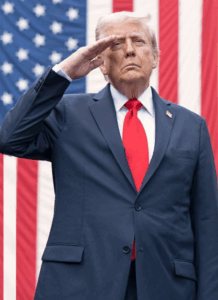
President Donald J. Trump salutes during the Pentagon’s 9/11 Observance Ceremony on September 11, 2025.


the strategy seeks to realign U.S. defense policy around pragmatic, interest-driven priorities, enhanced military readiness, stronger burden-sharing from allies, and maximum operational flexibility for national leadership—under the belief that this approach offers the most reliable path to security and sustained peace.
Geometry Dash