Why the Pentagon’s Security Cooperation Activities Must Address Disaster Response
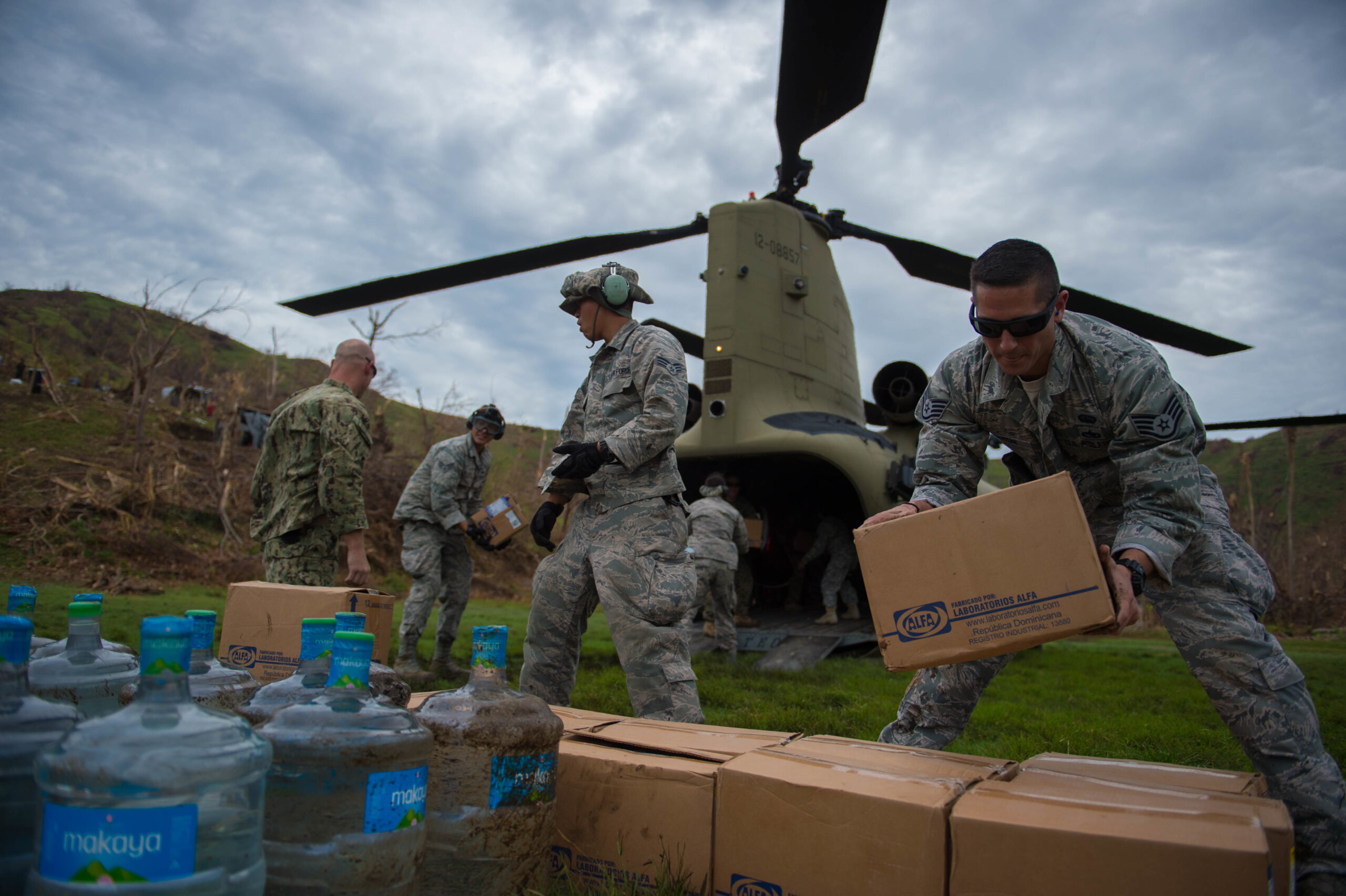

As Hurricane Melissa’s 185 mile-per-hour winds struck the Caribbean in October 2025, a critical yet underappreciated dynamic of modern United States (U.S.) security cooperation was on full display. Jamaica – a country whose Defense Force (JDF) had never experienced a direct hit from a Category 5 hurricane – was thrust into the role of first responder. The question was not whether the JDF would respond; they had no other choice. It was if they had the capacity to do so effectively without shelving their core national security mission for years to come.
U.S. allies and partners the world over are increasingly forced to respond to a diverse array of severe disasters that directly and systemically undermine military readiness and U.S. strategic interests. Particularly as attention turns to the increasingly disaster-prone Western Hemisphere, the vital consideration facing both the Pentagon and Congress is whether partners abroad respond in ways that preserve or degrade the readiness the United States depends on for deterrence and collective defense, and what the United States might do to better support them.
Disaster Response as a Strategic Imperative
U.S. security cooperation remains largely focused on conventional hardware and training. Yet cascading natural disasters abroad are increasingly consuming the resources meant for readiness and deterrence. Meanwhile, China increasingly uses disaster relief as a diplomatic tool to expand its influence.
Most partner national security forces are not resourced, staffed, or trained for large-scale disaster missions. They rarely have national guard or Federal Emergency Management Agency (FEMA)-like entities fit for purpose to respond – only the national military. The result is that their defense readiness erodes as global threats increase; adversaries exploit these gaps.
In the Indo-Pacific – perhaps the most disaster-prone region in the world and the most strategically relevant to the United States – the tradeoffs between disaster response and national security are especially acute. For example, the Armed Forces of the Philippines, a key U.S. ally in the region, have repeatedly deployed thousands of personnel for typhoon response over the past two years. These deployments have consumed substantial helicopter flight hours, maintenance capacity, and training cycles that would otherwise sustain conventional readiness.
In Ukraine, unprecedented wildfires further complicate an already dire wartime environment. These missions – which are often critically under-resourced – pull personnel, equipment, and resources away from the frontlines.
With a few important exceptions, U.S. security cooperation remains largely focused on conventional hardware and training. Yet cascading natural disasters abroad are increasingly consuming the resources meant for readiness and deterrence. Meanwhile, China increasingly uses disaster relief as a diplomatic tool to expand its influence.
In Myanmar, following a devastating 7.7-magnitude earthquake in March 2025, the deployed over 400 personnel and committed $14 million in aid within 18 hours while the United States struggled to mobilize a response team due to a then-ongoing restructuring of the United States Agency for International Development, or USAID. China’s approach in Myanmar and elsewhere was fast, visible, and politically opportunistic, but it lacked safeguards and sustainability. However, this does not dilute its strategic effectiveness in the short term, especially when the United States rarely musters a response at all.
The Case of Jamaica
In 2024, Hurricane Beryl in Jamaica offered both a lesson and a warning. Beryl killed four people and damaged power stations, telecommunications, and every-day citizens’ homes across the island. The JDF deployed rapidly – by necessity – but lacked sufficient transportation, logistics, and communications capabilities to do so effectively. The United States ultimately provided $2.5 million in assistance to Jamaica, $4.5 million to the broader Caribbean region, and a five-day naval deployment. In the year-plus since Beryl, not much has changed. U.S. security cooperation continues to prioritize traditional defense equipment and training over disaster response capabilities in the Caribbean.
If prior security cooperation had strengthened early-warning systems, aircraft lift capacity, medical units, or fuel distribution networks, Jamaica might have executed a more self-reliant disaster response while still maintaining readiness for defense missions.
A few million dollars to a small island partner may sound small or insignificant. But, limited, strategic, dual-use investments can change outcomes dramatically. If prior security cooperation had strengthened early-warning systems, aircraft lift capacity, medical units, or fuel distribution networks, Jamaica might have executed a more self-reliant disaster response while still maintaining readiness for defense missions. Instead, every hour the JDF spends on disaster response without proper preparation is an hour of degraded deterrence in the United States’ backyard – exactly when U.S. strategic interests need partners at full readiness.
Competing on the United States’ Strengths
Critics may argue that disaster response missions represent “mission creep” – that the Pentagon should focus on warfighting, not disaster management. But that critique misses the stark reality that the United States’ partners are already using their militaries for disaster response, whether we help them prepare or not.
Our advantage lies not in winning the opening hours of a crisis, but in building systems that prevent crises from becoming catastrophes and ensure partners can respond independently without sacrificing combat readiness.
Helping partners prepare for disaster response is a preservation of military readiness. When partner militaries can respond effectively to disasters without crippling training cycles, flight hours, and maintenance capacity meant for defense missions, everyone wins. When they cannot, we all lose – and strategic competitors exploit the gap.
Russia and China understand the strategic value of disaster assistance and the access it can provide in-region. But the United States has something far more powerful than rapid, performative deployments: world-leading expertise in early warning, predictive modeling, remote sensing, emergency command-and-control, inter-agency disaster management, and dual-use technology.
Where China offers speed and visibility – the immediate delivery of relief supplies and dramatic imagery of Chinese equipment on the ground – the United States can offer sustainability and real capacity. Our advantage lies not in winning the opening hours of a crisis, but in building systems that prevent crises from becoming catastrophes and ensure partners can respond independently without sacrificing combat readiness. Self-reliance and resilience of that kind strengthens alliances significantly more than dependence on external relief. And best of all, it is cost-effective and helps to build strong and enduring relationships.
The United States does not need to imitate China’s approach. Instead, it should craft its own that plays to its strengths.
Capabilities ranging from drones and helicopters to amphibious or waterborne vessels, deployable medical teams, logistics nodes, and hardened communications can serve both defense and disaster missions.
First, the United States should amend the Pentagon’s main train and equip program – which is governed by 10 U.S. Code § 333 (Section 333), and is a core component of security cooperation – to explicitly enable disaster preparedness and resilience support of partner national security forces, not only post-disaster relief as outlined in other statutory authorities and programs (e.g. Overseas Humanitarian, Disaster, and Civic Aid). Current activities authorized by Section 333 make partner national security force disaster engagement virtually impossible; any further action requires making changes to the National Defense Authorization Act (NDAA). And indeed, the case for Congress is clear: exercises, planning, logistics hardening, and command-and-control integration are preparedness activities which directly enhance readiness, including the ability to maintain deterrence capacity even during disaster response operations.
Second, the United States should prioritize dual-use capabilities. While changes to the Pentagon’s authorities would enable a broader suite of support, it is possible to ramp up relevant capabilities within the confines of existing authorities. Capabilities ranging from drones and helicopters to amphibious or waterborne vessels, deployable medical teams, logistics nodes, and hardened communications can serve both defense and disaster missions. These dual-use assets and associated trainings are also cost-effective and sustainable, particularly relative to high-end, high-maintenance platforms. Dual-use investments can allow partner forces to respond to disasters while maintaining capabilities the United States needs and values for collective defense missions.
Third, the United States should leverage its superiority in data, technology, and tools. Early warning systems, weather and hazard modeling, remote sensing platforms, and disaster-planning frameworks not only save lives but also deepen operational interdependence and improve warfighting performance. These capabilities help partners anticipate and prepare for disasters, reducing disruption when crises actually occur. Similar to more tangible and deployable capabilities, United States technology and datasets are comparably cheap, easy to share, and can have an outsized impact on partner readiness.
Finally, the United States should expand Institutional Capacity Building (ICB) for disaster resilience. Existing ICB frameworks already support partner nations in developing defense governance, resource management, and operational planning capabilities. Disaster preparedness should be a core component. The Defense Security Cooperation University leads advisory and education programs that aim to strengthen institutional capacity at both ministerial and operational levels. That same approach could address how partner national security forces prepare for and respond to natural disasters without degrading combat readiness.
The Path Forward
The FY 2026 NDAA, which includes language supporting enhanced disaster response collaboration with India (Sec. 1255) and the Philippines (Sec. 1269), along with additional National Guard support domestically – which is often utilized by, with, and through the Pentagon’s Defense Support of Civil Authorities (DSCA) activities – showcases an emerging understanding of the intersection between extreme weather events and defense readiness. Certainly, the National Guard Bureau’s State Partnership Program is an excellent if underutilized example of comprehensive and varied partner engagement, and natural disasters will continue to strain U.S. allies and partners. The United States can and should further explore new ways to help them meet these challenges in a manner that does not sacrifice deterrence and regional stability.
This imperative becomes more urgent as recent cuts to U.S. disaster assistance and humanitarian aid have minimized the United States’ capacity to respond after crises occur. Congress approved approximately $1.1 billion in cuts to humanitarian assistance (including emergency disaster aid) as part of broader reductions to foreign assistance programs. While State Department-led humanitarian operations remain important, the Pentagon’s security cooperation programs represent a complementary and increasingly critical tool for disaster preparedness.
Prepared partners are successful partners. Integrating disaster resilience into U.S. security cooperation is not charity – it is a strategic force multiplier.