





Book Review: Putin’s Revenge
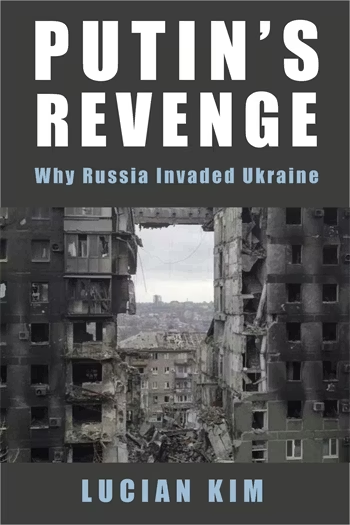

Putin’s Revenge: Why Russia Invaded Ukraine. By Lucian Kim. New York: Columbia University Press, 2024. ISBN: 9780231214025. Pp. xx, 322. $27.95 at time of review.
Lucian Kim’s Putin’s Revenge offers a compelling explanation of how Vladimir Putin evolved from a pragmatic leader who courted Ukrainian audiences in 2004 into the authoritarian figure who launched a full-scale invasion in February 2022. Kim argues that the war was not a spontaneous reaction to NATO expansion but rather the culmination of Putin’s personal grievances, imperial nostalgia, and a collective Western failure to take his ambitions seriously. At a time when understanding Russia’s motivations remains essential for policymakers and military planners, this book provides crucial context for Europe’s largest conflict since World War II.
Lucian Kim is a veteran foreign correspondent who covered Russia and Ukraine for National Public Radio, Reuters, Bloomberg News, and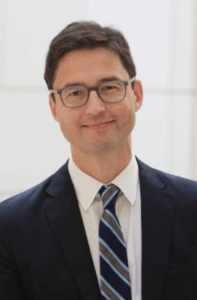 other outlets. He holds a master’s degree in nationalism studies from Central European University in Budapest, an academic background directly relevant to a book examining Putin’s imperial worldview. His methodology combines on-the-ground journalism with extensive research into primary sources, including Kremlin speeches, Ukrainian political developments, and interviews with key figures on all sides. The book follows a chronological structure, beginning with Putin’s visit to Kyiv for a victory parade in 2004 and concluding with the February 2022 invasion. Throughout the book, Kim’s core argument is that Putin’s radicalization began with the Orange Revolution, which he experienced as a personal humiliation. This process intensified through subsequent events: the Euromaidan protests, the annexation of Crimea, and his COVID-era isolation, during which he became increasingly consumed by historical grievances and imperial fantasies, reinforced by hawkish advisers like billionaire Yury Kovalchuk, while Viktor Medvedchuk fed him misleading intelligence about Ukrainian support for Russia.
The book’s greatest strength lies in its balanced examination of responsibility. While Putin remains the central figure responsible for the conflict, Kim does not spare Western leaders from criticism. He documents American disengagement under Obama, who viewed Russia as “a nuisance, not a threat,” and European failures rooted in economic dependence on Russian energy. Among European allies, Germany emerges as a notable example of these failures. Former Chancellor Gerhard Schröder moved from public office to a position at Nord Stream less than a month after leaving office. Even after Russia invaded Crimea, Schröder celebrated his 70th birthday in St. Petersburg with Putin, greeting him with a hug on the same day the EU imposed new sanctions. France proved equally complacent: at the 2016 Warsaw NATO summit, President Hollande declared Russia was “not an adversary, not a threat.” Kim also highlights the tragic 2008 Bucharest NATO summit, where Germany and France blocked clear membership paths for Ukraine and Georgia. The resulting vague promise of future membership provoked Putin without providing either country with real security. Unlike accounts that focus narrowly on NATO expansion or Russian strategic interests, Kim foregrounds the interplay between Western complacency and Putin’s personal psychology.
Kim’s journalistic background is evident in vivid scenes throughout the book: the chaos of the Maidan, the surreal flight of Yanukovych in 2014 as Russian helicopters spirited him to safety, and the quiet fear of ordinary Ukrainians as invasion approached. He also effectively dismantles Kremlin narratives. For instance, he notes that Putin’s claim of “genocide” in Donbas was contradicted by UN data showing only 25 civilian deaths there in 2021. Kim further corrects oversimplifications common in popular coverage, such as the idea that language determines political loyalty. Citing polls showing 70 percent of eastern Ukrainians supported national unity, he demonstrates that Russian-speaking Ukrainians are not automatically pro-Russian, a crucial insight often lost in Western media coverage.
While the book excels as a narrative history, it has some limitations. The extensive coverage of Zelensky’s rise and the Trump impeachment affair, while demonstrating how American domestic politics undermined Ukraine, occasionally feels disconnected from the book’s central thesis about Putin’s motivations. Additionally, a comparative perspective examining how Putin’s approach resembles or differs from other authoritarian leaders’ uses of information warfare and political subversion might have strengthened the analytical framework.
Ultimately, Putin’s Revenge is a valuable resource for multiple audiences. Foreign policy professionals and military personnel working on NATO, European security, or U.S.-Russia relations will find crucial context for understanding the Kremlin’s decision-making. Scholars and students of international relations, post-Soviet studies, or European history will appreciate its well-researched and accessible entry point into the conflict’s origins. Journalists and general readers will benefit from Kim’s ability to synthesize complex geopolitics into a readable narrative that avoids the oversimplifications common in popular coverage. The book’s central insight, that the invasion was driven by Putin’s personal sense of humiliation and historical grievance, enabled by Western complacency, offers a sobering lesson for how democracies engage with revisionist powers.


